I'm doing some detective work in our villa from '54.
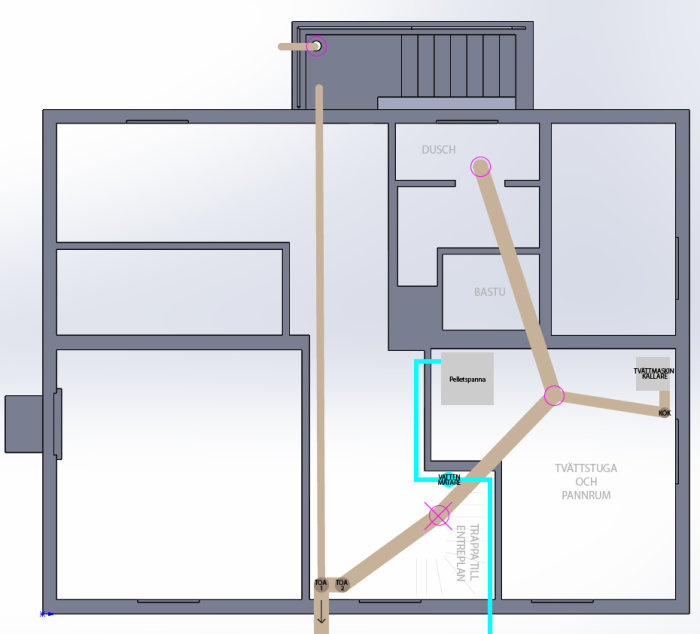
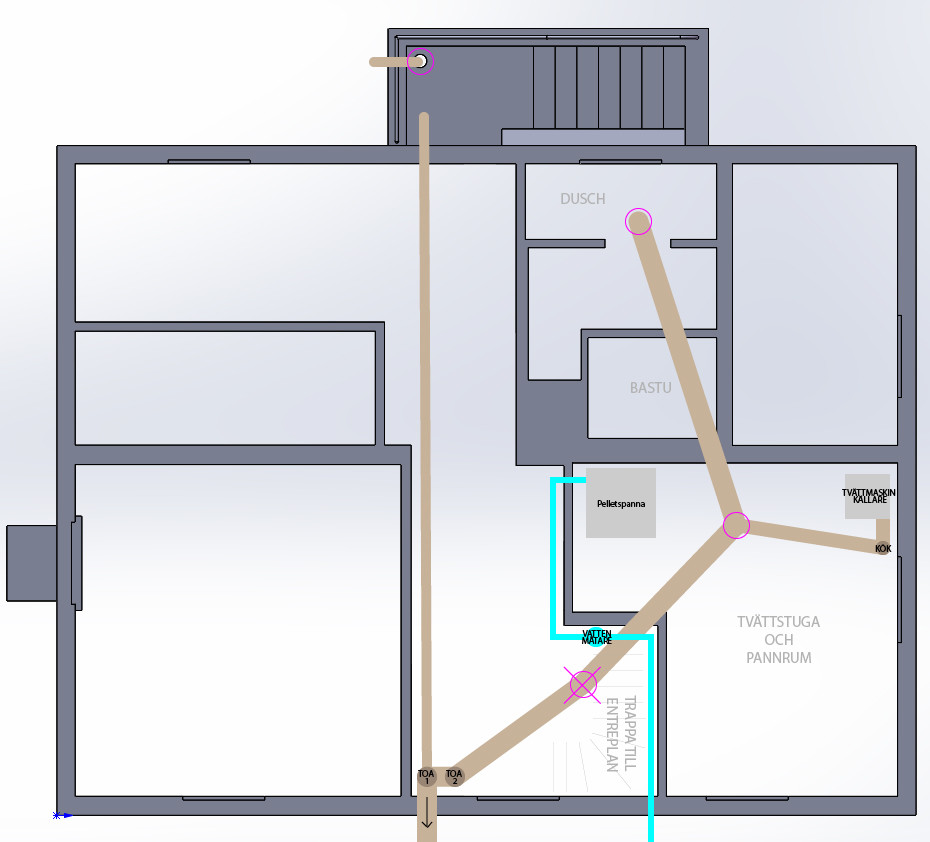
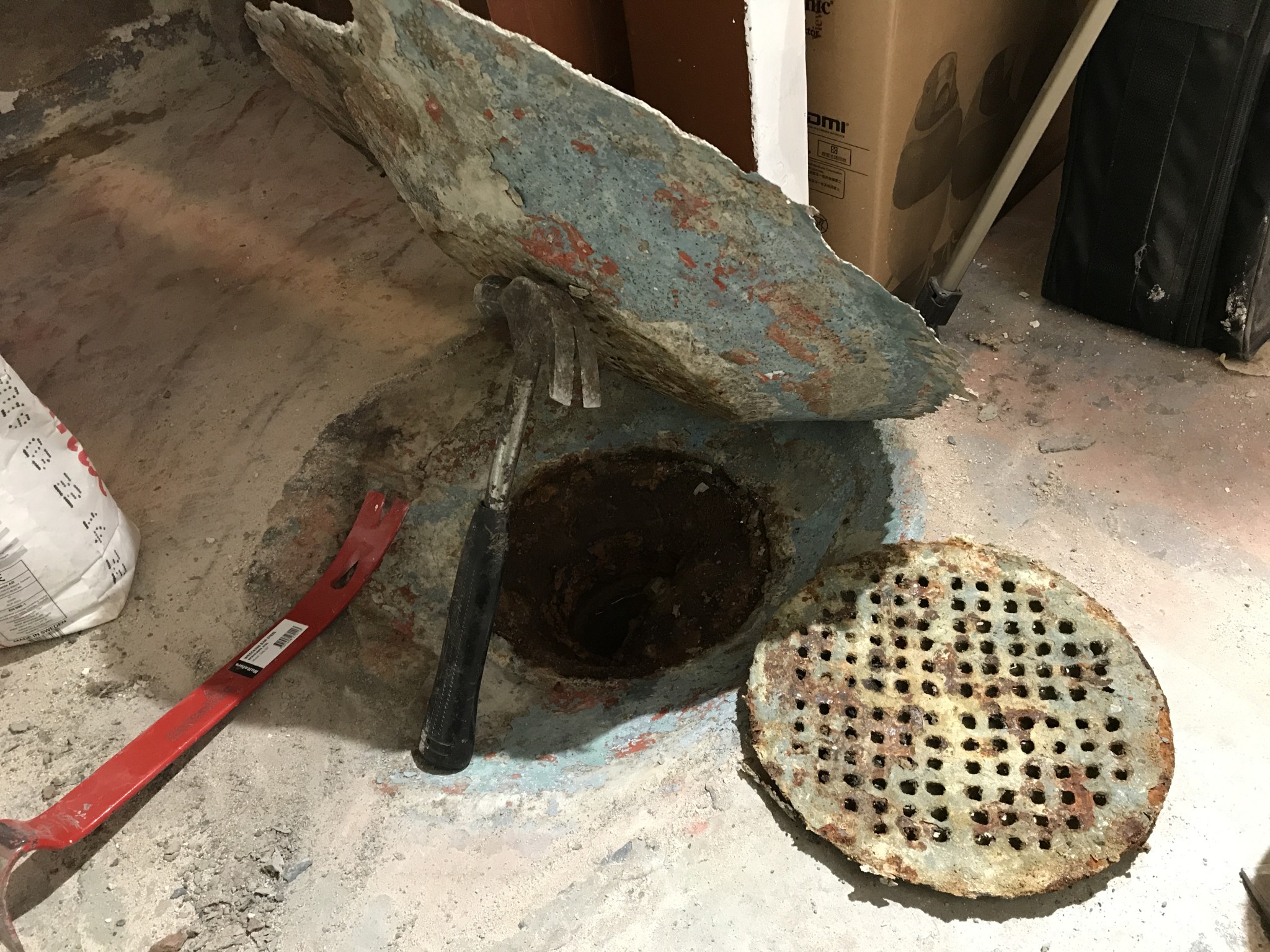
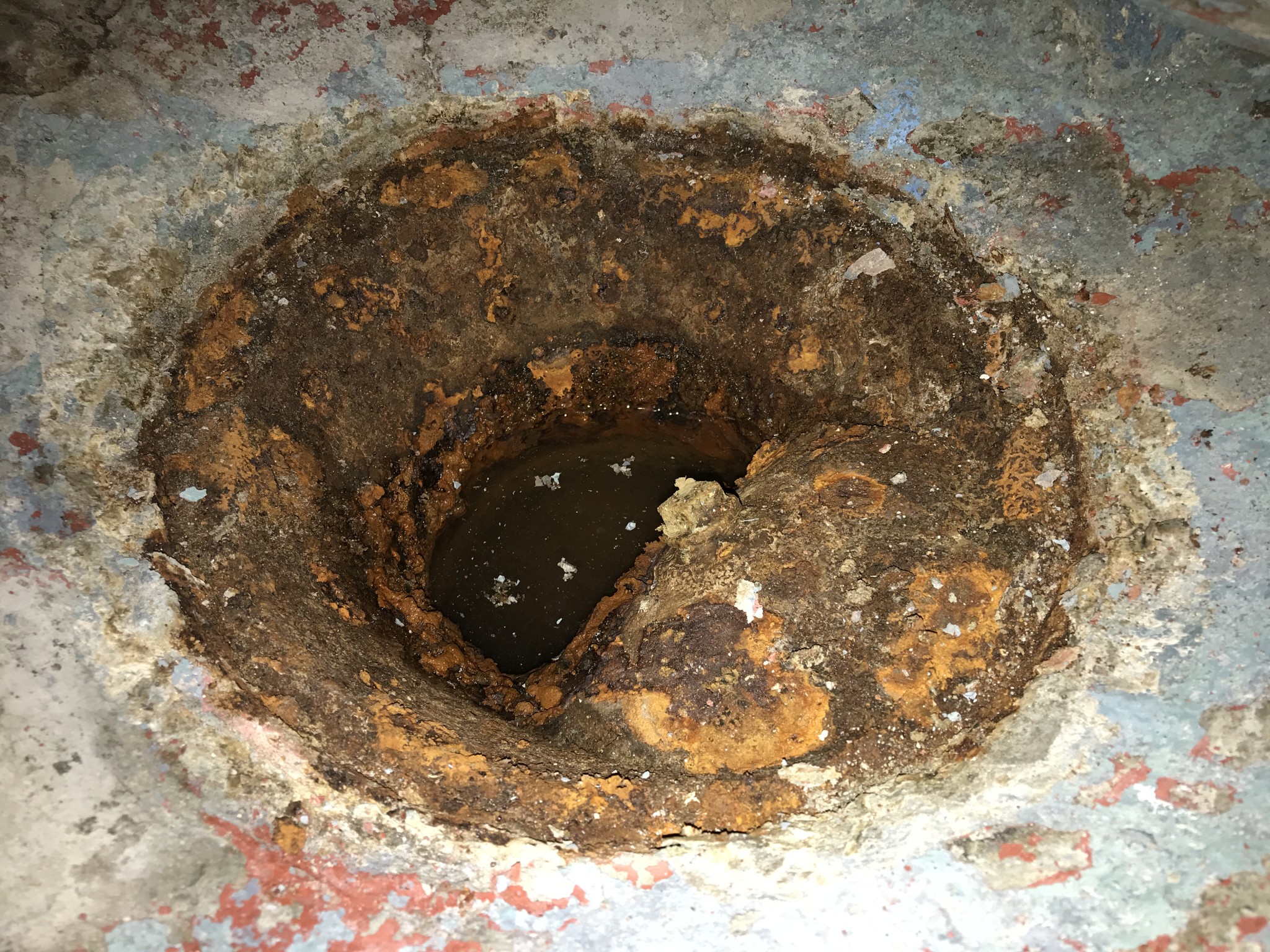
I'm in the process of laying tiles, and as I was preparing the laying, I spotted a mysterious round casting. After some tapping, I found a cast iron drain. (Marked with a pink x) Previously, a pressure tank was in the space since the property had its own well, so I understand that a floor drain was needed there at the time. Today, the municipal water is connected at the same location and the water meter (new) is there.
I now face the choice of drilling up and replacing the floor drain with a new nice plastic one or sealing the drain again and forgetting it exists.
Everything except for the drains in the shower and laundry room is cast iron. Previously, the floor drain in the outer basement stairs was connected to the house's sewer but has been connected to the stormwater since last year's drainage work.
How do you think the pipes are routed in this house? Is there any common way to route them, or is it 100% individual? I’ve painted approximately how I think it is now
Do you see a need to have an extra floor drain at the water meter?
It certainly varies between municipalities, but during installation, they usually do not require a floor drain, although they say it "should preferably" be present.
However, one must ensure that the floor and walls around the meter "can withstand splashes and spills."
As for already installed and approved, you probably have to determine yourself what feels most appropriate.
I would probably get the floor drain going if it wasn't too complicated, somewhat depending on what the floor area is used for otherwise...
Hmm, wonder how it is connected.
Since the well is severely rusted, there is a considerable risk that the rest is not in good shape...
I would probably invest in a camera inspection to check the condition before I laid tiles on the floor.