
12,487 views ·
64 replies
12k views
64 replies
How high should a chimney be?
Page 1 of 5
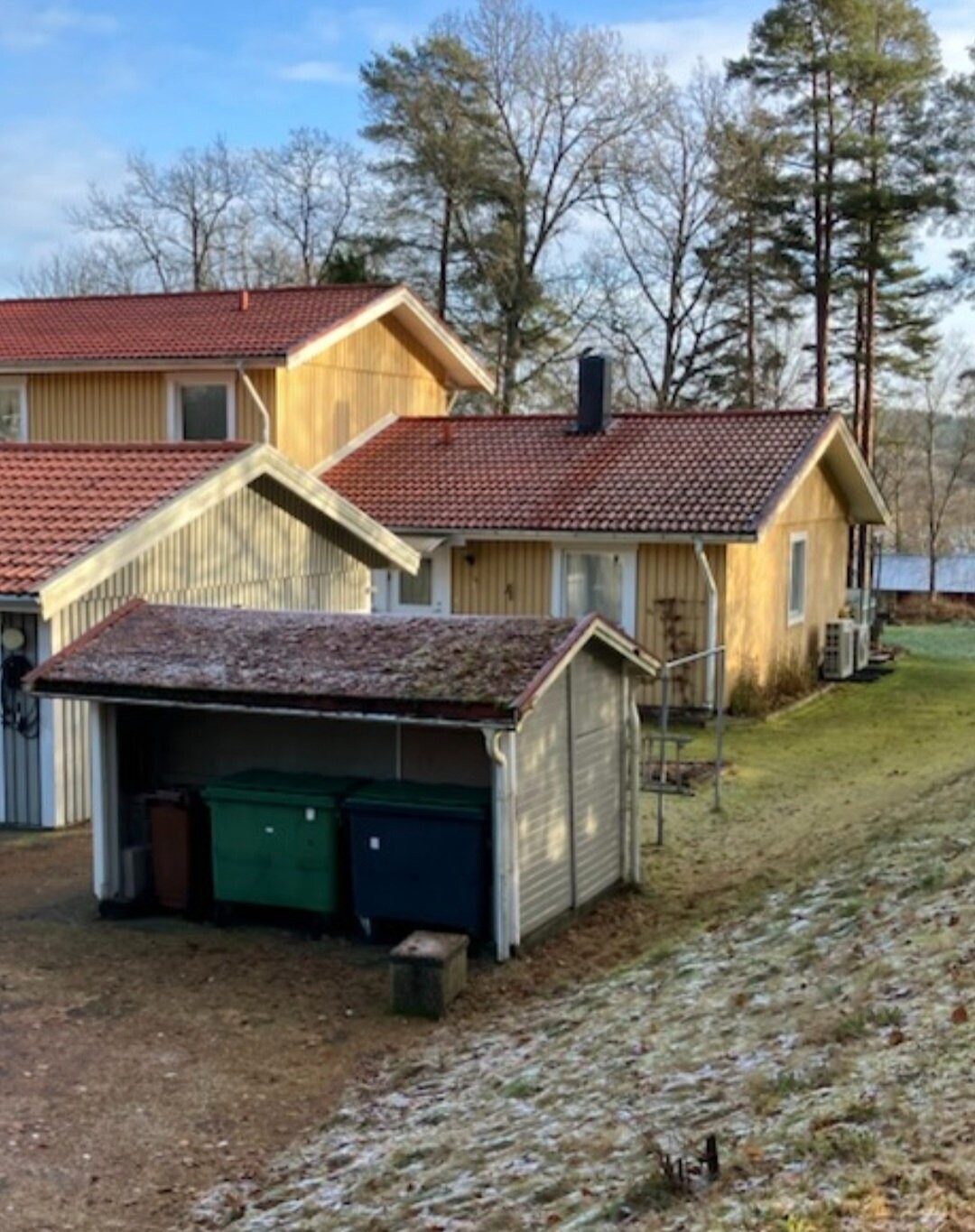
My mother has a neighbor in the same row of townhouses who has installed a chimney. The problem is that the neighbor's house, which is the last in the row, has one floor while all the others have two. The chimney reaches 1 meter above their own ridge, but not above the neighboring ones. The question is: is this allowed? Shouldn't it be calculated as 1 meter from the highest ridge? The smoke is coming in through the air intakes, causing several neighbors to have problems with smoke and soot indoors! The municipality doesn't seem to know what applies and isn't interested in checking...
The best and safest answer will come from the municipality.C christoffersamuelsson said:My mother has a neighbor in the same row of townhouses who has installed a fireplace. The problem is that the neighbor's house, which is the last in the row, has one story while all the others have 2. The fireplace's chimney reaches 1 m above their own ridge, but not over the neighboring ones. The question is: is it allowed to be like this? Shouldn't it be calculated 1 m from the highest ridge? The smoke is coming in through the air intakes, causing several neighbors to have problems with smoke and soot indoors! The municipality doesn't seem to know what applies and isn't interested in checking...
As I see it, it should be at least 1 meter above the roof covering and above the ridge.M MrDizzy said:
But you should also consider the following:
"BBR requires sufficient chimney height to ensure good function and dispersion of smoke and exhaust gases.
The placement of the chimney is also important, so that smoke and exhaust gases are not brought back to the building itself or transferred to nearby buildings."
Try to get the neighbor to agree to test extending the chimney using these rules.
Good luck.
/W
The environmental office visited today. They only checked the air indoors at my mother's place. They knew nothing about building regulations and stated that they couldn't find that out as it wasn't their responsibility...L lbgu said:
Unfortunately, the neighbor is not understanding at all. They don't care about the smoke... But thanks for the response!Workingclasshero said:
As I see it, it should be at least 1 meter above the roof covering and above the ridge.
But one should also consider the following:
"BBR requires sufficient height of chimneys to achieve good function and dispersion of smoke and exhaust gases.
The placement of the chimney is also important, so that smoke and exhaust gases are not brought back to your own building or transferred to nearby buildings."
Try to get the neighbor to agree to try extending the chimney using these rules.
Good luck.
/W

Mats-S
Construction veteran
· Sollentuna
· 3 646 posts
Mats-S
Construction veteran
- Sollentuna
- 3,646 posts

The general rules say that the chimney should be at least 1 meter above the roof covering and end above the nearest ridge. Then there are special rules concerning what applies when there is a distance to the nearest ridge. Or at least it used to be so. For example, if there is a certain distance to the nearest ridge and the chimney is in the lee from this in relation to the prevailing wind direction in the area, it can be lower or something like that.C christoffersamuelsson said:My mother has a neighbor in the same row house who installed a stove. The problem is that the neighbor's house, which is the last in the row, has one floor while all the others have 2. The chimney of the stove reaches 1 m above their own ridge, but not above the neighboring ones. The question is: is that allowed? Shouldn't it be calculated 1 m from the highest ridge? The smoke is entering through the air intakes so that several neighbors have problems with smoke and soot indoors! The municipality doesn't seem to know what applies and is not interested in checking up...
The municipality should be able to answer.
But if they can't give you an answer, as it seems here, then I would recommend contacting the company that handles the chimney sweeping in the area. They are well aware of what applies.
I myself contacted the company that handles the chimney sweeping in my municipality when I recently redid the roof and chimney to know what applies.
However, it seems to be an existing chimney that was previously approved. Then I’m afraid you just have to live with it unless you can get the neighbor to voluntarily extend the chimney.
Soot in larger amounts should not occur except when you have just lit the fire, and it hasn't reached temperature yet.
But unfortunately, there will be smoke, and if the chimney is too short, the smell of smoke will reach the nearby houses.
No, it is not existing from before. The stove and chimney were installed this winter.S steffo_b said:The general rules state that the chimney must be at least 1 meter above the roof covering and end above the nearest ridge. Then there are special rules regarding what applies when there is a distance to the nearest ridge. Or at least it used to be so. For example, if there is a certain distance to the nearest ridge and the chimney is sheltered from this in relation to the prevailing wind direction at the location, it can be lower or something like that.
The municipality should be able to answer.
But if they can't give you an answer, as it seems here, I would recommend contacting the company that handles chimney sweeping in the area. They have a firm understanding of what applies.
I contacted the company responsible for chimney sweeping in my municipality myself when I recently renovated the roof and chimney to know what applies.
However, it is probably an existing chimney that has been approved previously. Then, unfortunately, I think you just have to accept the situation unless you can get the neighbor to voluntarily extend the chimney.