If you know you're not going to use them, then why not..
Yes, absolutely, I have a few friends who always check with me first before they go to the lumber yard.
And one of them usually has some iron left over, so then I can get a little scrap of it
Handling waste is an important issue. The foundation of a philosophy...
For a workshop to function, it needs
workspaces,
staff areas,
space for materials,
storage space for finished products,
and tools and machines.
The order is not random. It is actually very simple.
The staff is the basis of everything. Every event in a workshop is the result of mental processes long before anything happens. Then it's hands and muscles that make "it" happen.
Material is the starting point that will become a finished product. Therefore, these are grouped together. Of course, if you have a discipline where every finished creation must immediately leave the workshop, then no strategy for handling products is needed. In practical reality, the workshop is cluttered while waiting for opportunities. So a strategy is always needed.
The tools and machines are the instruments that the staff believes they need. I have witnessed countless times when either I or someone else feels that an investment should create new opportunities. If you focus on transforming material into products with available means, you will notice that old habits are hard to break. After a new investment in miracle machines, it turns out that those among the staff who produce the most remain at their benches and work as they are accustomed. Young people and those who have much to say during breaks stand scratching their heads trying to figure out how to do things with the new machine.
This is not to say that new machines are wrong. Just that the idea of solving problems with staff and material through grandiose machine purchases is, frankly, dumb.
Any change that allows less critical components to dictate conditions for higher-level things will lead to lower production.
Hierarchy within sheet material.
Whole sheets
Divided sheets
Strips
Cross-cuts
Small pieces down to A4
Pure waste.
As soon as something below encroaches on space needed for more precious pieces, you've saved too much scrap. It's that simple. If you then start cluttering the workspaces, it quickly becomes unsustainable. There's junk everywhere and it's impossible to work without first moving around "good to have stuff."
Strategy for a small workshop.
Permanent stand for sheets.
Part of the stand divided for cross-cuts.
Strips worth saving are handled like solid wood.
Of course, common sense should prevail. A 1222 wide sheet from which a shelf has been cut should obviously be returned down to the level where it starts to resemble strips.
For small pieces down to A4, build a special storage under a bench or something. Every time such a piece goes in among the cross-cuts (wrong place), the situation worsens. They have an almost natural ability to get pushed in between more valuable pieces where they can't be reached. Over time, the entire section becomes a deadweight where nothing can be put in or taken out. As soon as this happens, it is better to completely empty it and throw everything away. Then the waste is no longer a resource but a burden that causes the staff to stop functioning.
This is how all handling of "good to have" items works.
Be vigilant about this. Or rather, as soon as you feel something other than the urge to work when you enter your workshop, it's probably because something is preventing you from immediately starting to work on what you went there for.
Regarding waste. Build specialized storages and use them for what you built them for. When it's full, don't allow waste to push out something more important. Instead, clear it out.
Scraps are also inspiring. If you have an idea, then obviously things that fit should be saved.
Conflicting advice... isn't it. Navigating a small workshop so that it works is filled with pitfalls. In practice, it will vary in periods. Somewhere on the scale, there is a creative chaos that works for you. Or it's just an illusion. Principles that work professionally are powerful tools even when you're woodworking as a hobby.
My solution (since the garage functions as a workshop, stroller storage, painting workshop, and carpentry).
All machines and items in the garage MUST be on wheels (the only exception is the workbench that is built-in along one side).
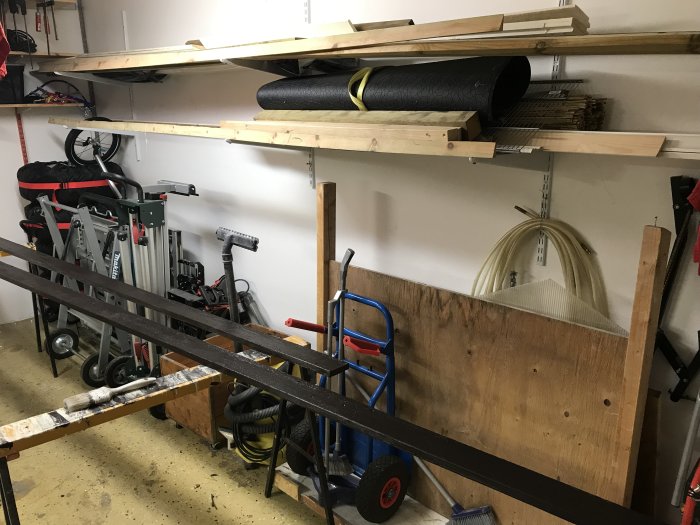
Longer scraps placed on brackets on two levels along one long side.
Boards and board scraps placed on a board cart (built from scraps).
Shorter scraps are placed in the small wooden box (which is rolled out and placed where I am currently working so I can throw scraps in it directly).
This ensures that scraps are never in the way but can be rolled around depending on the configuration I need in the garage at the moment. Additionally, a car can fit in if needed since everything is mounted/placed along the walls (as long as no project is ongoing like painting fascia boards right now).
We recently had a showing so there's been a lot of clearing out of scraps. However, I have a rule that when the “storage” is full, it gets cleared out and taken to recycling.
Inspiration struck me this morning when I was writing about scrap pieces. The following is a bit OT, but I think it can shed light on the subject.
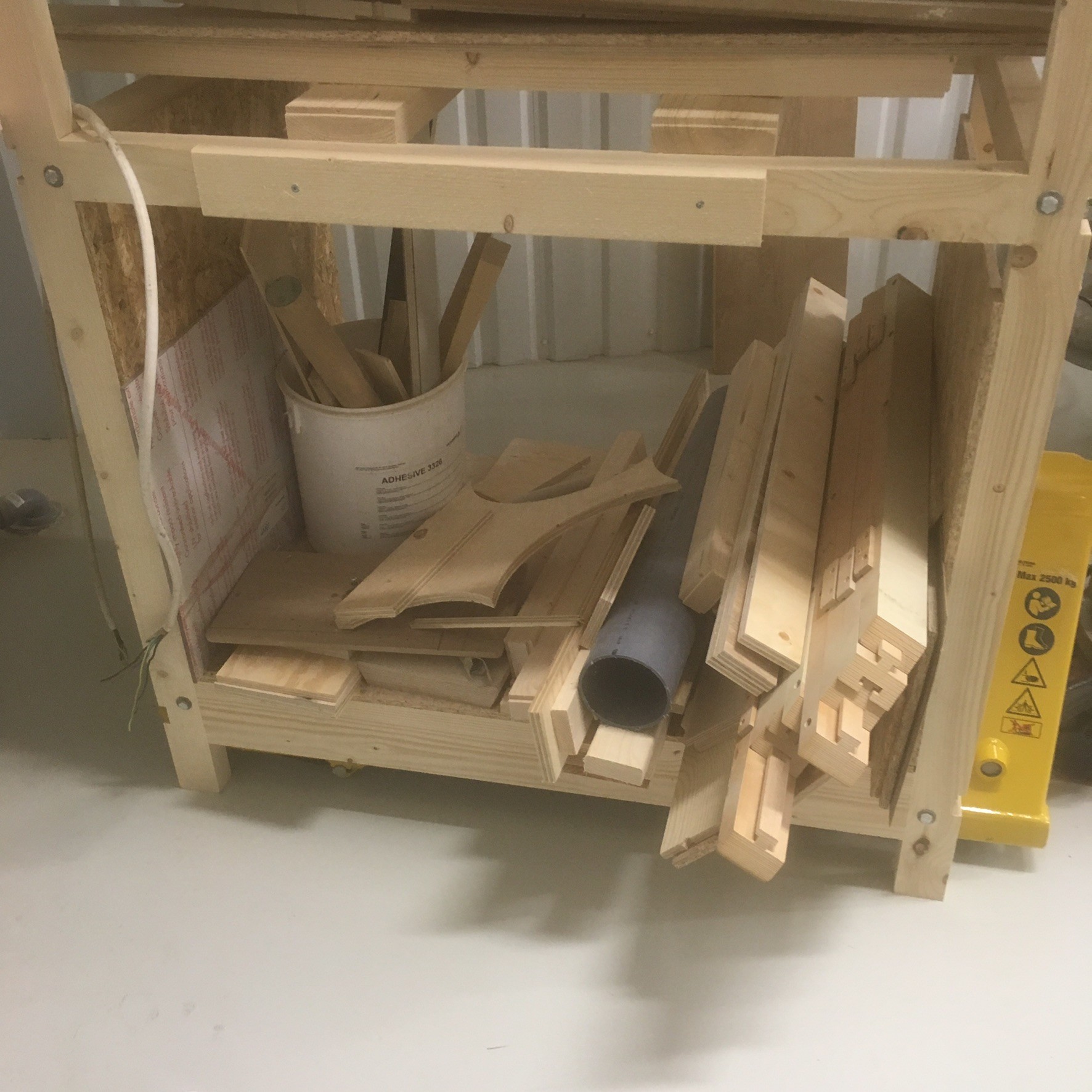
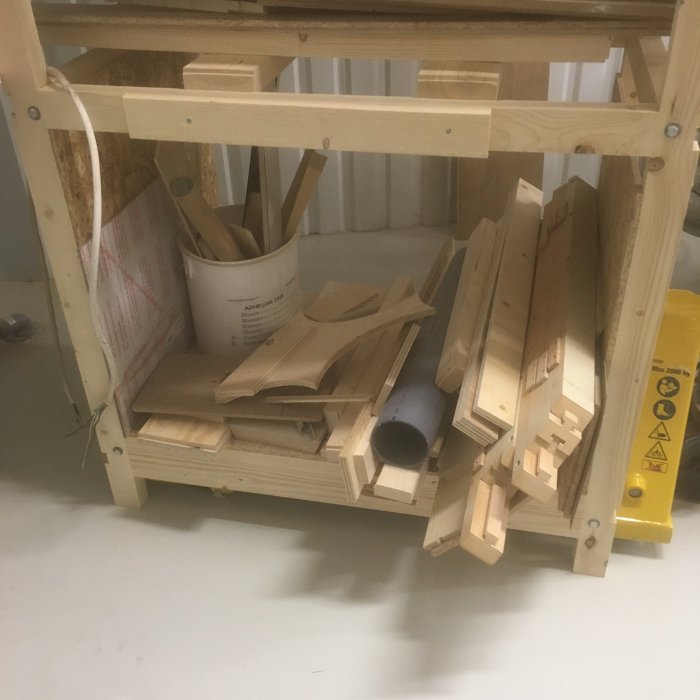
In the workshop, there are corners that have deteriorated. A fine example of storage of scrap that doesn't nurture creativity. Inefficient and lazy.
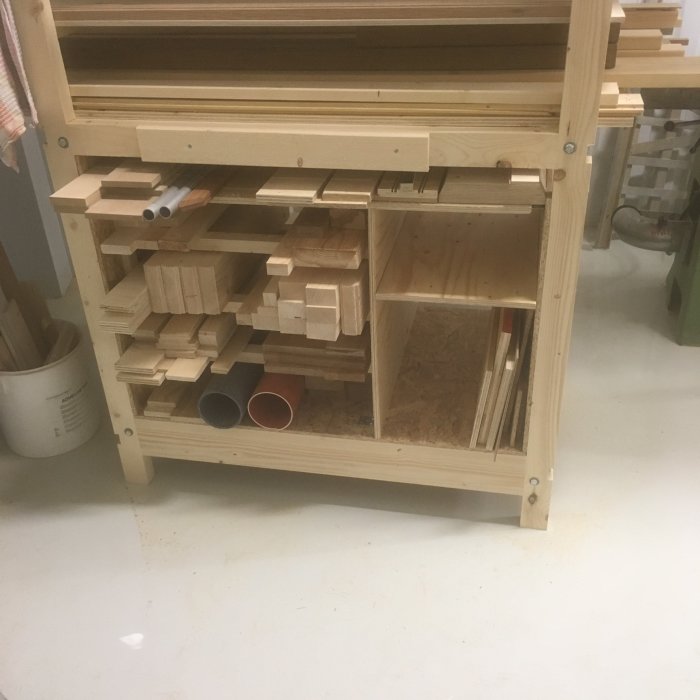
Decided to tidy it up today. The mess under the bench was organized with dividers and shelves. Holds much more. Is organized. Looks nice.
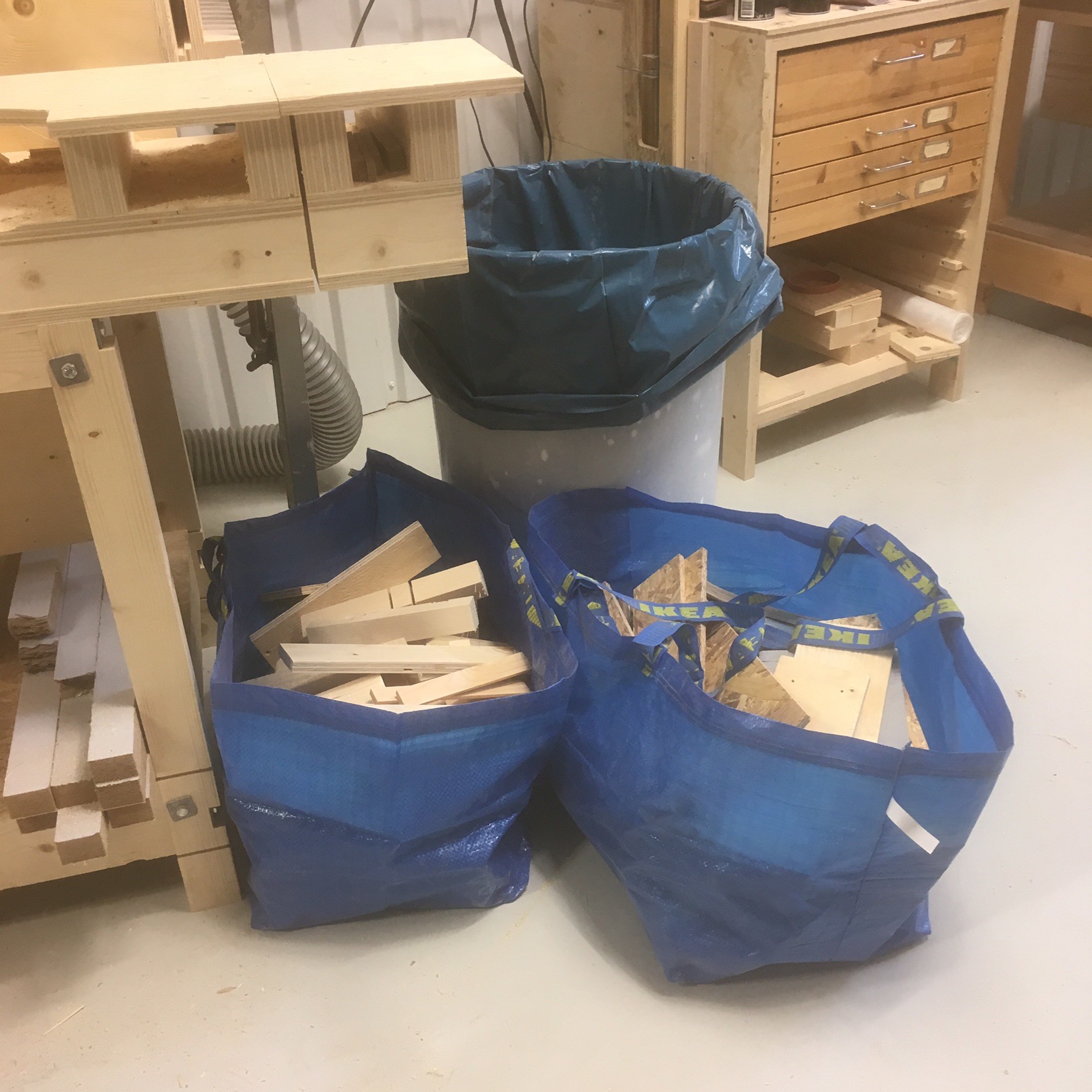
Cleared out all neglected corners. A lot ended up in the trash bin or became firewood.
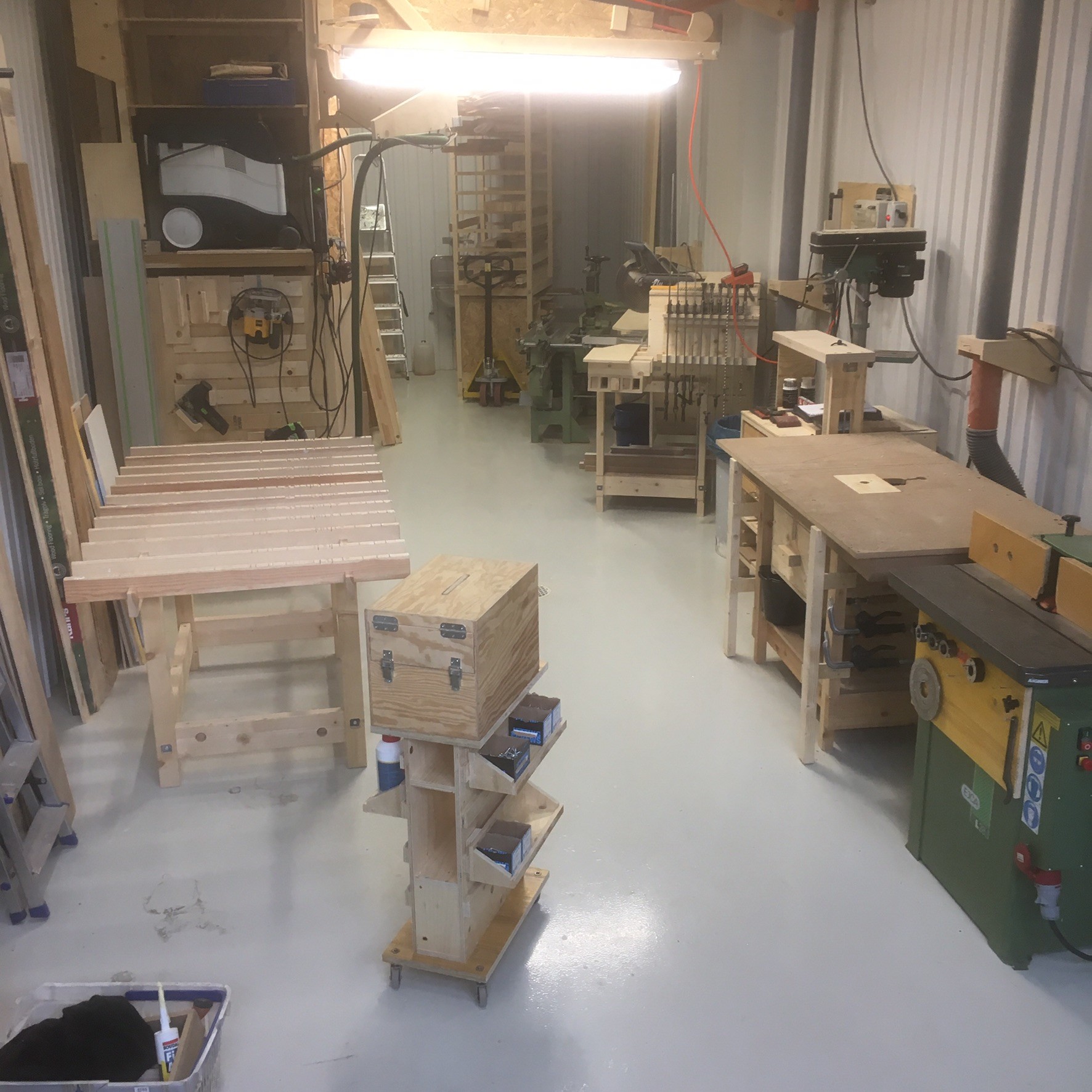
Tomorrow the workshop will be inspiring.
As I wrote earlier, I (maybe others too) get ideas from nice pieces. This means that scrap often ends up somewhere other than the trash bin. The tool I use to not drown in junk is organization. No matter how good my intentions are, there will be a drift over time. The purpose is to maintain order at a level where there is room for madness without chaos taking over completely. Discipline is important but boring.
Of course, I couldn't focus on just one task.
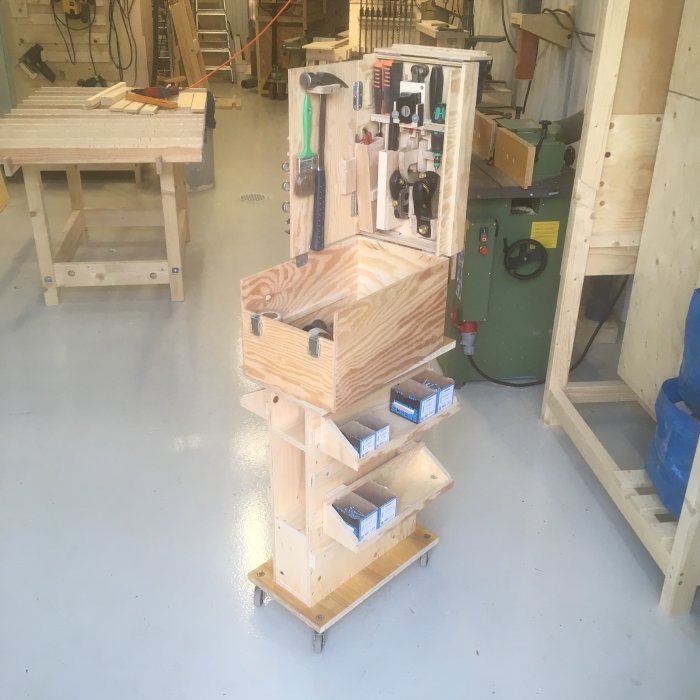
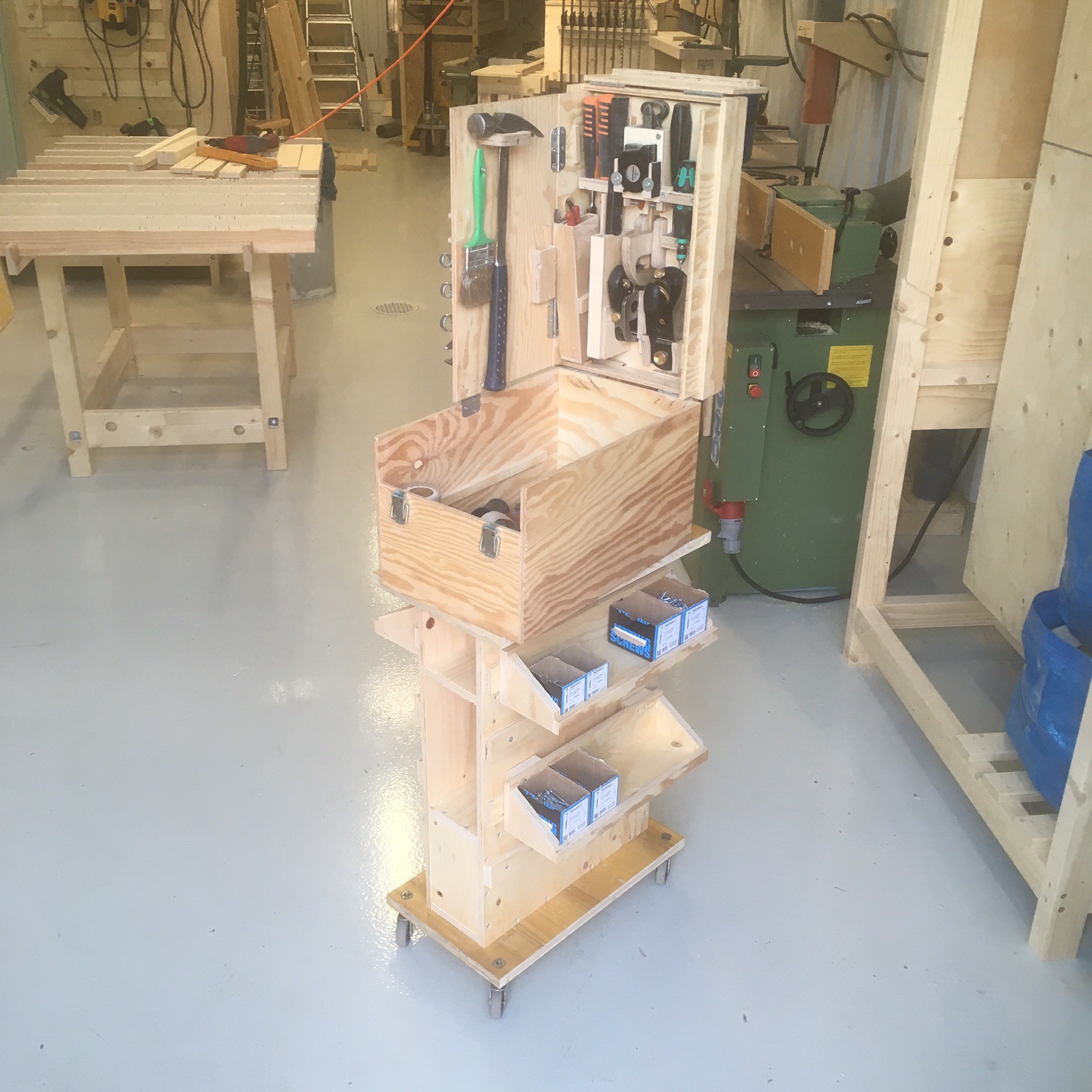
The cleaning project expanded to building a cart that makes the toolbox mobile and with French cleats on the sides, so things that would easily sit on the workbench can have a place that can move with me.
Best regards, Findus
Click here to reply
Vi vill skicka notiser för ämnen du bevakar och händelser som berör dig.





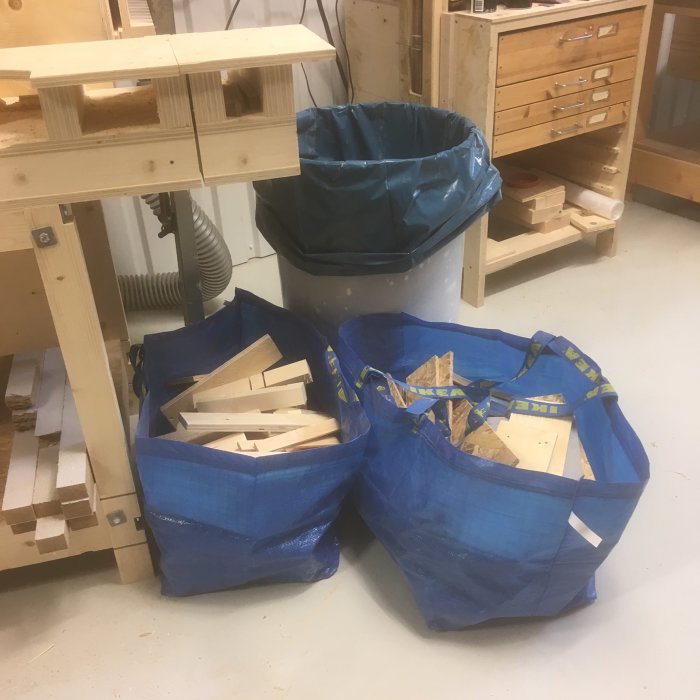
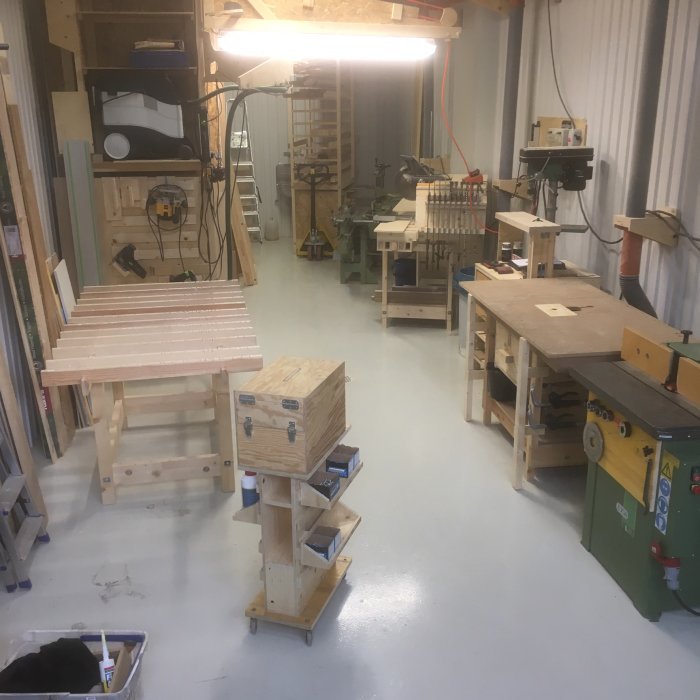
 . The tool I use to not drown in junk is organization. No matter how good my intentions are, there will be a drift over time. The purpose is to maintain order at a level where there is room for madness without chaos taking over completely. Discipline is important but boring.