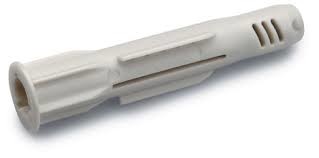
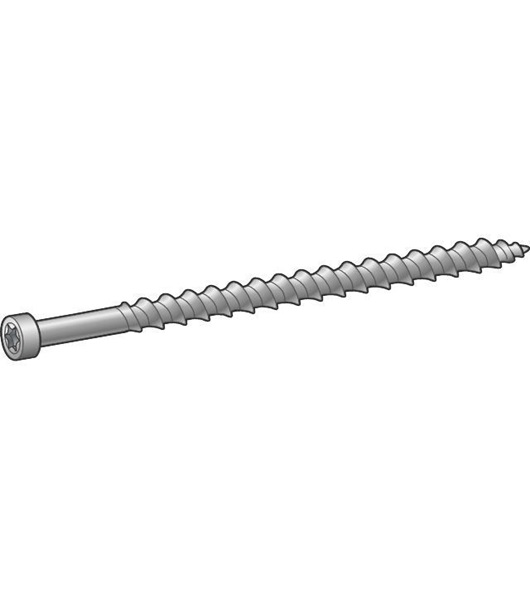
I'm building a garage with Ytong aerated concrete blocks, and I see many variations on fastenings. However, I haven't really seen any "ranking" of how much they can withstand, and if it's sufficient for a garage door, which I believe generates quite large moments every time it opens and closes.
However, it only references Hilti, and if I calculate correctly, each hole will cost me 400 SEK with VAT... But if I understand correctly, injection mortar in combination with internally threaded sleeve is the sturdiest? Is that what is used as standard?
If I read correctly, from strongest to weakest:
Nylon plug HGN 0.65 kN
Impact plug 0.45 kN
Aerated concrete anchor (special tool to hammer in) 0.4 kN
Concrete screw 0.2 kN
Then I also see other metal aerated concrete anchors, like
In order to even make a suggestion here, we probably need to know how the gate should be attached. If it's a hopeless model that deals with large forces, it's a completely different matter than something that only needs to support its own weight and shell protection.
I have not collected the door yet; it is a swing door model Diplomat Anna, 2500x2100
Anchor mass, is that in combination with an internally threaded sleeve? Do all brands work, and is it available at regular hardware stores?
From what I can gather, it seems to be a standard swing door with a frame. The installation instructions for their exterior doors indicate normal use of frame screws and frame sleeves. In lightweight concrete, there are a few different approaches, one approach, and perhaps the easiest, is to install the door according to the normal instructions, possibly with a few extra fastening points, and lightweight concrete screws. Provided that you do this correctly, it should hold, but of course, if you tighten it too hard, that fastening point is done for, and you'll need to switch to plug/anchor mass in that hole.
Such an installation will likely withstand all normal use, but such fastening might be slightly more sensitive, for example, a garage door that slams open in strong wind, compared to fastening into wood, which flexes differently. It might be suitable in that case to install some dampeners or other accessories that prevent the frame from bearing the full force when the wind catches the frame.
I personally like to use plugs in lightweight concrete, not the lightweight concrete plugs with massively large wings, etc., but rather more standard plugs combined with, for example, 6x80 screws or equivalent. I find it sets a bit more consistently than lightweight concrete screws, even if I sometimes start there and switch to plugs in the holes where I either tighten too hard or the screw slips for some other reason.
I wouldn't have used frame sleeves directly against the aerated concrete.
Either I would have wedged the frame and used aerated concrete screws (which don't need plugs), but then there's nothing to adjust if needed. (like doors and windows used to be mounted)
Otherwise, I would have thought about it from the beginning and made the opening a bit larger, lined the opening with a sturdier board, which could preferably be screwed and glued, and then mounted the frame as usual with a sleeve and screw.
A third option is to get some larger washers, which can be placed between the frame sleeve and the aerated concrete.
Oh, so just one (special) screw into the aerated concrete? Any plug?
[bild]
No plug for these, they grip very well into siporex and leca.
These are designed to be used with karmhylsor. As @Isakare mentions, it's good to place something between the sleeve and the wall when the wall is porous, as the sleeve can easily burrow into the wall when adjusting. Either you take a teäbit and drill a hole in it or you purchase the ready-made product Essve has in its range.
But ... there is also the option of attaching an intermediate material between the door and the ytong to distribute the load over a larger area than just a few attachment points directly in the ytong. For example, screw + glue (PL400 type) planks to the ytong and then attach the garage door to the planks ...
Guaranteed the strongest and most durable option, plus all the discussions about what is the best screw in light concrete are eliminated ;-)
If the light concrete is already in place, rent a chop saw and cut away 5 cm from the light concrete. I would never ever attach your door directly to that material.
Why?
Ask all those homeowners I've helped fix their exterior doors that came loose from the attachment in light concrete ... so "better safe than sorry" don't attach anything heavy or pressure-loaded directly to light concrete, there are NO margins, when it cracks it has no hold at all
Use an expansion sleeve with a load distribution washer and lightweight concrete screw. Screw in double rows, i.e., both in the rebate and in the visible part of the frame. It holds!
Vi vill skicka notiser för ämnen du bevakar och händelser som berör dig.


Andreas Lundgren said: