Hello! Here's a real beginner's question from a new homeowner (and forum member).
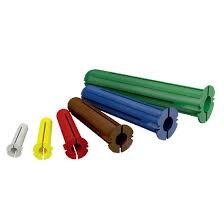
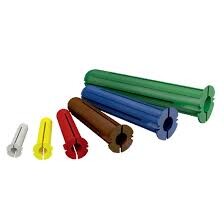
We have single plasterboard walls. I've bought various fixing items, including these plasterboard plugs from Clas Ohlson (I initially thought of buying metal expanders, but they had terribly bad reviews at Clas Ohlson).
The question is - how do I use them step by step? It might seem like a silly question, but if you've never used them, how would you know? The only instructions I see are a bit too vague for my taste - "For light installations in plaster, particle, and wood fiber boards (minimum thickness 13 mm). Pre-drill with an 8 mm drill. Screw in the screw until the fastener sits against the surface and then one more turn, no more."
Is it
1. Drill a hole (size is on the package)
2. Hammer them in (since there are only two "arms," should you press it in so that the arms expand vertically for maximum holding power? There's nothing about this, but my intuition says it should matter)
3. Now what - should you...
A) FIRST screw in a screw to get it to expand/fix and then unscrew it, and THEN screw it in again, this time with whatever you are fastening
B) or should you just DIRECTLY screw up whatever you intend to screw up? (just make sure to have a long enough screw)
Hi! Here's a real beginner's question from a new homeowner (and forum member).
We have single drywall in the walls. I bought various fastening items, including these drywall plugs from Clas Ohlson (I initially considered metal expanders but they had terribly poor reviews on Clas Ohlson).
The question is - how do I use them step by step? It's a dumb question, but if you've never used them, how would you know? The only instructions I see are a bit too vague for my liking - "For light mounting in gypsum, chipboard, and fiberboard (minimum thickness 13 mm). Pre-drill with an 8 mm drill. Screw in the screw until the fastening detail lies against the surface and then one more turn, no more."
Is it
1. Drill a hole (size is on the packaging)
2. Hammer them in (since the "arms" are only two in number, should you press it in so that the arms expand vertically for maximum load capacity? It doesn't say, but my intuition says it should matter)
3. Now then - should you...
A) FIRST screw in a screw to expand/fix it and then unscrew it, and THEN screw in again this time with whatever you are attaching
B) or is it just to DIRECTLY screw up whatever you wanted to screw up? (just make sure to have a screw long enough)
Thanks! 😀
Orientation of the plug shouldn't matter, and it's hardly controllable anyway.
I interpret it as you should press in the plug and then screw up what needs to be fastened. Not sure how well they hold for reuse, the risk is that you tear apart the anchor (expander part), as they warn to only turn one round after getting a grip.
For easier installation in gypsum, I think the "thorsmanspluggen" is good. Difficult to make mistakes, wings that lock it in the board, a collar that prevents the plug from falling into the hole, and made of good plastic material. (once made in Sweden).
For easier installation in plaster, I think the "thorsmanspluggen" is good.
Hard to make mistakes, wings that lock it in place, a collar that prevents the plug from falling into the hole, and made of good plastic material. (once made in Sweden).
[image]
The world's best for secure fastening in concrete, brick, and other hard mineral materials that are thicker than the length of the plug. The downside with them in plaster is that they hold by expanding radially in the hole. Very little margin for error there.
Last edited:
Click here to reply
Vi vill skicka notiser för ämnen du bevakar och händelser som berör dig.