
862 views ·
5 replies
862 views
5 replies
How do I reinforce my exterior walls?

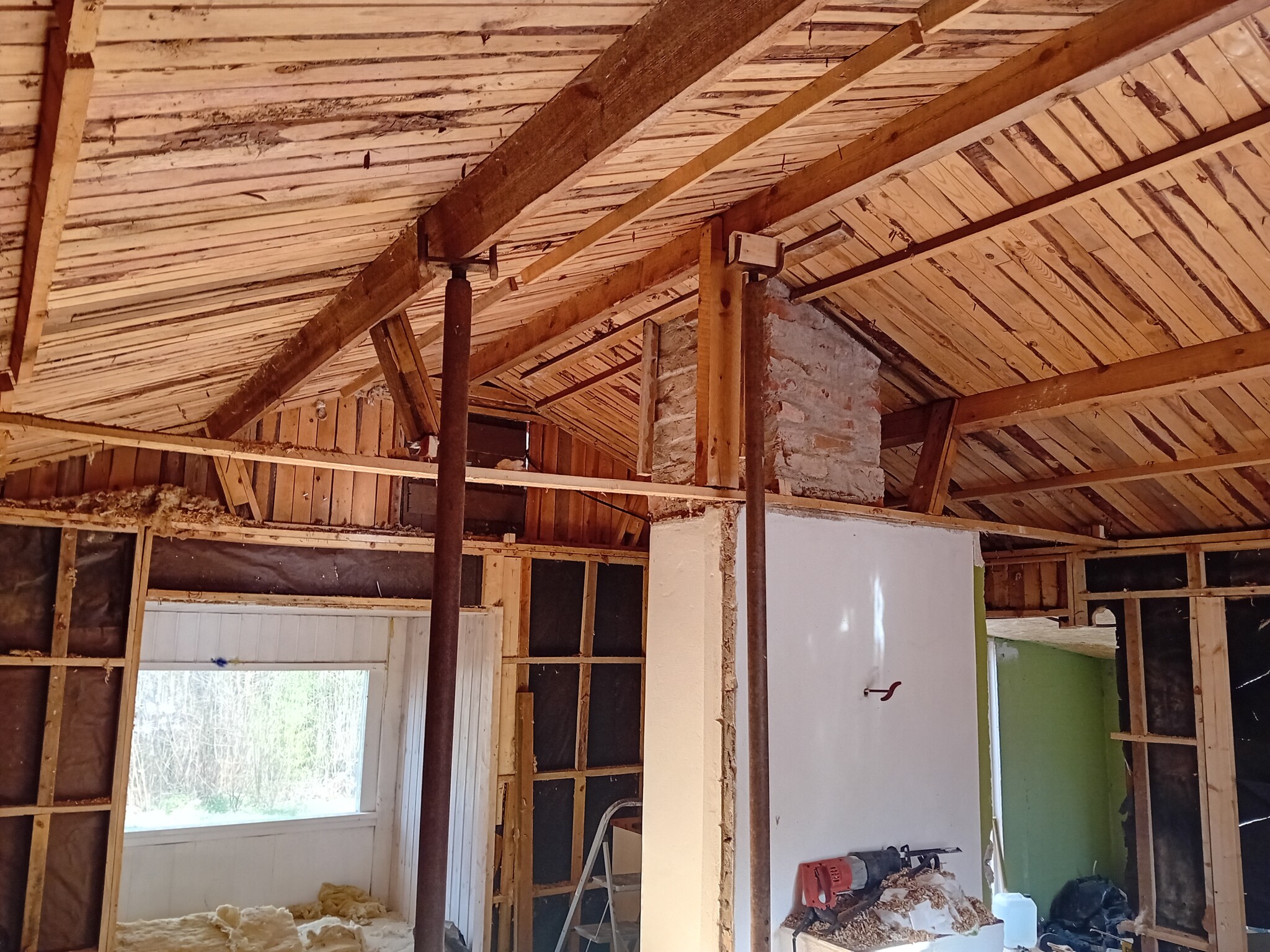
Holiday home built in '57, 5x4 meters. The roof is supported by 3 frame trusses; 2 on the gable walls and one in the middle. But they lack a collar beam. Upper arm dimension is 70x130mm. However, the lower arm is only 28x70mm. In the middle, the lower arm rests on the chimney, but a support leg stands in the middle of a 1.7 m span and there it has visibly sunk.
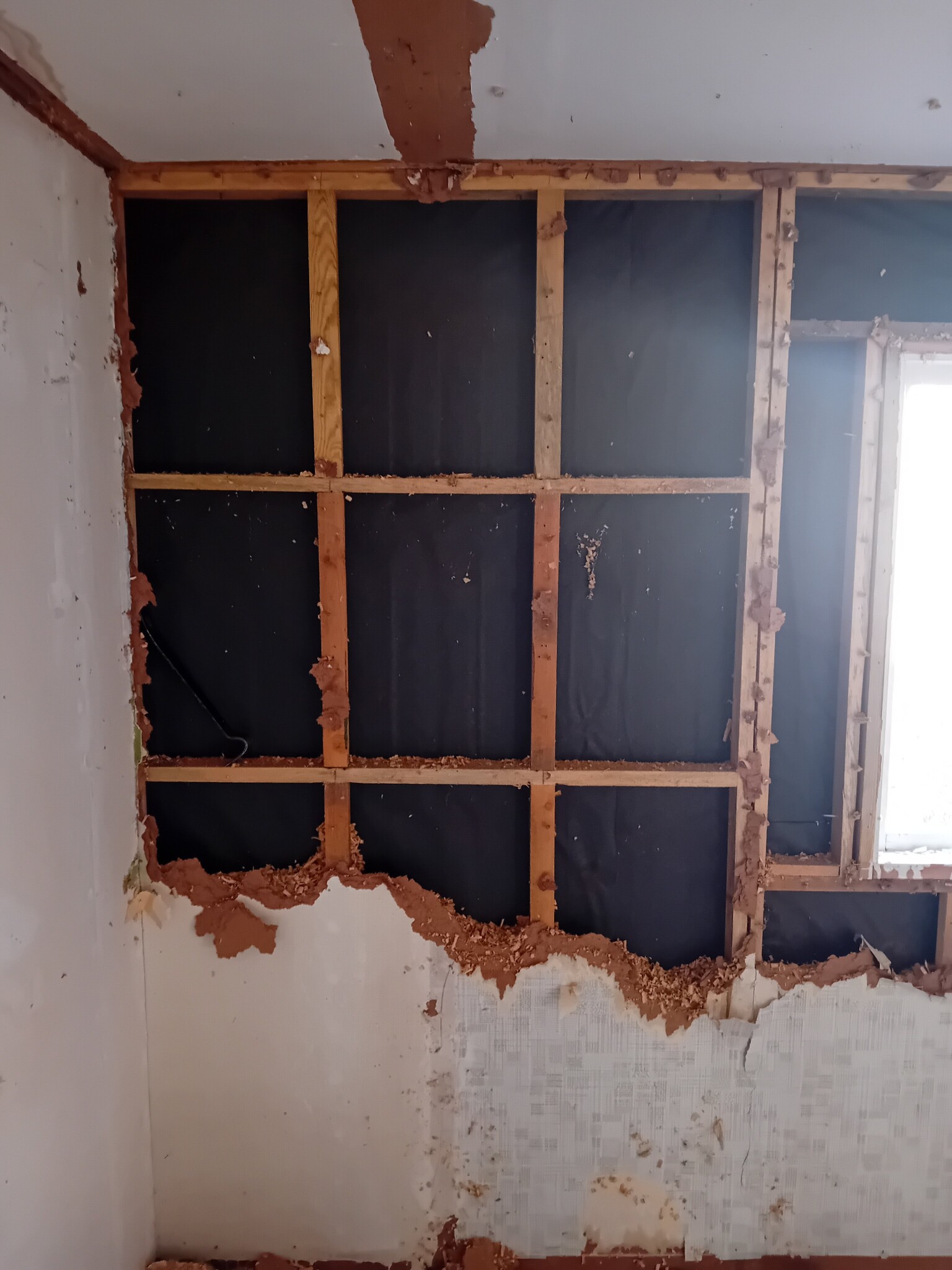
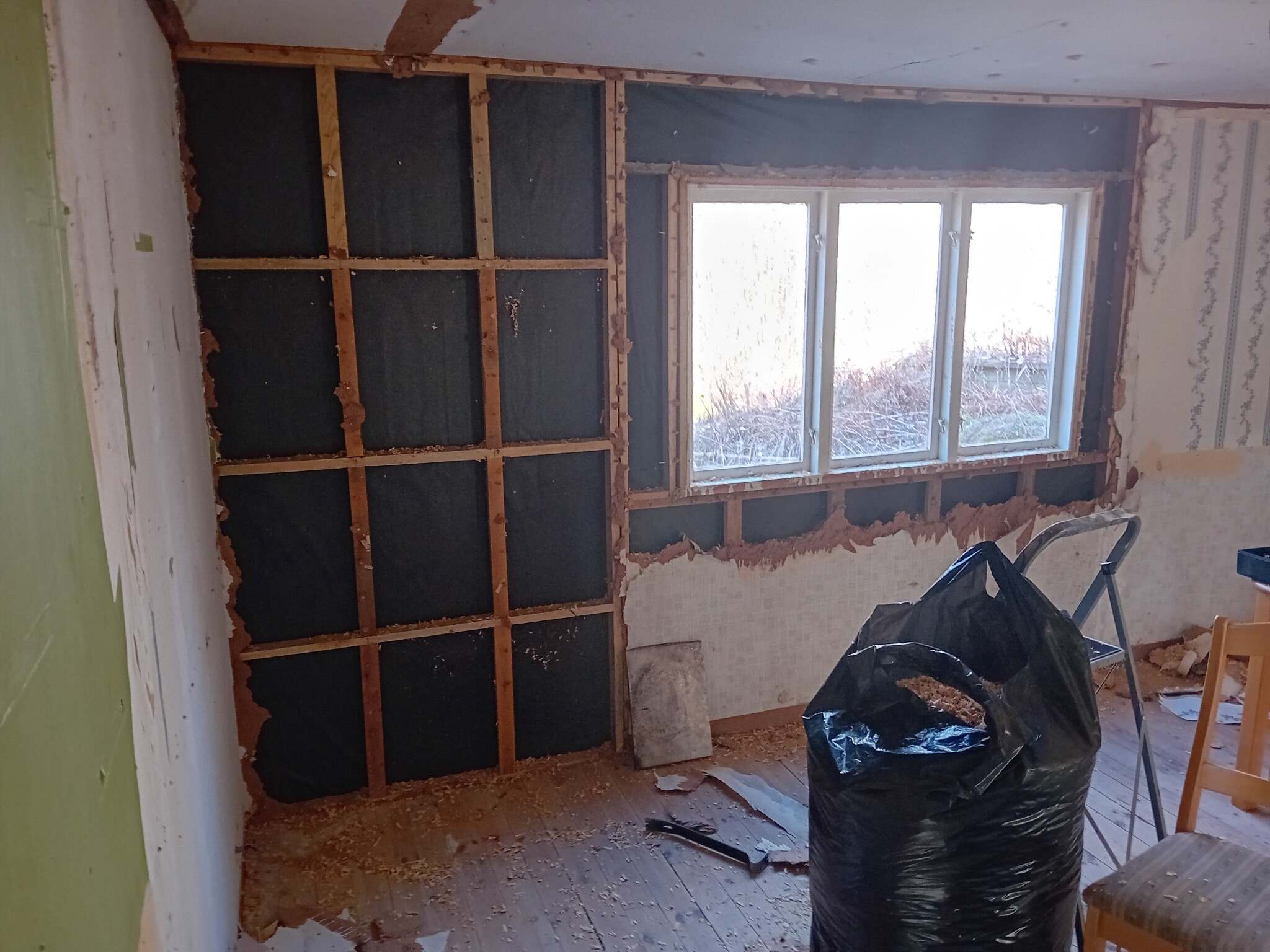
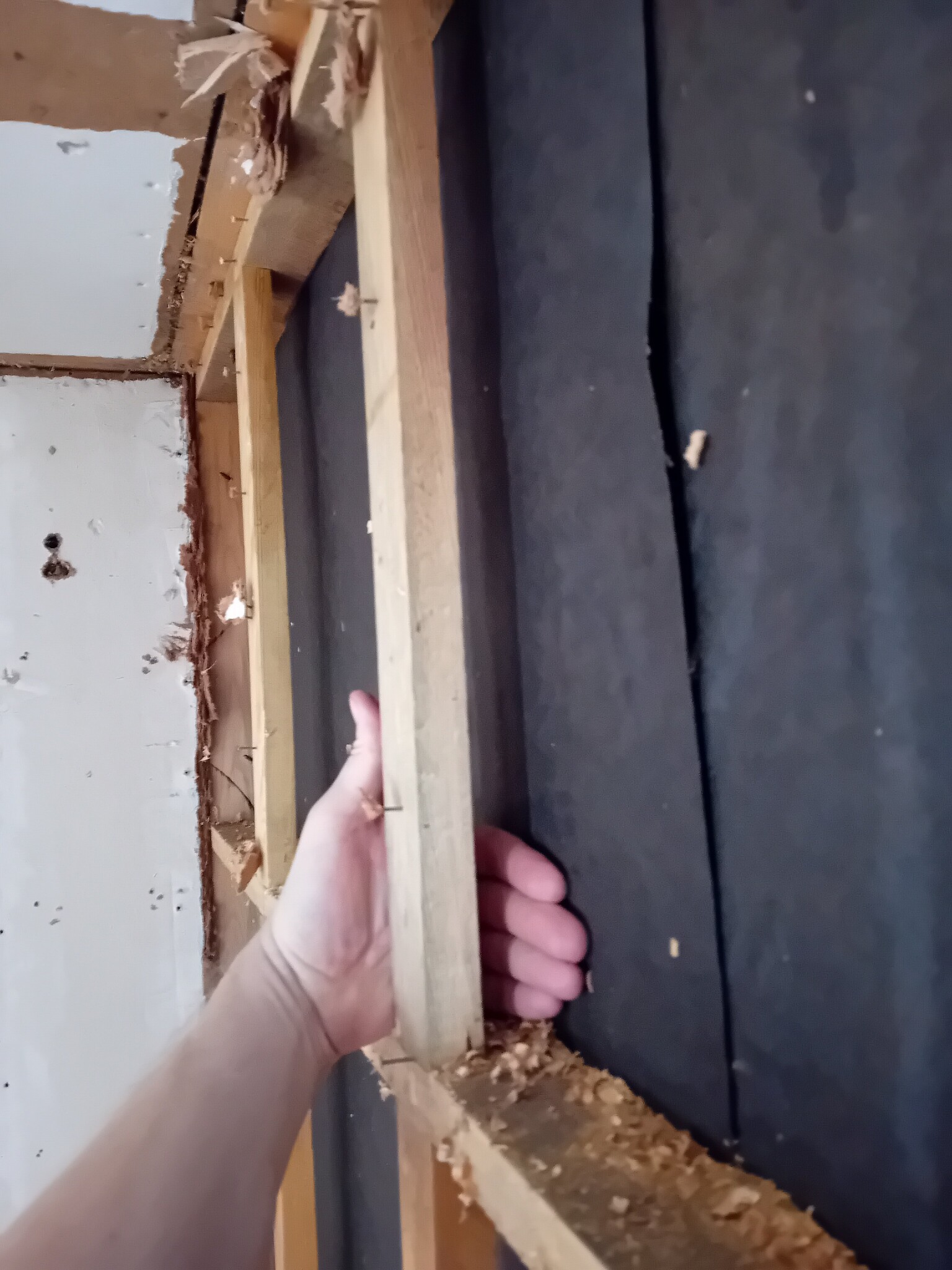
All walls are built of "modules" of timber approximately 28x58mm, with a span of about 1200mm between the "posts". See image.
I will add insulation and put on new paneling (leaving the old one in place) so I want to strengthen the walls, but I'm unsure how to go about it. A friend mentioned something about "notching in" a stud, but I never understood the principle.
All walls are built of "modules" of timber approximately 28x58mm, with a span of about 1200mm between the "posts". See image.
I will add insulation and put on new paneling (leaving the old one in place) so I want to strengthen the walls, but I'm unsure how to go about it. A friend mentioned something about "notching in" a stud, but I never understood the principle.
- Do I need to insert a beam/load-bearing line, and if so, how?
- Do I need to reinforce with new posts, and if so, how?
Last edited:
I assume you mean between existing studs?F fribygg said:
This is what I was leaning towards, but I had only thought about the posts, not the top plate. But now that you mention it, it makes sense if I'm going to add more weight to the facade. The downside is that there will be less insulation. My plan was to insulate the existing wall, of course, and then add another 45mm into the room. And then 45mm outside before the new facade.
But the small area a few studs take up might be negligible?
Ah ok. But how does that make the wall stronger?F fribygg said:
I'm thinking that I would at least need to reinforce where the roof trusses are. If the forearm had been thicker, I would understand that the newly erected wall would support it. But it is, as I said, flimsy (according to my layman's opinion), so I imagine I would want to reinforce around where the force from the roof truss comes down on the existing exterior wall.
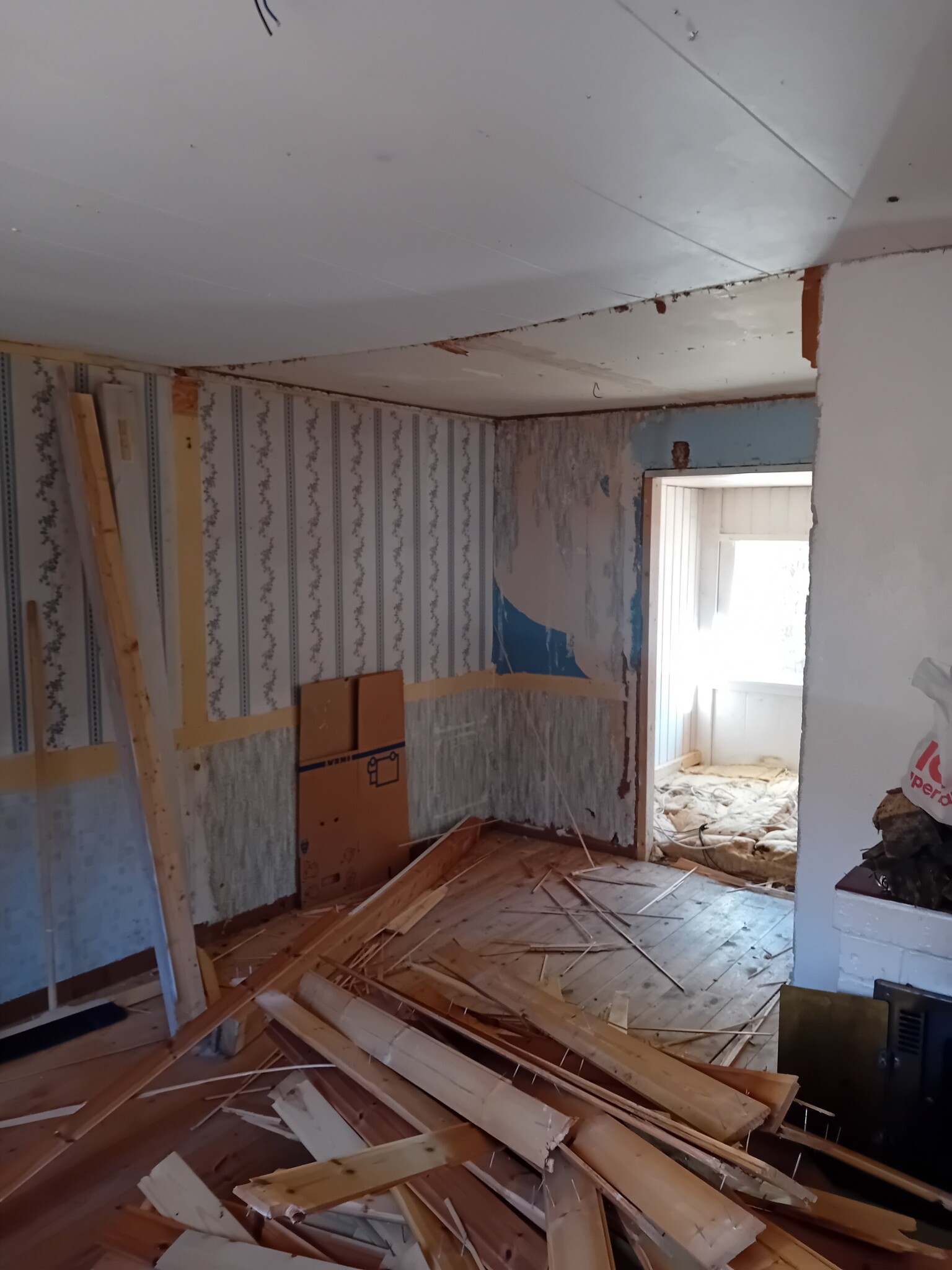
I have demolished more now and am starting to understand how the house is built. The load is distributed at three points on the gable walls and in the middle of the house. Partly on the chimney, so that’s good. But on the other side, there is no support. I guess there was a wall there once upon a time. It had noticeably sunk, but now I've lifted everything.
However, I still don’t quite understand what to do with the walls. I would gratefully welcome suggestions.
However, I still don’t quite understand what to do with the walls. I would gratefully welcome suggestions.
Click here to reply