What I have written is that I recommend you follow the advice that the underfloor heating manufacturer gives, but ultimately you decide that yourself.
Why are you starting another thread if you are completely clear on how you want to construct the floor?
Yes, if you construct according to that premise, most things work.
I rest my case..
I believe underfloor heating suppliers give advice based on selling a lot, such as slotted chipboard and cassettes, etc.
I also called Uponor and asked if my solution would work, they didn't know but were eager to sell their products instead...
I started this thread to know how I should set up the floor joists. We got onto floor coverings because you asked what kind of floor I would have
gluing and screwing a 45x45 at the bottom of the "frame" sounds like the best solution so far I think, by the stones you'll probably have to make a habrovinkel of some sort, too bad I'm not a carpenter
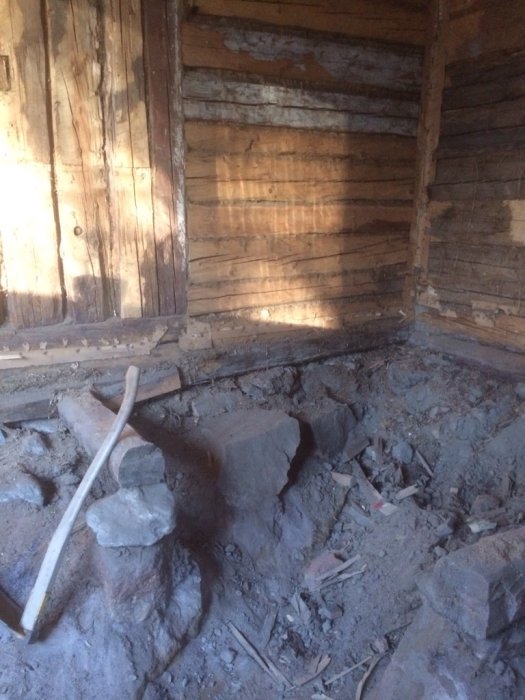
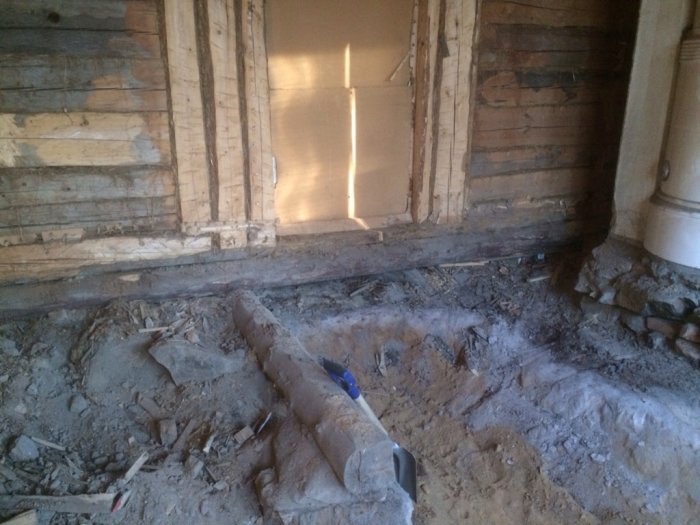
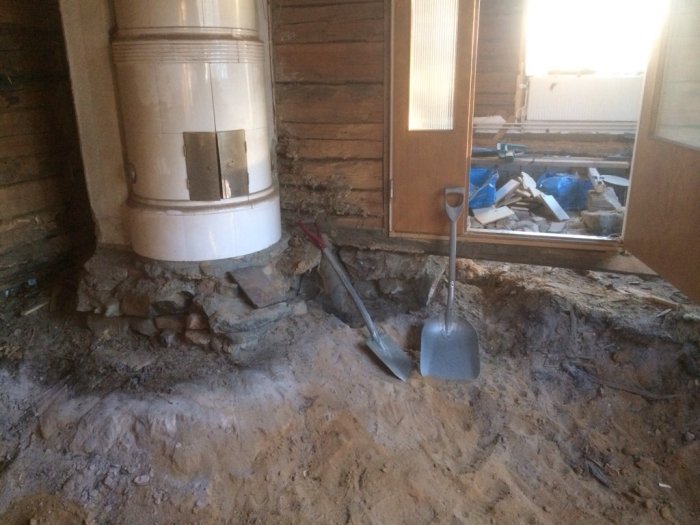
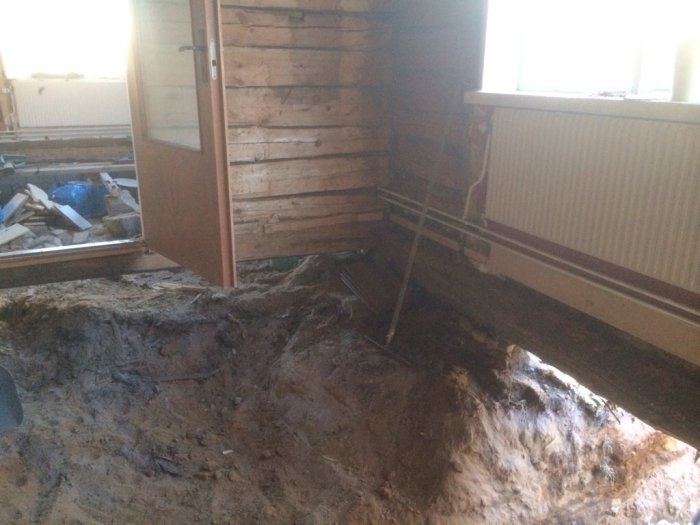
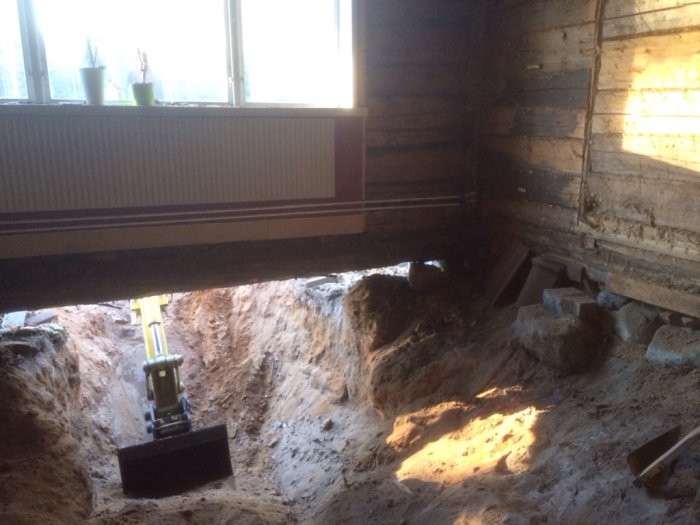
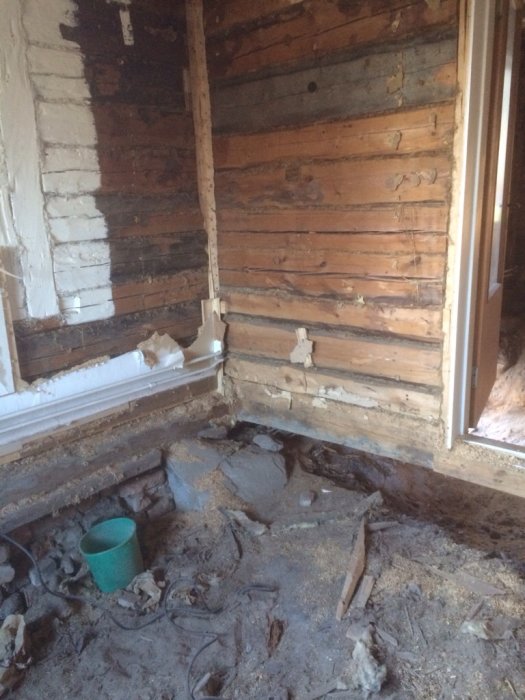
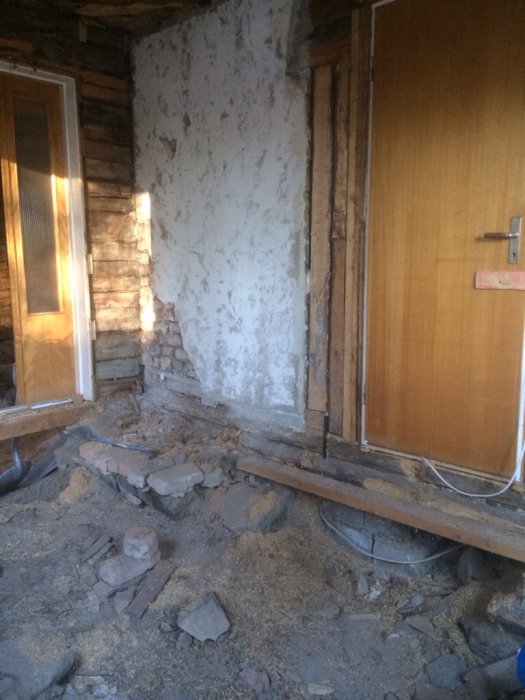
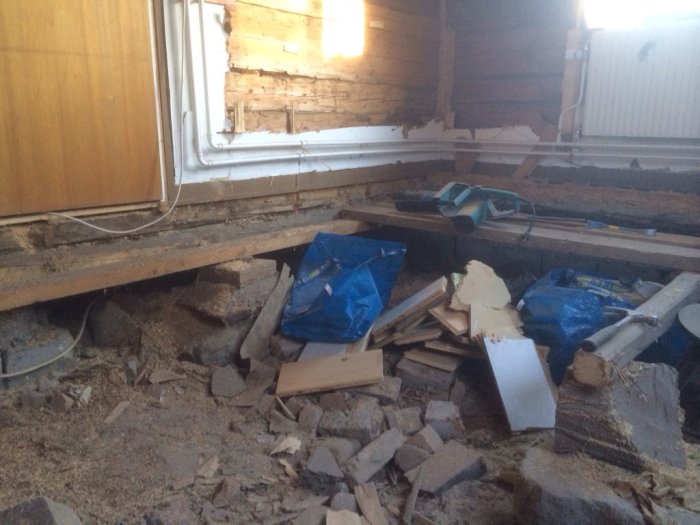
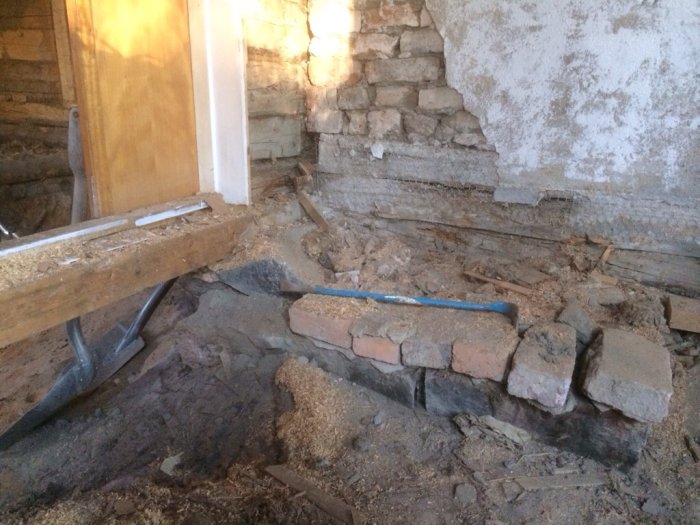
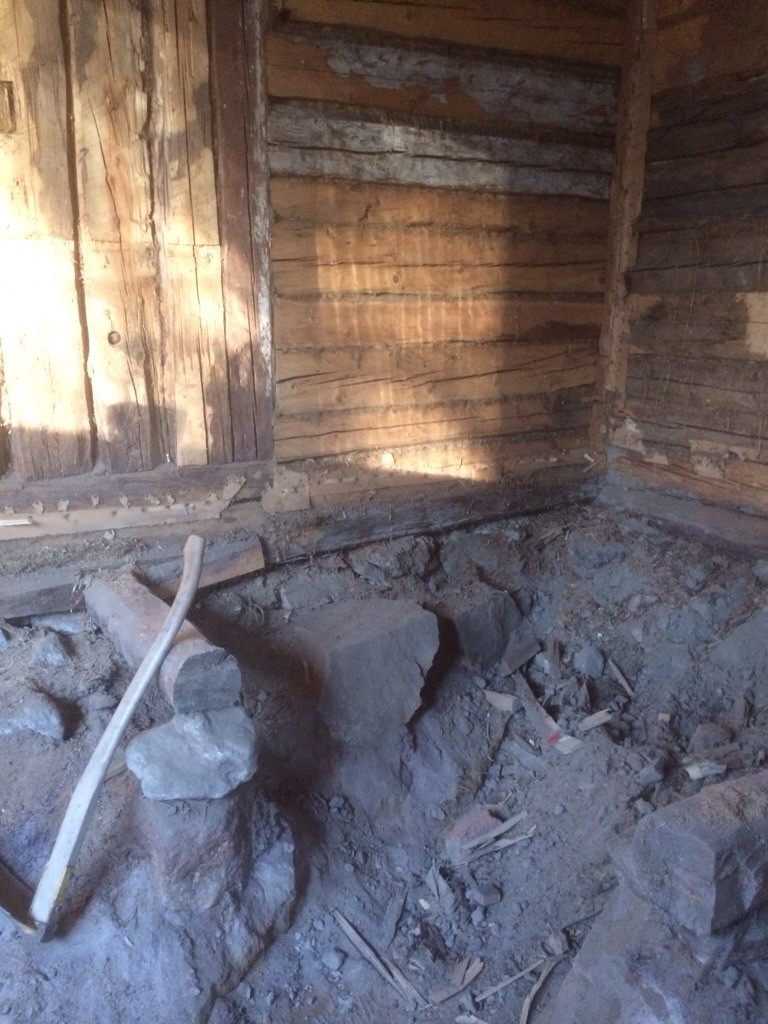
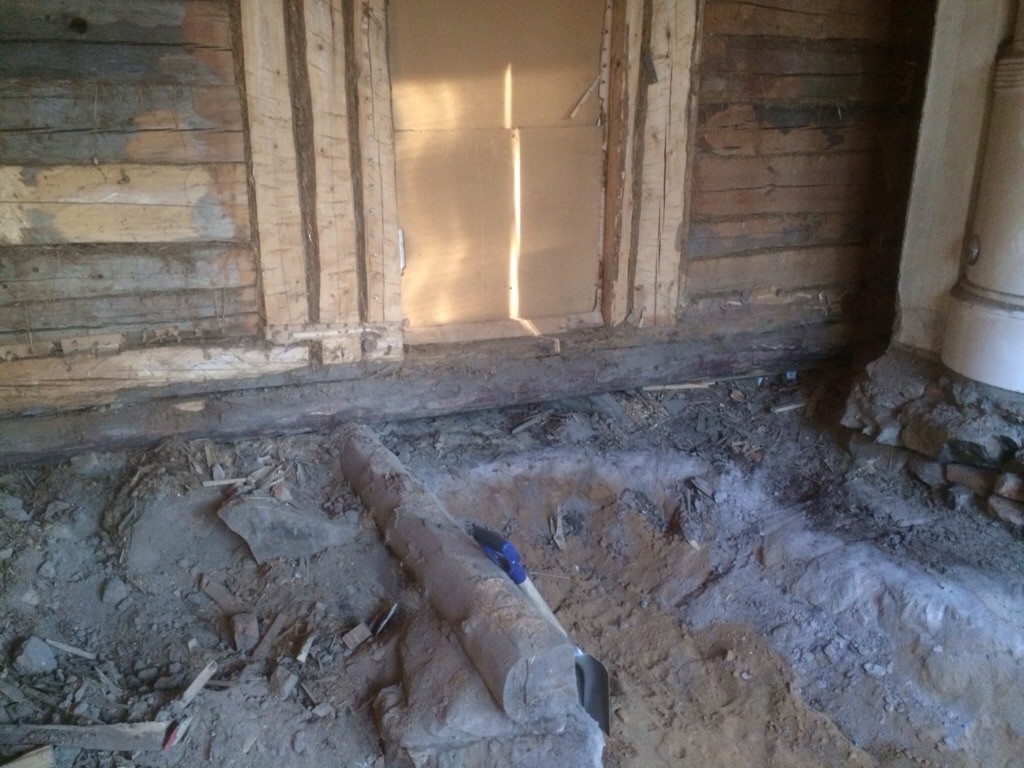
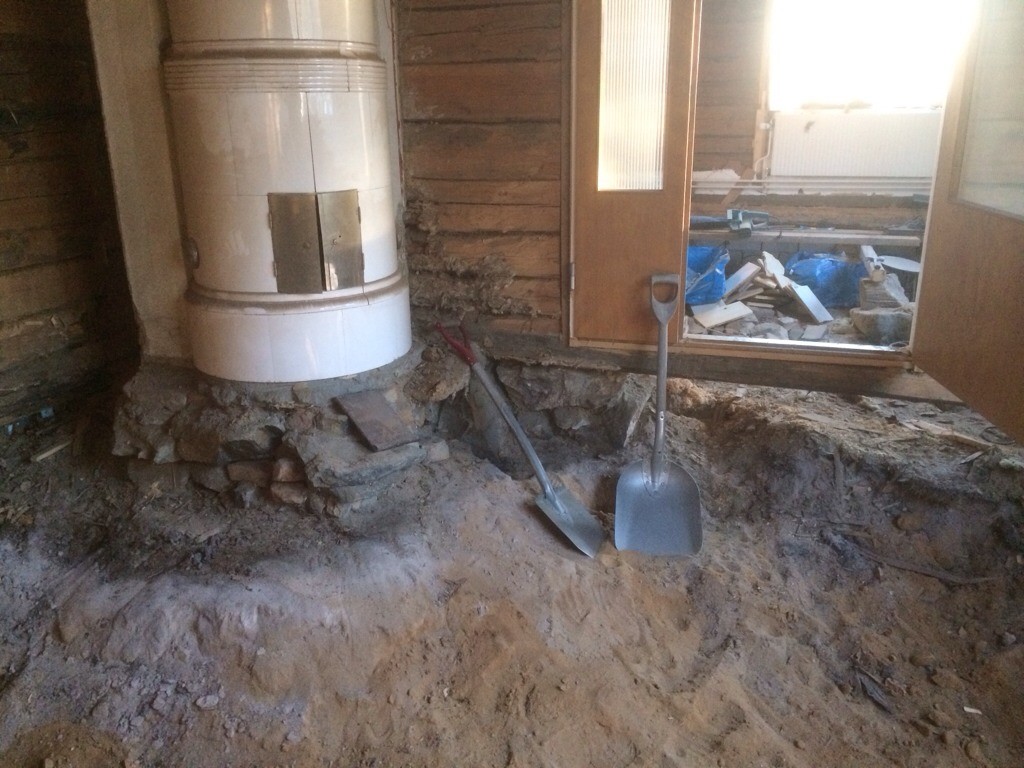
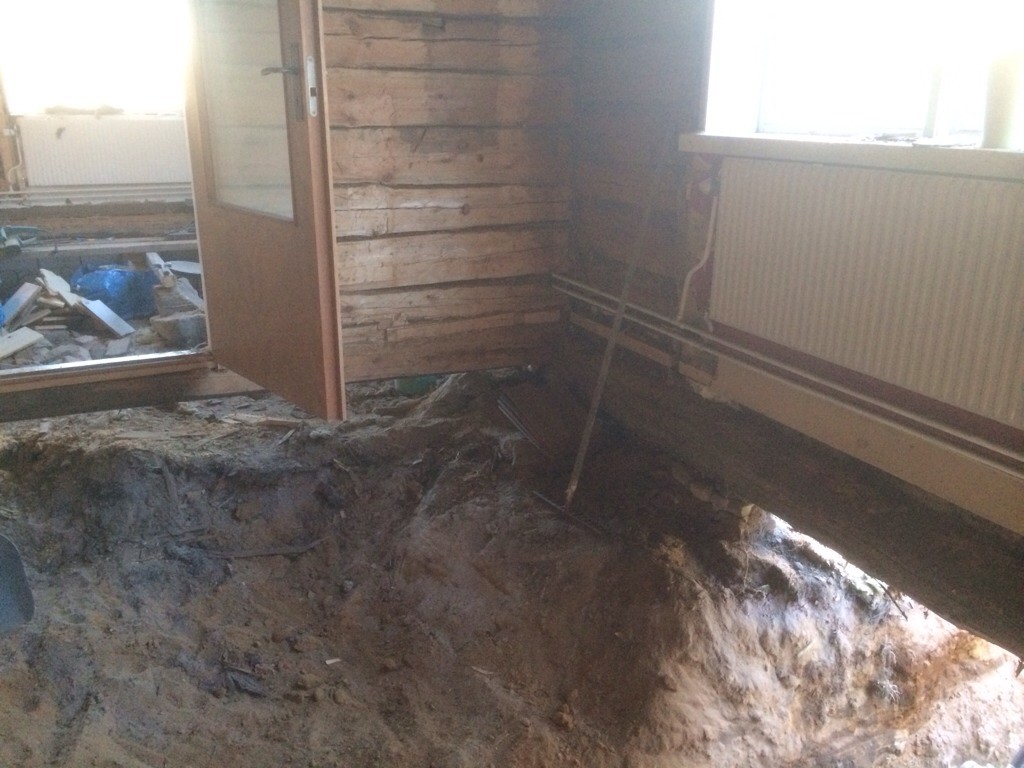
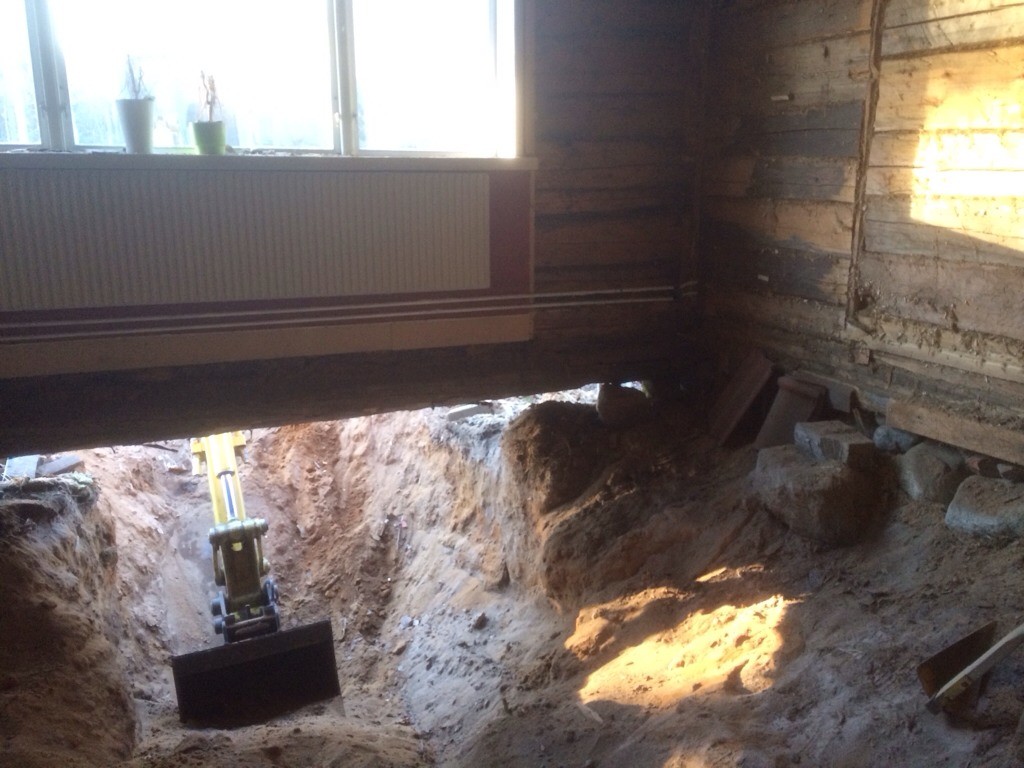
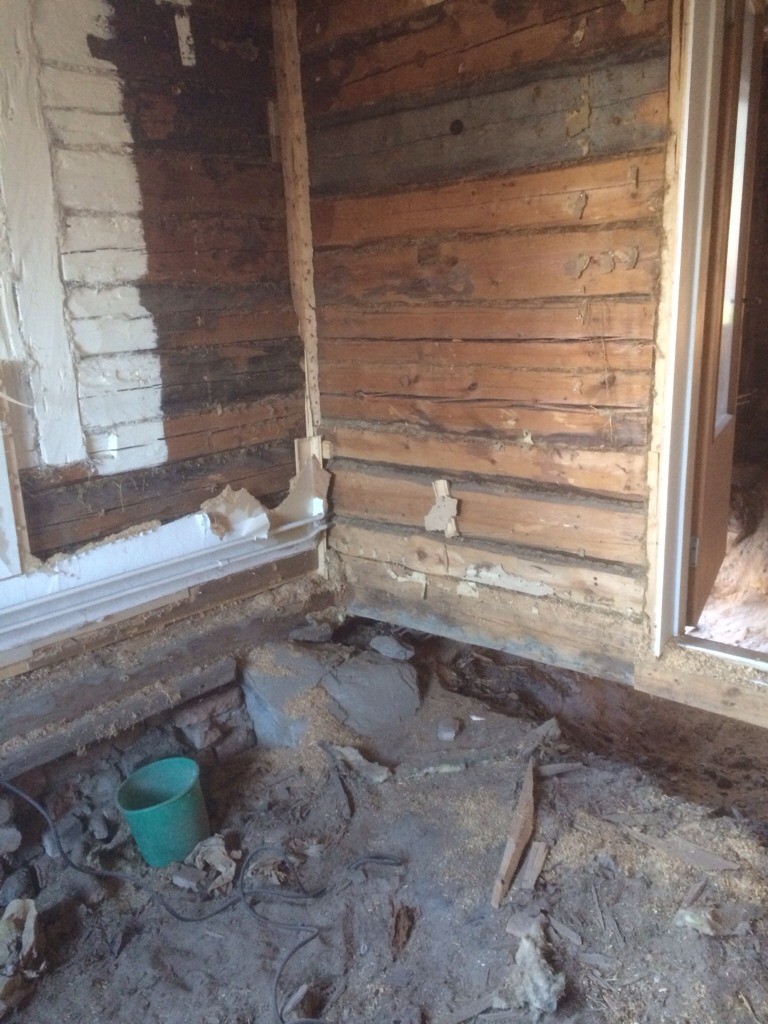
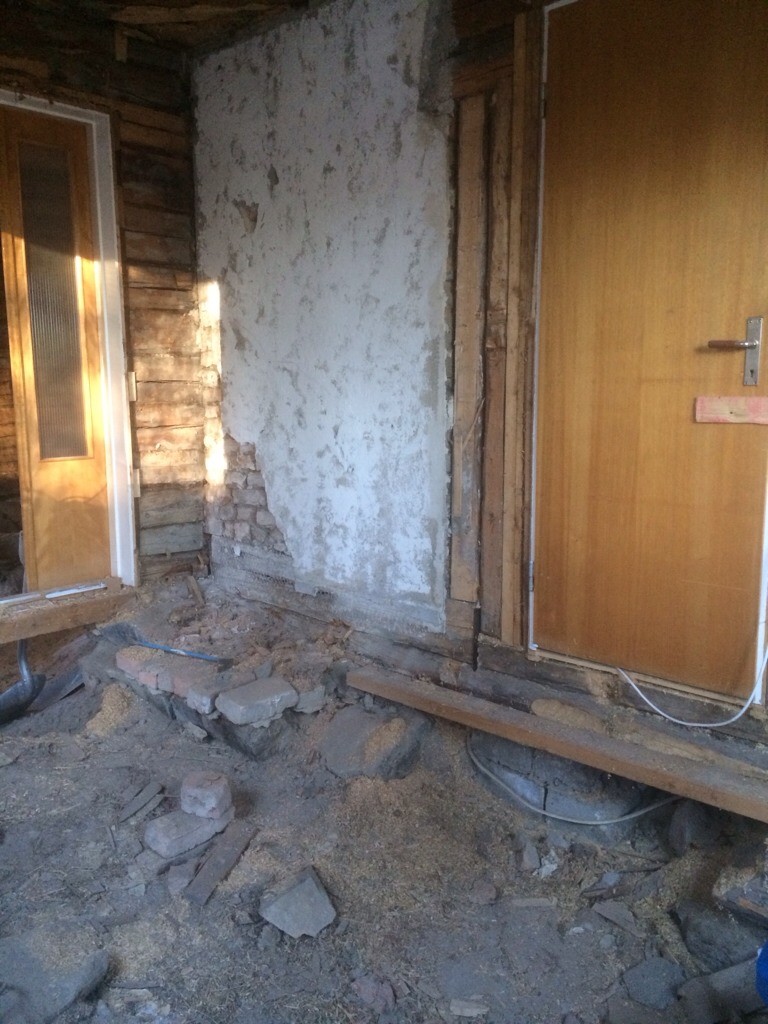
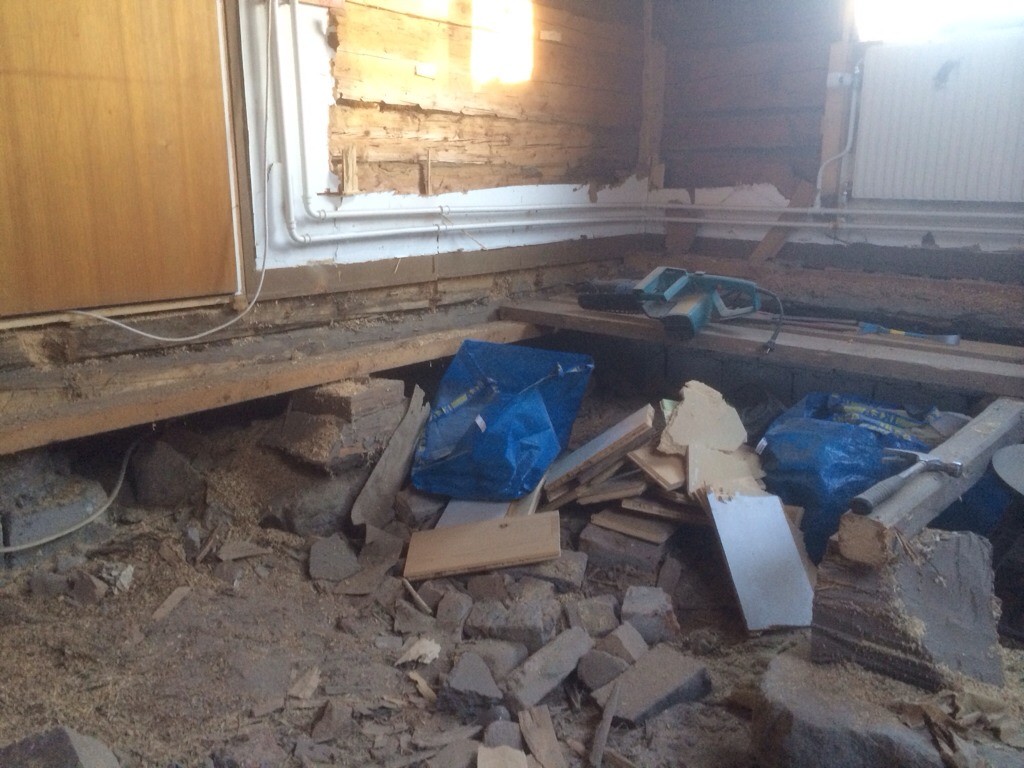
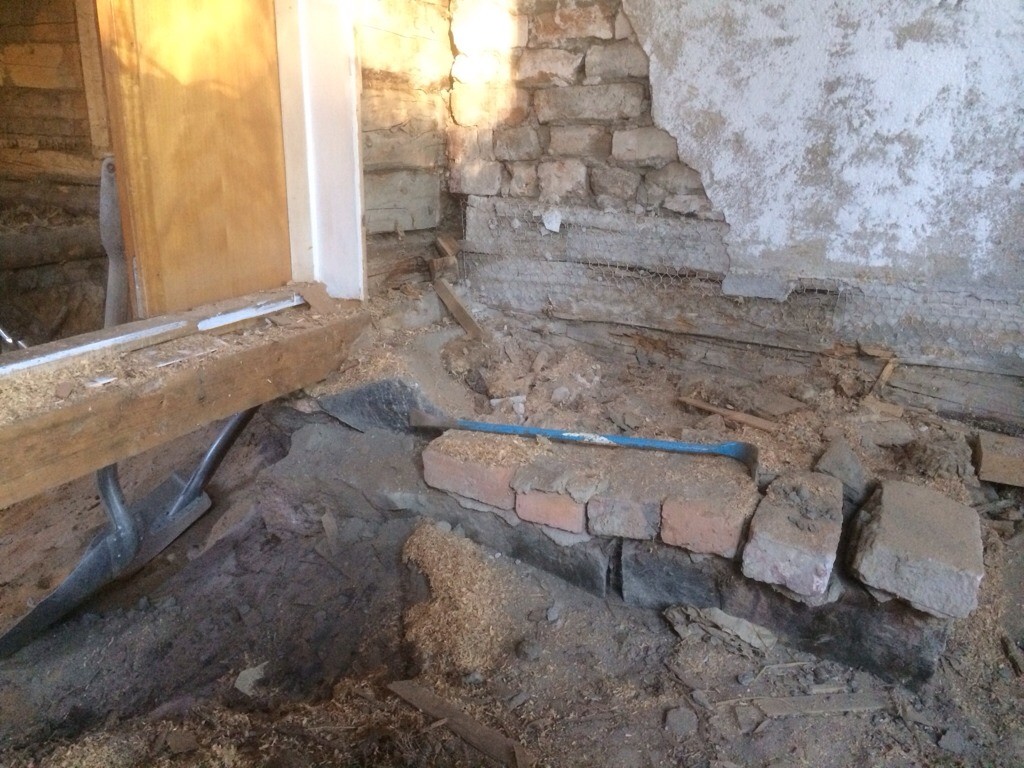
It's crazy to look at your pictures. I'm working on the exact same project right now. I've just ordered my materials so I can briefly explain how I plan to do it. The room is 8x7 meters, so it's quite a large span.
Inside the sill, I screw on 45x145 to get a smooth, stable, nice inside to attach everything to. From there I set 45x220 in joist hangers. Under these, I nail 28x120 pressure-treated so it looks like an upside-down "T". On top of this, I then lay asfaboard as a seal bottom.
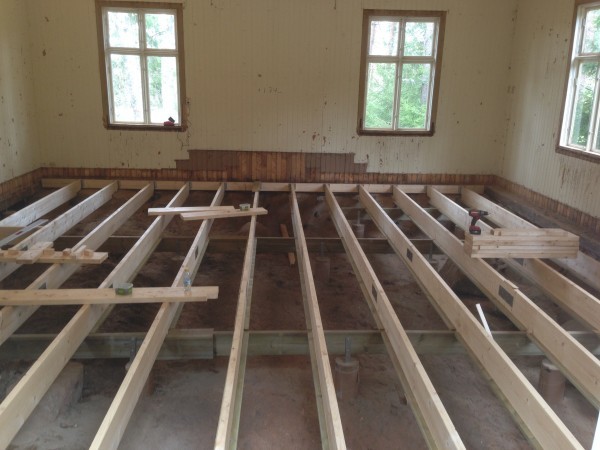
To avoid such a long span, I set some support beams 45x170 in the opposite direction from the floor joists. If I need to splice the floor joists, I do it with nail plates right above the support beams. Under the support beams, I cast pillars for them to rest on. About one every other meter, perhaps.
It should be added that in what is to become a bathroom, after many turns, I decided to cast the room shut to get a solid and good base. However, this might feel a bit like overkill in your case, especially since you seem to want to do it as cheaply as possible. I believe the wooden beams will be cheaper then.
however, I've read that one should avoid pressure-treated wood, what's your take on that? if it gets damp, there's a risk of odor.
how many support beams will you have in your case, in other words, what span length will you get on 45x220 between these support beams?
what cc measurement will you use?
i'm considering a couple of cast pillars directly against my floor beams and from them, extending out to connect other floor beams and achieve stability that way, but a support beam might be a better idea, after all, with just sandy soil it should be easy to dig a bit more
feel free to post pictures during your progress, in this thread or link to your own thread
The same "frame" that you would attach the joist hangers to, you instead screw-glue a 45x45 board to at the bottom edge. On this board, you then place your floor joists. Screw them diagonally into the frame. To compensate for the floor joists being 45mm too high compared to the frame, you can add another 45x45 on top of your "frame". This only works if there is space for a 265mm high floor structure. An advantage of this is that you (to further reinforce the floor) can screw-glue a 45x95 board onto the underside of your floor joists. This will then act as a tension flange, resulting in a significantly stronger floor structure. Just be careful with the glue and screw relatively close together. Another advantage is that you can place underfloor panels directly on this "tension flange."
If there isn't space, you can instead notch each floor joist 45x45 at the bottom edge, allowing you to still use the 45x45 board as support instead of joist hangers. However, this alternative might take longer than using joist hangers.
I've calculated a bit on what joist hangers cost, it will be about 1800:- plus nails for these. It will probably be a screw-glued 45x45 at the bottom of the frame and notching each board, which should go pretty quickly if you set the circular saw to 45mm depth.
I use pressure-treated wood for anything that isn't "built in," meaning the main beams. They will be situated in the ventilated foundation. All other lumber will be untreated.
I'll probably use two main beams in the large room where the span is about 8 meters. So, a 2.6-meter span on the floor joists.
These will be on CC60 to fit the floorboard that will be placed on top.
We also have just sand under the house. I plan to rent an earth auger and burn out the pillar holes to avoid digging, but digging is free... In the holes, I will then cast a bottom, then add paper tubes which I will fill with coarse concrete and fasten the iron in, which will then hold the main beam.
I have a few questions;
What did you use to attach the 145x45 to the old wall? French screws maybe? If so, how thick and how close?
Is one plinth iron enough for each plinth? I've seen recommendations for two and bolting right through.
Did you measure and cast the plinths first or did you set the support beams with plinth iron in and then cast? I'm wondering which is best/easiest.
CC600 looks good... and I'm going to set CC 330 or so... it's going to be tight between the studs....
Regards/T
Thanks, here are the answers:
1. I attached it with corrseal screws from Essve. Length about 120, I recall. In a zig-zag with maybe 200 mm between.
2. Using two plinth irons is probably better, but it’s holding so firmly... and that’s enough to convince me. It's only 45mm in width that needs to be supported, but go with two if you're unsure.
3. First, I measured where to make the holes for the plinths using a long measuring tape from one wall so they align straight against it. Then, when it was time to cast, I set up the first and last floor joist and temporarily hung the support beam on this. Then I also temporarily hung the plinth irons down from the floor joist. This way I got the irons at an approximate height and in a straight line.
Then I leveled it with a laser, pumped it up with jacks underneath to get it perfectly leveled under the floor joists, and then drilled and bolted it to the irons and let everything down to finally fill in with floor joists at cc 60.
Click here to reply
Vi vill skicka notiser för ämnen du bevakar och händelser som berör dig.