
4,588 views ·
7 replies
5k views
7 replies
How can I tell what is a load-bearing wall?
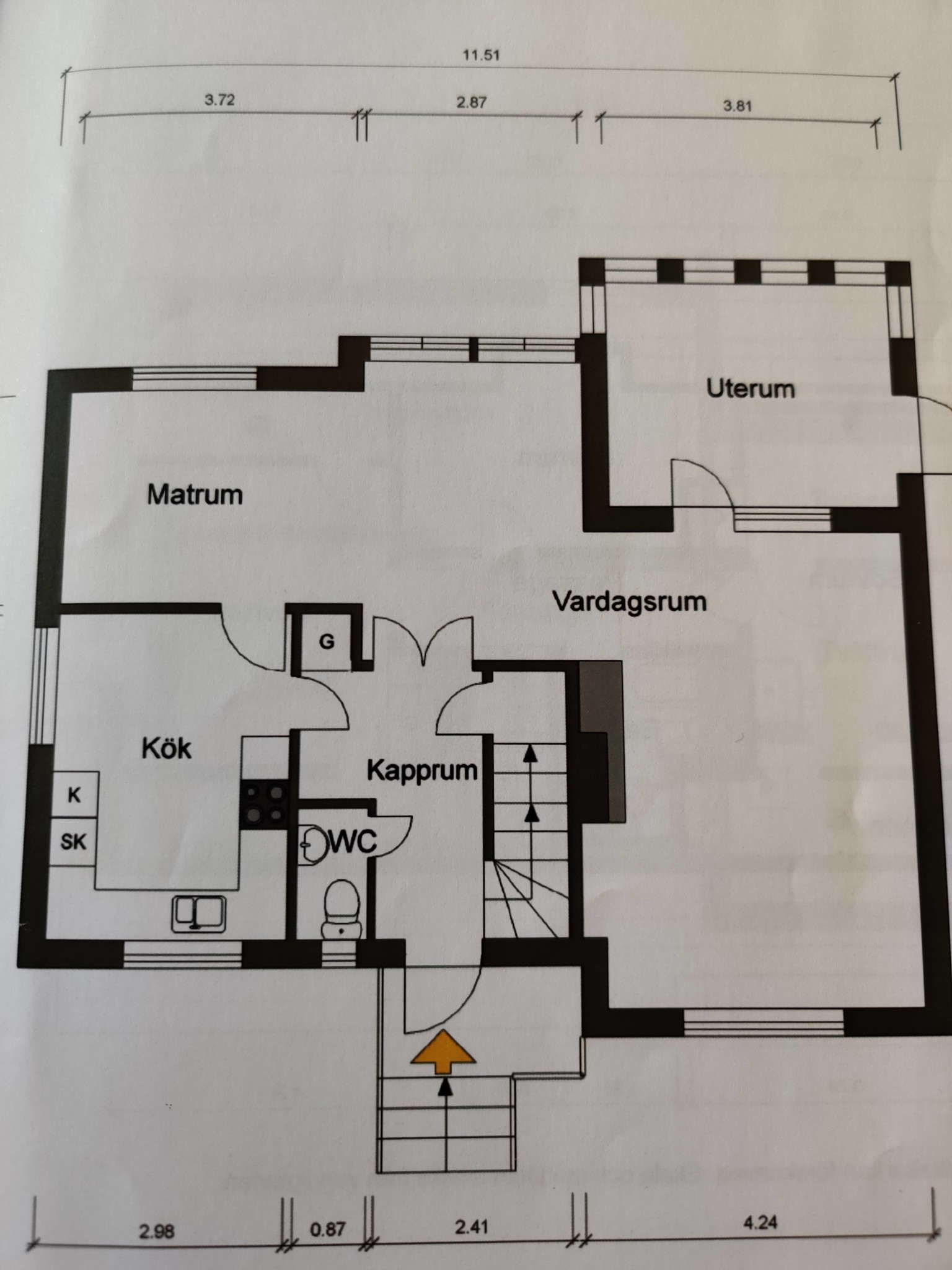
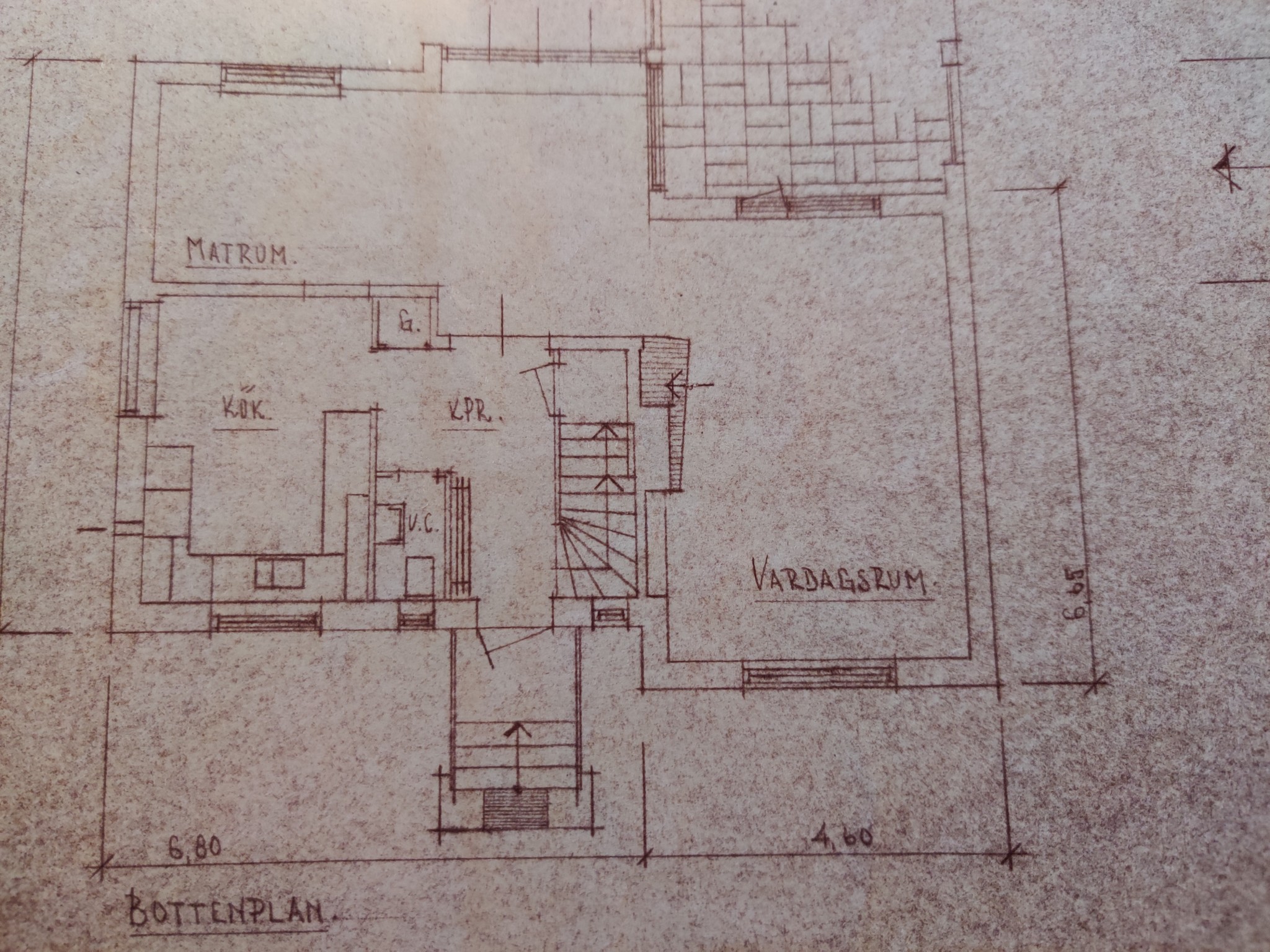
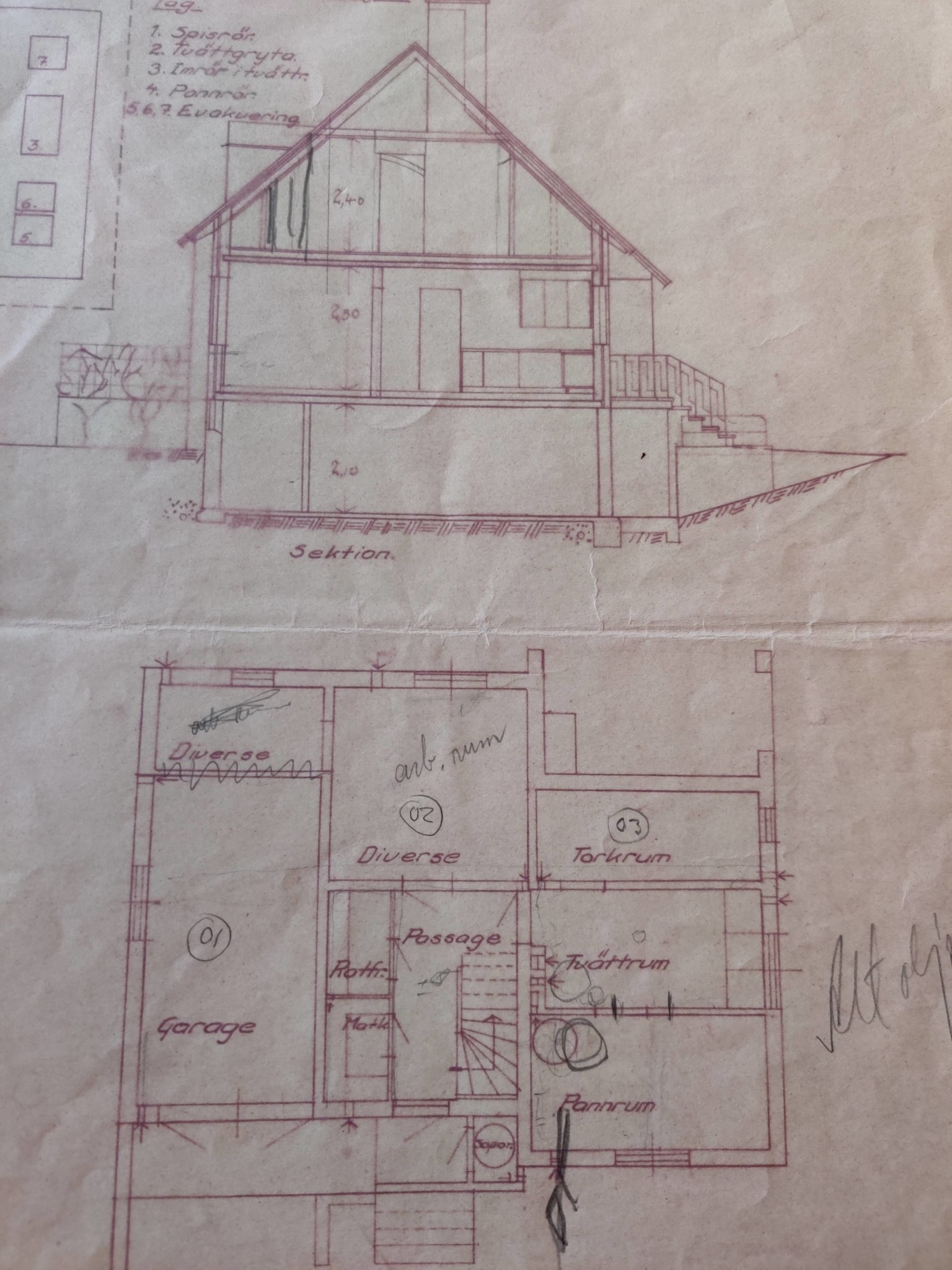
I live in a newly purchased concrete house from 1954 and am considering taking down 1.5-2 meters of the wall that runs between the kitchen and dining room. (about 80 cm of the wall will remain) The walls in the house are made of thicker concrete/blocks (siporex). Can anyone tell from the following drawings if this wall is load-bearing or not? A more thorough investigation will of course be conducted, but I would appreciate your input!

Tomture61
Self-builder
· Född i Luleå
· 6 578 posts
Tomture61
Self-builder
- Född i Luleå
- 6,578 posts
Load-bearing walls are usually located across the rafters. Intermediate floors can only support a certain distance, typically 4-4.5 m, after which they need to be supported by load-bearing walls, for example. Glulam can be used to replace load-bearing walls, requiring an engineer to calculate the correct dimensions/execution + building permit.
Last edited:

The wall is load-bearing. This can be determined from the section drawing. It needs to be replaced by a glulam beam (preferably). You have a lightweight concrete house, not a concrete house. There is a big difference.


What about that wall in the garage that seems to have been removed?J justusandersson said:
It is also drawn on the sectional drawing.
I am quite sure that it is a concrete slab over the basement where the reinforcement over the garage runs across the length direction. The removed basement wall was therefore certainly not load-bearing. I never fully trust that sections are consistently drawn.
The plan is to install an I-beam since we have one available. Could you enlighten me, how do I deduce that from the sectional drawing?J justusandersson said:
Or is it simply because it's included in the sectional drawing?
One must start with the type of house, in this case, a 1½-story frame house. Then one knows that the intermediate floor requires support at about halfway. In a frame house, the floor beams run parallel to the roof trusses. The year of construction often says a lot about the type of house.
J justusandersson said:Man måste utgå från hustypen, i det här fallet ett regelhus i 11/2 plan. Då vet man att mellanbjälklaget behöver ett upplag på ca halva sträckan. I ett regelhus ligger bjälklagets bjälkar parallellt med takstolarna. Byggåret säger oftast mycket om hustypen.[/QUOvvvvvvTE]
Okej . Förstår jag dig rätt om vi då säger att husets längd är säg 12 meter att mellanbjälklaget behöver minst 6 meter bärande vägg?
Click here to reply