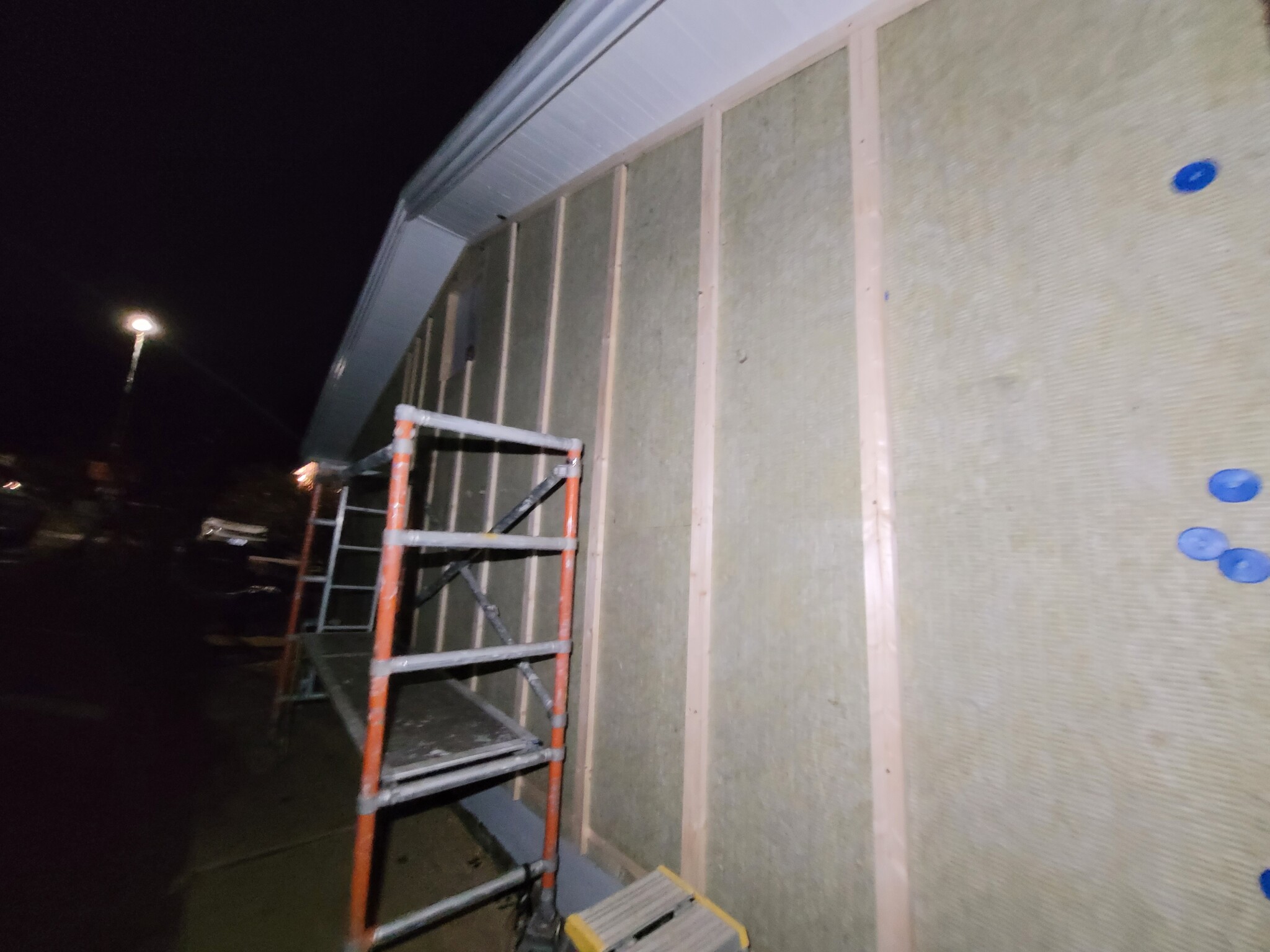
During the ongoing extension, the carpenters were surprised that I wanted ventilation in the air gap behind the facade, it was not necessary in their opinion. Now I've put in mouse strips at the bottom and am about to start installing the panel. (Horizontal panel tongue and groove/half-tongue 145mm). There were some old threads on the subject, but I couldn't find a good example.
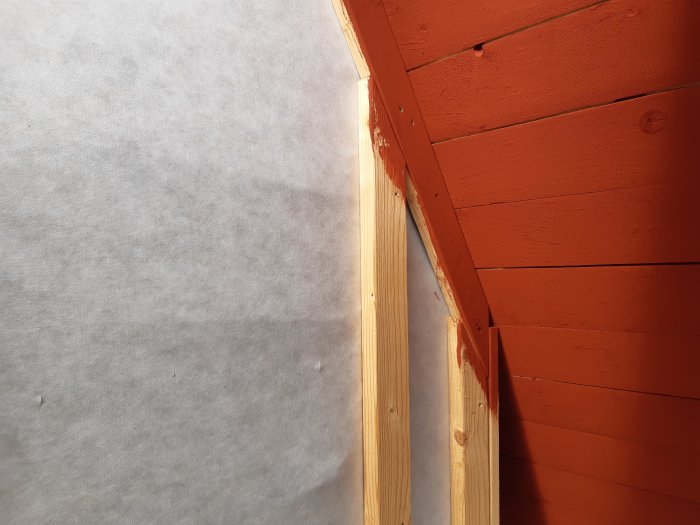
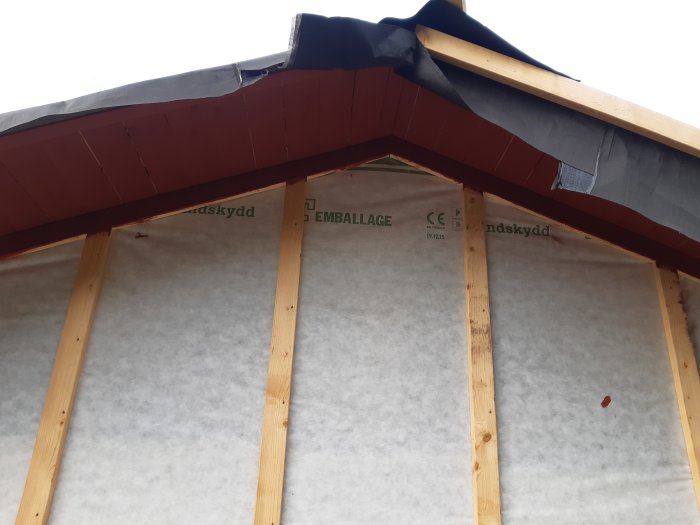
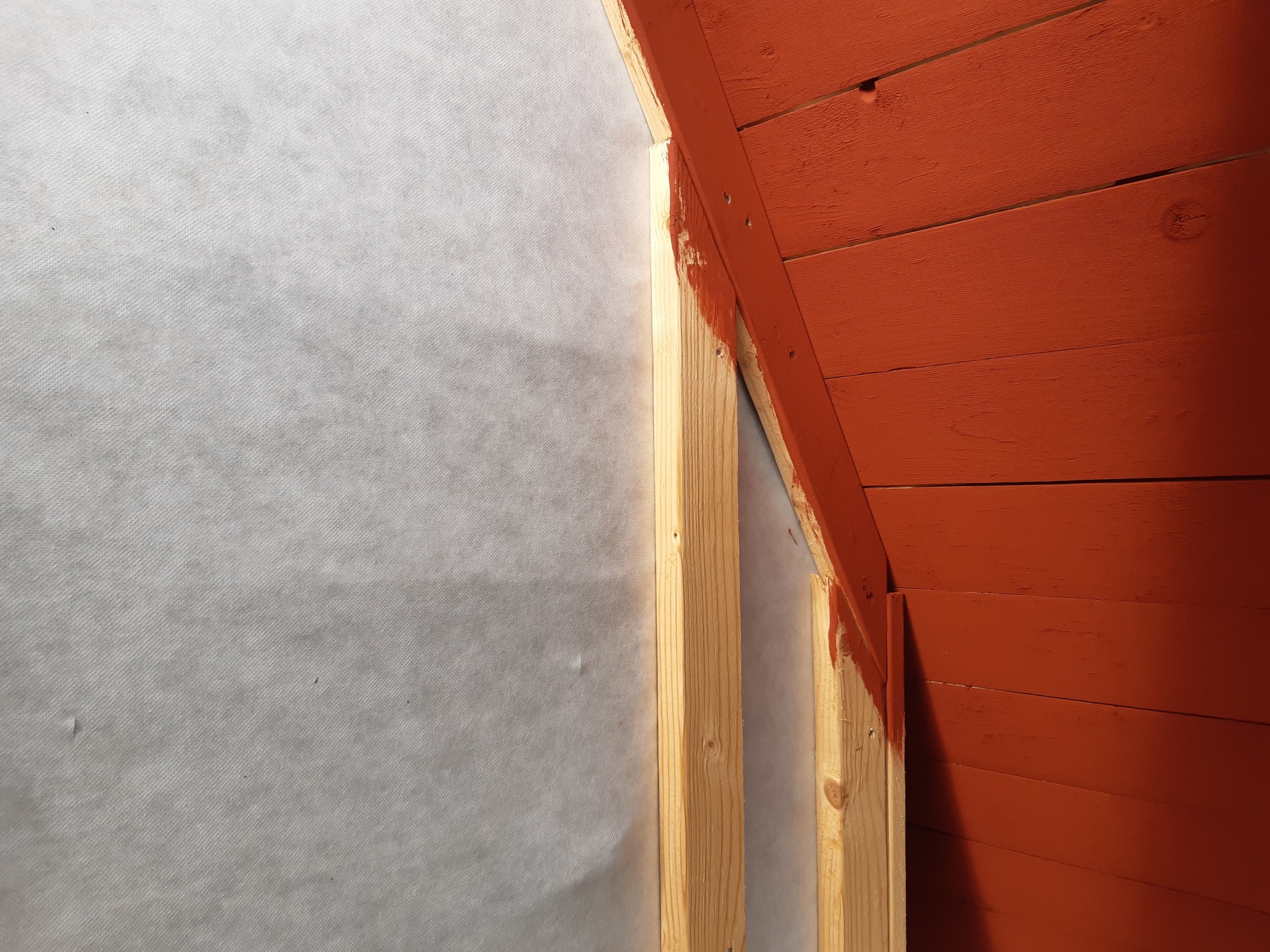
-How do you solve the venting nicely at the top of the gable in the simplest way?
I hadn't thought about enclosing the tongue and groove boards, just painted them as you can see
the carpenters were surprised that I wanted ventilation in the air gap behind the facade, it wasn't needed in their opinion.
I understand the carpenters!
But I am as questioning as you.
I think I have never seen such ventilation arranged for the air gap at the top.
And it has never been done on my houses, neither the ones I have been involved in building nor those built by professionals.
It may be that it's unnecessary, and that the primary purpose of the air gap is to prevent water from accumulating capillarily between the outer panel and the windproof paper or outer gypsum, to allow it to run down, and that an "air draft" behind the panel is unnecessary.
But I have never seen this investigated "scientifically" in an orderly manner with control of the moisture in the air gap and on the inside of the outer panel.
With a comparison between constructions with an opening in the air gap at the top or not.
Maybe something for Christer Harrysson, our eminent professor emeritus in building technology to investigate.
Anyway, if you make a gap into the air space at the top, you should probably put an insect net there, so it doesn't become a winter home for flies, wasps, and other small critters.
No support behind the panel is needed. I have never seen such a solution. But if you want to make it work, you probably need to add another batten so the panel comes further out, and when you make the cover boards for the eaves, you need to leave a gap against the tongue and groove sheathing so that air can circulate between. Alternatively, you could break off the battens around the eaves and plane them down a few cm. I would guess that it's completely unnecessary extra work.
Thank you, that sounds good. I will continue with the current construction.
The current facade was nailed directly to the standing timber with a clamped paper in between. However, that construction leaked a lot of heat, which should have facilitated drying after rain. Now it will be a considerably colder construction. There should be ventilation to aid in drying after heavy rain.
Awakening the thread.
We are also changing the panel and I reacted to exactly the same thing.
In my world, I want an air gap on the top side as well, but here the builders are doing the same as in your case.
Perhaps it's not a well-articulated solution to have it open on top as well...
Simply cut away a piece of the horizontal batten in each section. Finish the panel 10-20mm from the underlayment and cover the gap with a batten spaced from the panel.
Reviving the thread.
We are also changing the panel, and I reacted to exactly the same thing.
In my world, I want an air gap even on the top side, but here the builders do the same as in your case.
Maybe it's not a well articulated solution to have it open up as well..
I would say it's unnecessary as long as there is an air gap..
Click here to reply
Vi vill skicka notiser för ämnen du bevakar och händelser som berör dig.




Sne4 said: