
18,863 views ·
3 replies
19k views
3 replies
Horizontal paneling - moisture issues!
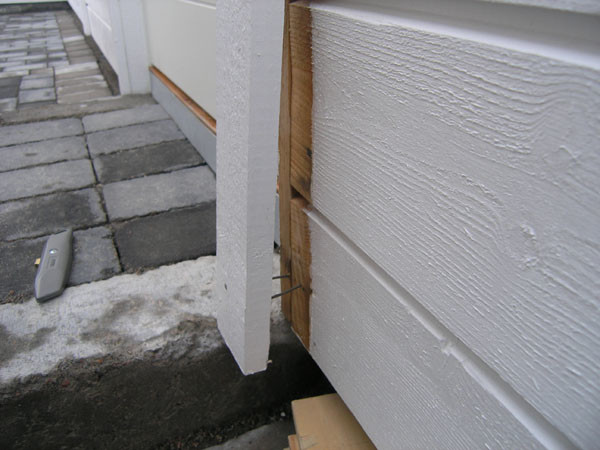
Does anyone know how a horizontal cladding (like the one Trivselhus uses) should meet jamb boards, etc. (at doors, windows, and joined wall sections)? Isn't it true that the horizontal cladding should end with about 10 mm distance to the jamb board, so that the end grain of the wall panel doesn't sit flush against the jamb board (this junction is covered by a "joint board")? This is to create a "ventilation channel" between the end grain of the panel and the jamb board. I've had problems at the storage door on the garage (different supplier, but exactly the same type of horizontal cladding as on the house which is TH). Here, the end grain of the panel rests flush against the jamb board, which has resulted in the panel being completely wet under the "joint board" (SEE IMAGE). This moisture has now traveled into the wall downward via the end grain of the sill. Since there are no baseboards and only a concrete floor in the storage, I saw the problem right away. My concern now is that I might have similar issues on the house, but that it won't become apparent until several years later when the moisture damage has become really severe!? I guess I'll have to remove some "joint boards" on the house over the weekend to check this... :-?

Hello!
Try sealing some of the plank joints with silicon or similar (specifically in the "gaps") to prevent driving rain from creeping in. Otherwise, I would impregnate with hot raw linseed oil (around 60 degrees) for the best results against mold, etc.
Lagavulin
Try sealing some of the plank joints with silicon or similar (specifically in the "gaps") to prevent driving rain from creeping in. Otherwise, I would impregnate with hot raw linseed oil (around 60 degrees) for the best results against mold, etc.
Lagavulin


Click here to reply