I'm currently cutting out for spotlights in my underlying cover panel for the upper cabinet.
It's binding quite a bit and the first hole took a long time to cut out, and now on the second one, the drill is almost burning out and nothing is happening.
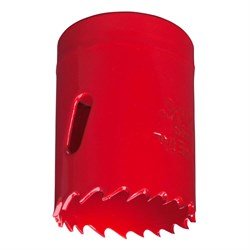
Should I use a special hole saw? Doesn't a "regular" one for wood work?
only have one screwdriver to choose from unfortunately. Only cut in drywall with the hole saw before and it goes like butter but it was a whole different ballgame now. Admittedly bought the hole saw at Jula..so I guess it's the usual case of you get what you pay for.
It's probably not the saw that's the problem. You need a real drill with higher torque/speed/power. Or a jigsaw and a rounded rasp.
Preferably low-geared (low-speed and strong) or two-speed with the low gear.
My screwdriver also has extremely poor power with large hole saws. But with the two-speed green Bosch 230V machine, it goes like butter.
But otherwise, it goes better if you feed slowly and cautiously and "wobble around" a little with the machine so the hole becomes slightly larger. (the sides of the hole don't brake against the hole saw as much then)
Preferably low-geared (low-revving and strong) or two-geared with low gear.
My screwdriver also has extremely poor power with large hole saws. But with the two-geared green Bosch 230V machine, it goes like butter.
Otherwise, it goes better if you feed slowly and steadily and "wobble around" a bit with the machine so the hole becomes slightly larger. (the sides of the hole don't brake against the hole saw as much then)
good tip that one!
I thought my Hilti drill was good but this is the first time I've encountered problems
good tip with that! thought my Hilti driver was good but this is the first time I've encountered problems
When reading the forum, you can sometimes get the impression that it is almost forbidden to own a hammer drill because the rotary hammer is superior to everything else. Here is an excellent example where you benefit from the hammer drill with the hammer function turned off, I think you're better off buying a cheap drill than using the screwdriver. Like http://www.clasohlson.com/se/Slagborrmaskin-Cotech/40-7964
A silly thought, it's not full of previous holes, or that you've driven a nail/screw before because a proper saw works excellently for many holes as long as you don't cut into any hard material that dulls the saw. A drill that is good for driving thicker screws can easily go through a shelf or similar.
The side panels are probably made of MDF, which creates really fine dust that tends to clog up the teeth of the hole saw.
Drill, angle and rotate the hole saw as Mikael_L writes, take it out now and then to maybe tap it with a knife handle to remove all the chips from the teeth on the hole saw. Keep going.
I have the same model of hole saws, though not JULA's, and find that it clogs up quite often in MDF.
It worked out. But as suggested above, you have to wiggle the hole saw a bit and clean it occasionally because the MDF curled quite a bit. It's true that over time, you notice the limitations of your tools and see the need for new ones.
I also tried the router for the first time to make grooves for the electrical wiring. It's fascinating how new gadgets can be..
It worked out. But as suggested above, you have to wiggle the hole saw a bit and clean it occasionally because the mdf clogged quite a lot. It's probably true that over time you notice the limitations of your tools and see the need for new ones.
I also tried the plunge router for the first time to carve out for the electrical wiring. It's amazing how fascinating new gadgets can be..
Previously, I also used the plunge router for the cabling, but I've now realized that two cuts with the plunge saw and guide rail create a wide enough groove for most cables - Faster and more convenient!
Click here to reply
Vi vill skicka notiser för ämnen du bevakar och händelser som berör dig.







 thanks for the tip
