
793 views ·
16 replies
793 views
16 replies
Hole-drilling in floor joists, seeking opinions and experiences.
Hello
We are going to replace the staircase in our new house and at the same time reverse it.
In connection with this, we need to open up the stairwell 100cm wide and 70-80cm deep.
The joist system is made of concrete (concrete vault?) and is 300-350mm thick.
We need to open the hole according to the red marking on the pictures. Can anyone say if it affects the load-bearing capacity based on the pictures?
I myself find it hard to believe since it is "just" a floor area, it doesn't rest on anything. Also, it's only 100cm wide that needs to be taken, and on both sides there are immediate interior walls that bear weight.
Unfortunately, there are no original plans for the house available. It has a gable roof and the trusses are on each long side, so to speak.
I would gratefully receive any form of feedback.
We are going to replace the staircase in our new house and at the same time reverse it.
In connection with this, we need to open up the stairwell 100cm wide and 70-80cm deep.
The joist system is made of concrete (concrete vault?) and is 300-350mm thick.
We need to open the hole according to the red marking on the pictures. Can anyone say if it affects the load-bearing capacity based on the pictures?
I myself find it hard to believe since it is "just" a floor area, it doesn't rest on anything. Also, it's only 100cm wide that needs to be taken, and on both sides there are immediate interior walls that bear weight.
Unfortunately, there are no original plans for the house available. It has a gable roof and the trusses are on each long side, so to speak.
I would gratefully receive any form of feedback.
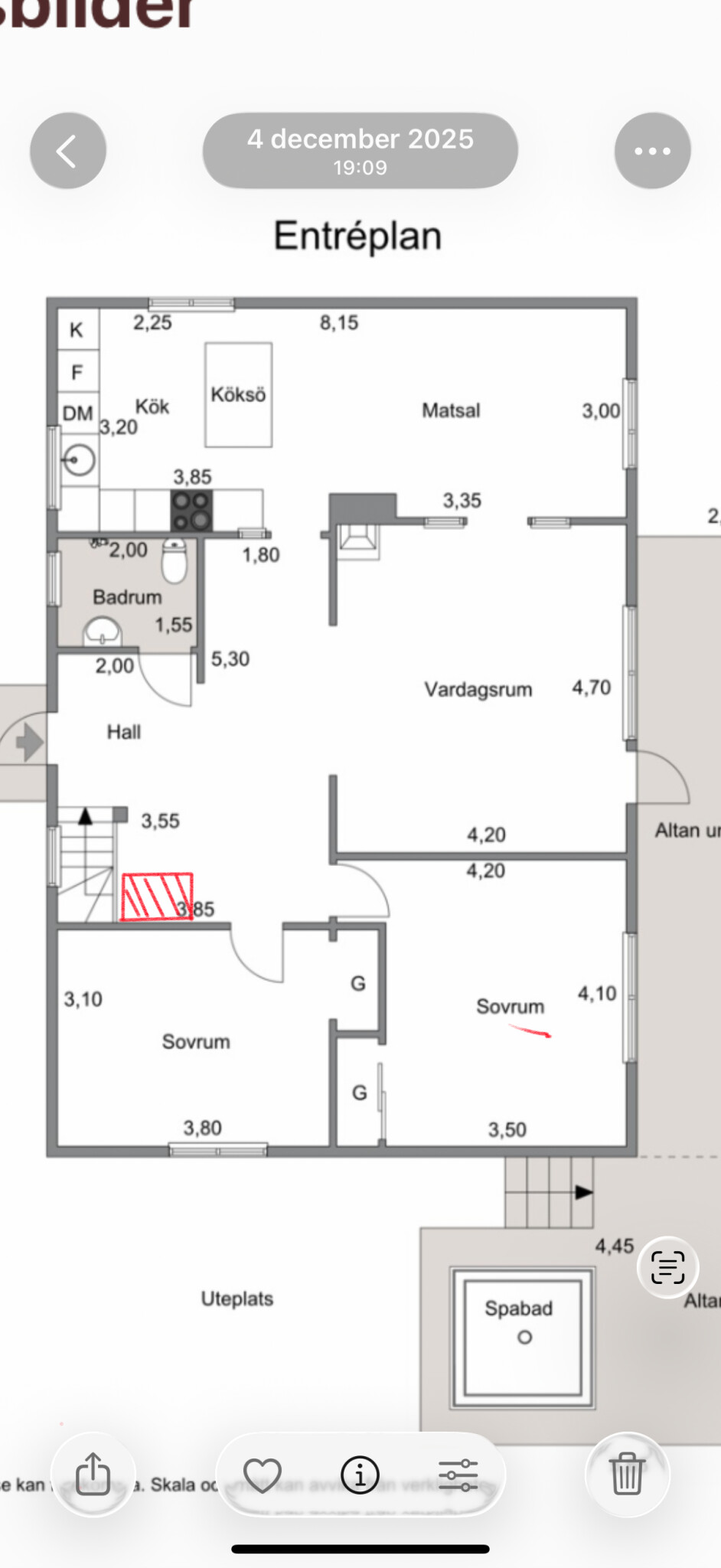
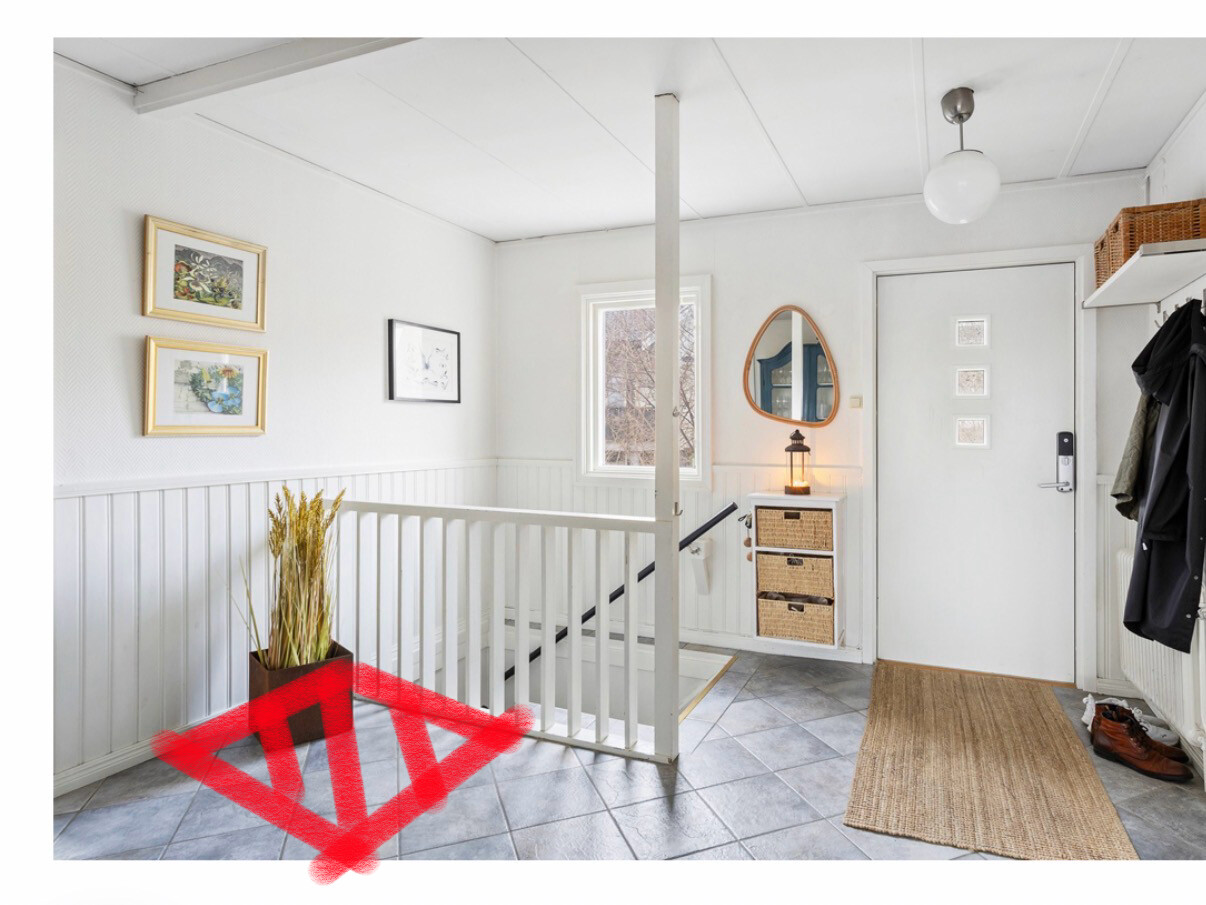
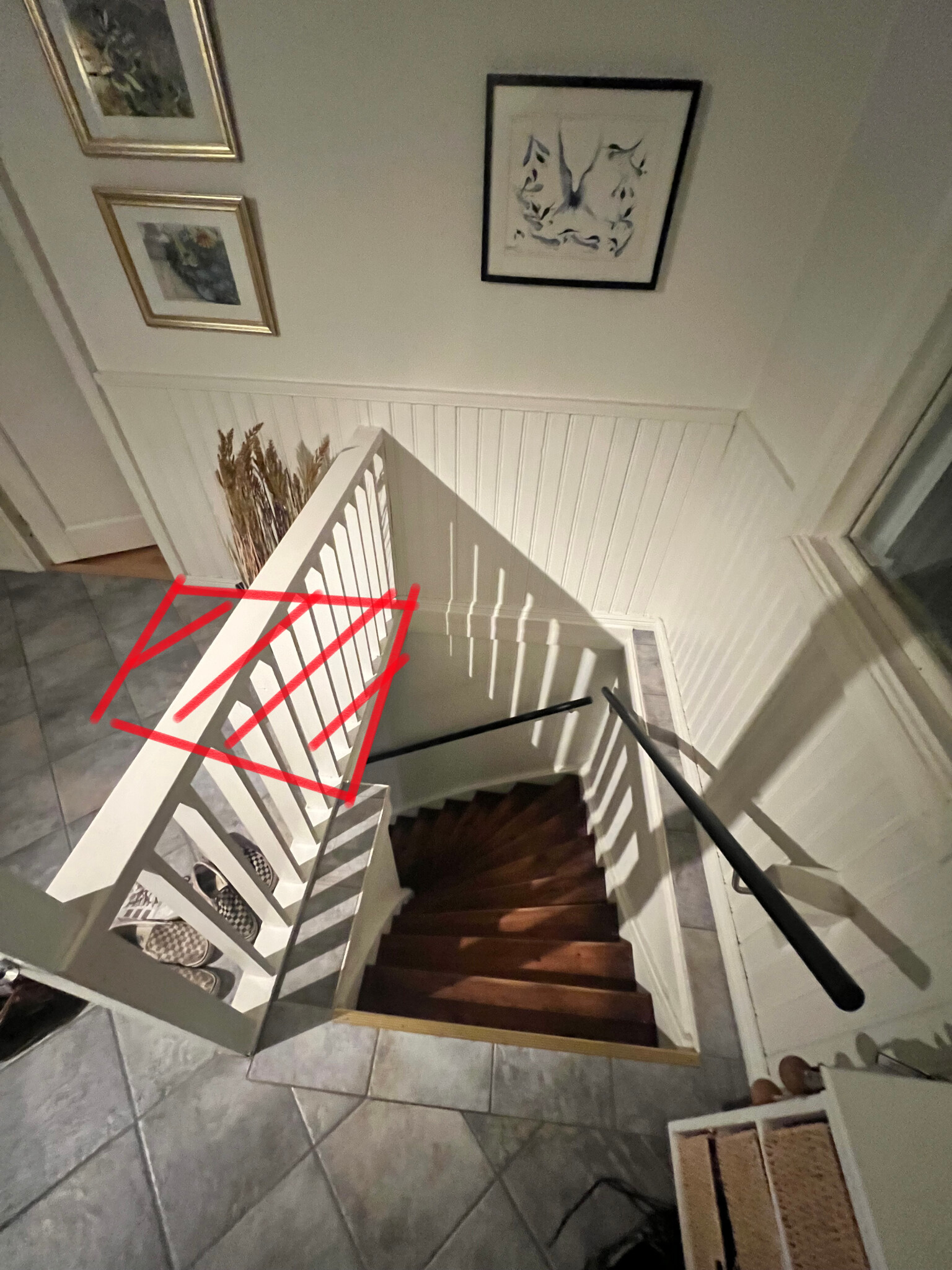
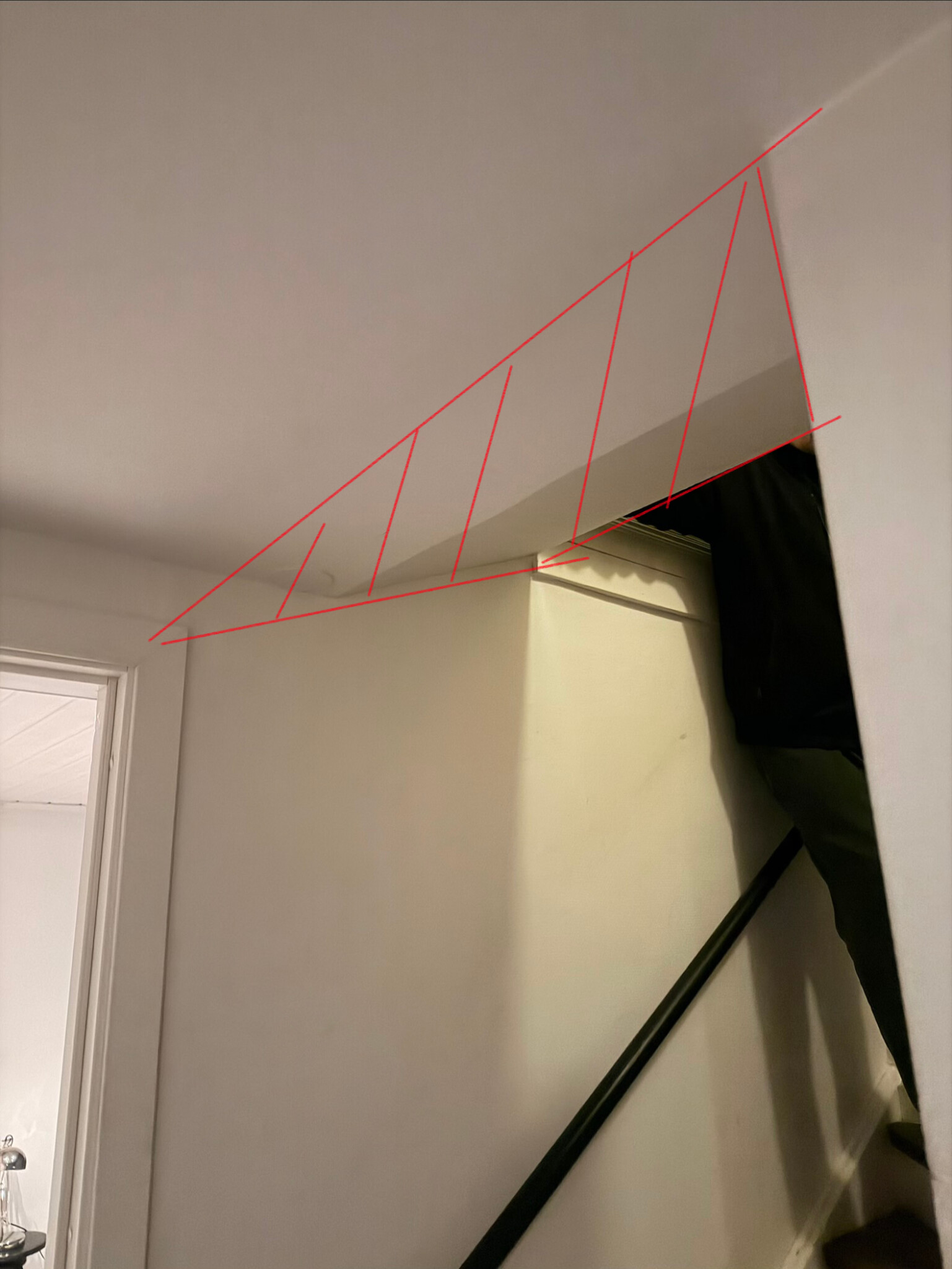
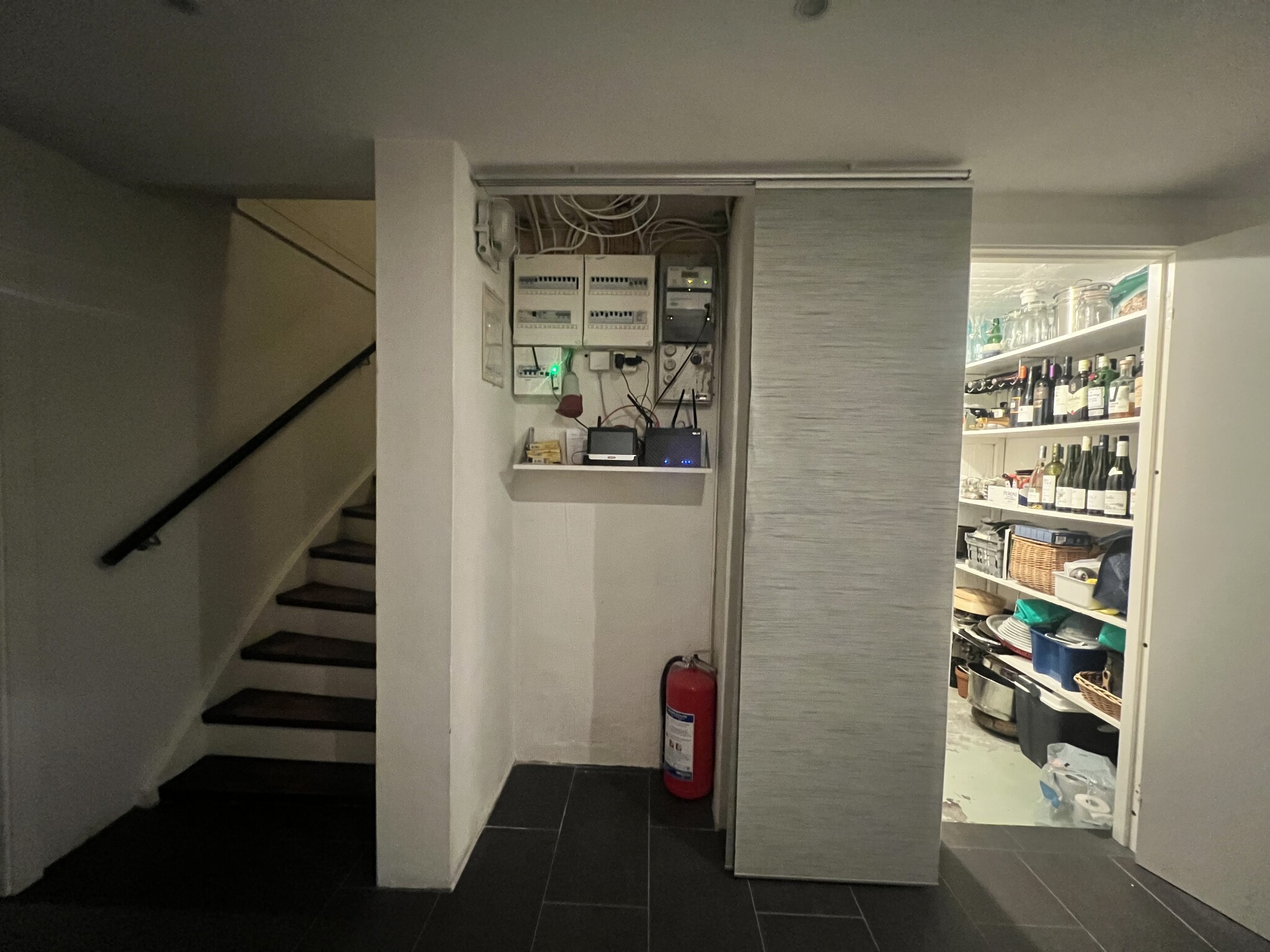
You might want to check a bit more carefully if it really is such thick concrete. It could be Siporex planks or possibly so-called hollow core slabs of concrete. The wall around the electrical panel on the ground floor seems to be load-bearing. Considering the electrical panel, you might also have some electrical lines there. You should probably get help from someone knowledgeable.
It's hard to investigate before the stairs are removed, unfortunately. We also think it is thinner.N Nissegandhi said:You should probably check a bit better if it really is such thick concrete. It could be Siporex planks or possibly so-called hollow core slabs of concrete. The wall around the electrical panel on the ground floor seems to be load-bearing. Considering the electrical panel, you may also have some wiring there. You should probably get help from someone knowledgeable.
Electricity can absolutely run there, we'll have to try to rule that out before we start cutting.
In the picture below, you see what the ceiling looks like in places where the new ceiling is not installed. I don't know if the "board marks" can give any hint about what they consist of.

The board marks are from the mold, so the vault is cast in place. It's probably elevated on the upper floor, hence the thickness. After you've removed the stairs, you'll see how it looks, and if you demolish from above, you might see any electrical wiring. You should first ensure the load-bearing capacity of the vault.
Thank you, that could be the case. I have sent it to a designer to check. But since there are no original drawings, it's a bit more difficult. However, according to carpenters who have been on site, there should not be any problems.N Nissegandhi said:The board marks are from the casting mold, meaning the ceiling is cast in place. It's probably raised on the upper floor, hence the thickness. Once you remove the stairs, you'll see how it looks and if you demolish from above, you may see any electrical wiring. You should first ensure the ceiling's load-bearing capacity.
Bumping this thread to see if anyone can help.
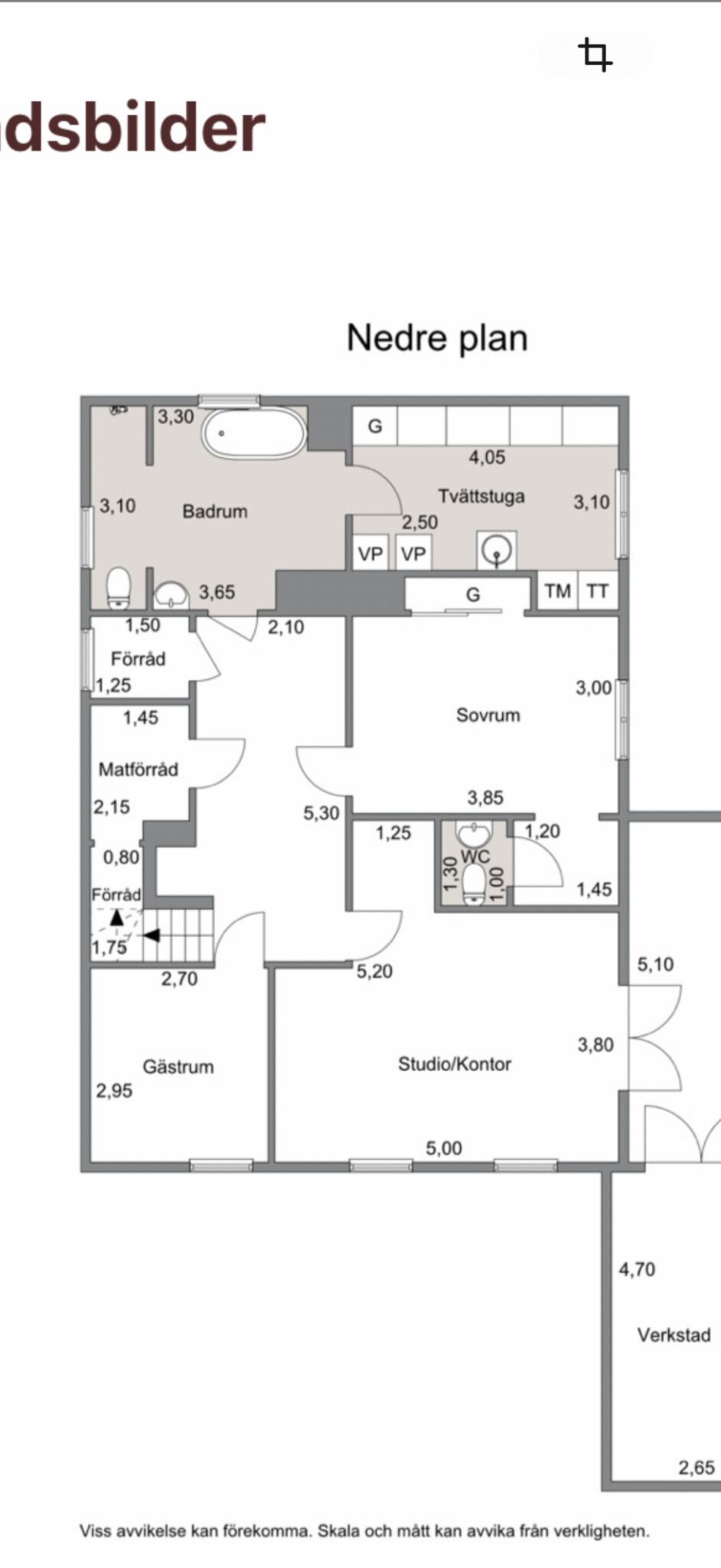
I have sent everything I have to a structural engineer but he can't say anything based on the drawings available, attaching them below.
Anyone have any tips?
I have sent everything I have to a structural engineer but he can't say anything based on the drawings available, attaching them below.
Anyone have any tips?
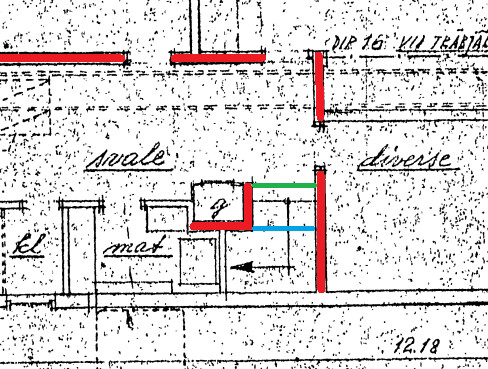
The drawings indicate that the middle of the wall is a load-bearing wall. The same applies to the wall around the electrical box. Since this is a cast ceiling and you don't have a reinforcement drawing, you can do it as follows. You need to install a beam that will support the new ceiling edge and support it on the side walls by cutting out sockets for it. No deeper than half the wall thickness. The beam can be steel, precast concrete, or cast reinforced concrete, but I don't recommend this. Only after the concrete on the sides of the stabilizing beam has dried can you remove this section of the ceiling. Of course, you first need to check the cables!!! And you need to ask someone to calculate the beam. And one more thing: if you're unlucky, there might be a solid steel profile on the blue edge. Green line is new floor edge.
Sorry, but this feels like a very strange thing to spend time and energy on. To start making major changes to a massive concrete structure just to turn a staircase, is it worth it? Consider the opportunity cost here, what else you could do instead...🤔
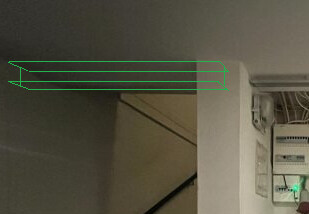
You might not be "read" from the photos, but it's really low down there! You could hit your head on the ceiling, that's why the bottom edge is chamfered.Farstatjej90 said:
Than you for a great answer. A few questions. Do you really think i need to install a beam? I mean, the piece i want to remove is just ”resting in the air” today and i will only shorten it?S sturnus said:[image]
The drawings indicate that the middle of the wall is a load-bearing wall. The same applies to the wall around the electrical box. Since this is a cast ceiling and you don't have a reinforcement drawing, you can do it as follows. You need to install a beam that will support the new ceiling edge and support it on the side walls by cutting out sockets for it. No deeper than half the wall thickness. The beam can be steel, precast concrete, or cast reinforced concrete, but I don't recommend this. Only after the concrete on the sides of the stabilizing beam has dried can you remove this section of the ceiling. Of course, you first need to check the cables!!! And you need to ask someone to calculate the beam. And one more thing: if you're unlucky, there might be a solid steel profile on the blue edge. Green line is new floor edge.
[image]
If i need to place a beam i need to shorten the length so i can put it in the wall next to the electric fuse box.
My plan was to lengthen the hole so the new edge ends in line with the door on the bottom floor. And because of that i dont have a wall to put the beam in.
Otherwise i was thinking building a wall under the stair, is that enough to support?
It is very worth the time and money because the staircase is incredibly steep with a tread of 17cm.
If the kids run on it, it will end badly.
Moreover, it is directly inside the front door, making the hallway minimal.
Last edited:
A beam is definitely necessary for the duration of the work. It's unclear what the reinforcement is, what the load-bearing elements (e.g., I-beams or reinforced beams) are, and how they're arranged. Maybe you're lucky and what you're planning will be possible. But no engineer will give you permission without securing the opening against collapse. Moving the depth of the opening is a completely different matter. Building a wall won't help because there's no foundation beneath it, and the loads will transfer to the floor, potentially causing it to crack.I Inteno- said:Than you for a great answer. A few questions. Do you really think i need to install a beam? I mean, the peiece i want to remove is just ”resting in the air” today and i will only shorten it? If i need to place a beam i need to shorten the lenght so i can put it in the wall next tonthe electric fuse box. My plan was to lengthen the hole so the new edge ends in line with the door on the bottom floor. And because of that i dont have a wall to put the beam in. Otherwise i was thinking building a wall under the stair, is that enoug to support?
Hmm okay...S sturnus said:A beam is definitely necessary for the duration of the work. It's unclear what the reinforcement is, what the load-bearing elements (e.g., I-beams or reinforced beams) are, and how they're arranged. Maybe you're lucky and what you're planning will be possible. But no engineer will give you permission without securing the opening against collapse. Moving the depth of the opening is a completely different matter. Building a wall won't help because there's no foundation beneath it, and the loads will transfer to the floor, potentially causing it to crack.
But the problem is that if I lengthen the opening as much as needed the eventually new support beam has no place to rest on as I want the opening to be in line with the door downstairs.
Therefore my question about building a support wall with 2 45x120 put together in the roof and then 45x90 tight together down to the floor. You don't think it's possible?
And I still can't see how the bigger hole will affect the construction so much.
I also think the concrete only is 10-15cm thick.
Last edited:
You can't use wood due to its low dimensional stability and limited durability compared to concrete. If you must, use steel profiles. Unfortunately, I don't have the time to provide you with extensive training in the methods and types of materials used in ceiling reinforcement. However, this unsupported edge must now have a reinforced beam or a steel truss profile supporting the main reinforcement located between the load-bearing walls. As I mentioned earlier, beams can be spanned between these walls, and then we're dealing with a situation where it might be possible to achieve the opening you envisioned, but this requires demolition work to determine what's inside or the use of specialized equipment to x-ray the ceiling. Costs. So, I've given you a quick and inexpensive solution. You want a larger opening, the higher the cost.I Inteno- said:Hmm okay…
But the problem is that if I lengthen the opening as much as needed, the eventually new support beam has no place to rest on as I want the opening to be in line with the door downstairs.
Therefore my question about building a support wall with 2 45x120 put together in the roof and then 45x90 tight together down to the floor. You don't think it's possible?
And I still can't see how the bigger hole will affect the construction so much.
I also think the concrete is only 10-15cm thick
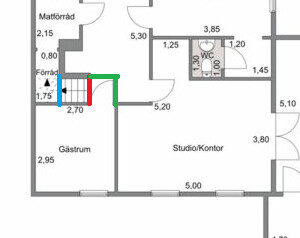
Besides, you can't enlarge the opening beyond the basement door (green lines) as you want because you'll cut off access to the door upstairs. The red option is easy and won't cost you a fortune.
Last edited:
Okej.S sturnus said:You can't use wood due to its low dimensional stability and limited durability compared to concrete. If you must, use steel profiles. Unfortunately, I don't have the time to provide you with extensive training in the methods and types of materials used in ceiling reinforcement. However, this unsupported edge must now have a reinforced beam or a steel truss profile supporting the main reinforcement located between the load-bearing walls. As I mentioned earlier, beams can be spanned between these walls, and then we're dealing with a situation where it might be possible to achieve the opening you envisioned, but this requires demolition work to determine what's inside or the use of specialized equipment to x-ray the ceiling. Costs. So, I've given you a quick and inexpensive solution. You want a larger opening, the higher the cost.
So just so i understand. If there is a beam in the end of the opening now i need to replace it with a new, and if there is no there is maybe no need to place one if i larger the hole?