
16,233 views ·
13 replies
16k views
13 replies
Hide pipes in the ceiling. Choice of material.
In the house we have relatively recently moved into, there are ugly pipes in the otherwise well-renovated basement (see pictures).
I now want to try to hide them somehow and am seeking advice on the choice of materials and approach. The ceiling is already very low, so the solution cannot add much height. Ideally, I'd like to build a box around them, and the question is what sheet material is recommended and practical tips on how to proceed. (As I imagine it now, it would involve battens parallel to the pipes where the sheets attach, and then simply build a box around the pipes).
What type of sheet should I consider that is thin, yet stiff enough so the box doesn't become "wavy"?
Another option I have is to replace and tidy up the insulation and then paint it, but I don't seem to find any suitable insulation for this at the building stores I've looked at. Insulation exists, but none that I can see would look nice even if painted.
How would you have done it? Grateful for all the tips I can get!
I now want to try to hide them somehow and am seeking advice on the choice of materials and approach. The ceiling is already very low, so the solution cannot add much height. Ideally, I'd like to build a box around them, and the question is what sheet material is recommended and practical tips on how to proceed. (As I imagine it now, it would involve battens parallel to the pipes where the sheets attach, and then simply build a box around the pipes).
What type of sheet should I consider that is thin, yet stiff enough so the box doesn't become "wavy"?
Another option I have is to replace and tidy up the insulation and then paint it, but I don't seem to find any suitable insulation for this at the building stores I've looked at. Insulation exists, but none that I can see would look nice even if painted.
How would you have done it? Grateful for all the tips I can get!
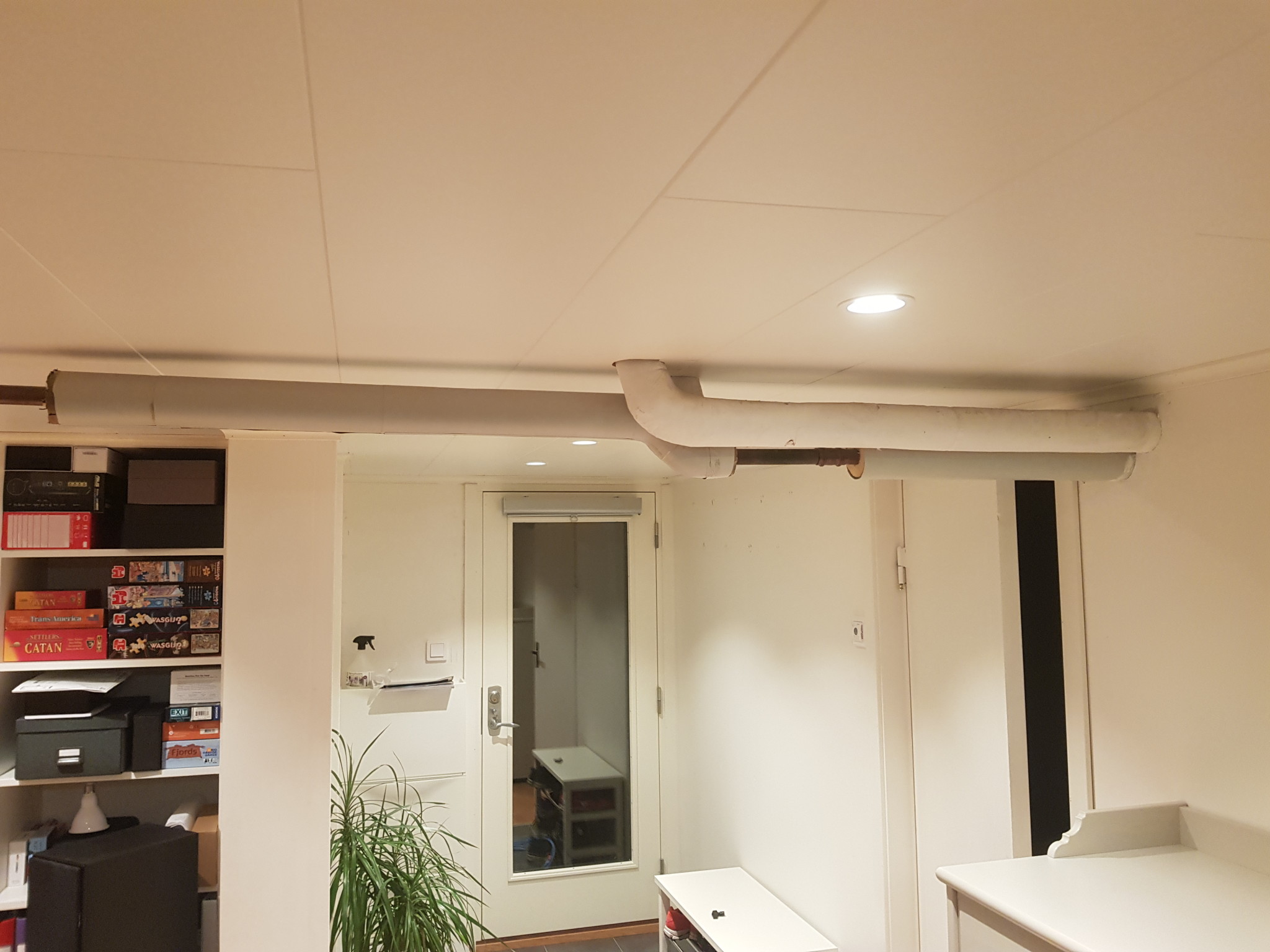
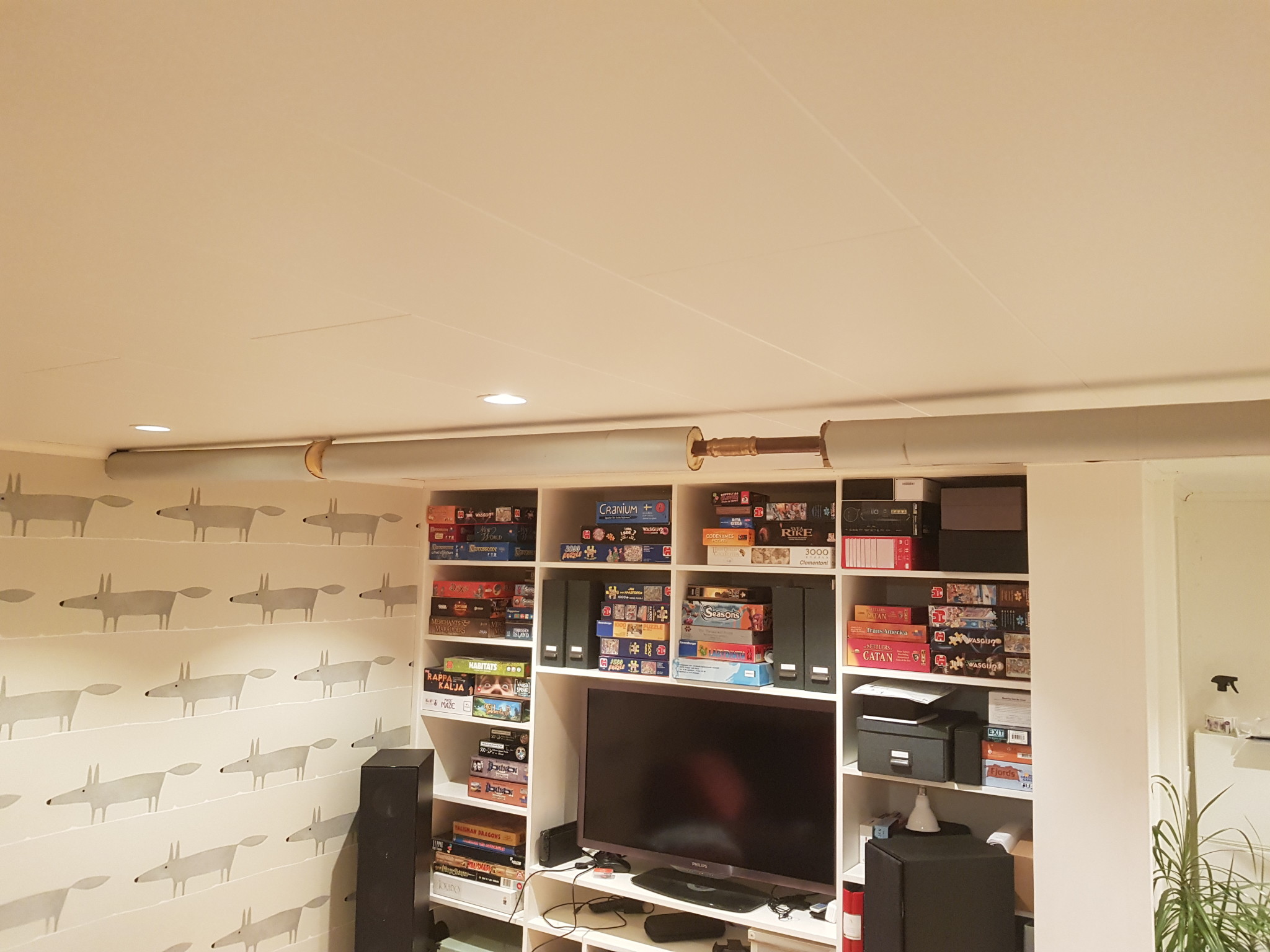
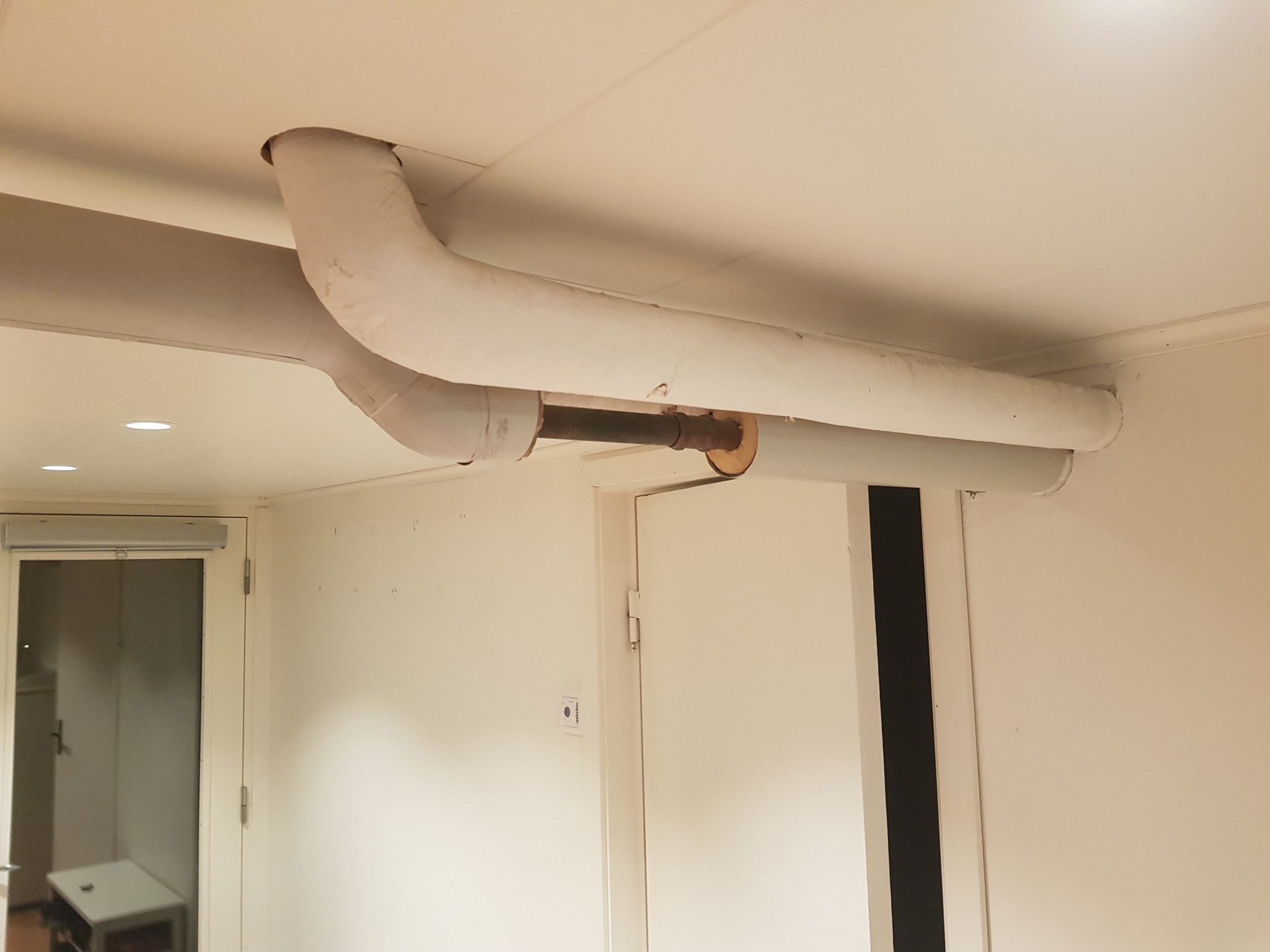
I had obtained suitable wood for the frame. Perhaps 45x45 due to availability and price. Possibly, one could use ströläkt, with the risk that it might be a bit too weak for this. Probably a bit weak...
You build the box just like a studded wall. A wall on each side of the pipes with some supports between them, all in 45x45.
Cover with gypsum
Putty/sand/paint
You build the box just like a studded wall. A wall on each side of the pipes with some supports between them, all in 45x45.
Cover with gypsum
Putty/sand/paint
Thanks a lot for the quick and detailed response!1977bjorn said:
I would get suitable timber for the frame. Maybe 45x45 due to availability and price. Possibly you could use ströläkt, with the risk that it's somewhat flimsy for this. Probably a bit flimsy...
You build the box just like a framed wall. A wall on each side of the pipes with some supports between them, all in 45x45.
Cover with plasterboard
Fill/sand/paint
If you want to save a few millimeters and use a thinner material than plasterboard - do you have any suggestions?
Fiber cement boards maybe? I think they are available in 6 mm.
They can be a bit tricky to work with, but they are rigid and durable.
Otherwise, you might have to order a metal cladding from the tinsmith, but it can be a bit tricky to get it perfectly neat.
Are there heating pipes running in the ceiling?
You might be able to reduce the insulation thickness a bit to save some height?
They can be a bit tricky to work with, but they are rigid and durable.
Otherwise, you might have to order a metal cladding from the tinsmith, but it can be a bit tricky to get it perfectly neat.
Are there heating pipes running in the ceiling?
You might be able to reduce the insulation thickness a bit to save some height?
The pipe that is lowest (and now has gray insulation) is cold water, so reducing the insulation thickness is not a bad idea at all and something I hadn't thought of before, thanks! As I understand it, you insulate cold water pipes to avoid condensation, to prevent cooling the room, and to keep the water temperature low to prevent bacterial growth? The thought of skipping insulation altogether (to gain ceiling height) crossed my mind initially, but after reading up on it, it seemed like a bad ideaP Patrik Friberg said:Fiber cement boards maybe? They are available in 6 mm I think. They can be a bit tricky to work with, but they are rigid and durable. Otherwise, you could order a sheet metal cladding from the sheet metal worker, but it might be a bit tricky to get it to look nice. Are those heating pipes running in the ceiling? You might be able to reduce the insulation thickness to save some height?

Thinner insulation and gypsum boards as material I think will work well.
Do you think it's possible to achieve a nice 45-degree slope on the transition where three pipes become one, or should I not bother and make a right angle? It would be a bit of a sharper corner to hit your head on and it might look a bit angular with a right angle, I think?

Düsseldorff
Building conservationist
· Bromma
· 3 223 posts
Düsseldorff
Building conservationist
- Bromma
- 3,223 posts
It's no problem to build angles with studs and plasterboard. Remember to reinforce all joints with joint tape. Outer corners become vulnerable, so they need to be protected with a corner guard. If you want a different angle in a corner, you can use a paper tape with an embedded steel strip (multiflex) that can be folded at any angle.
There are veneered boards in thinner material. But since the ceiling is white anyway, I think the box is least visible if you also paint it white. And, in that case, plaster is simple.freni126 said:
As already pointed out by others, use corner protection strips, etc.
I just remembered something I saw somewhere in an office. They had covered it with fabric. A strip on each side of the pipes attached to the ceiling, then thick fabric like a half cylinder approximately...
That way you don't enclose the pipes, but they are less visible, and won't break if you bump into it
requires 5 points in handicrafts
That way you don't enclose the pipes, but they are less visible, and won't break if you bump into it
requires 5 points in handicrafts
Thanks, lots of new info that I needed! This project is starting to feel more and more doable =)There is no problem building angles with studs and plasterboard. Remember to reinforce all joints with joint tape. External corners become vulnerable, so they need to be protected with corner bead. If you want an unusual angle in the corner, you can use paper tape with an embedded steel strip (multiflex) that can be folded at all angles.
I have a sewing machine license from middle school, but unclear how far that will get me here =)Came up with something now that I saw somewhere in an office. There they covered it with fabric. A strip on each side of the pipes attached to the ceiling, then thick fabric as a half cylinder approximately...
Then you're not enclosing the pipes, but they're less visible, and won't get damaged if you hit them
requires 5 points in sewing skills
Also, this feels like a fun project once I figure out how to do it. With all your help, the picture has become much clearer, thanks!
Click here to reply