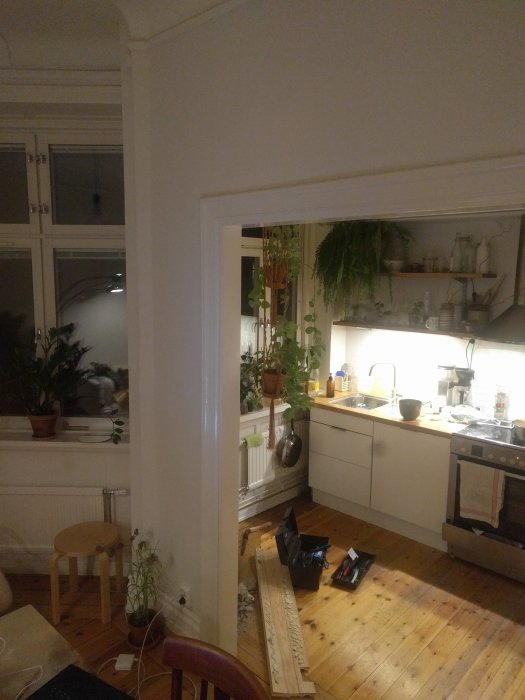
Hello! First post here. I've been thinking about fixing the baseboards in the apartment (from 1909), which in half of the apartment don't look very good, but I've now hit a snag! In the kitchen, there's a wall with woven wallpaper and underneath it sits a brick wall. We had the idea of highlighting the brick wall and wanted to peek behind the baseboard.
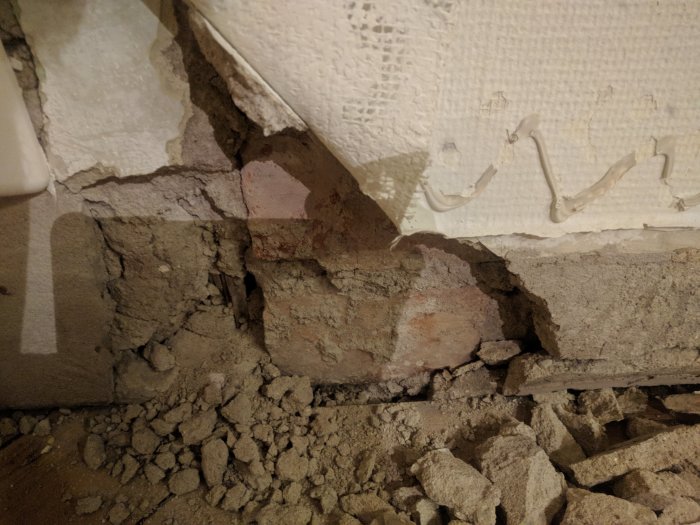
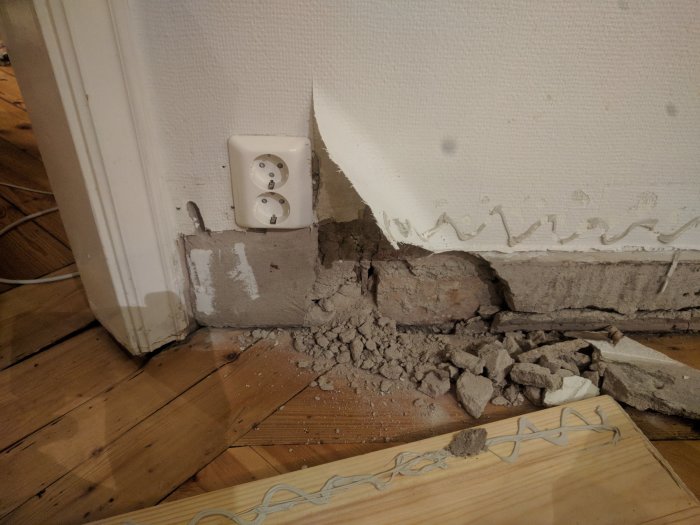
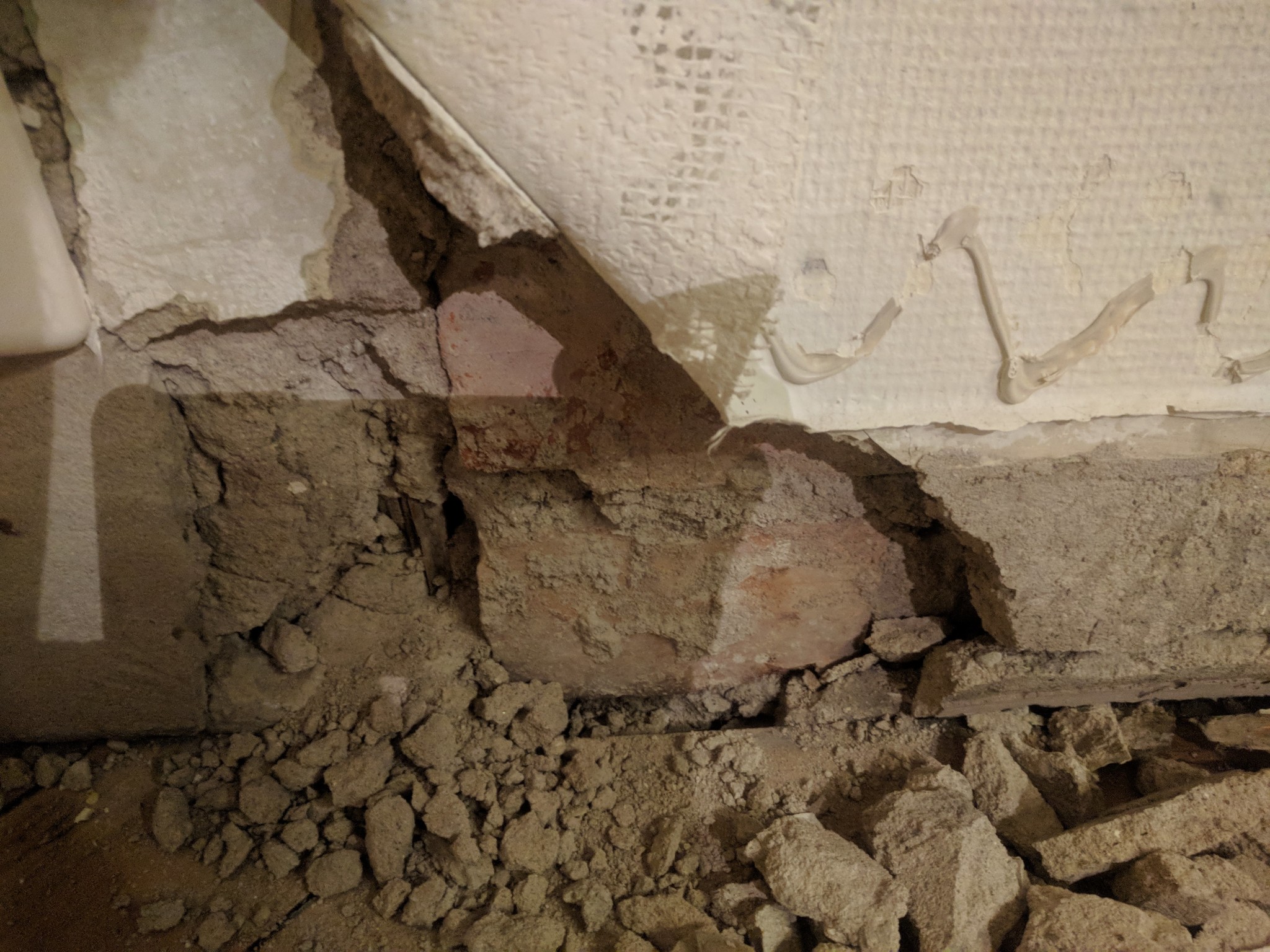
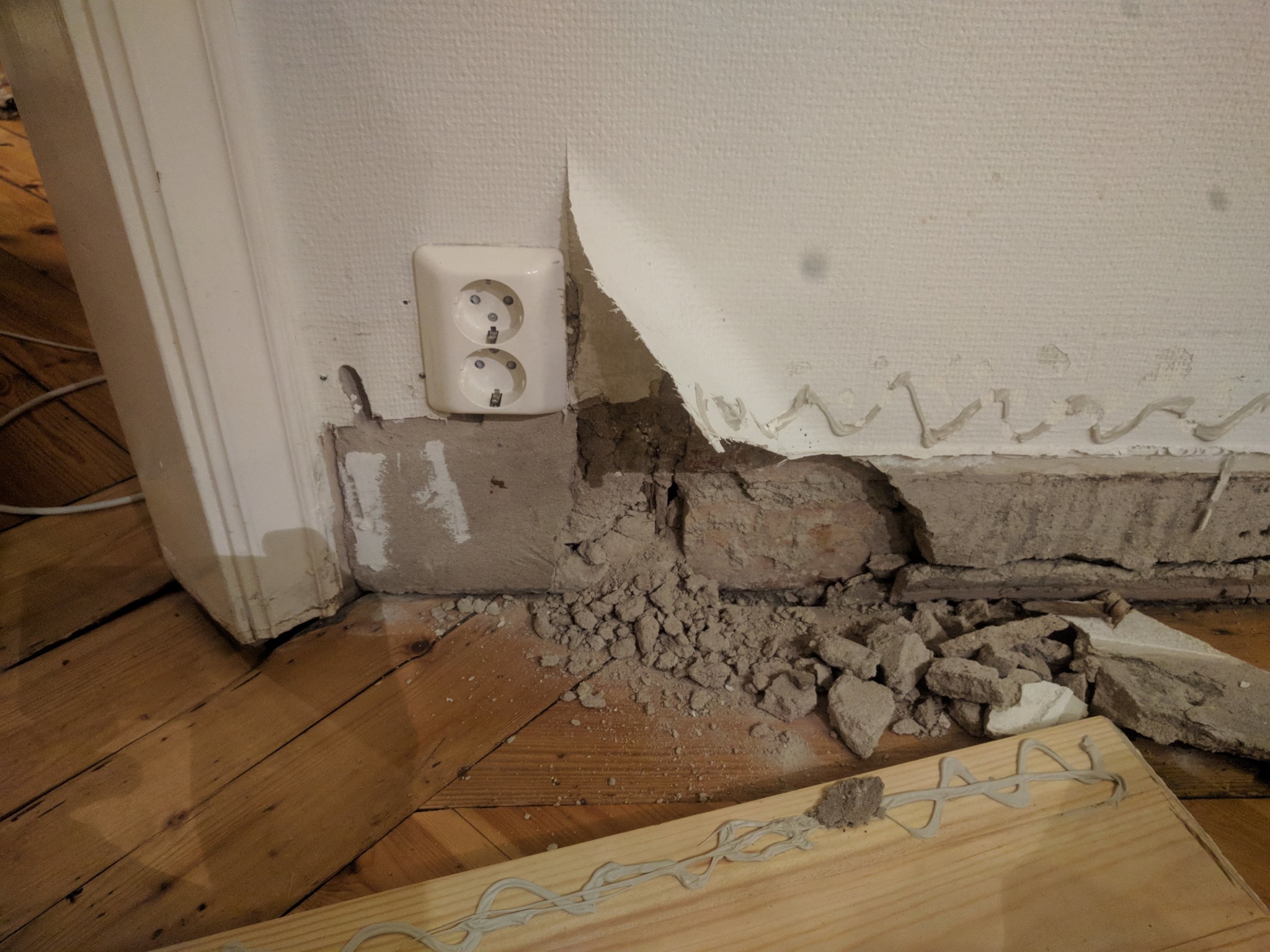
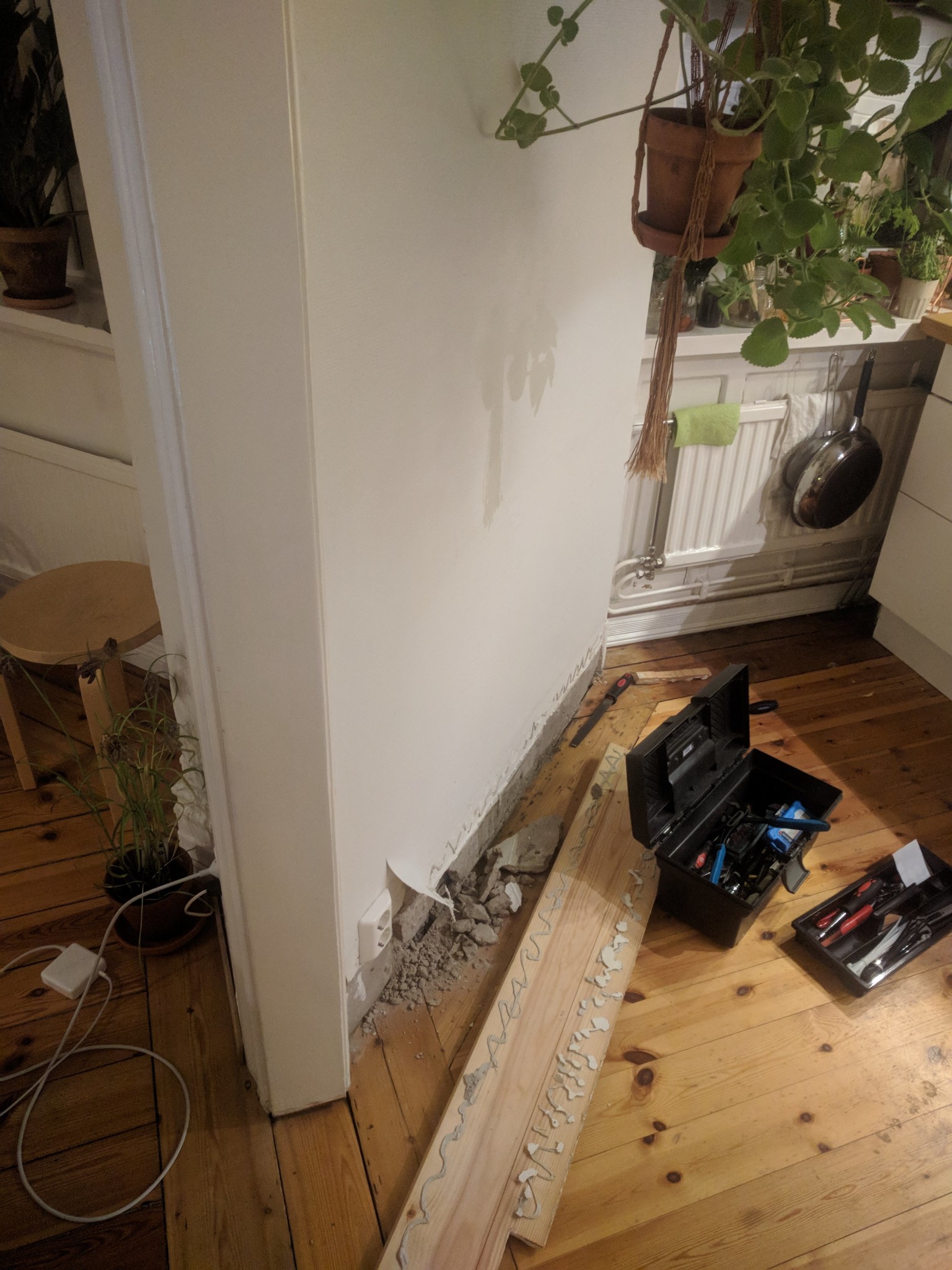
Unfortunately, it doesn't look promising. The brick wall seems to stop about 30 cm from the doorframe, and a lot of very porous mortar fell out. Even the mortar between the bricks can be scraped off with a finger.
Can anyone explain why the brick wall doesn't extend all the way to the doorframe?
I'm also wondering if it's normal for the mortar to disintegrate? Is that the reason the woven wallpaper was there to begin with?
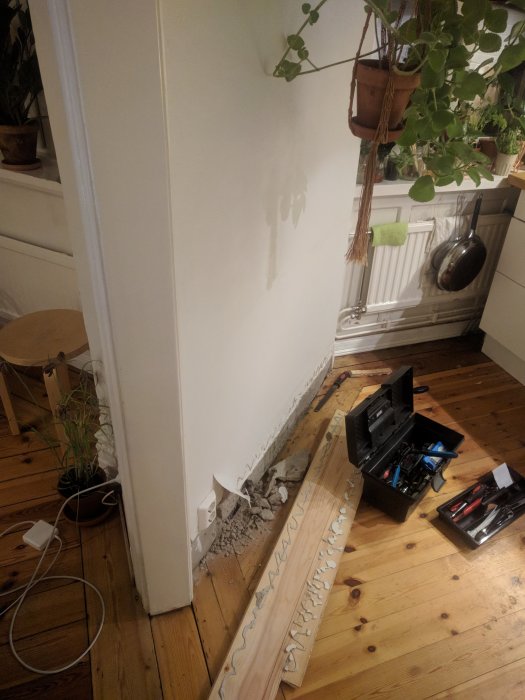
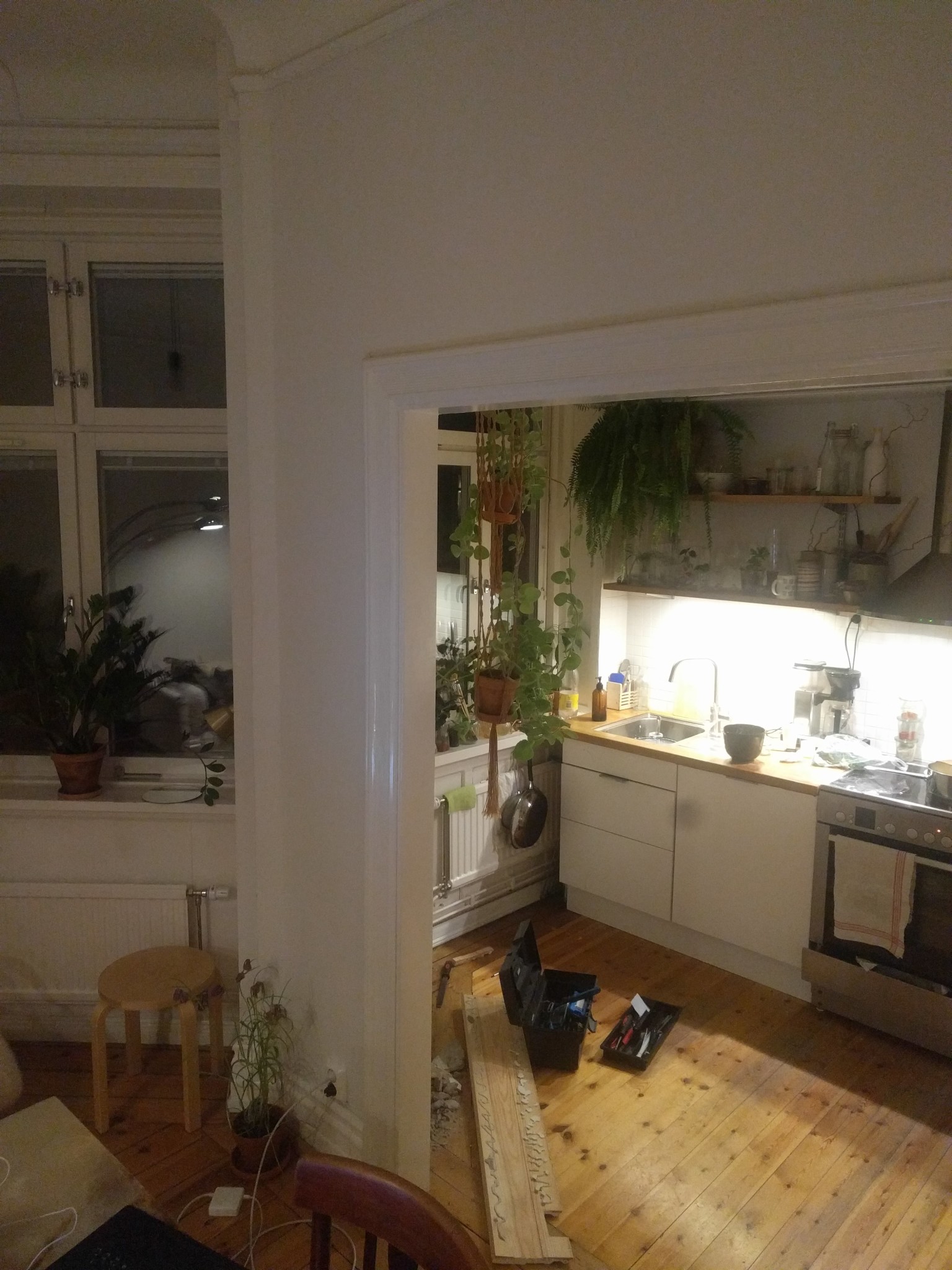
Old houses have often undergone some changes. In your case, it seems the ending of the wooden floor, which comes from the kitchen cabinets, aligns with the end of the brick wall. You also have recessed electrical outlets, which definitely weren't present in 1909. These two things suggest that the wall has been extended at some point.
Old mortar was often lime- (or clay-) based, and it's a mortar that is soft and easy to scrape out of the joints, unlike modern mortar which is often cement-based. Because the mortar is soft, it is also easy to touch up and achieve a nice visible brick wall. Previously, on the countryside, cheap unbaked clay bricks were also used, and these would crumble very easily if they became too dry.
The wallpaper is modern and can be removed. But, as mentioned, you will probably have to touch up the brick wall.
Old houses have often undergone some changes. In your case, it seems the finish for the wooden floor, which comes from the kitchen cabinets, aligns with the end of the brick wall. You also have recessed electrical outlets, which you certainly wouldn't have had in 1909. These two things suggest that the wall has been extended at some point.
Old mortar was often lime (or clay) based and is mortar that is soft and easy to scrape out of the joints, unlike modern mortar which is often cement-based. Since the mortar is soft, it's also easy to touch up and get an attractive visible brick wall. In rural areas, cheap unfired clay bricks were also used, and these would crumble very easily if they became too dry.
The woven wallpaper is modern and can be removed. But as mentioned, you will probably have to touch up the brick wall.
Thank you for the clear and informative response. As JohanLun mentioned below, we are not convinced that an exposed brick wall is the most aesthetically pleasing option. However, we dislike the woven wallpaper so much that we want to do something about it. Do you have any insight into what could be done that is more in keeping with the period if we choose not to reveal the brick wall?
Old brick can be very nice to have exposed. Otherwise, it was common to plaster brick walls with lime or clay plaster. These can then also be painted if you want some color on the wall.
Addition: At the end of the 19th century and around the turn of the century, people liked to have rich and dark wallpapers with many patterns in the city's apartments. At that time, people liked to clutter their homes with all sorts of bric-a-brac, as it made it feel so cozy, they thought.
Last edited:
Click here to reply
Vi vill skicka notiser för ämnen du bevakar och händelser som berör dig.


Microkatten said:
Old houses have often undergone some changes. In your case, it seems the finish for the wooden floor, which comes from the kitchen cabinets, aligns with the end of the brick wall. You also have recessed electrical outlets, which you certainly wouldn't have had in 1909. These two things suggest that the wall has been extended at some point.