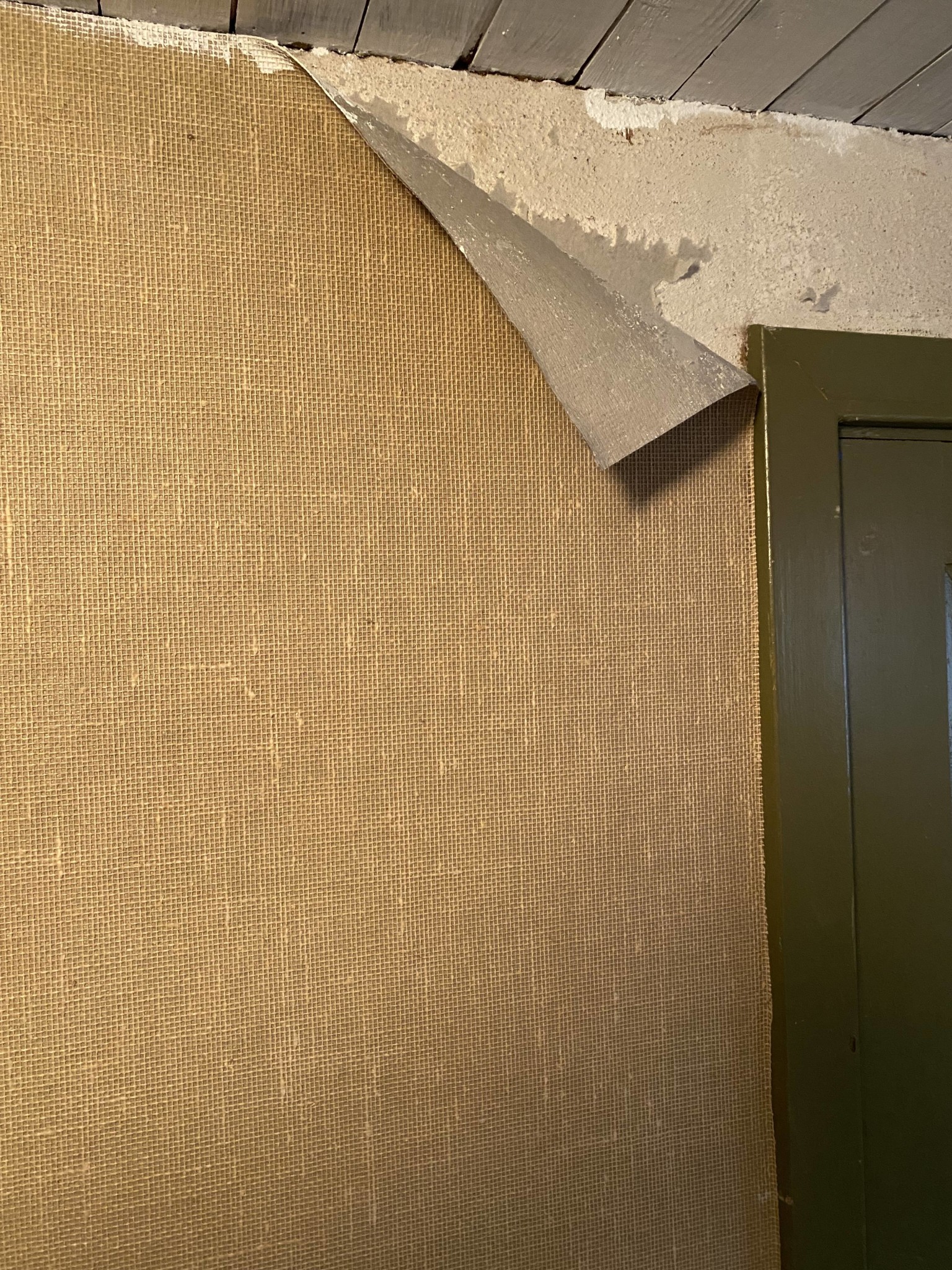
Close-up of an old, textured basement wall with exposed plaster and some surface damage, including shallow holes and cracks. A basement wall with patches of missing plaster after removing tapestry, showing some deeper areas needing repair in a 1954 house. Old basement with peeling plaster walls, a green-framed door with yellow panels, and an open storage door with shelves inside. Wall with missing plaster and exposed areas near wooden baseboard in a basement. Potential renovation needed to repair surface damage and fill deeper holes. Peeling wallpaper revealing plaster damage on a basement wall in a 1954 villa, with some exposed areas and chipped plaster near the ceiling. Hi!
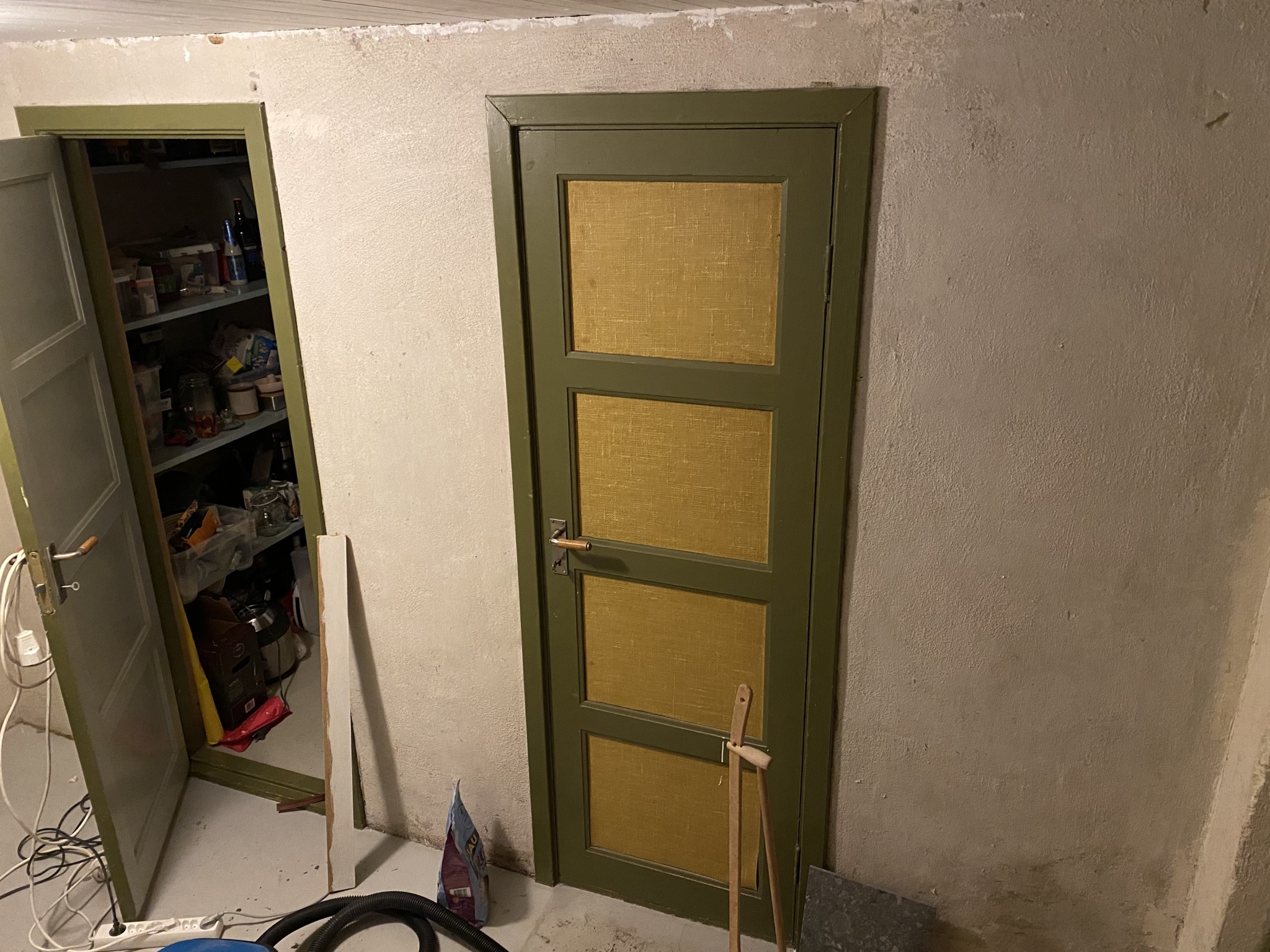
I've been living in a house from 1954 for a year now and I'm planning to freshen up the basement a bit. On the basement walls, there has been a woven wallpaper for many decades.
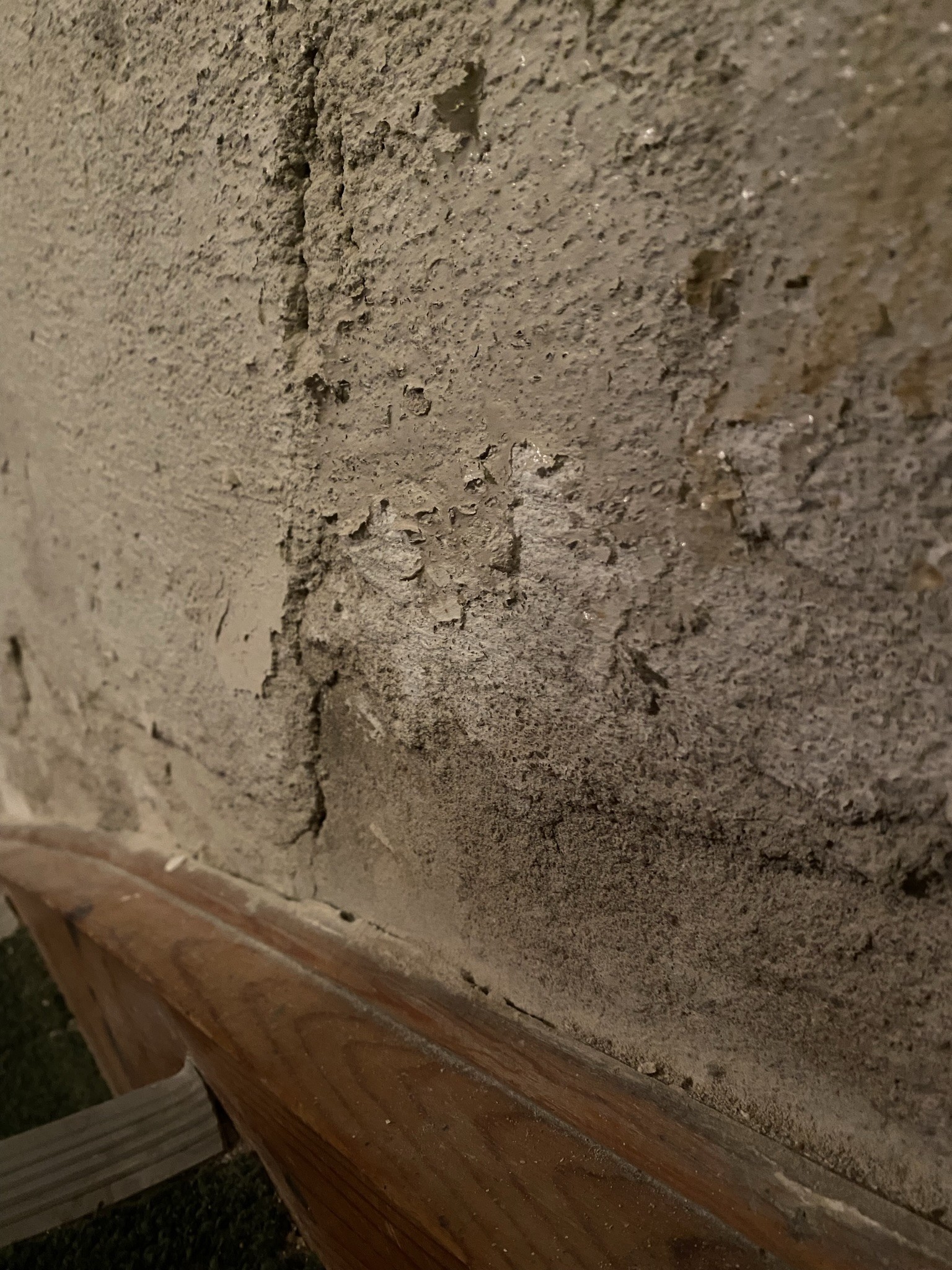
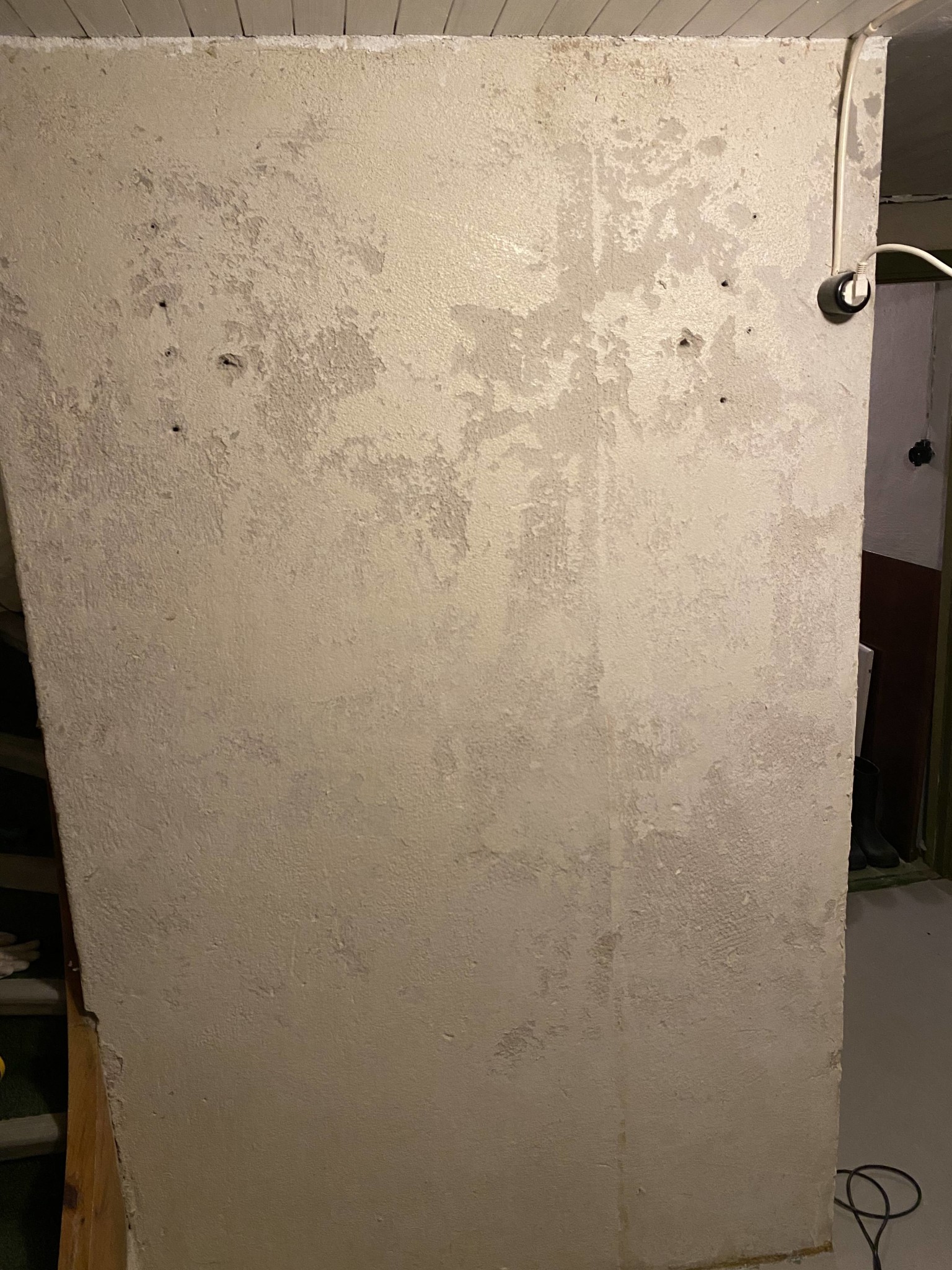
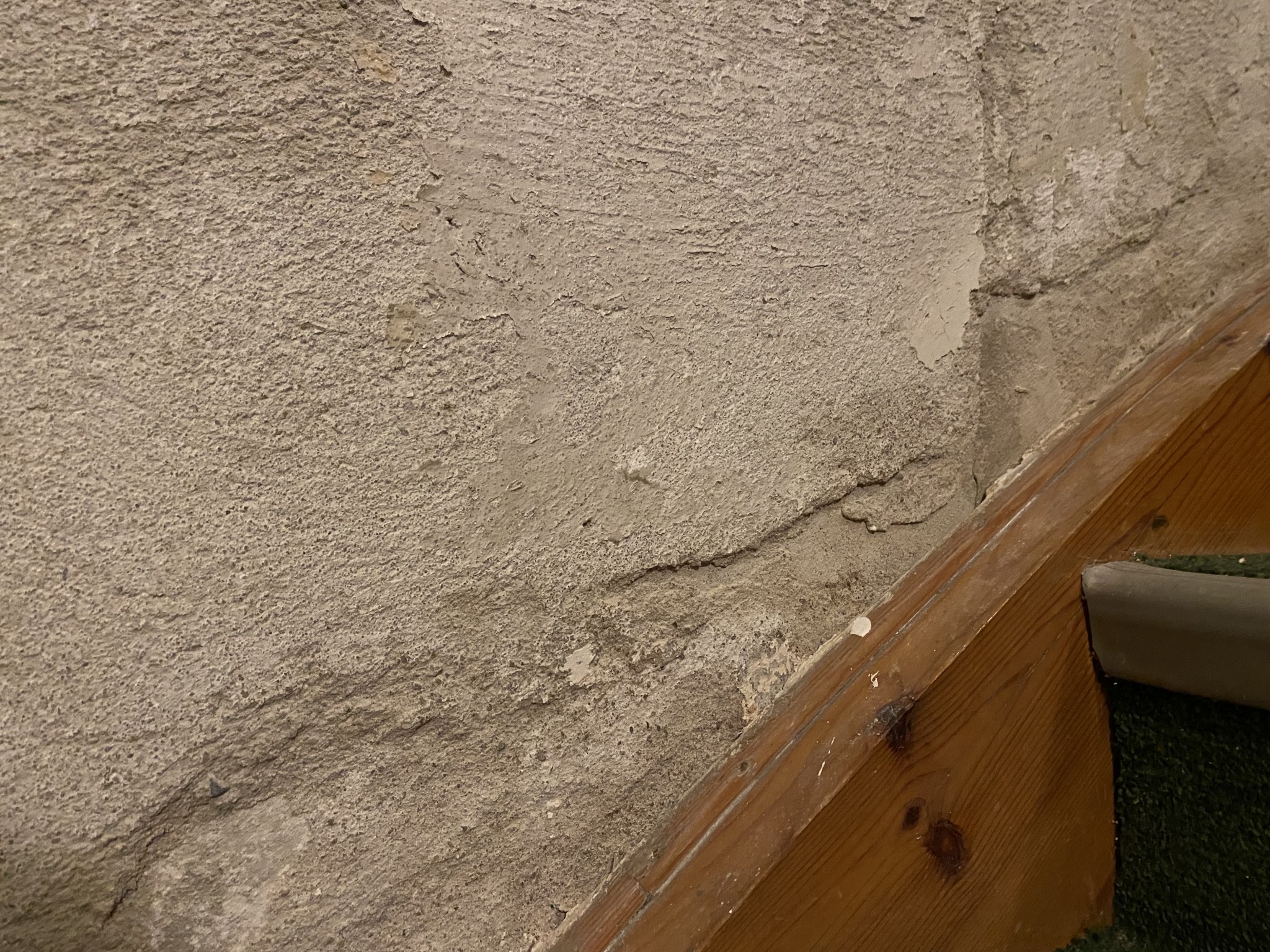
I have now started to remove this to expose the clean walls. In doing so, some of the plaster has come off in places, mostly the outer surface but also a little deeper in some places, maybe about 1-1.5 cm in some areas.
How should I go about replastering? Do you think plaster mix C will work, or do I need something else to fill the deeper holes?
I have no knowledge at all about the process, tools, or materials but I'm grateful for any tips and advice you can provide!

Happy New Year!
 
I'm not a professional mason, but I've done some plastering work. If there are wooden strips along the floor, I would start by removing them. It will definitely be a messy job, so I would mask and protect door frames and other areas. Then, chip away porous plaster and especially around any cracks. Attach plaster mesh if a lot of plaster has been removed, and reinforcement can be helpful with plugs, screws, and washers to create a little distance from the substrate. Wet the walls so the plaster adheres properly, then apply layer by layer, max 1 cm at a time. There are different techniques, but I took a plastering course in England where you press the plaster on with a trowel, and it sticks firmly. After a while, smooth it with a damp sponge float (circular motions). A scratch float also works.

I spoke with a mason who liked Ardex A46 for this type of job, but I found it difficult to work with - it set very quickly. I would use Finja plaster mortar C as you are considering. It's a strong mortar, easy to work with, and seems to work well with slightly older existing plaster. I seem to remember it has quite a high lime content.
 
Click here to reply
Vi vill skicka notiser för ämnen du bevakar och händelser som berör dig.