
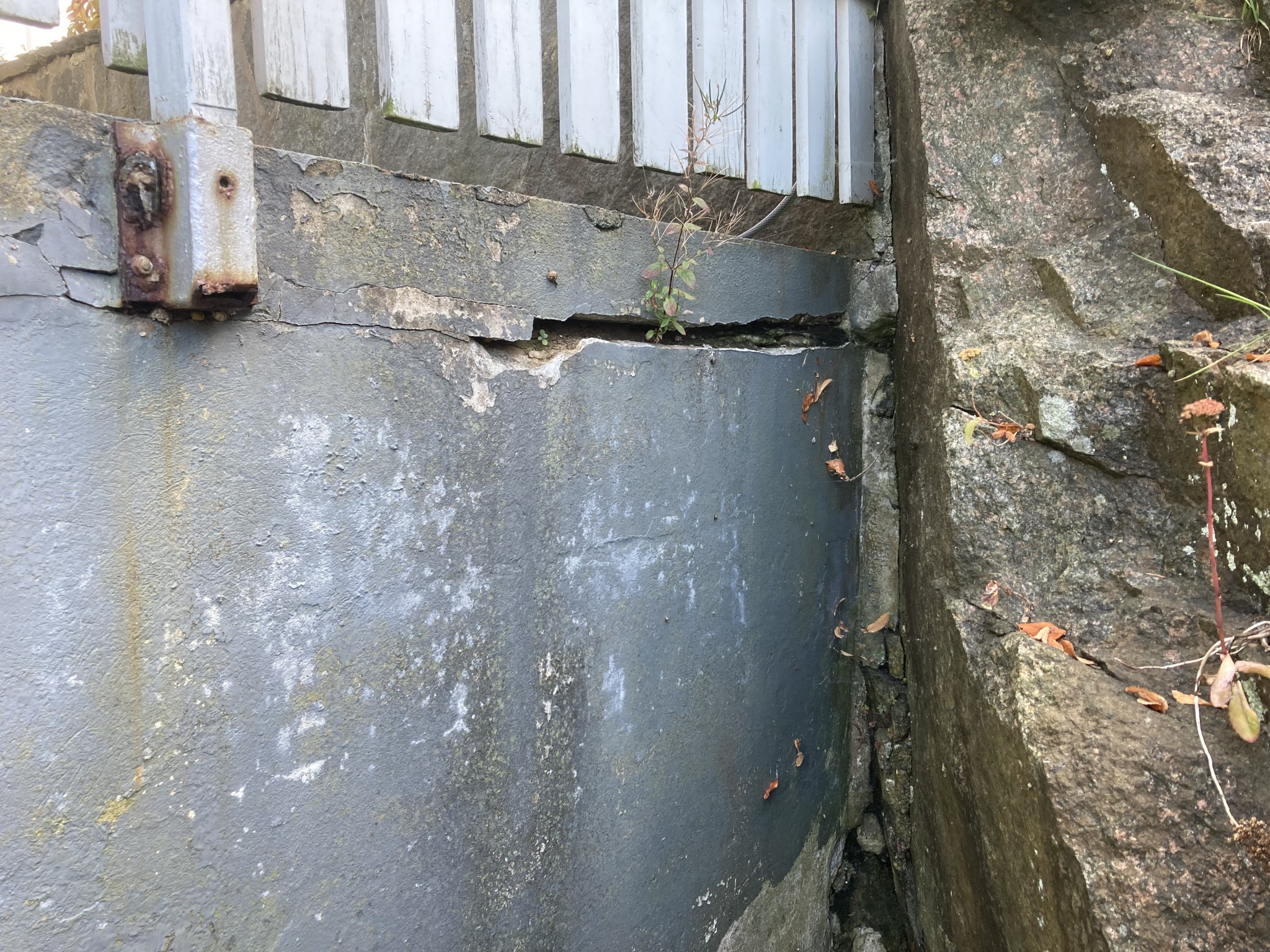
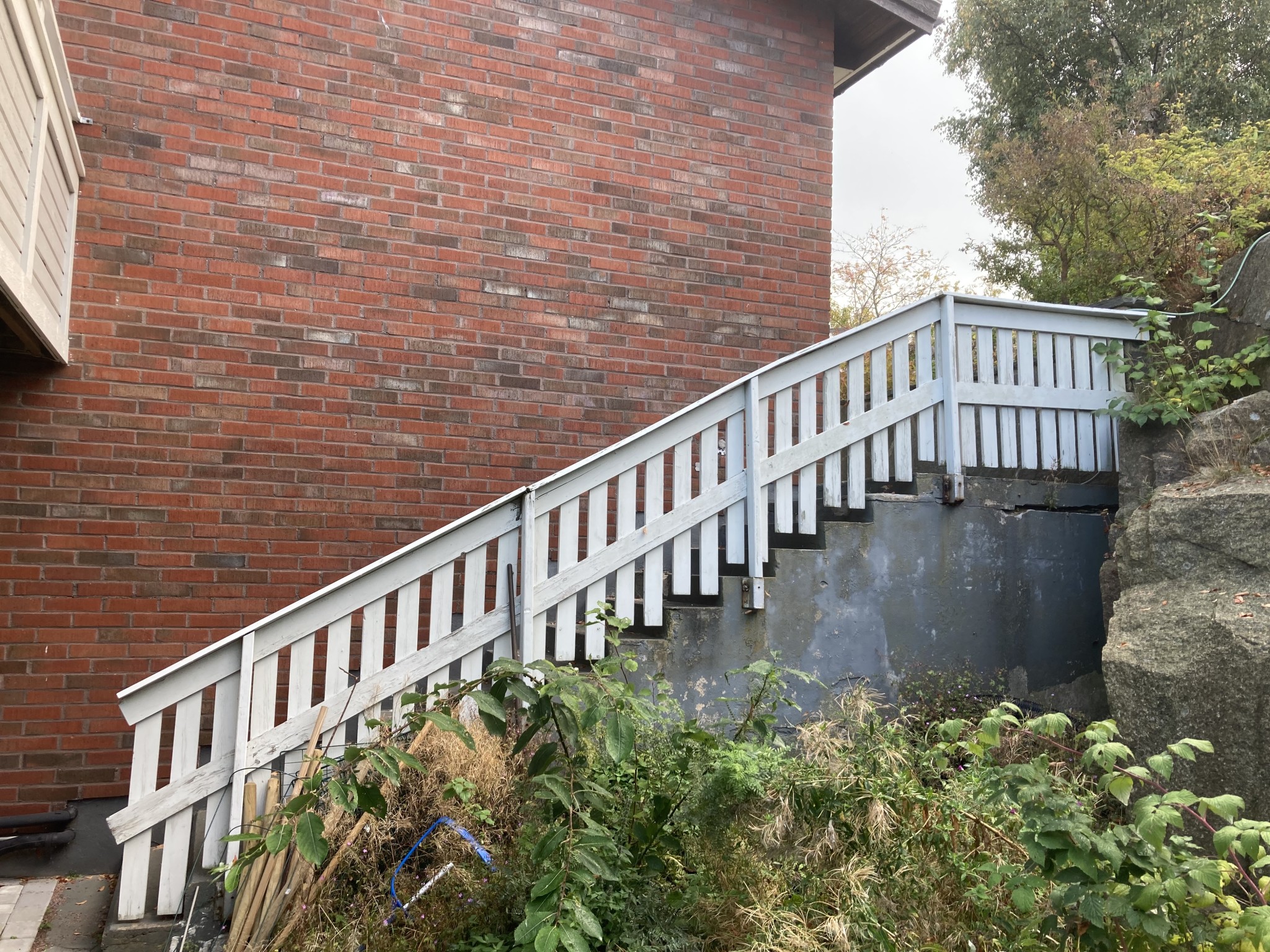
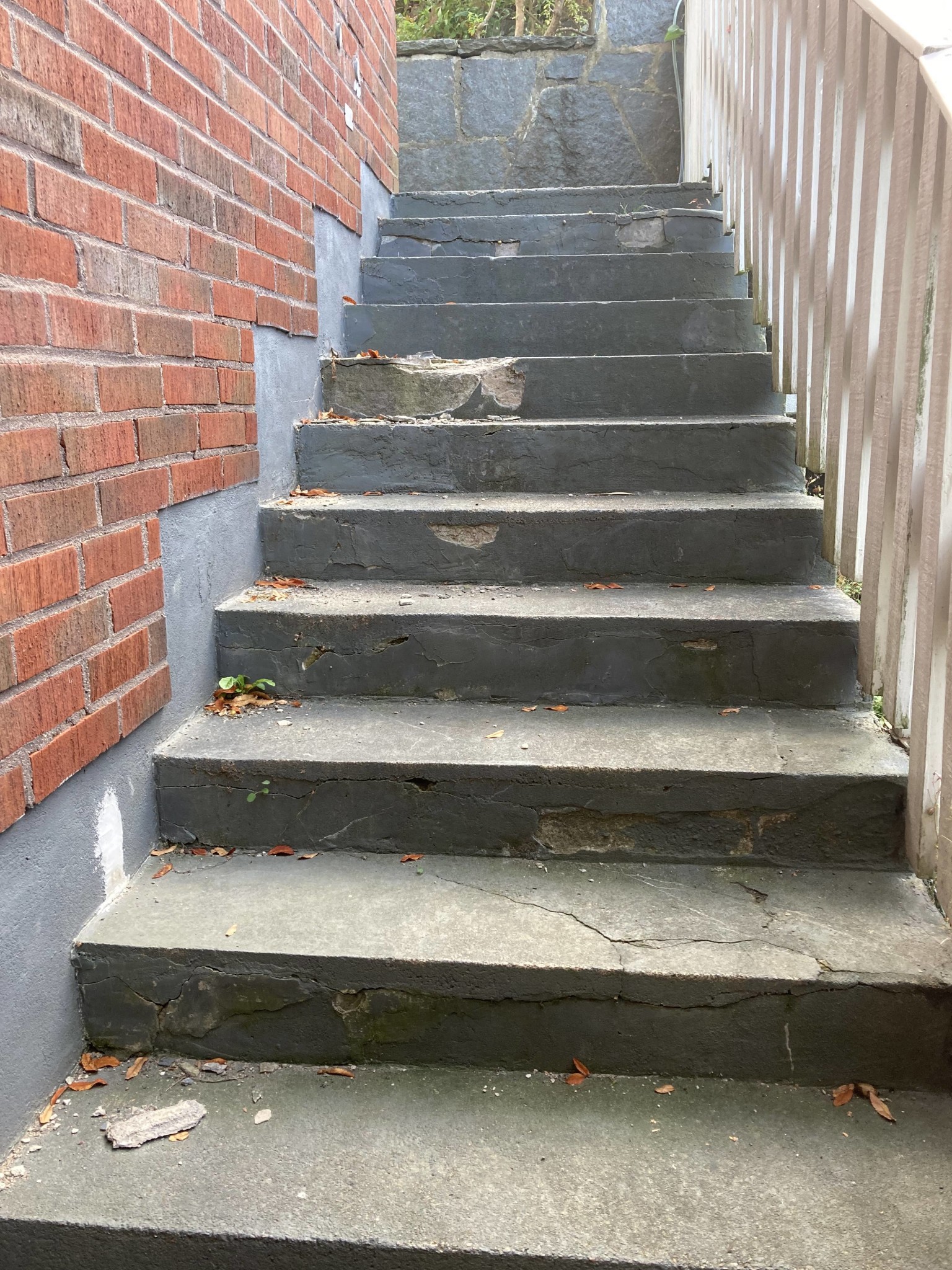
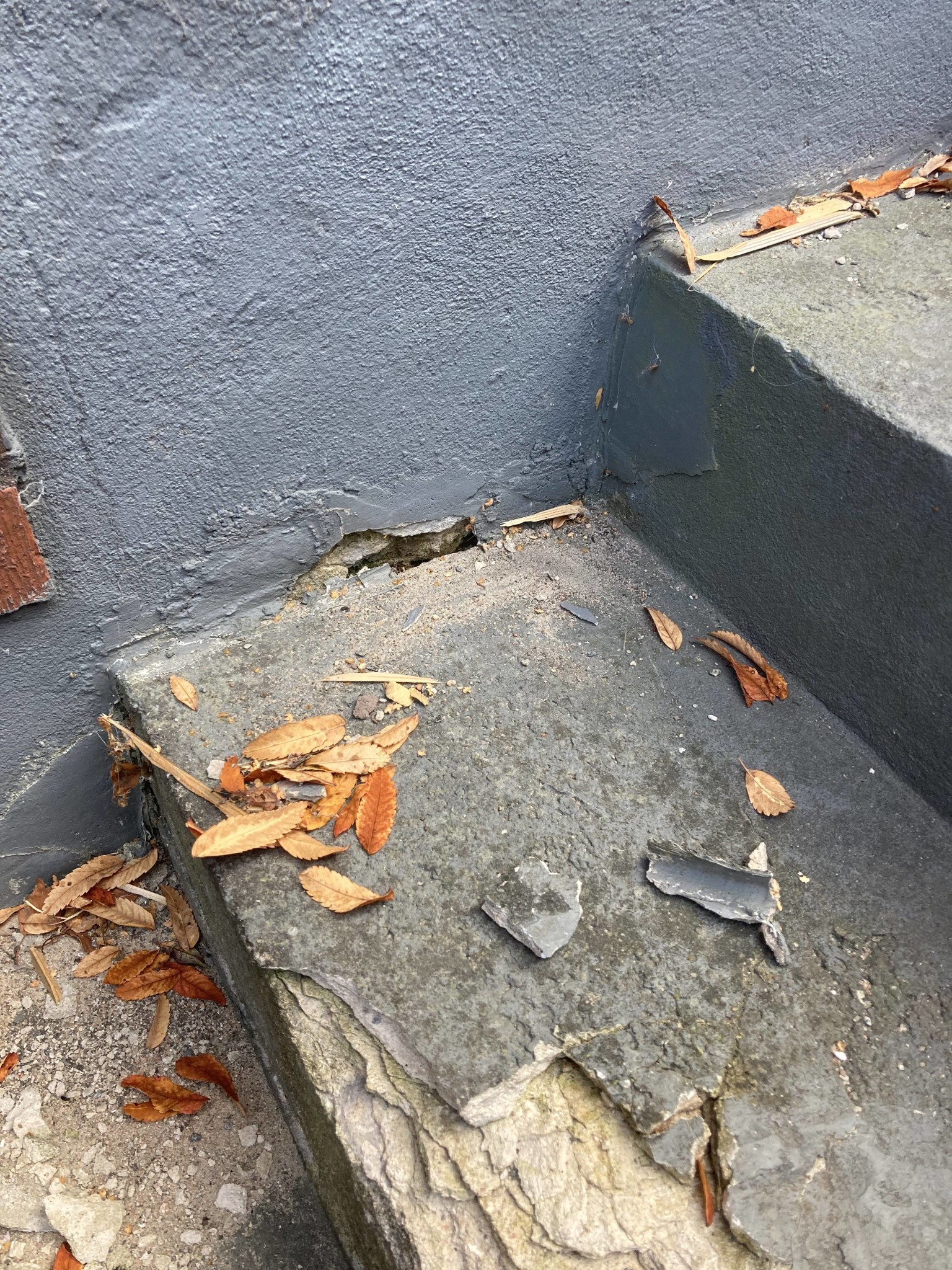
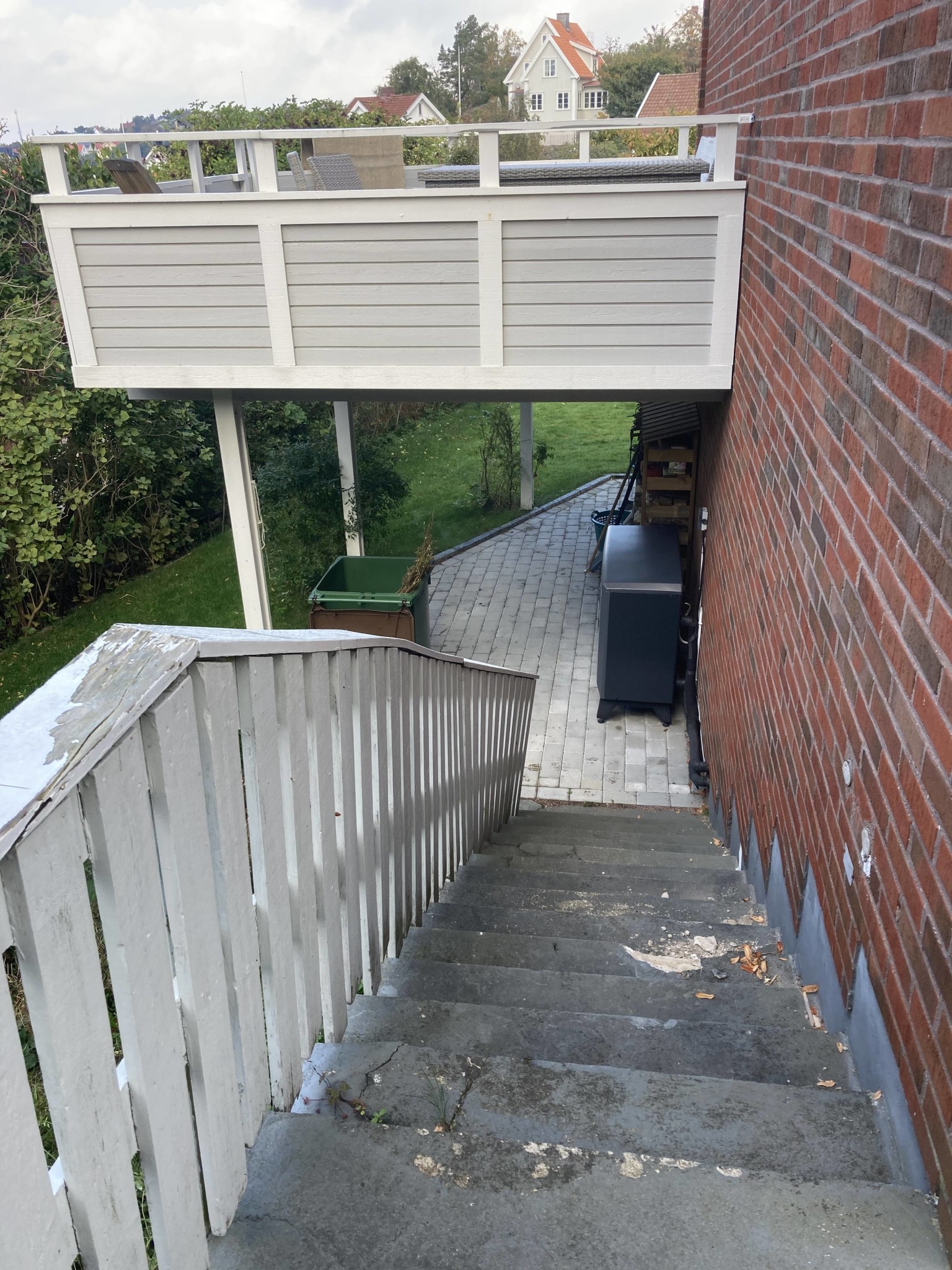
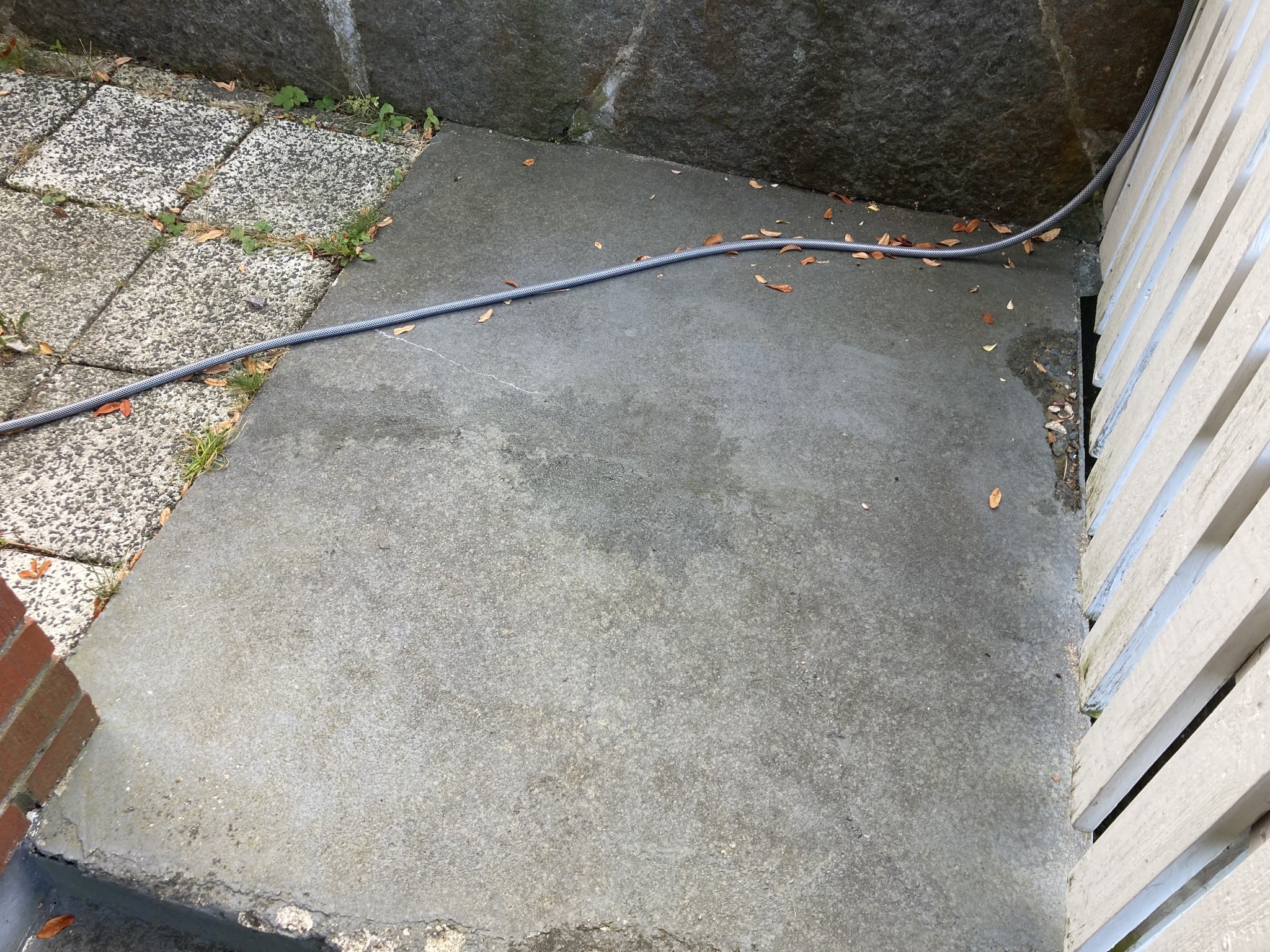
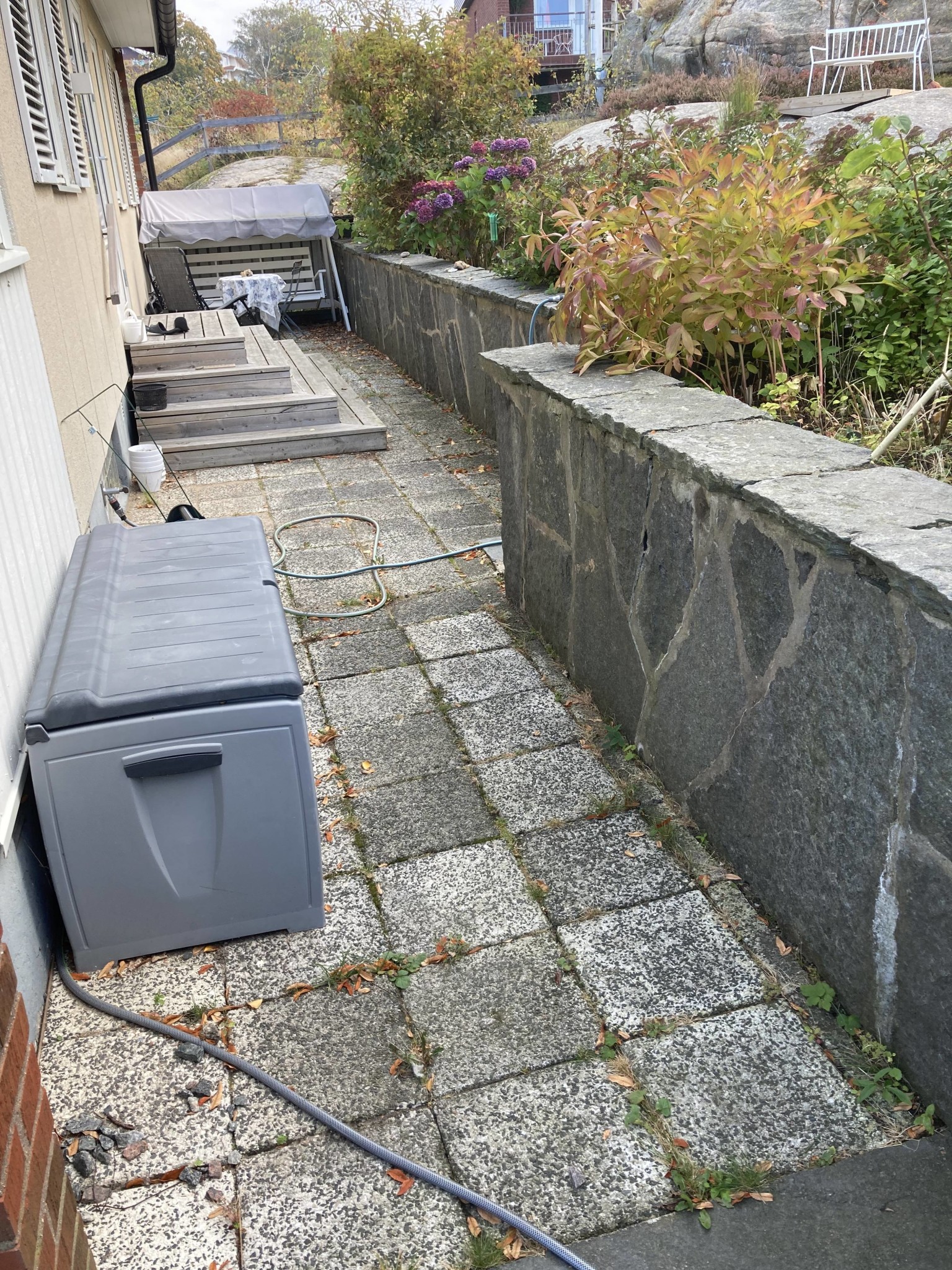
Hello! We live in a split-level house with a concrete staircase on the gable outside. The staircase is solid concrete all the way down to the ground and almost looks like it is cast together with the foundation. The staircase is in such bad condition that I feel it's high time to do something about it. Especially since it's attached to the house, I'm mainly thinking about water intrusion. My idea is to chisel away all the unhealthy concrete, then waterproof the remainder, and then build a wooden staircase over it. The staircase should blend in with a wooden deck I plan to build on the backyard patio.
Question: what should I use to seal it? Can I pour asphalt adhesive? The sealing method might depend on how it looks when I'm done chiseling, whether it's smooth, bumpy, porous, etc.
Grateful for tips
Regards
Question: what should I use to seal it? Can I pour asphalt adhesive? The sealing method might depend on how it looks when I'm done chiseling, whether it's smooth, bumpy, porous, etc.
Grateful for tips
Regards
Member
· Västernorrland
· 12 020 posts
Considering the vegetation that is growing in cracks and elsewhere, I don't think it's that remarkable to remove completely. It's probably not cemented into the house as it looks more like it's plastered there after the casting.
That was a poor wording on my part. It's not connected to the house but lies flush against it. The idea of completely removing the staircase is actually quite right but there will be a lot of concrete to demolish and move. Therefore, I thought of demolishing the damaged top part and then using what remains as support for the staircase. However, I want to seal the concrete so it doesn't let in water and frost damage again in a few years.S Stefan1972 said:
I want to remove what is cracked so that I expose fresh concrete. Then I want to make it waterproof for two reasons.N neo11 said:
1 To stop the degradation so that the concrete doesn't deteriorate and crack again, as it should serve as the foundation/support for my wooden stairs.
2 To prevent water from entering the house foundation via the stairs. Thus, the sealing should not only cover the stairs but also extend a little bit up the house wall.
I understand that asphalt adhesive makes future concrete work difficult. What other methods are available? Rolling out tar paper? Difficult I assume when the surface underneath is not even.
Yes, I'm not a master when it comes to waterproofing. However, I don't think pouring asphalt adhesive on the stairs will seal it completely. As you mentioned, you need a waterproofing layer, and I'm sure there are others on the forum who can offer advice on that.
Concrete. Remove anything that is clearly at the end of its life, get rid of all the dust, moisten the old concrete, and pour anew. If you want, you can then apply an epoxy-based surface layer.
This way, you won't have to maintain a wooden staircase for the next 50 years.
Then you'll probably realize it looks strange with wooden decking for the stairs, so you’ll lay concrete pavers instead, saving even more on maintenance and at least half the cost since the decking will need replacing in 20-25 years....
One day I will succeed in persuading someone not to build decking.
If you want to build a wooden staircase, repair with concrete and cover with the wooden staircase. When you or someone else then removes the staircase, there will be a functioning stair underneath. I would be tempted to only cover the tread surface with wood to blend the staircase with the house. A stainless spacer that the deck is screwed into protects against moisture and everything is connected with the railing.
This way, you won't have to maintain a wooden staircase for the next 50 years.
Then you'll probably realize it looks strange with wooden decking for the stairs, so you’ll lay concrete pavers instead, saving even more on maintenance and at least half the cost since the decking will need replacing in 20-25 years....
One day I will succeed in persuading someone not to build decking.
If you want to build a wooden staircase, repair with concrete and cover with the wooden staircase. When you or someone else then removes the staircase, there will be a functioning stair underneath. I would be tempted to only cover the tread surface with wood to blend the staircase with the house. A stainless spacer that the deck is screwed into protects against moisture and everything is connected with the railing.
Just smearing a bucket seems too cheap and easy to be true. So I'm looking for other methods.N neo11 said:
A wooden staircase is always more attractive than a concrete one, isn't it?Z z_bumbi said:Concrete. Remove anything that is obviously worn out, get rid of all dust, dampen the old concrete, and pour anew. If you want, you can then apply some epoxy-based surface coating.
This way, you avoid maintaining a wooden staircase for the next 50 years.
Then you'll probably realize that it looks odd with wooden decking on the steps, replace it with concrete stone instead, and you'll save even more on maintenance and halve the cost since the decking will need replacing in 20-25 years...
One day I will succeed in convincing someone not to build decking.
If you want to build a wooden staircase, repair it with concrete and cover it with the wooden staircase. When you or someone else later removes the staircase, there will be a functioning staircase underneath. I would be tempted to just cover the step surface with wood to bind the staircase with the house. A stainless-steel spacer that the decking is screwed into, which protects against moisture and connects everything with the railing.
But sure, it might be better in the long run. The current staircase is from '73. I believe I can build a wooden staircase. However, recasting the steps, not so much.
But what about this? I chisel away, install post shoes for the staircase, pour a layer over everything to make it a bit smoother—think of a wavy slide—then waterproof it.
I think you're mistaken. I repaired concrete that had been frost damaged myself this summer, but I used housefix. It became rock hard. Housefix is expensive, though. But it works like putty that becomes rock hard. Much harder than concrete. For small cracks, it's just a matter of removing all loose material and applying putty.
But I had a large corner that became enormous as I started chiseling away, so I had to set planks with clamps to make a form and pour in the housefix. But it turned out well after the planks were removed.
But you don't need to use housefix. There are plenty of other products, like byggfix or finbetong. Finbetong is much cheaper.
There are also color powders you can mix in to try to match the existing concrete.
I really wouldn't mess with asphalt adhesive or anything else. Repair concrete the usual proper way. There are plenty of guides on how to do it. Just search for "renovera betong trappa" on Google.
But I had a large corner that became enormous as I started chiseling away, so I had to set planks with clamps to make a form and pour in the housefix. But it turned out well after the planks were removed.
But you don't need to use housefix. There are plenty of other products, like byggfix or finbetong. Finbetong is much cheaper.
There are also color powders you can mix in to try to match the existing concrete.
I really wouldn't mess with asphalt adhesive or anything else. Repair concrete the usual proper way. There are plenty of guides on how to do it. Just search for "renovera betong trappa" on Google.
Last edited:
Click here to reply