Unfortunately, your fancy sketches are not self-explanatory. Floor plans of the basement and ground floor are absolutely necessary. Likewise, a section through the wall that is to be removed.
Sorry, excuse my old drawings.... Huge thanks for still sending comments to help me!!
Here are a few more that I hope will explain how it is intended to be!
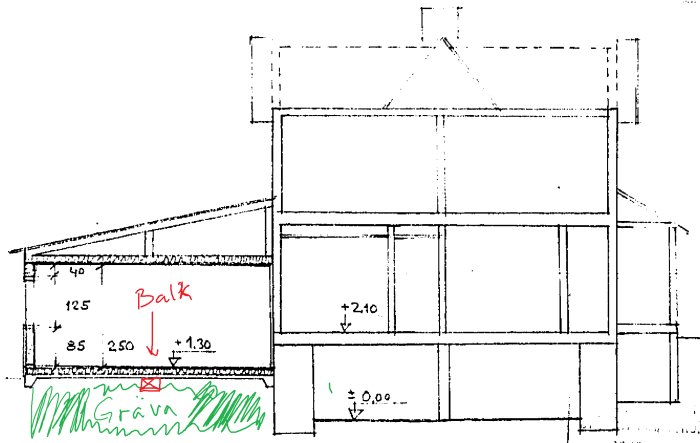
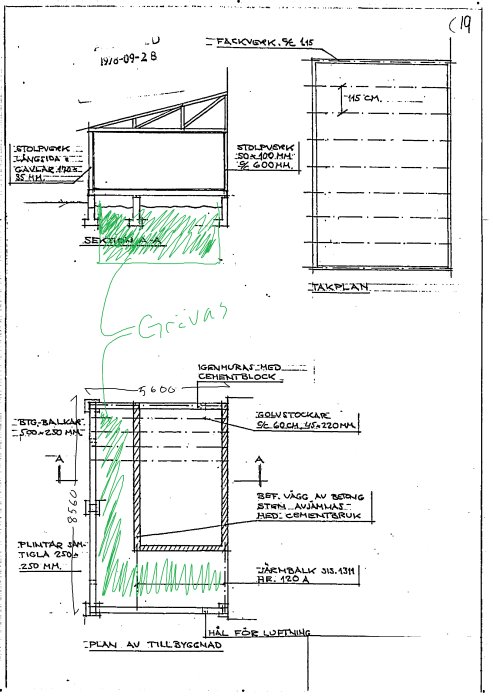
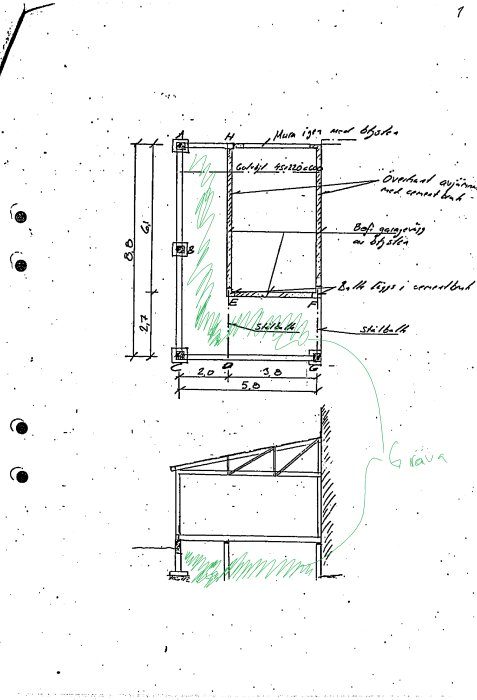
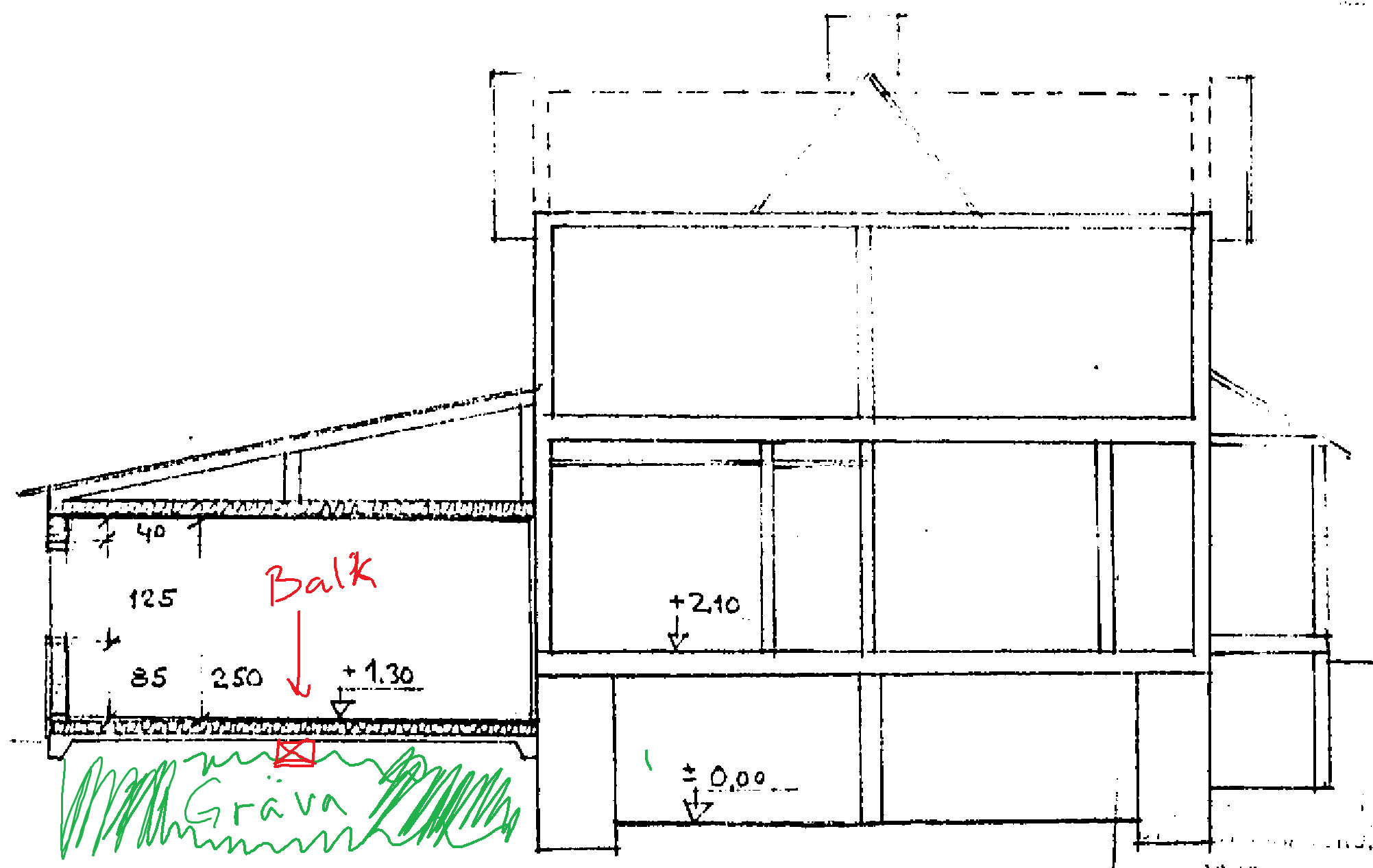
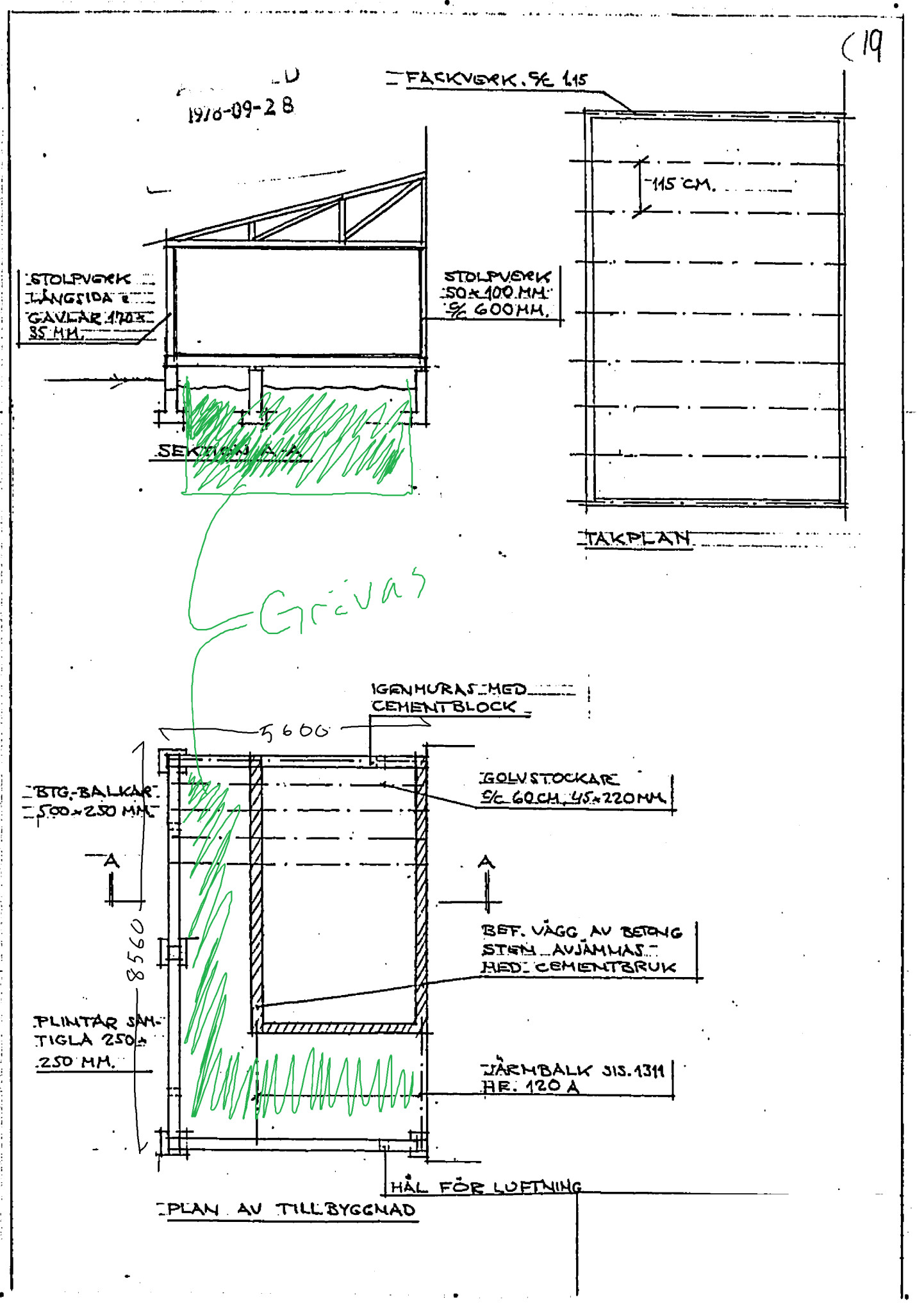
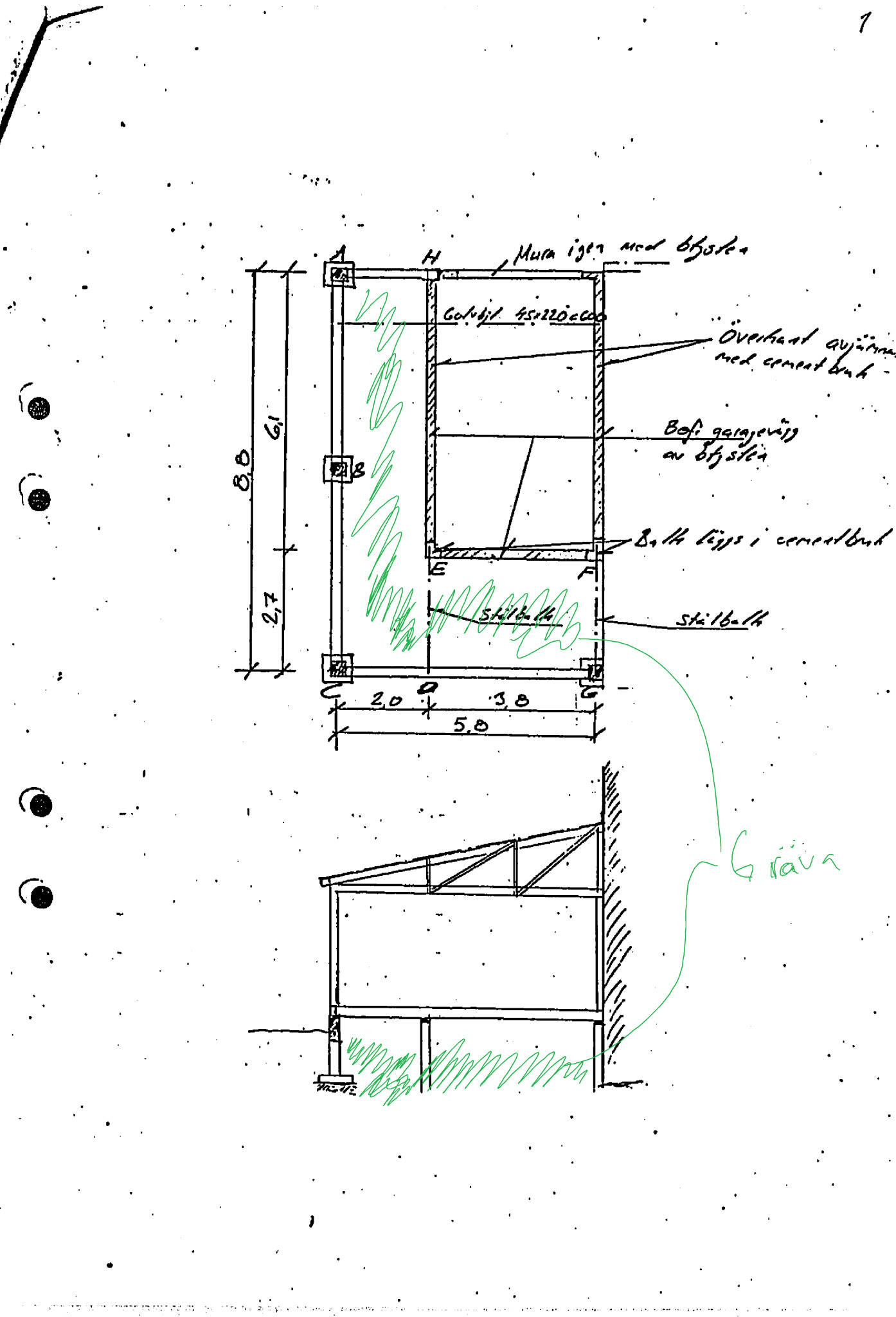
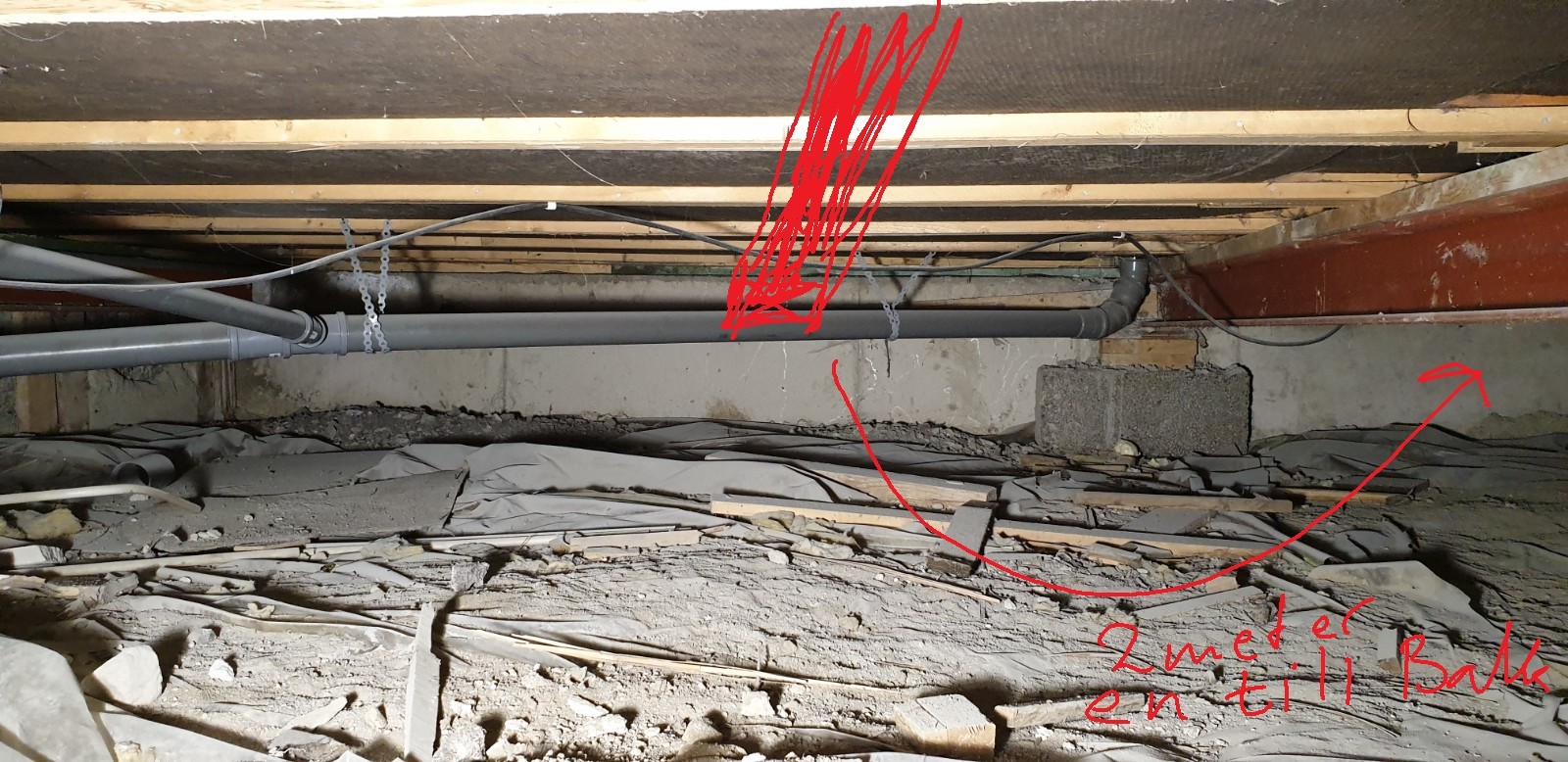
Basement with excavation in green.
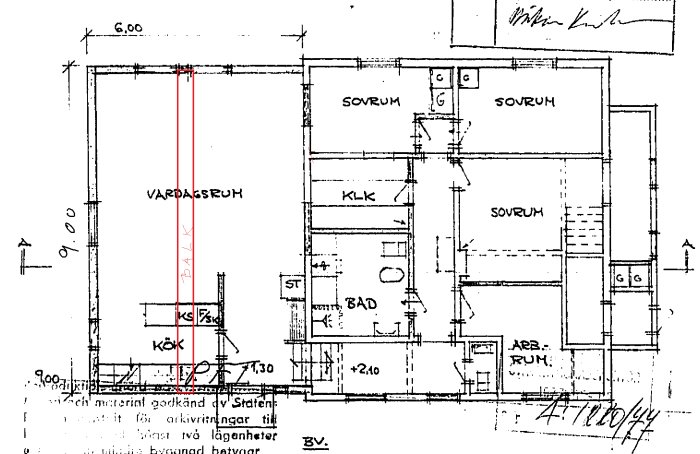
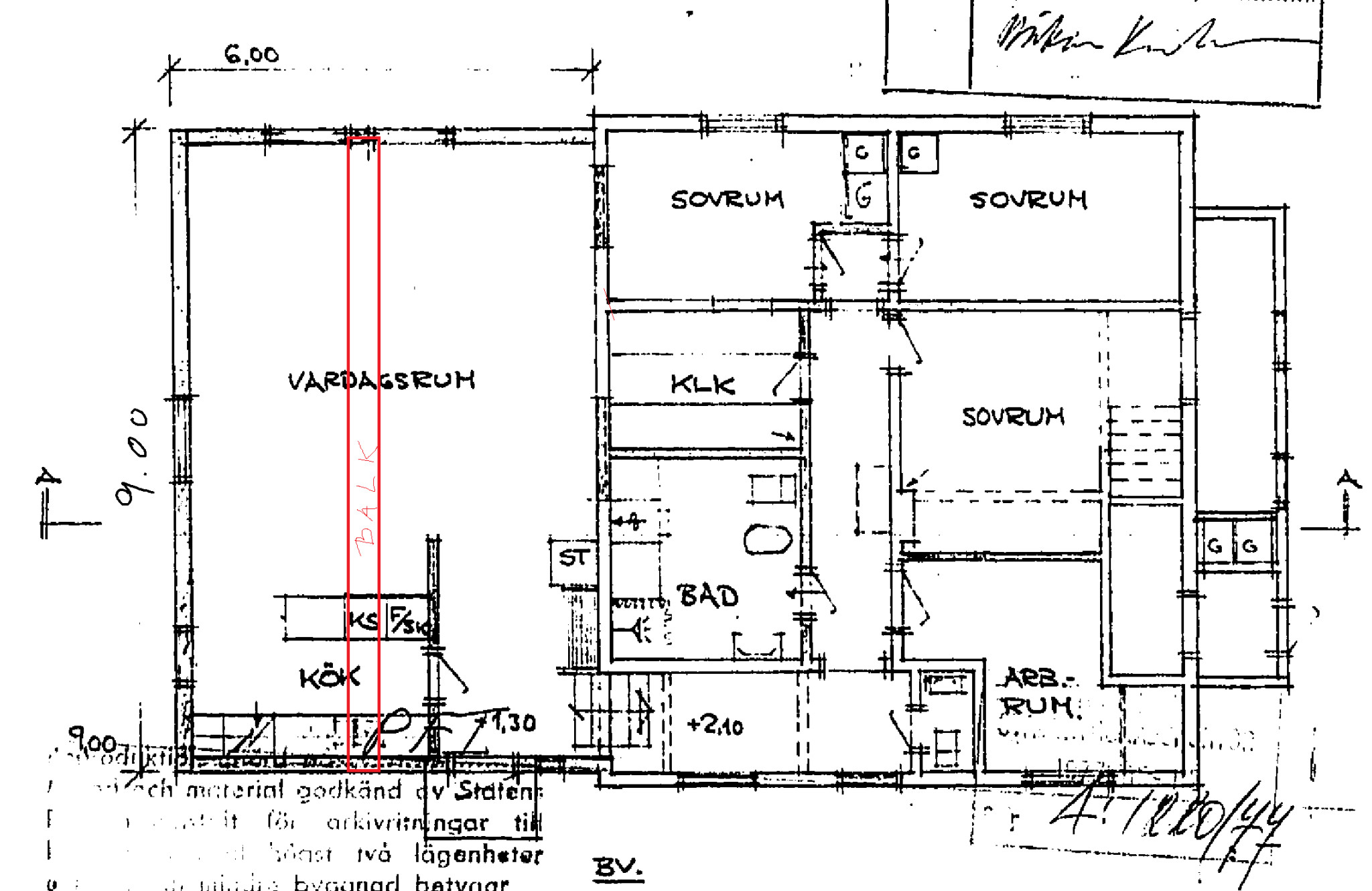
Floor plan of the floor above the basement to be excavated. New beam marked in red.
Above you can see the old garage which is intended to be bigger. The beam will replace the existing garage wall and the short beam that exists today.
This is probably more a case for @bossespecial than for me. Some questions anyway. I don't understand what the top section is doing here? It shows a completely different execution. What are you planning to do with the foundation of the outer wall? The one that currently consists of concrete beams on pillars? If we disregard these considerations, the idea of a steel beam still feels rather doubtful. We're talking about at least a HEA 260, which at the current length weighs about 600 kg. I find it difficult to see how one could reasonably get it in place. A middle pillar would make things much easier. With a middle pillar, glulam also becomes fully possible. Much easier to handle in the given and difficult situation.
Apologies for my bad and old drawings. The more I think about this, and feel free to correct me if I'm wrong. But the beams will only need to support the floor above, i.e., the kitchen:
The weight from the roof with snow is currently engineered to go down into the outer walls and that will continue to be the case.
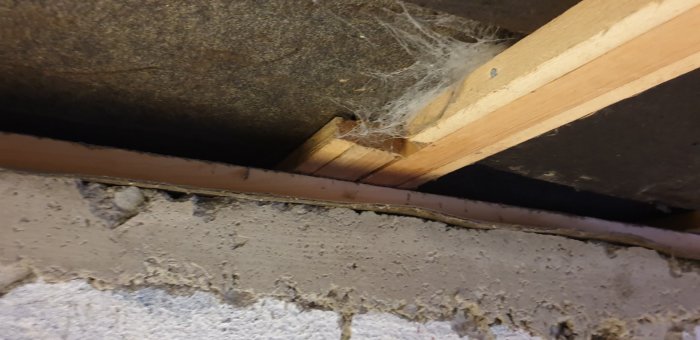
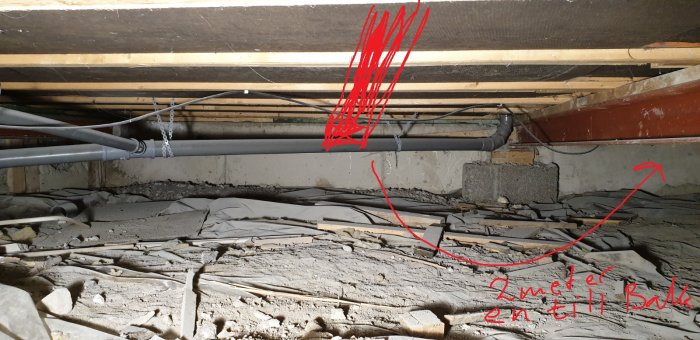
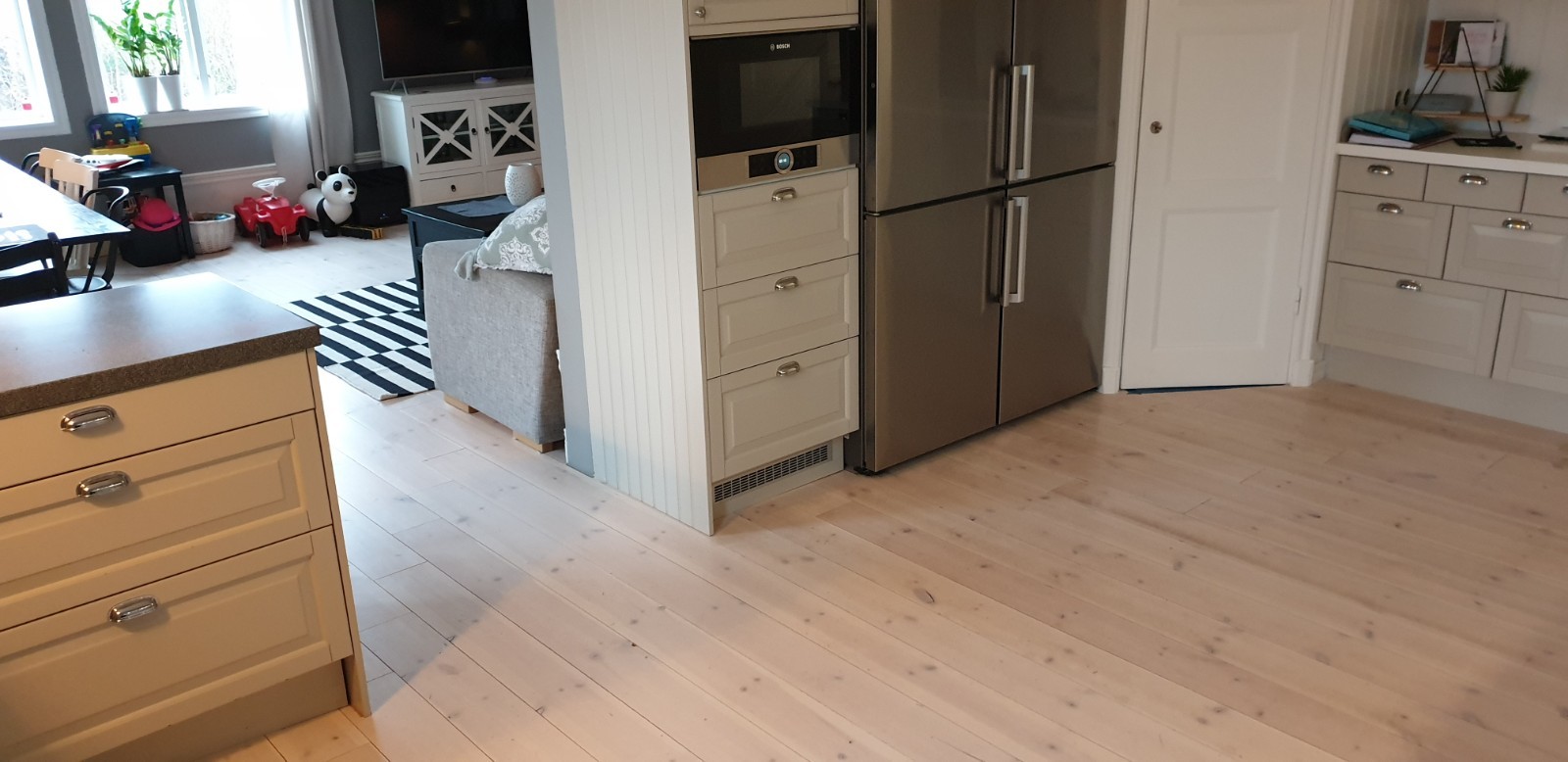
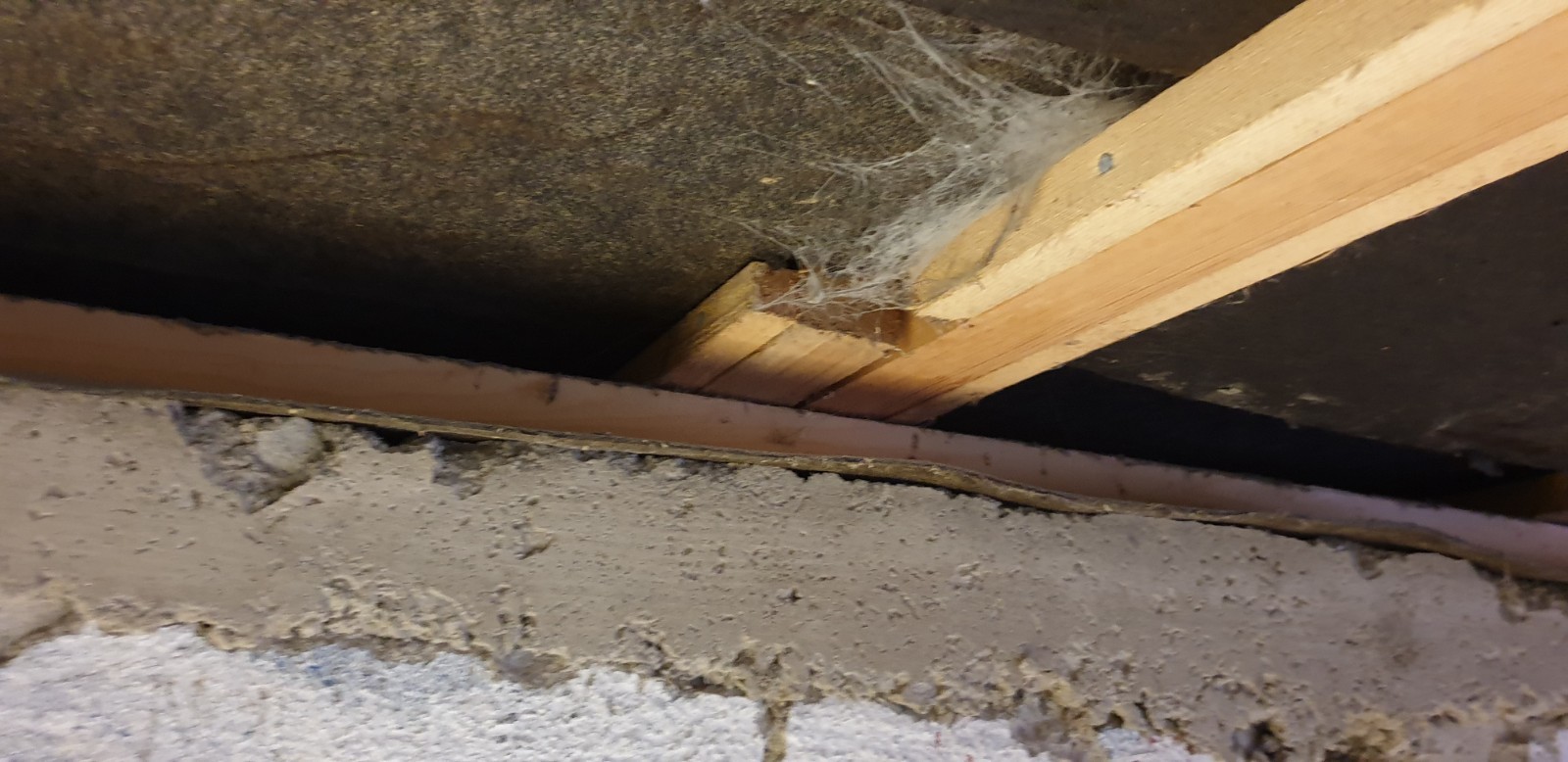
The beam and wall currently under the kitchen floor support the floor, and unfortunately, the wooden joists have been joined in the middle where the old garage wall stands below. The joists are 3+3 meters:
So the new beam should make sure that these joints in the wooden joists remain unchanged.
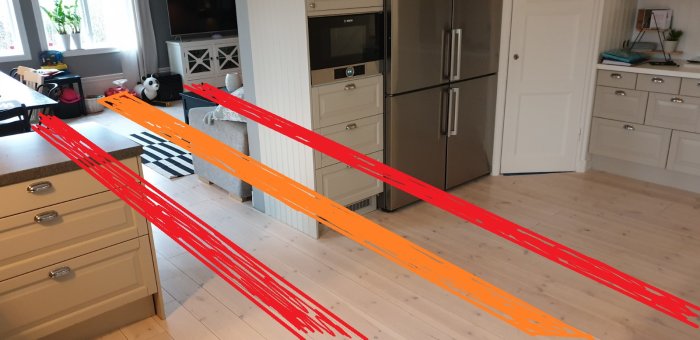
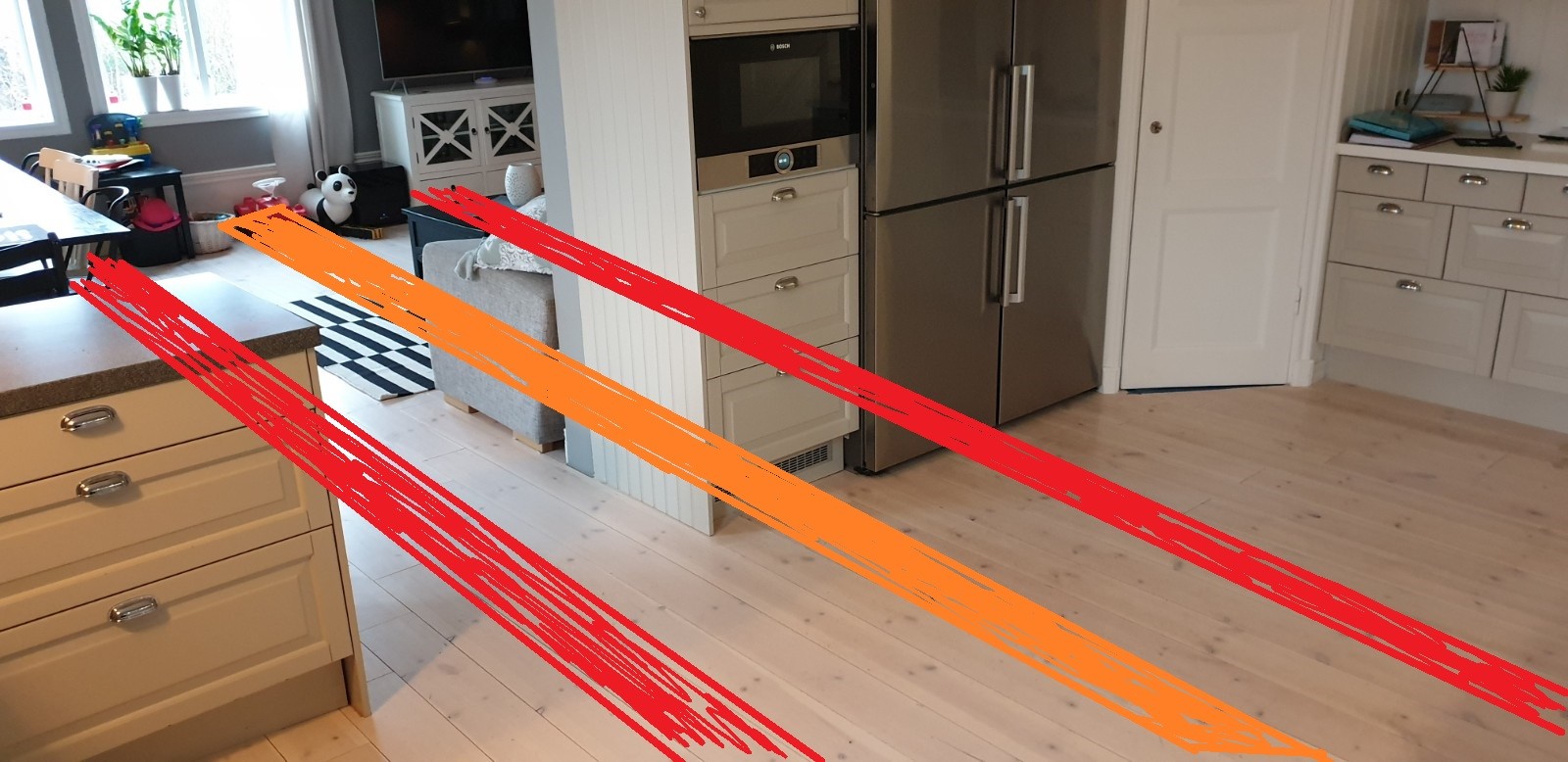
I'm thinking maybe two smaller beams can be installed. The room is scarcely 6 meters wide. That would be barely 2 meters between wall - beam - beam - wall. The joints in the joists will then hang in the middle between two steel beams, about 1 meter from the beams.
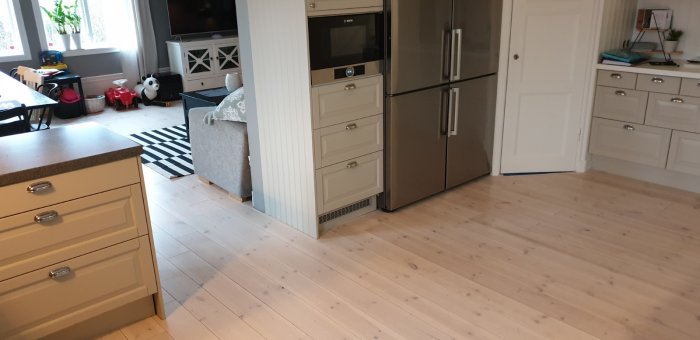
In the kitchen above they would approximately end up like this: Red beam is the new ones and orange is the old wall + old beam.
The new beams will deflect over 9 meters so clearly, and compensation will be needed for this. But the load on the beams should be calculated at about 100kg per meter, or is that completely wrong?
It is clear that with double beams you can slightly reduce the dimensions. However, you will still end up with at least HEA 240, which weighs 500 kg when it is 8.5 m long.
Click here to reply
Vi vill skicka notiser för ämnen du bevakar och händelser som berör dig.