Well, it depends on whether you consider the wooden rule as part of the load-bearing beam or not. If you only calculate the sheet metal as a bearing element, and the rule's only task is to prevent the sheet from tipping and not taking any load, then the sheet should be on the side of the rule. However, if you consider the rule and the sheets as a sandwich or as a truss, then the sheets should be placed on the top and bottom. Compare how an IPE beam is placed, like an I, not like an H. (My variant requires a good connection between the sheets and the rule, otherwise it becomes like a leaf spring.)
No, I have calculated on steel plus trä as a composite interacting element. I will calculate on your variant as well. It is clear that massa located far from the centroidal axis has a greater impact on the moment of inertia. At the same time, standing glue joints are stiffer than lying ones.
Yes, weight might be an issue but I don't think it will be too much. I'll need to do some calculations. The cost isn't very sensitive since I've basically budgeted for a rolling dome roof (around 40kkr), but I realize it would look much nicer to make a low roof (and I don't think we'll be bathing under the roof anyway).
Hello, this is bybbare bob 1966! Regarding your pool construction, what I'm wondering is if the "floor" should be walkable or really sturdy. For me, the difference is being able to walk or functioning as a dance floor. Do you want it to be waterproof as well, or does it not matter if rain and snow come into the pool? Suggestion if you want it as a simple pool cover: A frame with pressure treated 45-145 beams of somewhat better quality... feel free to place the curve upwards. cc600 mm or whatever fits the insulation = cell foam, I think two pieces of 50mm on top of each other with staggered short seams to prevent heat leakage. You can prevent the plastic from falling into the pool by nailing a small rib around 22-22 mm at the bottom of the 45-145, not underneath but on the 145 side; this will give you a fairly smooth underside, so you don't get much heat leakage. You can now lay pressure treated 28-120 decking on top. If you can do without the decking, you could lay a channel roofing as rain cover, which is often quite nice-looking? Hope this post makes sense to you.
I promised to make a comparison between two different types of reinforcement for a wooden beam (45x120 C 24) with flat steel. A: 120x6 mm glued and screwed (not sure how to do that in practice) on both sides of the wooden beam. B: 45x6 mm glued and screwed on the top and bottom of the wooden beam. Conclusion: Taking into account that the vertical joints provide a slightly stiffer construction (I have no solid basis for that assessment), they are fairly equivalent, with a slight advantage for B.
Keep in mind that even the +40 section of the deck needs to be reinforced. It has the same (technically slightly larger) span as the pool cover that must be managed. Or perhaps that's exactly where the problem should be solved: Build the +40 section with steel beams so you get a bit more height to roll the pool cover under.
Micsor, how did it go? Did anything come of it?
I'm considering building my own pool cover that can be used as a floor. I'm thinking about using self-supporting metal sheets, like TP131, which I will put wheels on and cover with decking.
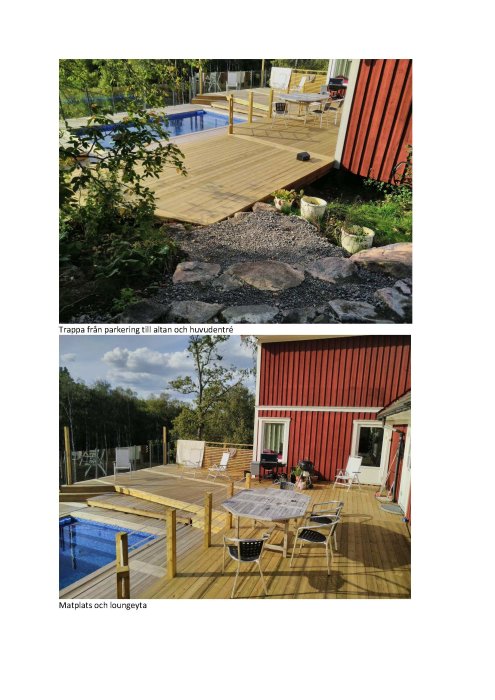
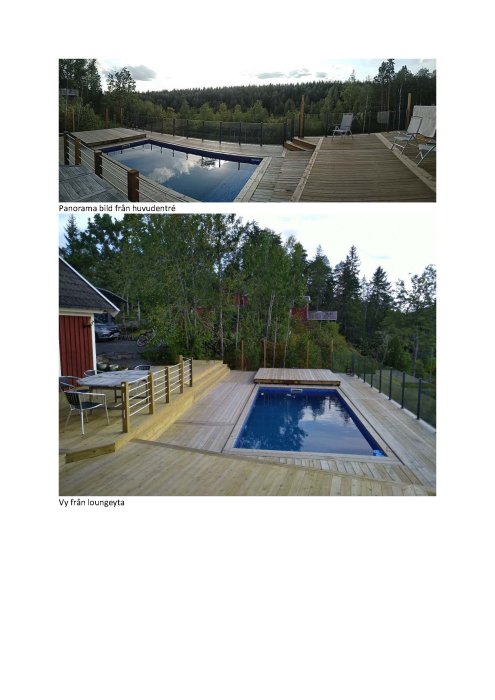
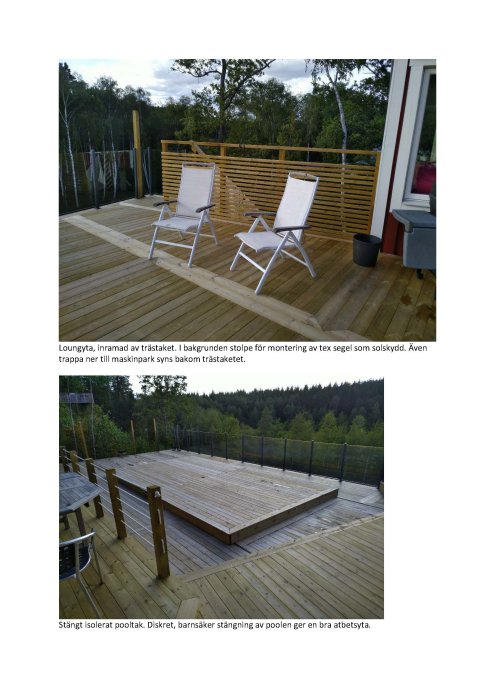
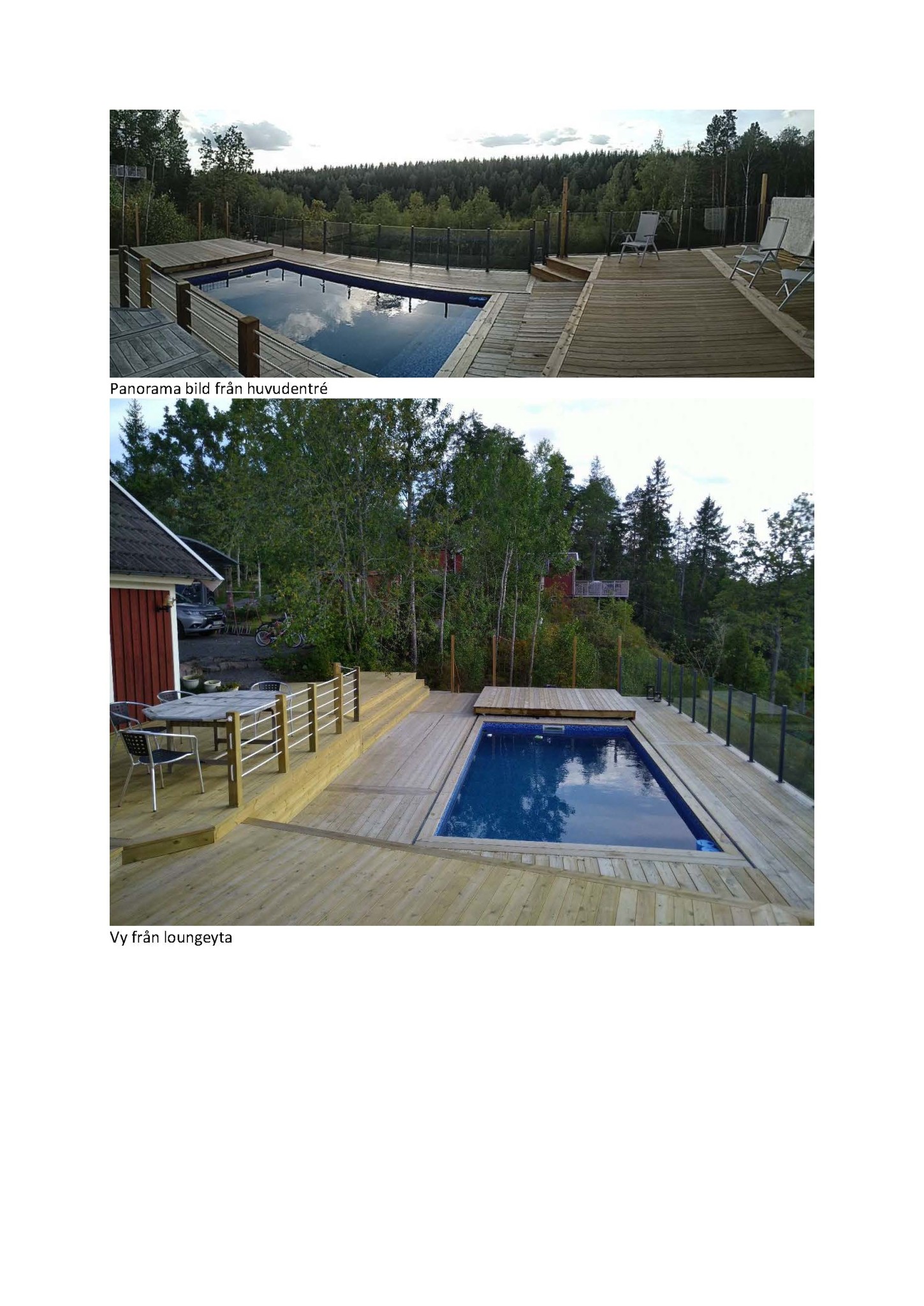
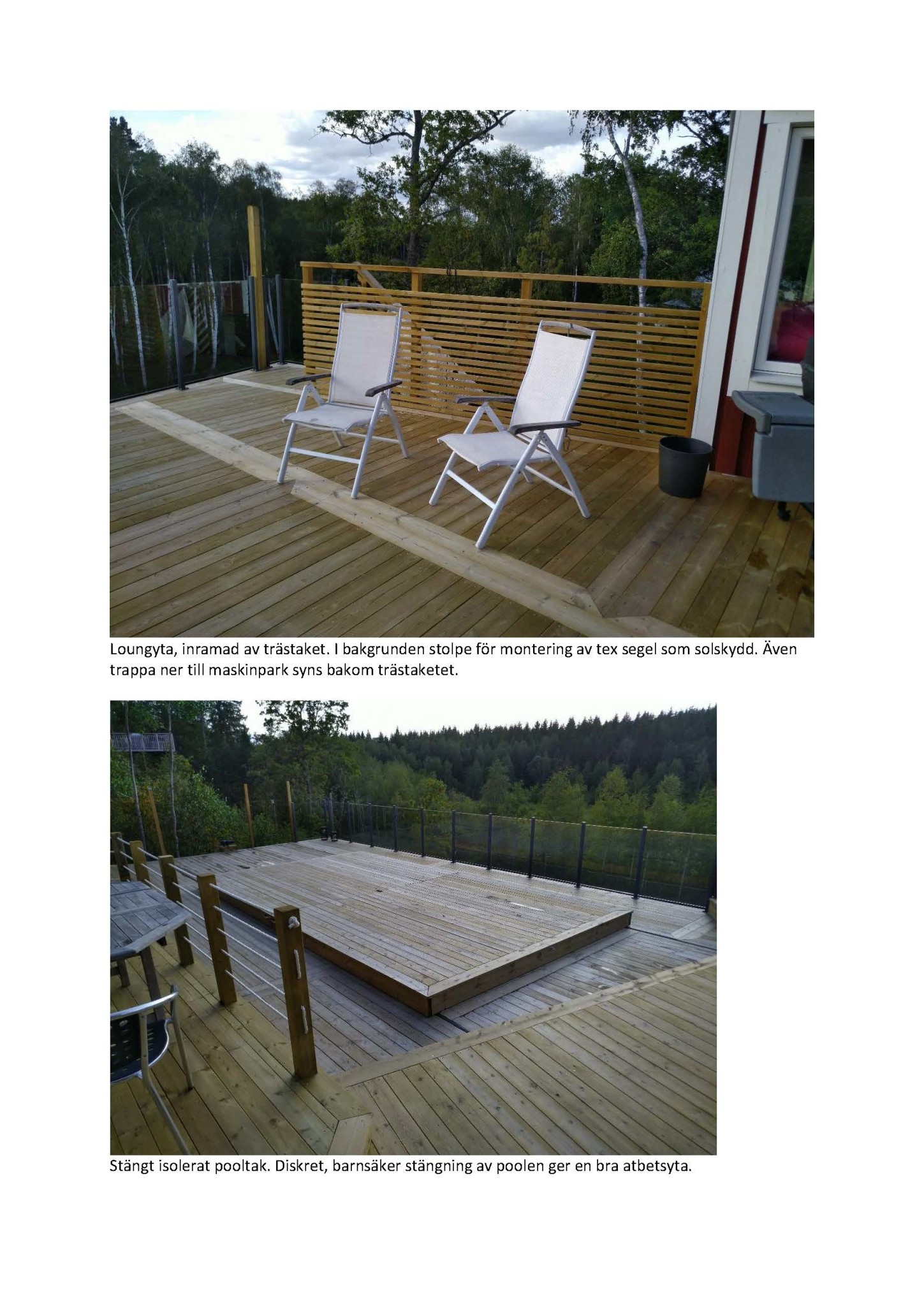
Sure, it turned out to be a nice roof. With 145mm wooden joists reinforced with glued galvanized steel straps. Chose 4x60mm, which I glued under the joists. The 60mm width created small "wings" under the joists that I used to lay foam insulation on. Had to reinforce the floor joists on the terrace in a similar way where the roof would roll in underneath. I'll attach some pictures of the finished result.
Thanks for the positive reviews! Nah, I won't sell. But I needed a new valuation of the house once the entire pool project was completed.
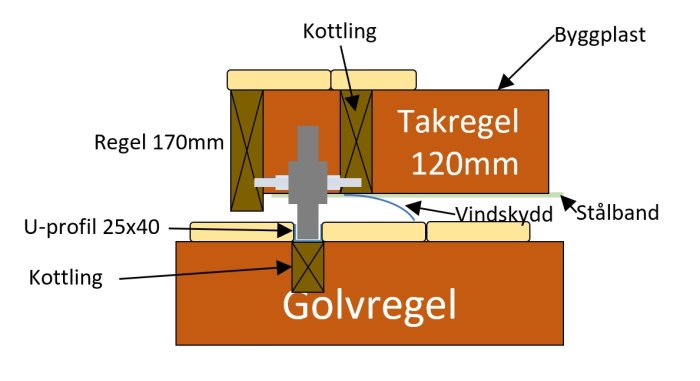
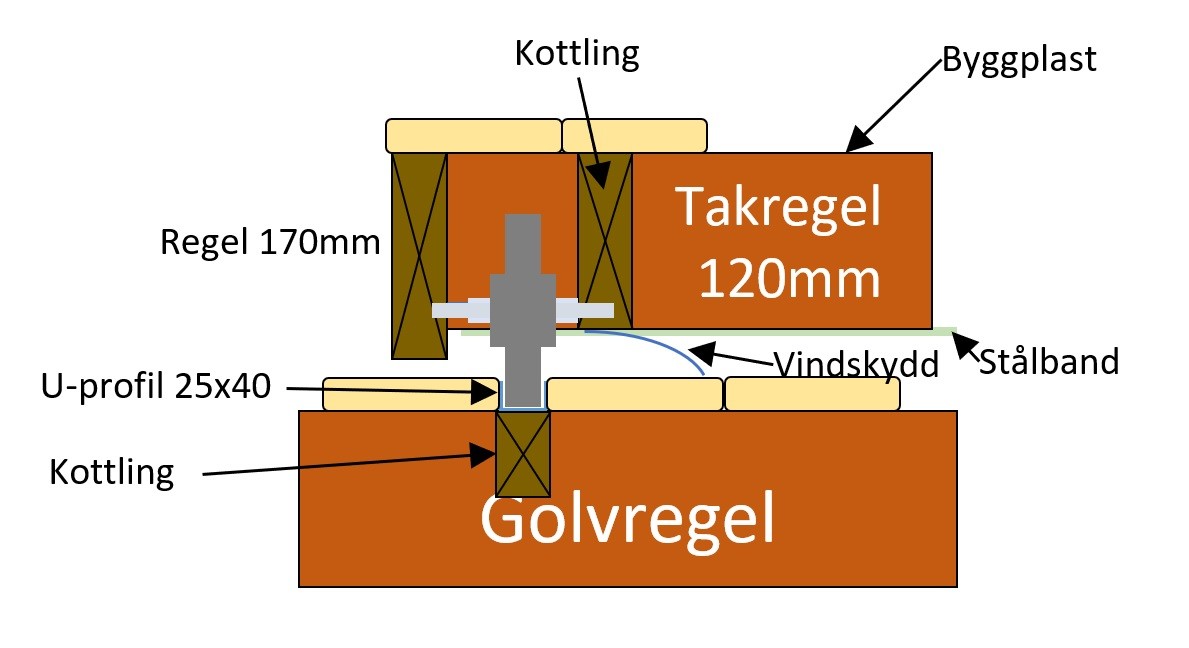
Unfortunately, it seems there are no photos of the pool cover construction. But the principle is as follows. The roof rolls in aluminum U-profiles of 40x25, which lie on the joists of the pool deck. The roof is divided into 2 halves, each about 3.6x3.3m. Each half has 3 sides (the sides visible when the roof is closed) with 45x170 beams and then reinforced 45x120 beams (reinforced with 6x60mm galvanized steel bands that were glued and screwed with cc 200 between screws). Each half is supported by 8 wheels. Between the beams, I insulated with 100mm foam board that is sealed against the beams with flexible sealant foam. To prevent rainwater from running into the pool, a construction foil is placed between the beams and the floor planks. I've added a small "skirt" of leftover 3mm foam mat under the roof as a wind protection to prevent it from blowing straight through under the roof.
Experiences: a lot of condensation forms on the underside of the roof during the heated season. It feels good that it condenses on the galvanized steel bands and foam board rather than on wood. However, much steam seeps up into the wooden structure and keeps it moist throughout the summer. It wouldn’t have been a bad idea to have construction foil underneath—but how would you attach it? Possibly place the reinforcements on the side of the floor beam instead of underneath; and clamp a construction foil under the beams with some plastic strip? I'm very satisfied with the wind protection. Besides preventing the cooling of the pool, it prevents debris from blowing into the pool and directs condensation water back into the pool.
The roof is heavy but can be rolled by an adult if accessed from the middle of an end. Alternatively, you have one person on each side. However, I prefer using winches that I have mounted on each end of the pool deck. The roof is so heavy that I had to build it on site.
Click here to reply
Vi vill skicka notiser för ämnen du bevakar och händelser som berör dig.