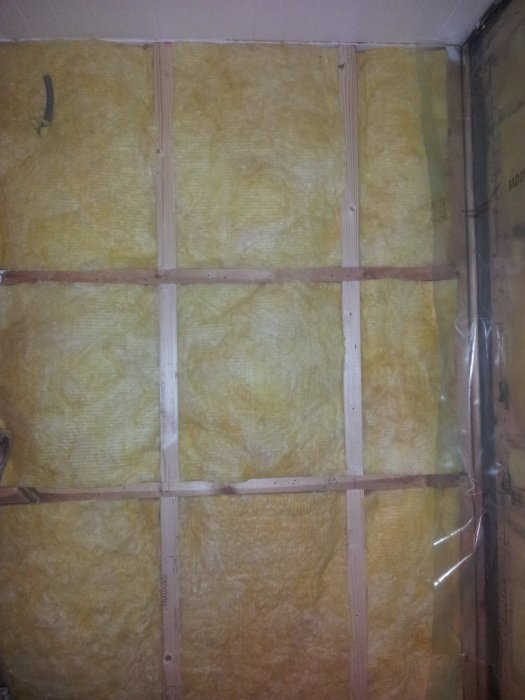
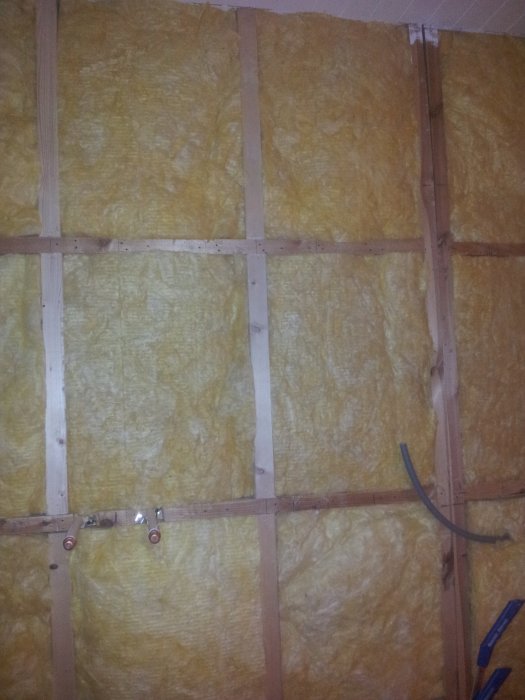
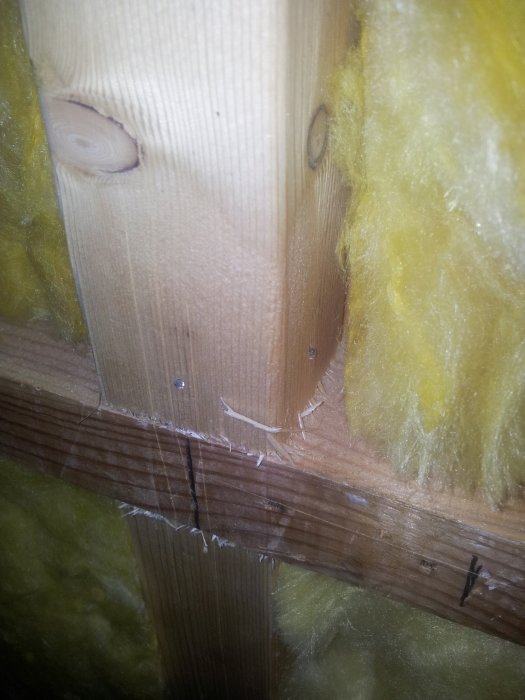
I have a company here renovating the bathroom. They have framed it and fixed it up now. Now to what I find strange... Instead of cutting cross timbers and placing whole studs in the wall, they have "wedged in" studs between the old "cross timbers" and nailed everywhere with 18 ga T-nails. On the back side, there is tongue-and-groove paneling, but the studs are not attached to the back side. Against the top plate (which, by the way, is hidden by a lowered ceiling) they have also nailed the studs with the same flimsy "nail". No screws or thicker nails, just 18 ga nails. Shouldn't there be full vertical studs and cut cross timbers to maintain the stud's bending stiffness? Shouldn't you also "drop" the top plate at the top, which you can then screw the sheets into between the studs? I think the walls feel quite unstable right now, it's easy to "flex" them with hand force. The idea is that the craftsmen will then install plywood and then wet room boards. But is this really done right?
Would be interesting to hear why they chose to work with horizontal studs. What is the cc measurement vertically and horizontally? If you have good fitting on the pieces, you absolutely don't need to use screws, however, I would probably have used 2.5" or 3" nails.
The horizontal studs were there from the beginning. There was paneling on both sides and approximately c-c 120 between the vertical studs. They simply did not remove the horizontal studs but added 45x45 studs in between. The c-c on the newly added studs is 45 cm. So the diff barrier shouldn't be there or? Yes, it's an external wall. But how should I continue...they'll probably be here at 7 tomorrow to put up the boards. :-\
The plastic is meant to prevent moisture in the room from getting into the frame.
Since wet areas are moisture-proofed on the inside of the paneling, the plastic will enclose the panel, which cannot breathe.
The plastic should be folded out about 10 cm on the protruding walls. This creates a little overlap, but that's okay.
Ok... I'll have to raise the question about the waterproofing with them anyway.
But, back to the studs, is it inappropriate for them not to be continuous from floor to ceiling or do you think it will work if you just ask them to nail or screw properly? Moreover, this is supposed to resemble "våtrumsvägg 2012".. But the studs are 45x45 (shouldn't they be 45x70?) so it seems to be some kind of "hybrid solution."
This was resolved very smoothly! I thoroughly researched the wall construction and then talked to them, explaining the situation in a straightforward way, without any fuss. They agreed to fix this, and now they're building what we actually agreed upon. They've also over-engineered it now; it's like a fortress compared to before! There's a ton of studs, and from what I can feel and see, really, really stable!