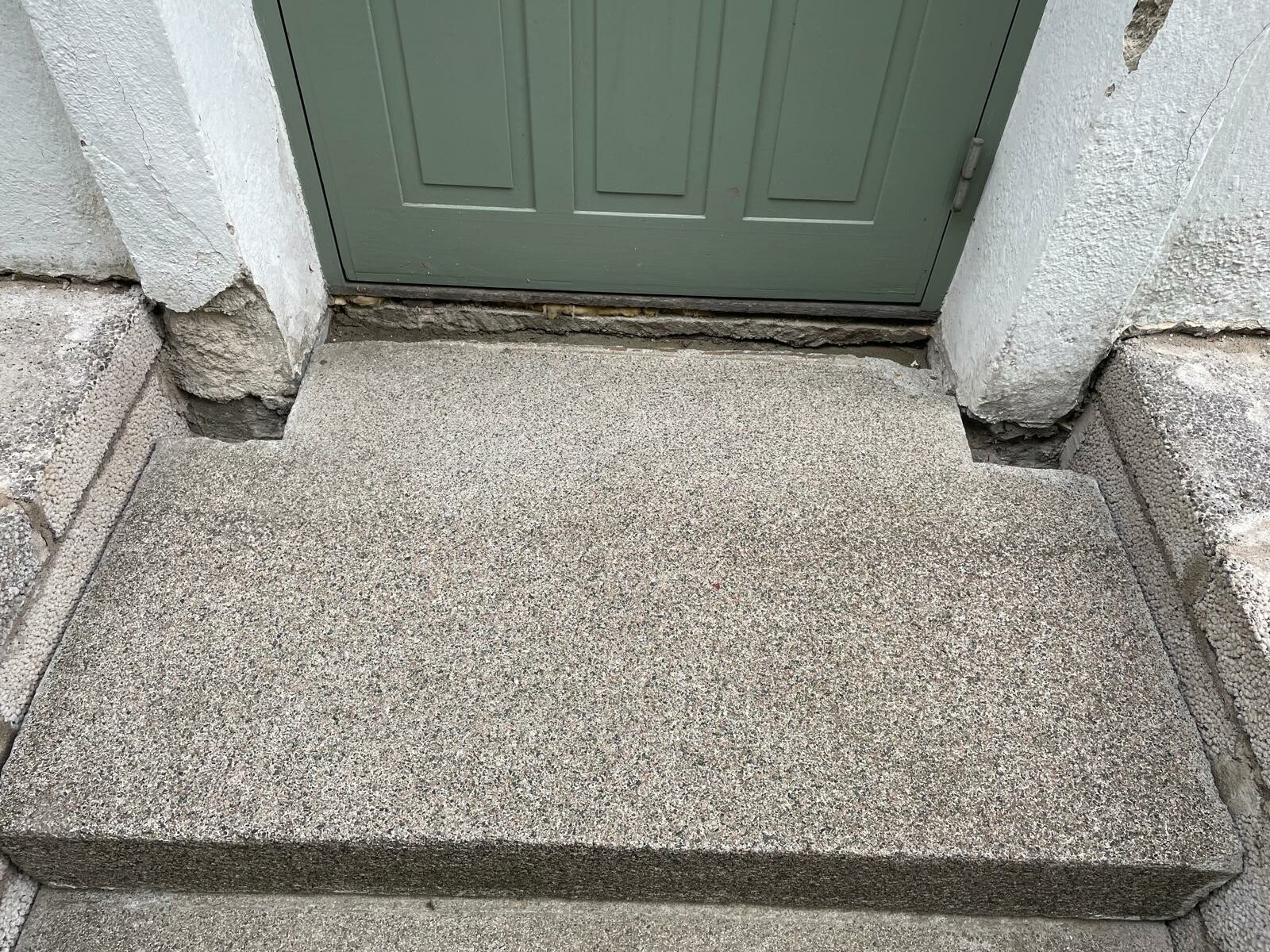
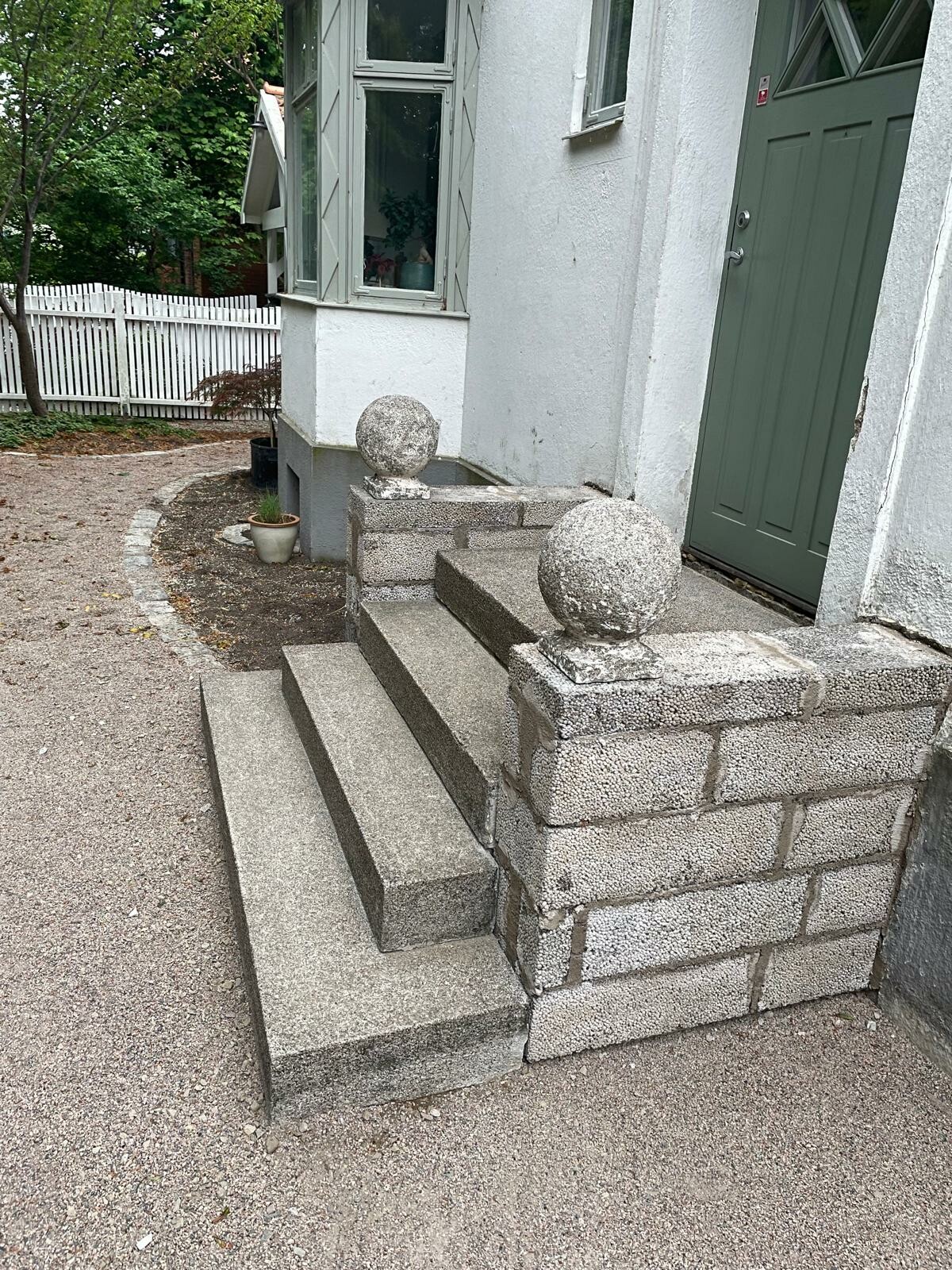
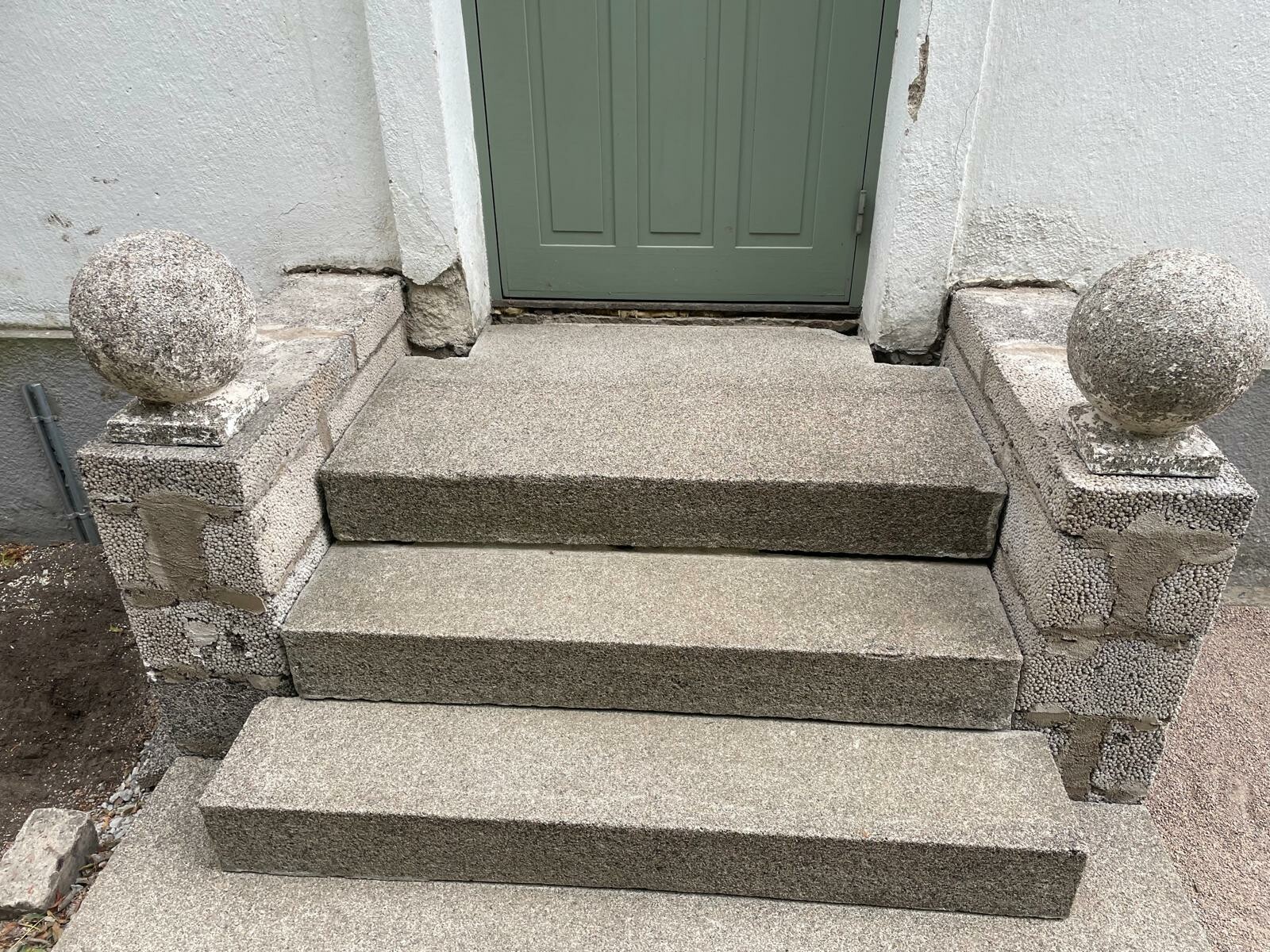
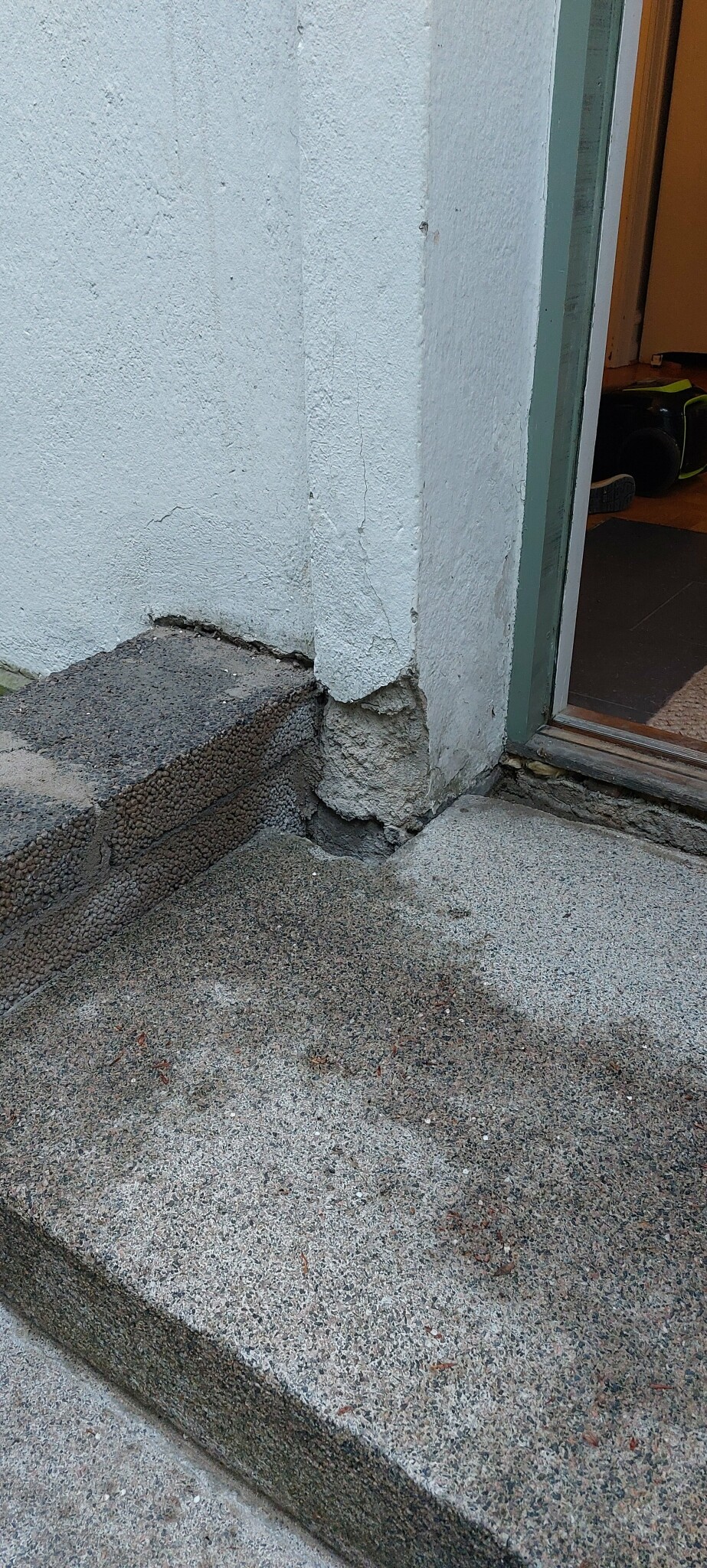
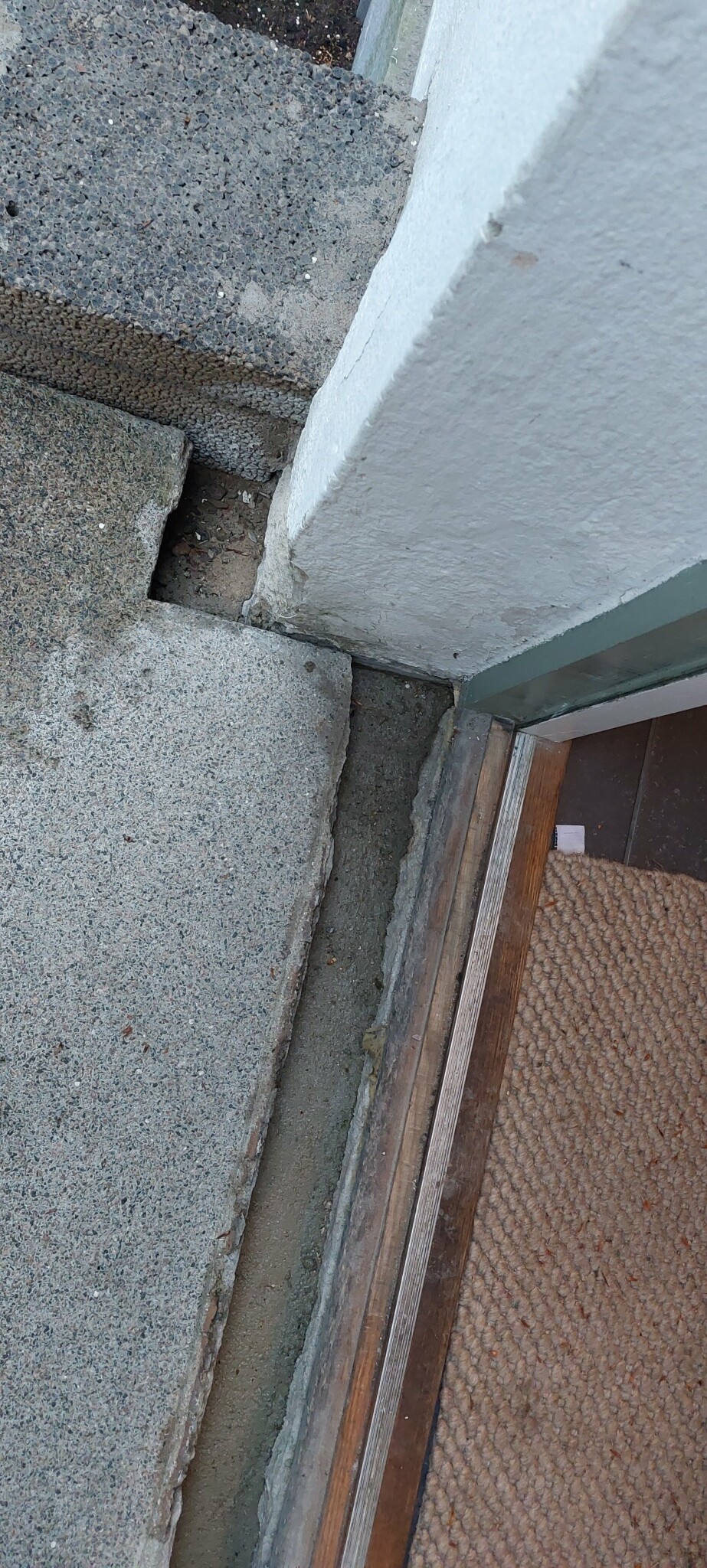
In connection with the drainage, we had to remove the original steps to our house (built in 1924). However, we saved the steps (separately cast) for reuse. A mason built new sidepieces and today the steps arrived to be reinstalled by a crane truck. I couldn’t be home and panicked a bit when I saw that they’ve pulled out the entire structure, leaving a gap of about 10 cm between the façade and the steps. The contractor claims this is necessary because the stairs need to be a separate construction to prevent cracking due to movement. But why a gap as large as 10 cm?? Is this necessary or are they trying to excuse a mistake? Suggestions for how to best fix a reasonably sensible transition are much appreciated. The mason suggests some kind of plinth on the sides and metal flashing at the threshold. Can this really look nice?
Yes, 10 cm is certainly possible in a severely earthquake-affected area, but hardly on Swedish bedrock. Have another talk with the executor on the topic of göromgörrätt.
Click here to reply
Vi vill skicka notiser för ämnen du bevakar och händelser som berör dig.