
32,572 views ·
63 replies
33k views
63 replies
Help! Elfa in lightweight concrete - Best approach
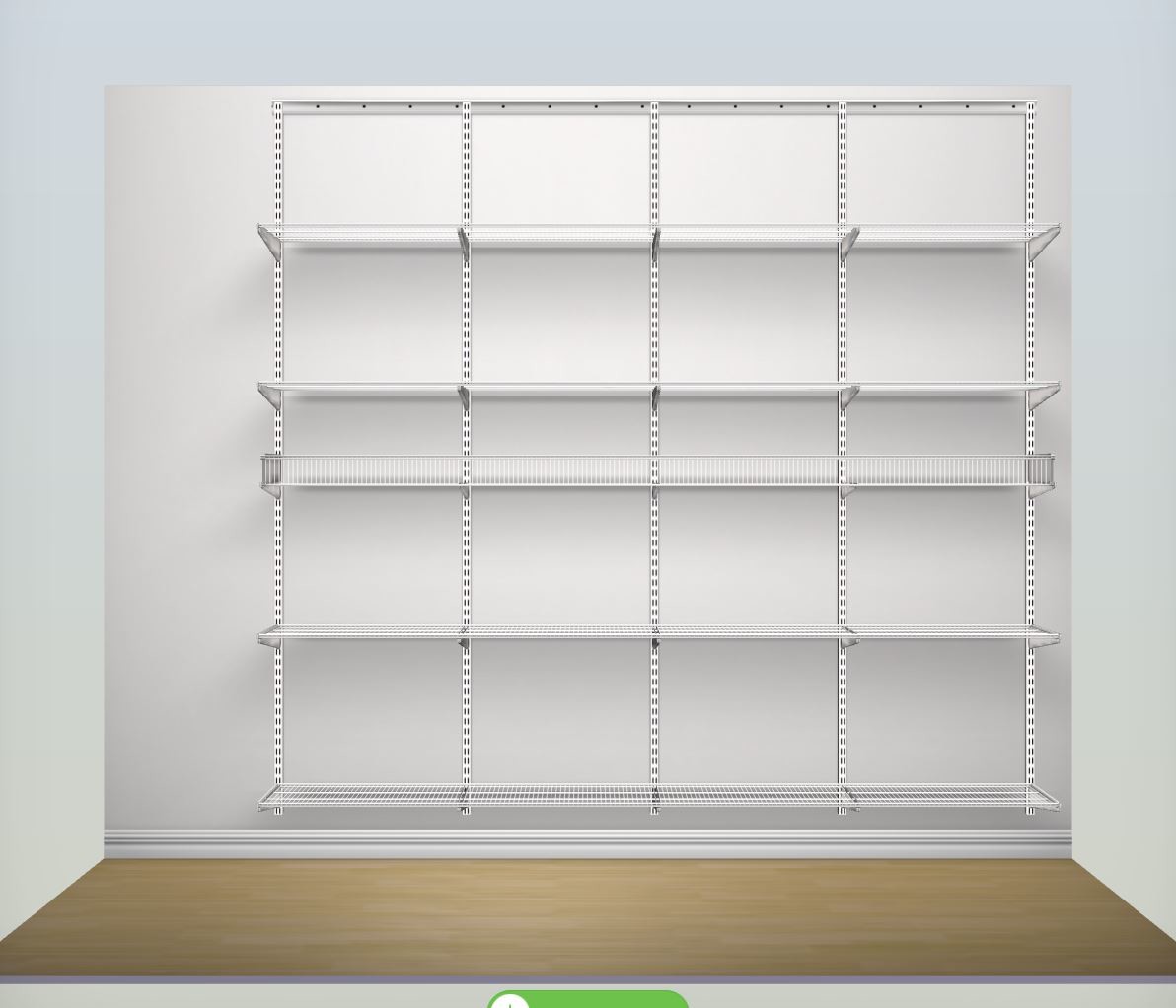
I have a lightweight concrete wall where I'm going to install an ELFA system.
Which plug is best?
Fischer GB10
Fischer Duo Max
Which one do you think is best for lightweight concrete?
Can I glue the plugs for extra strength?
I'm also wondering if I made a mistake by having a whole track. Should I have divided it into two tracks? Do you think I can manage to saw off the track and then buy shorter ones for the two lower shelves with a new top track? This should double the weight capacity of the system, right?
Then it's unclear in the guide; https://img.bygghemma.se/pfiles/elfa-laster-och-vikter__da89666e-5e99-4ef6-8cfa-6bb1e3c55f51.pdf
Is it 85kg per track? Per 90cm system? Per top track? Does the system handle more load with 60cm centers?
I'm completely confused, I want the shelves to hold substantial weights.
Duo-max is an excellent fastening device, but since it is intended for sheet materials, it is highly unsuitable for your solid lightweight concrete wall.
I've only used GB10 once, but it actually saved me in an unusually porous and tricky wall—I can imagine it would work well for you too. However, the "wings" on the plug that cut into the material when you drive in the plug are quite substantial, so the lightweight concrete needs to be fairly soft.
When you mention the rail—do you mean the horizontal mounting rail at the top of the construction?
I've only used GB10 once, but it actually saved me in an unusually porous and tricky wall—I can imagine it would work well for you too. However, the "wings" on the plug that cut into the material when you drive in the plug are quite substantial, so the lightweight concrete needs to be fairly soft.
When you mention the rail—do you mean the horizontal mounting rail at the top of the construction?
Exactly, the horizontal track. Feels silly that Beijer sold me duo max thenN Nyrostad said:Duo-max is an excellent fastener, but since it is intended for sheet material, it is highly unsuitable for your solid lightweight concrete wall.
GB10 I have only used on one occasion, but there it actually saved me in an unusually porous and difficult wall - I can imagine it would suit you well too. The "wings" on the plug, which cut into the material themselves when you insert the plug, are quite substantial, so it requires the lightweight concrete to be fairly soft.
When you're talking about the track - do you mean the horizontal hanging track at the top of the construction?

A bunch of M6 machine screws should handle a lot of shear load.
"TURBO-plug FTP for lightweight concrete - Metal.
Fischer Turbo plug is manufactured in two designs: nylon (FTP K) and metal (FTP M).
In both versions, it is an expansion-free fastening in lightweight concrete.
It is externally threaded in both versions. During installation, Turbo cuts a thread in the lightweight concrete and is screwed in until the collar is flush with the surface.
The Metal Turbo (FTP M) is prepared with a metric thread.
Optimally used in thin lightweight concrete blocks and close to the edge.
Drill Ø mm: 8
Plug length: 50
Screw Ø mm: M 6"
"TURBO-plug FTP for lightweight concrete - Metal.
Fischer Turbo plug is manufactured in two designs: nylon (FTP K) and metal (FTP M).
In both versions, it is an expansion-free fastening in lightweight concrete.
It is externally threaded in both versions. During installation, Turbo cuts a thread in the lightweight concrete and is screwed in until the collar is flush with the surface.
The Metal Turbo (FTP M) is prepared with a metric thread.
Optimally used in thin lightweight concrete blocks and close to the edge.
Drill Ø mm: 8
Plug length: 50
Screw Ø mm: M 6"
I have fastened a number of things in aerated concrete, concrete, etc. I usually use Byggmax nylon plugs, with the appropriate size screw. An 8mm plug and about an 8mm 45mm screw hold well. It's important to have a good concrete drill to get a nice hole.
https://www.byggmax.se/spik-och-skruv/plugg-och-expander/nylonplugg-p24649
https://www.byggmax.se/spik-och-skruv/plugg-och-expander/nylonplugg-p24649

Here are some tips and facts about what different fixings can handle,
http://tipsattgora.eu/handbok i infästning.pdf
http://tipsattgora.eu/handbok i infästning.pdf
Not sure if I can get it through the hole in the rail. Might have to drill it? Which holds better? Turbo FTP or the plug?R RapidSledge said:A lot of M6 machine screws should handle a lot of shear load.
"TURBO-plug FTP for lightweight concrete - Metal.
Fischer Turbo plug is manufactured in two versions nylon (FTP K) and metal (FTP M).
In both versions, it is a non-expanding fixing in lightweight concrete.
It is externally threaded in both versions. When mounting, Turbo cuts a thread in the lightweight concrete and is screwed in until the collar is flush with the surface.
Metal Turbo (FTP M) is equipped with a metric thread.
Preferably used in thin lightweight concrete blocks and near the edge.
Drill Ø mm: 8
Plug length: 50
Screw Ø mm: M 6"

I was going to install a fire door the other day, and we weren't allowed to use plastic plugs, so I went and bought lightweight concrete screws 8x95. And I can say, the wall will collapse before the screw comes loose.
Assuming you drill straight into the wall...M maximm said:
Both plug or turbo probably hold equally well since what determines it is the diameter of the screw/bolt and how many there are.
What you want to avoid is the plug or whatever you choose working its way outwards. The advantage of turbo is that it is stress-free.
The disadvantage is that all turbo plugs must be on a straight line for you to find the threads. The plastic plugs probably allow a bit more play.
Buy screws/bolts of good quality.
#5 wrote "Important to have a good concrete drill to get a nice hole." - a good drill also helps. As well as blowing/brushing the hole.
Are we sure that we are talking about lightweight concrete/Siporex, the white or blue one that you can crumble with your fingers, or draw a hopscotch grid on the asphalt with??
There have been instances on this forum where concrete hollow block/gray blocks have been called lightweight concrete, which it certainly is, but they are completely different things to fasten into.
There have been instances on this forum where concrete hollow block/gray blocks have been called lightweight concrete, which it certainly is, but they are completely different things to fasten into.