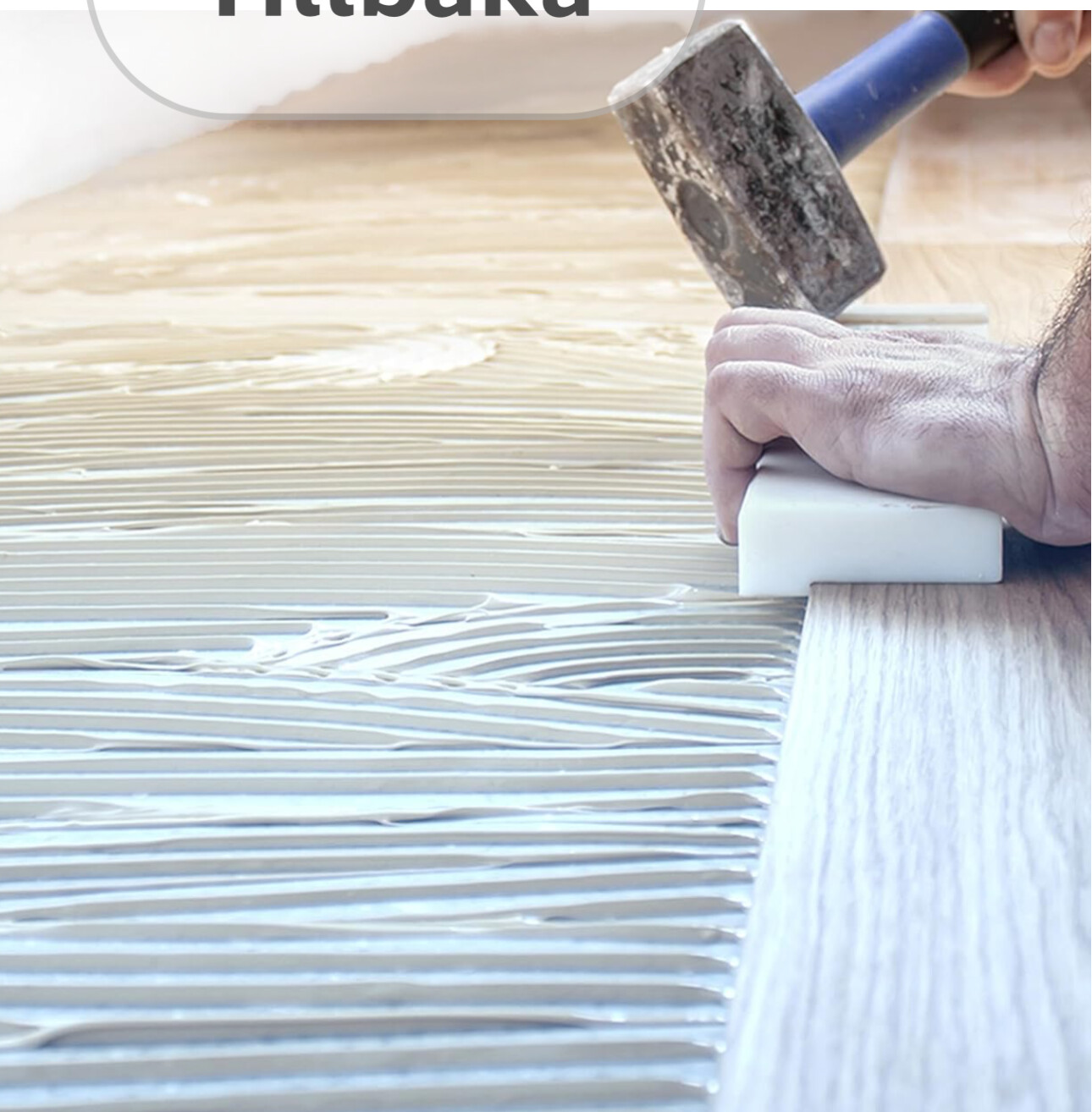
This glue is by far the cheapest "parquet glue" I can find — but it still costs about 200kr per kg. And it can be compared to Casco's variant that Beijer sells for 500-1000kr/kg. Is there no cheaper glue??
Instead of 5kg of glue covering 7-9m2 (according to the picture on the bucket, I’m closer to 25kg of glue for 9m2.
Now maybe someone who’s laid a lot of tiles and clinker thinks — slightly uneven surface here and there and 6mm trowel — of course it's using so much glue. And maybe this is the problem, that I should use much less glue and some kind of adhesive trowel instead of a notched trowel?
But I have the same manufacturer's floor downstairs, and I hired the manufacturer to lay the floor 5 years ago (a service they have stopped). There, they used a 10mm trowel and it used massive amounts of glue — probably well over 100kg for 60m2. Downstairs, we had water underfloor heating in chipboard, making it even more uneven. I remember two big stacks of empty 10kg buckets and I have a picture showing a 10mm trowel (or a bricklayer variant with 10mm teeth) — and they only charged about 350kr/m2 for installation, including labor and materials. Is it completely crazy to use this method?
Has anyone laid herringbone parquet or chevron parquet with glue? How have you done it?
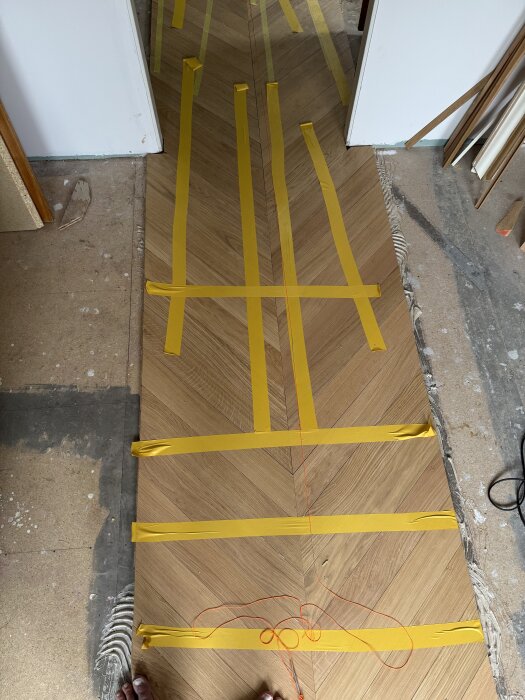
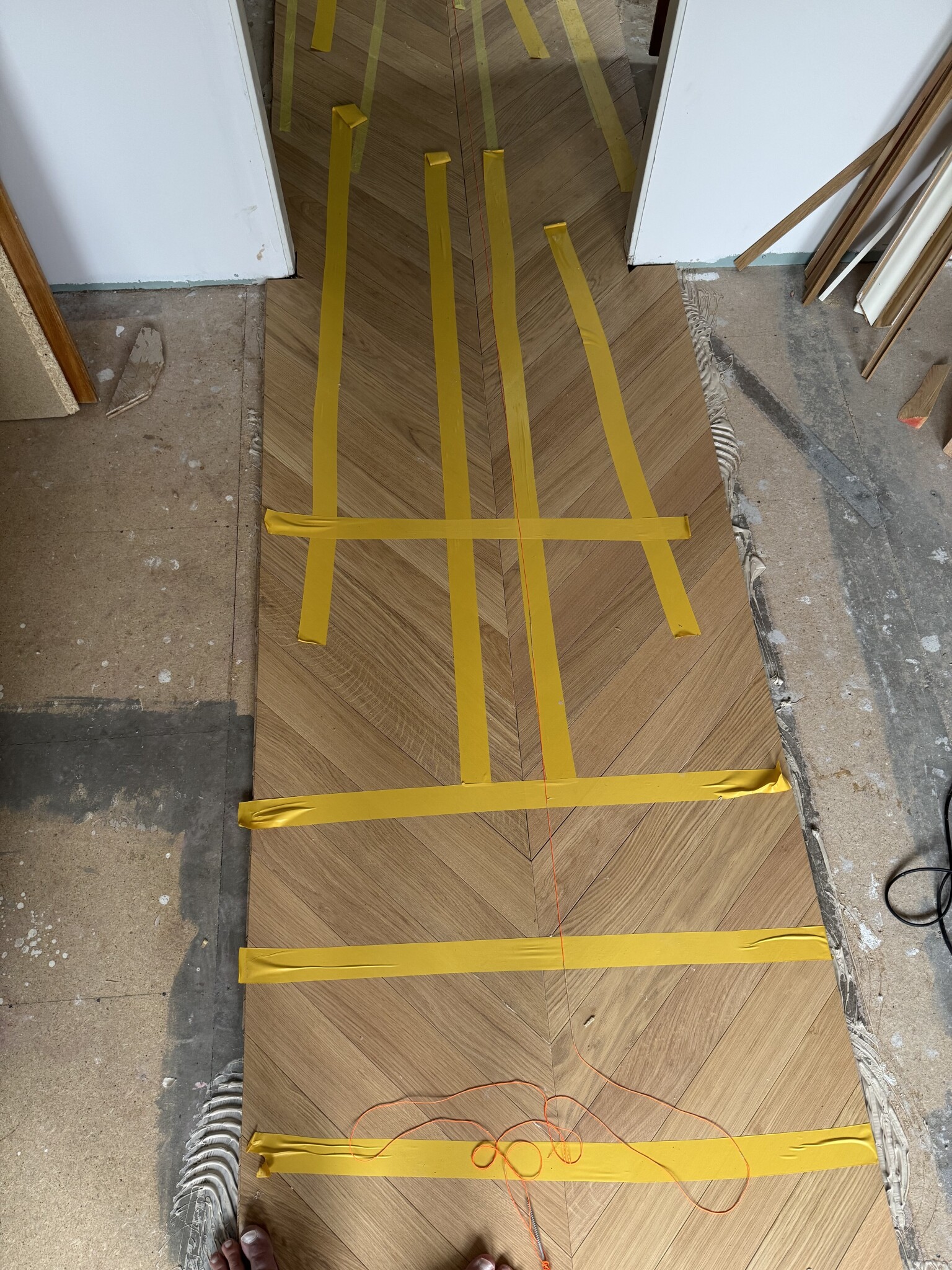
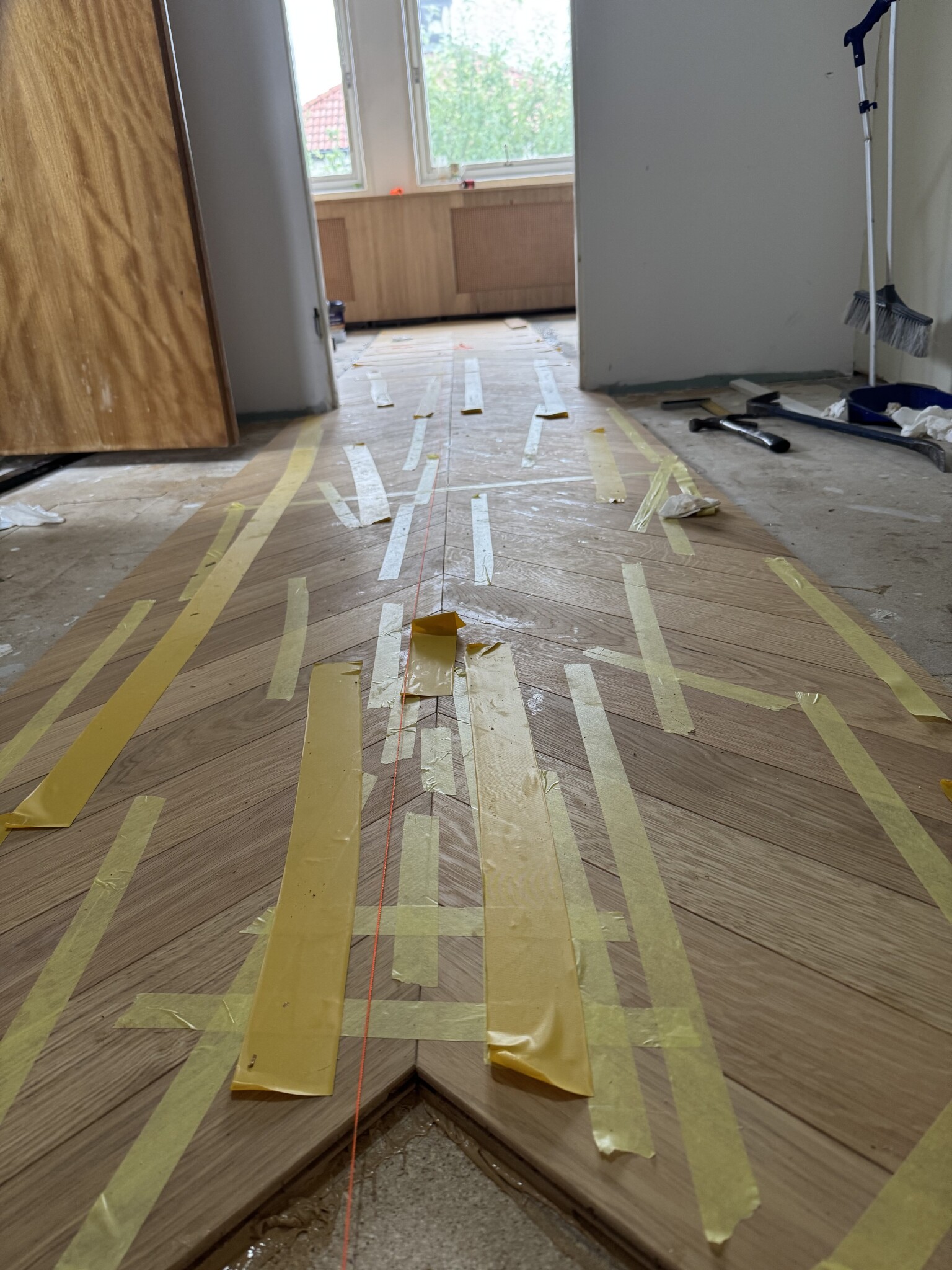
2. My goodness, how frustrating it is to lay the parquet when "nothing" sticks. You lay everything perfectly, then you have to apply some force to get a piece into place, and the pieces start moving further away in the line. I've tried taping according to the installation instructions — but it doesn't help much.
Is this just a matter of skill, or is there a trick one can use? I have to struggle extremely hard to get an OK result without gaps.
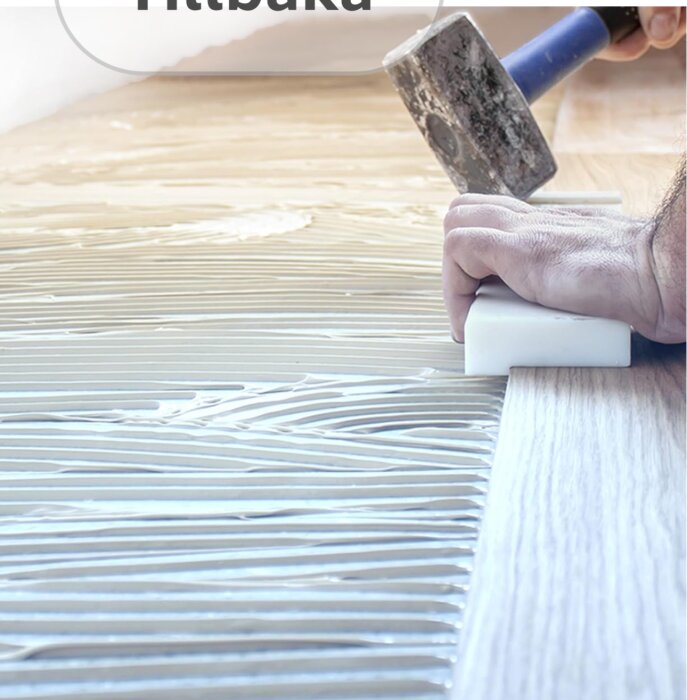
Oh, I mean — this is how it looks in the glue manufacturer's pictures. It's very abundant with glue.
It's simple math that 1mm thickness of glue on a 1m2 area gives 1kg of glue per m2. In the picture, there must be at least 2-3mm of glue, which gives the 2-3 liters per m2 that my consumption has been. If I were to use Casco's parquet glue or Bauhaus variant, the glue cost for laying 60m2 of parquet would amount to 180,000 SEK… 😭
I don't know how many mm I had on the comb, I don't have it with me now.
I laid herringbone parquet myself and used 144 kg of glue for 130 m2 of flooring. It was just enough, there was a little glue left when I was finished. I used Pallman P5 parquet glue.
The plough in the beginning is the most important thing that you have to be extra careful with. You can lay 4-5 pieces on each side so that you can start placing weights there to prevent it from moving. Also check in the grooves that you don't have anything obstructing when you press the pieces together.
When I laid herringbone parquet (against chipboard), I glued with regular wood glue and nailed it at an angle. It has worked great.
And in the rooms where I have the original parquet from 1943, they are just nailed seemingly without any glue, and there are parts that creak a bit.
Don't know how many mm I had on the comb, don't have it with me now.
Laid herringbone parquet myself and had 144 kg glue for 130 m2 floor. It was just enough, there was some glue left when I finished. Used Pallman P5 parquet glue.
The plow at the beginning is the most important part where you must be extra careful. You can place 4-5 pieces on either side so you can start placing weights there to prevent it from moving. Also check in the grooves that you don't have anything obstructing when you press the pieces together.
Thanks!
Yes, on the last row I did so that I glued the "plow" (the first two pieces) in advance so that they were fixed, when I then filled it in it went much better.
I have glued 100m2 of herringbone, but not according to the French principle. It's a hassle with the strips floating around. Take many breaks so the glue can take hold. It's fine to scrape away the excess and have a cup of coffee or even better, a beer.
Part of the secret is that the strips should be very dry, so gaps swell back together. When laying regular herringbone, you should focus on strip support, meaning that the short end doesn't gap against the previous strip. Gaps there remain. In your case, you probably need to focus on getting the 45-degree angle as perfect as possible.
But as I said, take it easy and many breaks so it will surely go well.
Click here to reply
Vi vill skicka notiser för ämnen du bevakar och händelser som berör dig.