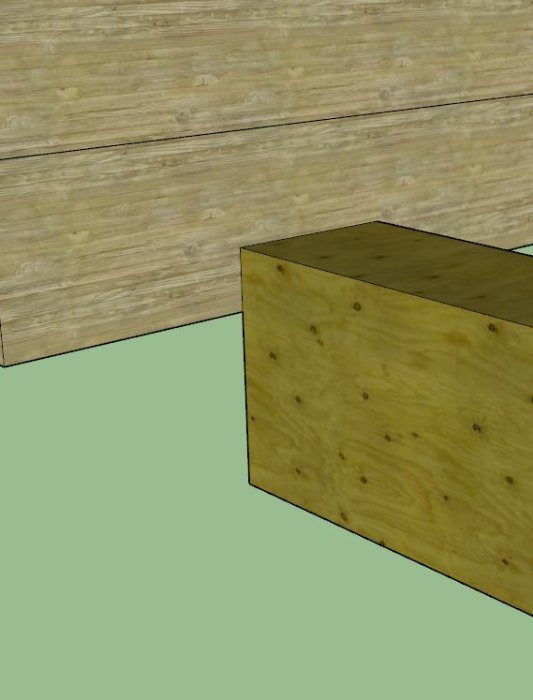
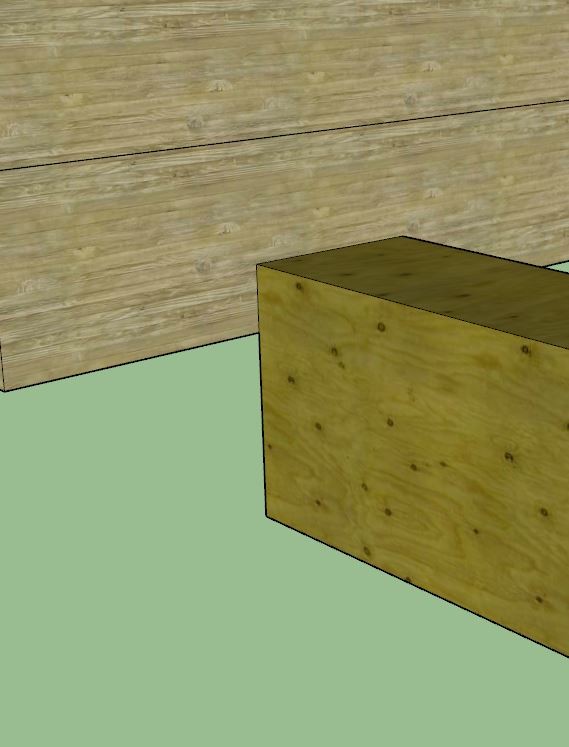
Renovating an old log cabin with what I believe is a somewhat unusual attachment of the floor joists made in the 1960s.
It's a log cabin standing on stones, and there's also a log heart wall.
It's likely that they tried to achieve as much ceiling height as possible by lowering the floor level as much as possible. This was done by hanging the floor joists in chains that run in short loops under each joist, attached at the top of the bottom log. Now, the two bottom logs on one wall need to be replaced, and the attachment of the joists to the wall must be redone.
To avoid chains, issues with the subfloor around the chains, twisting in the logs, and all other related problems, we want to find another solution to support the floor without changing the floor level.
Beam hangers in a large size would have been a simple solution, if they can be found anywhere?
Does anyone have experience or suggestions for a rational solution?
The joists vary between 50 and 60mm in width and 200mm in height, and the timber is about 300mm. Beautiful SketchUp of roughly how small the area where they meet is attached.
The ridges can be carved off a bit and the plate bent out.
I recall there are similar ones but for only one side (you place them on both sides) and then the timber dimension doesn't matter.
Have never seen beam shoes in that size, but it *shouldn't* be too expensive. Worth checking with the nearest welding/blacksmith shop to see what they would charge to make them anyway.
The rafters can be carved a little and the plate bent out.
I remember that there are similar ones but for just one side (you put on both sides) and then the wood dimension doesn't matter.
Protte
Thanks for the suggestion, but do those really hold for supporting such a large hanging load? In my inexperienced eyes, it looks like a lot of bent metal that can reshape and move? Does the attachment hold from the side over time, the house moves so I imagine the wood around the nails gets a bit tired after 10 - 50 years of movements.
It would be best with something the rafter can hang/rest in, it would be possible to cut angle iron and drill holes in it to get the desired length.
A ridge bracket on each side of the beam. There are right and left-facing ones
Do they hold for a larger hanging load, like a floor structure? Looks more like they are made to hold loads from the "side"? There's a difference between securing something and something that is supposed to hang from it.
Do they hold for a greater hanging load, like a floor beam? Looks more like they are made to support loads from the "side"? There's a difference between securing something and something that should hang from it.
Pass on that question. But yes, the fittings are originally made to fix roof rafters that sit on top of the wall plate and thus have support from underneath, so if it holds, I can't say, but the shape was right. Since you had varying dimensions on the floor joists, fittings that consist of two separate halves that are placed on each side would have been convenient.
Click here to reply
Vi vill skicka notiser för ämnen du bevakar och händelser som berör dig.