31,564 views ·
22 replies
32k views
22 replies
Glulam vs Steel Beam
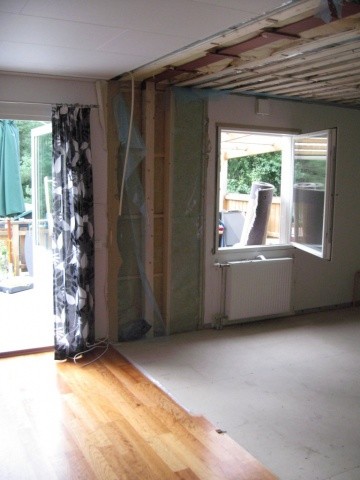
We are going to tear down a load-bearing wall (span 4m) to create space in our living room. An architect/engineer has calculated the project and concluded that the right dimension for the switch is either two glulam beams of 90x320 mm mounted side by side or an HEA steel beam of 180 x 100 mm. A single glulam beam is excluded because it would be 420x100 mm, which would almost require tall people to duck to get under (ceiling height of 2.4 m).
Since we want as little material as possible in the ceiling, the steel beam (180 vs. 320 mm protruding) naturally speaks for itself. However, the engineer suggests that 1) the steel beam is more difficult to install and 2) if one chooses glulam, the posts can be hidden inside the wall (interior wall at one end and exterior wall at the other end). Apparently, it is not possible to hide a steel post in the exterior wall because it cannot be placed on the studs. The engineer suggests that steel should stand on a concrete floor, while wood can be placed on the studs, which results in a 100x100 post being placed in the room flush against the exterior wall if we choose the steel beam option.
What do you who have some insight into the different options say? We will not carry out the work ourselves, but is it true that the steel beam is significantly more difficult to install?
Thanks in advance!
Lisa
Since we want as little material as possible in the ceiling, the steel beam (180 vs. 320 mm protruding) naturally speaks for itself. However, the engineer suggests that 1) the steel beam is more difficult to install and 2) if one chooses glulam, the posts can be hidden inside the wall (interior wall at one end and exterior wall at the other end). Apparently, it is not possible to hide a steel post in the exterior wall because it cannot be placed on the studs. The engineer suggests that steel should stand on a concrete floor, while wood can be placed on the studs, which results in a 100x100 post being placed in the room flush against the exterior wall if we choose the steel beam option.
What do you who have some insight into the different options say? We will not carry out the work ourselves, but is it true that the steel beam is significantly more difficult to install?
Thanks in advance!
Lisa

Hello
I can imagine that an HEA beam at 4 m weighs about 150 kg while the glulam beam lands at maybe 70 kg. Additionally, you can paint the glulam beam directly and don't need to clad it as one might want with a steel beam.
Best regards, wasa
I can imagine that an HEA beam at 4 m weighs about 150 kg while the glulam beam lands at maybe 70 kg. Additionally, you can paint the glulam beam directly and don't need to clad it as one might want with a steel beam.
Best regards, wasa
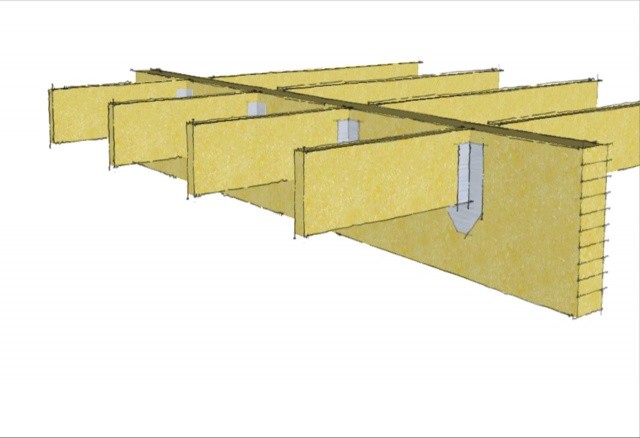
Regarding Wasa's solution, it is definitely an interesting alternative, but keep in mind that 1) The installation will be more difficult 2) Most likely, the floor joists are currently continuous over the load-bearing wall, and cutting them reduces capacity. So, a structural engineer should look into that, yes.
Yep, perhaps should have written that but it's obviously true... Existing joists must be cut on-site which involves more work. In addition, temporary bracing is required on both sides of the beam's position...kalubah said:

I do not understand the constructor's opinions about the posts for the steel beam versus the glulam. Nor about the foundation for the posts.
There is no reason for him to use different posts for the steel beam. Or a different foundation. However, it could very well be that in both cases the posts need to be placed directly on the concrete slab, and there's also reason to consider the load-bearing capacity of the concrete slab, perhaps especially on the side where there's an interior wall, as the slab is likely not reinforced with an edge beam there.
We have had a floor structure made as Wasa shows, but with a steel beam, so it does not protrude at all under the ceiling. This was during the construction of a new floor structure (adding an additional story), and it is probably quite tricky to retrofit such an invisible beam.
There is no reason for him to use different posts for the steel beam. Or a different foundation. However, it could very well be that in both cases the posts need to be placed directly on the concrete slab, and there's also reason to consider the load-bearing capacity of the concrete slab, perhaps especially on the side where there's an interior wall, as the slab is likely not reinforced with an edge beam there.
We have had a floor structure made as Wasa shows, but with a steel beam, so it does not protrude at all under the ceiling. This was during the construction of a new floor structure (adding an additional story), and it is probably quite tricky to retrofit such an invisible beam.
Thanks for the quick response! Regarding the HEA beam, I don't have the exact measurements in my head, but I seem to remember it was something like what was mentioned above (about 180x100).
Anyway, would it work to place the HEA beam on wooden posts? I recall the engineer was generally negative about mixing different materials. He also mentioned that a steel post must stand on concrete. Another argument from his side for using the glue-laminated beam was that the rest of the framework/floor joists in the house are made of wood. The only problem I have with glue-laminated wood is that it takes up so much space... Therefore, a steel beam seems better, but I'm unsure how difficult it is to come up with a good solution with a steel beam.
The solution to recess the glue-laminated wood into the floor joists looked interesting, but there would be a considerable difference in load if you place the floor joist on top of the beam (standard mounting) vs. attaching the floor joist from the side with joist hangers, right?
Lisa
Anyway, would it work to place the HEA beam on wooden posts? I recall the engineer was generally negative about mixing different materials. He also mentioned that a steel post must stand on concrete. Another argument from his side for using the glue-laminated beam was that the rest of the framework/floor joists in the house are made of wood. The only problem I have with glue-laminated wood is that it takes up so much space... Therefore, a steel beam seems better, but I'm unsure how difficult it is to come up with a good solution with a steel beam.
The solution to recess the glue-laminated wood into the floor joists looked interesting, but there would be a considerable difference in load if you place the floor joist on top of the beam (standard mounting) vs. attaching the floor joist from the side with joist hangers, right?
Lisa
Last edited:
Hello again,
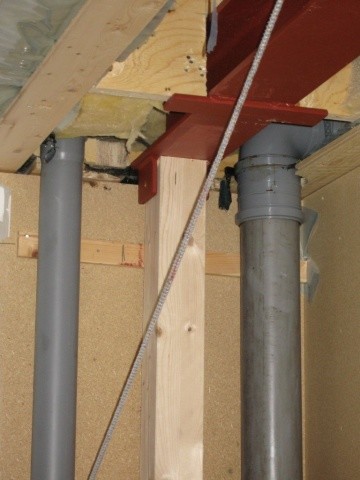
In a similar solution regarding an extension at home, I did according to my sketch. The "beam shoes" were made by a blacksmith and were significantly sturdier than typical hardware store beam shoes... But once again, make sure this is anchored (haha) with a structural engineer
Hope you find a solution that works both in terms of durability and appearance
Best regards, Wasa
In a similar solution regarding an extension at home, I did according to my sketch. The "beam shoes" were made by a blacksmith and were significantly sturdier than typical hardware store beam shoes... But once again, make sure this is anchored (haha) with a structural engineer
Hope you find a solution that works both in terms of durability and appearance
Best regards, Wasa
By the way, there is an IPE 180 that has approximately (90 wide if I recall correctly) the dimensions you mention. Could it be one of those? If so, you might ask him to look at an HEA or HEB beam instead. They are a bit wider and sturdier, so you should be fine with a 140mm height if you're chasing centimeters.
Kalubah and Wasa, thank you for all the input...
It is absolutely correct that my contact is an architect, who has made the calculations in consultation with a structural engineer.
Kalubah, you mean that it is okay to place an iron beam on a wooden post? Where can one possibly read about industry regulations on this?
Thanks!
Lisa
It is absolutely correct that my contact is an architect, who has made the calculations in consultation with a structural engineer.
Kalubah, you mean that it is okay to place an iron beam on a wooden post? Where can one possibly read about industry regulations on this?
Thanks!
Lisa
It is OK to place a steel beam on a wooden column. Personally, I had the opportunity to recess my steel beam into the existing beams as they are 260mm high and my steel beam was 160mm. Before cutting into the beams, however, you must check that you can manage without continuity over the support. Contact a structural engineer!