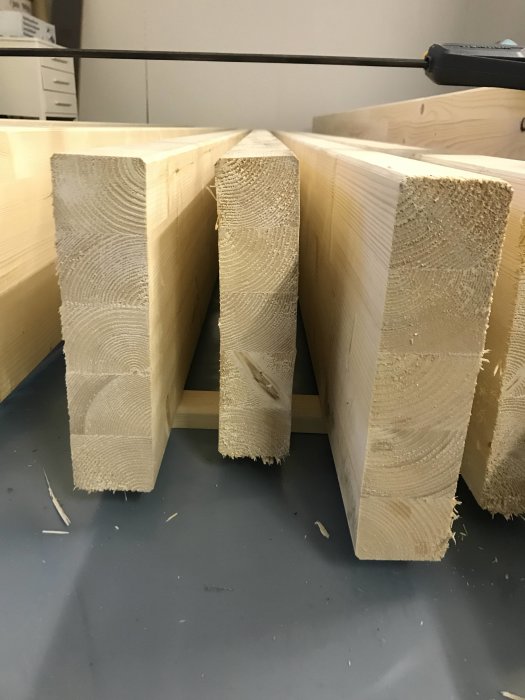
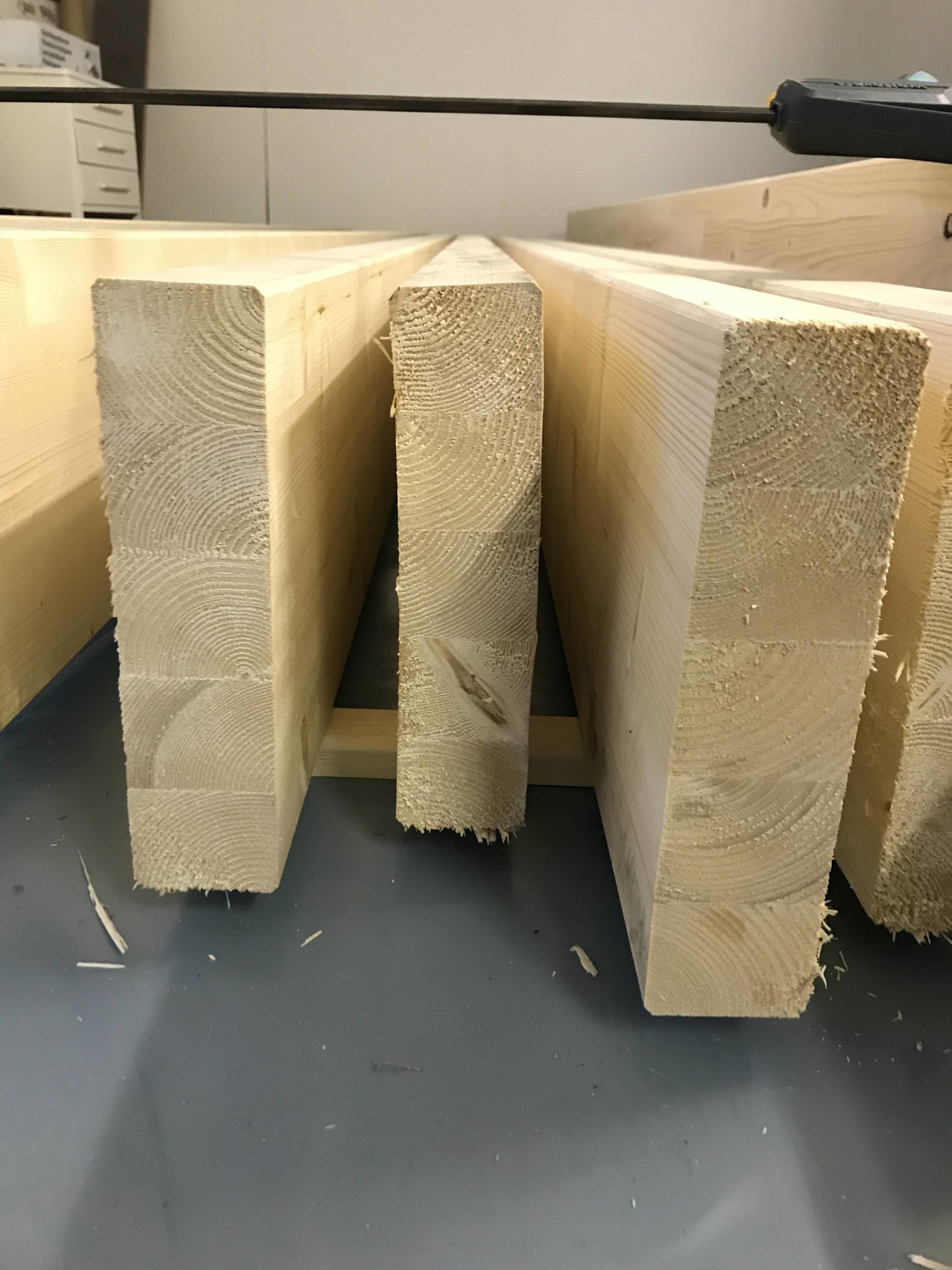
Picked up some glulam beams at the lumberyard yesterday and drove them 100 km in the rain. Some water got in, but the question is if it happened fast enough for them to swell?
Shouldn't it have taken longer than 2 hours?
That is, is it likely they were already moisture-damaged?
And what to do? Realize now that I should have checked more, but it's not easy when they had packed them before I arrived...
If you're unsure, you can check the moisture content. You can buy a meter for that cheaply at a hardware store. According to Hus AMA, glulam at installation should not have a moisture content higher than 16%. Personally, I don't think your beams have been damaged. It takes more rain and a longer time for that.
Exactly, but I have concluded that one of them was damaged earlier and got moisture... I will have to replace that one. Then these should be painted with outdoor paint as they are for a canopy, so the risk of building in is quite small.
The question is whether they can return to their original shape? It seems incredible considering how bent it is...
Did the beam become crooked on the way home? That's hard for me to believe. I would complain about anything that's askew. Usually, laminated wood is stored wrapped in plastic in lumberyards. I suspect they handled the material carelessly. If you plan to use the beams outdoors, you should surface-protect them in some way. Do not use acrylic paint, as it is diffusion-tight and unsuitable to apply on multiple sides of the same beam.
Thinking of painting with Beckers Oil Paint. I do have their white exterior oil paint, but maybe I should look into pure woodwork paint instead. Primer oil and primer paint should be straightforward.
No, not crooked, but one side is 4mm higher... like 229mm instead of 225... it has a significant damage likely caused by a forklift... seems like it's a bit too often that they mishandle with the forklift... and then it has probably absorbed moisture there...
Compared to regular timber, glulam is drier when it leaves the factory. I haven't seen unwrapped glulam in a very long time. 229 mm instead of 225 I find unacceptable, especially for glulam. That must be a production oversight. What is the name of the manufacturer?
Beijers RAW, I don't know which of the big manufacturers makes it for them, but everything indicates they damaged it before it ended up there. It can move a little; if I understand correctly, it's "more stable" with 90 wide and up, as they have two layers of lamella, which makes them counteract each other in a different way.
But it gets a bit too thick to have on a canopy roof
It is always most economical to choose the narrowest dimension. You shouldn't have to think about anything else when it comes to glue-laminated timber. Did you really buy them at Beijers?
yep, but that was all they had left, so there's usually always one that's taken a hit, if I had only bought one I probably would have checked more carefully... was in a bit of a rush when I picked them up.. 8 pcs...
Moelven states on their website that the actual measurement can be 1-2 mm smaller than the nominal. There is also a Swedish standard for glulam SS-EN 14080:
Dimensional tolerances for glulam
Table 3 Dimensional tolerances for glulam according to SS-EN 14080
Dimensional tolerances for glulam
Dimension b
± 2 mm
Dimension h
≤ 400 mm > 400 mm
+ 4 mm to – 2 mm +1 % to - 0.5 %
Length L
≤ 2.0 m
> 2.0 ≤ 20 m > 20 m
± 2 mm ± 0.1 % ± 20 mm
Angles
Cross-section angles may deviate a maximum of 1:50 (approximately 1°) from a right angle.
Straightness
(for straight elements)
Of any two points chosen arbitrarily with a 2 m distance on any of the glulam element's edges, the deviation can be up to 4 mm. Cambered beams are excepted.