
2,866 views ·
37 replies
3k views
37 replies
Galv rusts after a month?
Bought and installed galvanized ground gutters a month ago. It has barely rained since then but already lots of rust spots on the grid?! How is it possible? https://www.biltema.se/bygg/vvs/san...ing/markrannor/draneringsranna-1-m-2000063467


HiF Fideliox said:
Have you had anyone with an angle grinder nearby or dragged something metal over them so they've been contaminated?
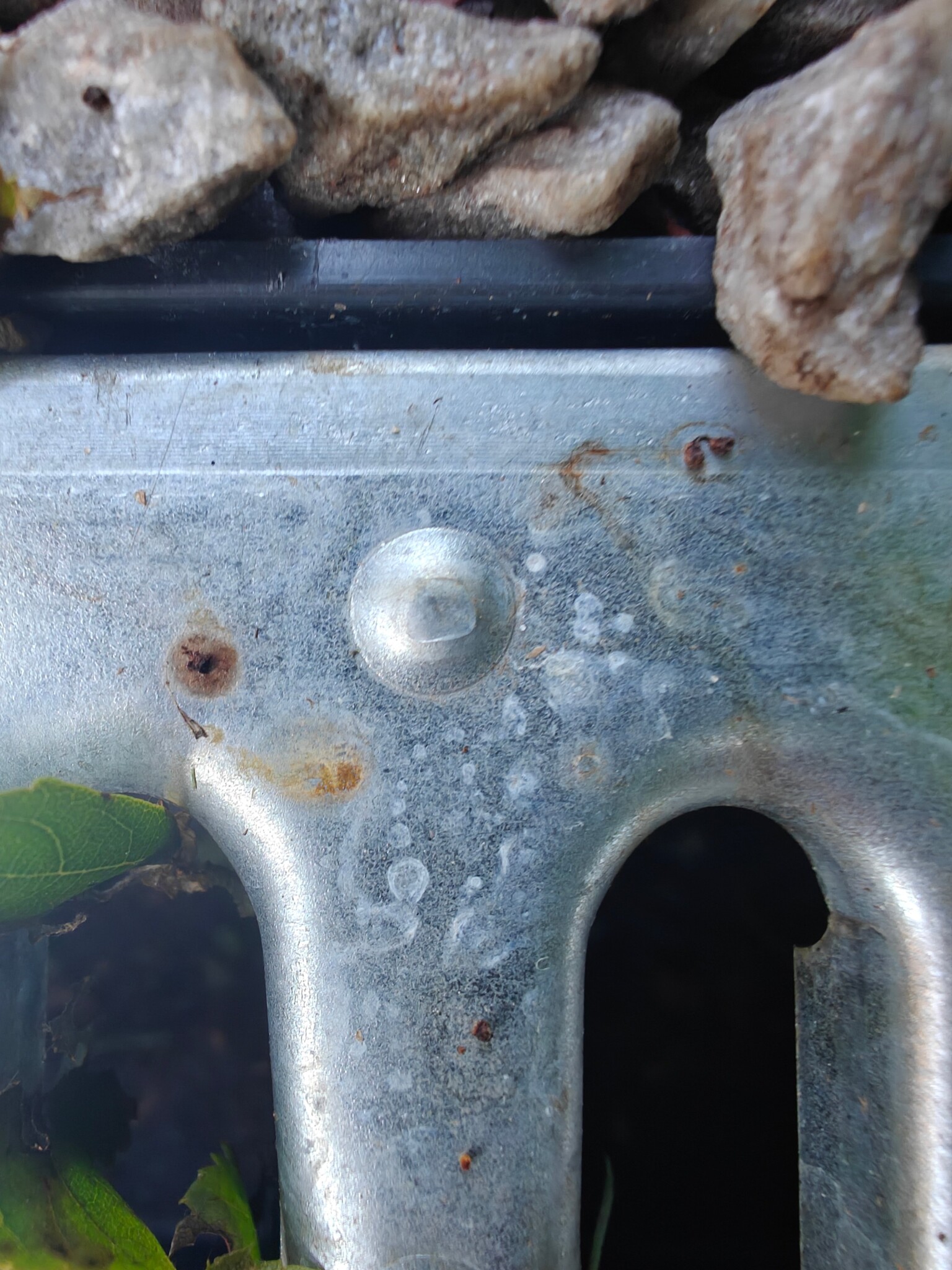
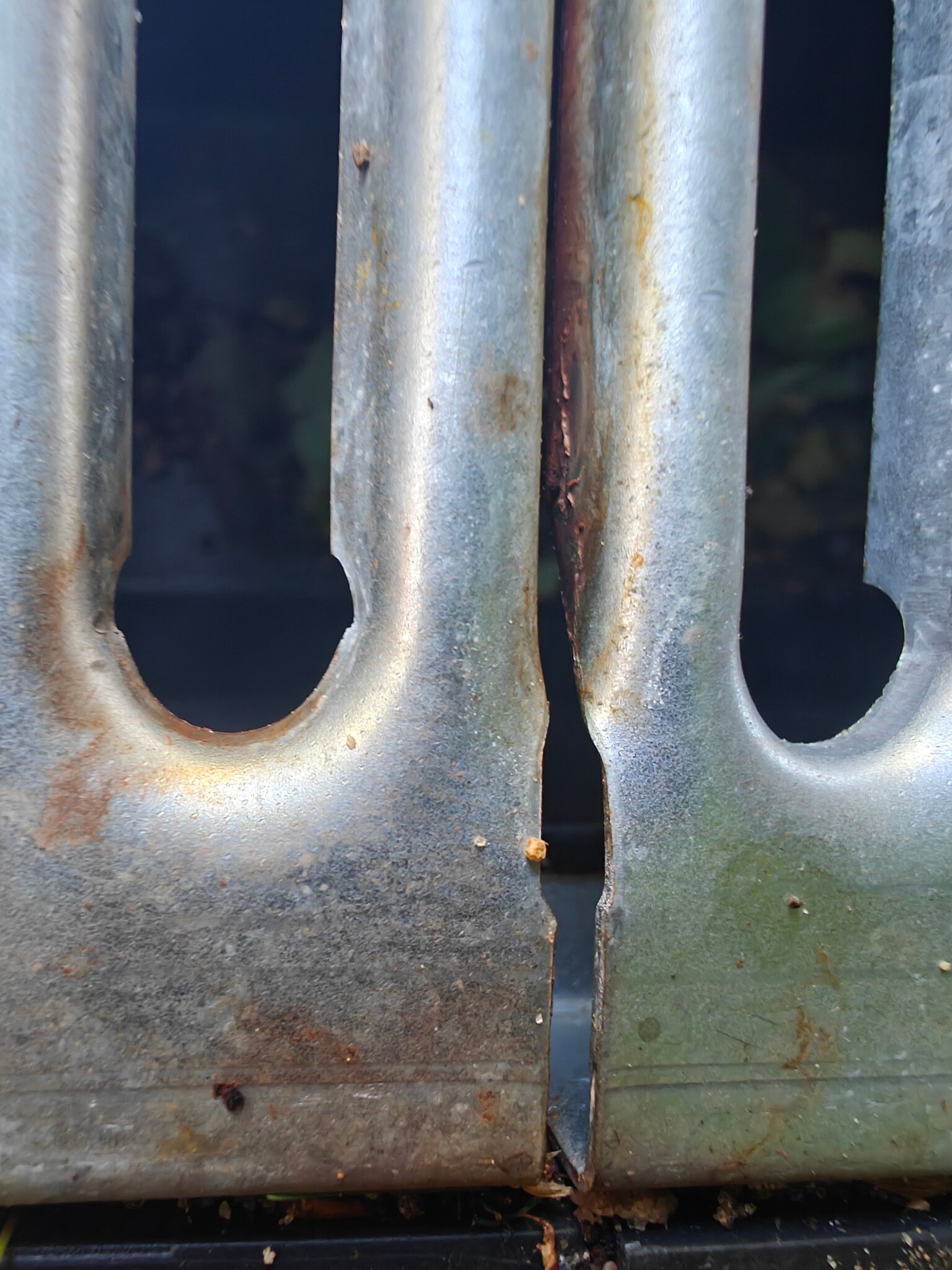

Unfortunately, it's not Biltema that has quality products. Sometimes okay, sometimes crap.
Are these oak leaves? They contain tannic acid which can be quite aggressive.
Check if the edges of the sheet metal are cut/sheared after galvanization (bad) or before (better).
Sometimes there's cheating with zinc thickness.
Check if the edges of the sheet metal are cut/sheared after galvanization (bad) or before (better).
Sometimes there's cheating with zinc thickness.

In a marine context, hot-dip galvanized performs quite well if it is in saltwater all the time (immersion zone). If it is in the splash zone or tidal zone with intermittent contact with saltwater, it is very aggressive.


TS Blltemarännor are galvanized, not hot-dip galvanized.T Thomas_Blekinge said:
No, this is in the backyard garden, no salt there. As I mentioned, it hasn't rained much either.A AndersS said:
I do have an oak tree nearby, though, and some leaves have fallen.
Return to Biltema and buy some spray cans of "cold galvanizing." The layer of rust protection is simply too thin or damaged. It is cheaper to buy in a regular paint can but harder to reach and apply in even layers. If you can easily access them, I would brush paint the entire backside in several layers. More zinc on the surface provides better protection.
There is a bit of language confusion.
Hot-dip galvanizing is done by dipping the object into a bath of molten liquid zinc. Strictly speaking, it is not galvanizing because no electrical current is used through the object in the process.
Electroplating or electrogalvanizing, on the other hand, is an electrolytic process.
But in everyday (incorrect) language, hot-dip is referred to as hot-dip galvanised for the method of dipping in liquid zinc.
Hot-dip galvanizing is done by dipping the object into a bath of molten liquid zinc. Strictly speaking, it is not galvanizing because no electrical current is used through the object in the process.
Electroplating or electrogalvanizing, on the other hand, is an electrolytic process.
But in everyday (incorrect) language, hot-dip is referred to as hot-dip galvanised for the method of dipping in liquid zinc.