(Trying in this category instead, sorry for double posting :/)
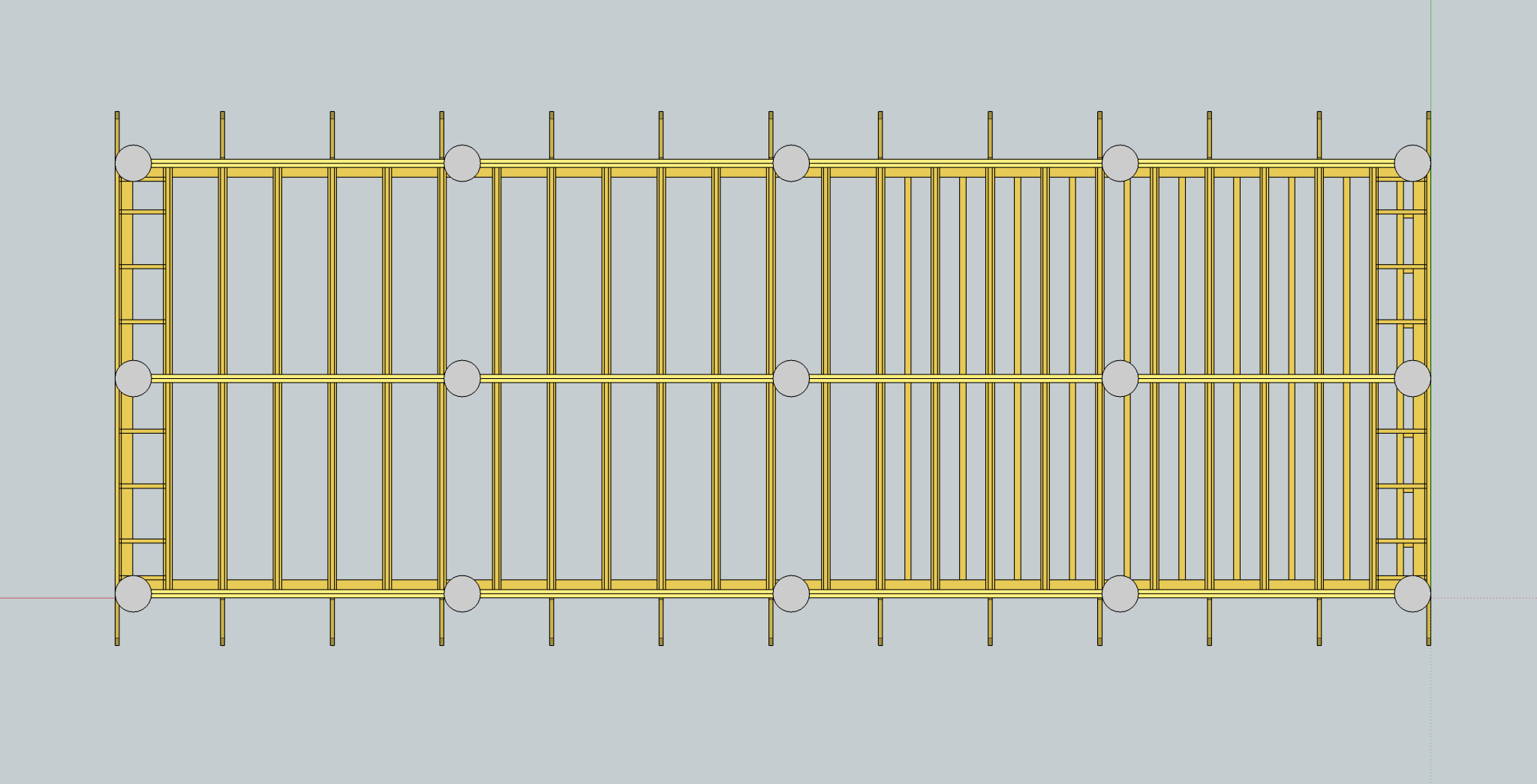
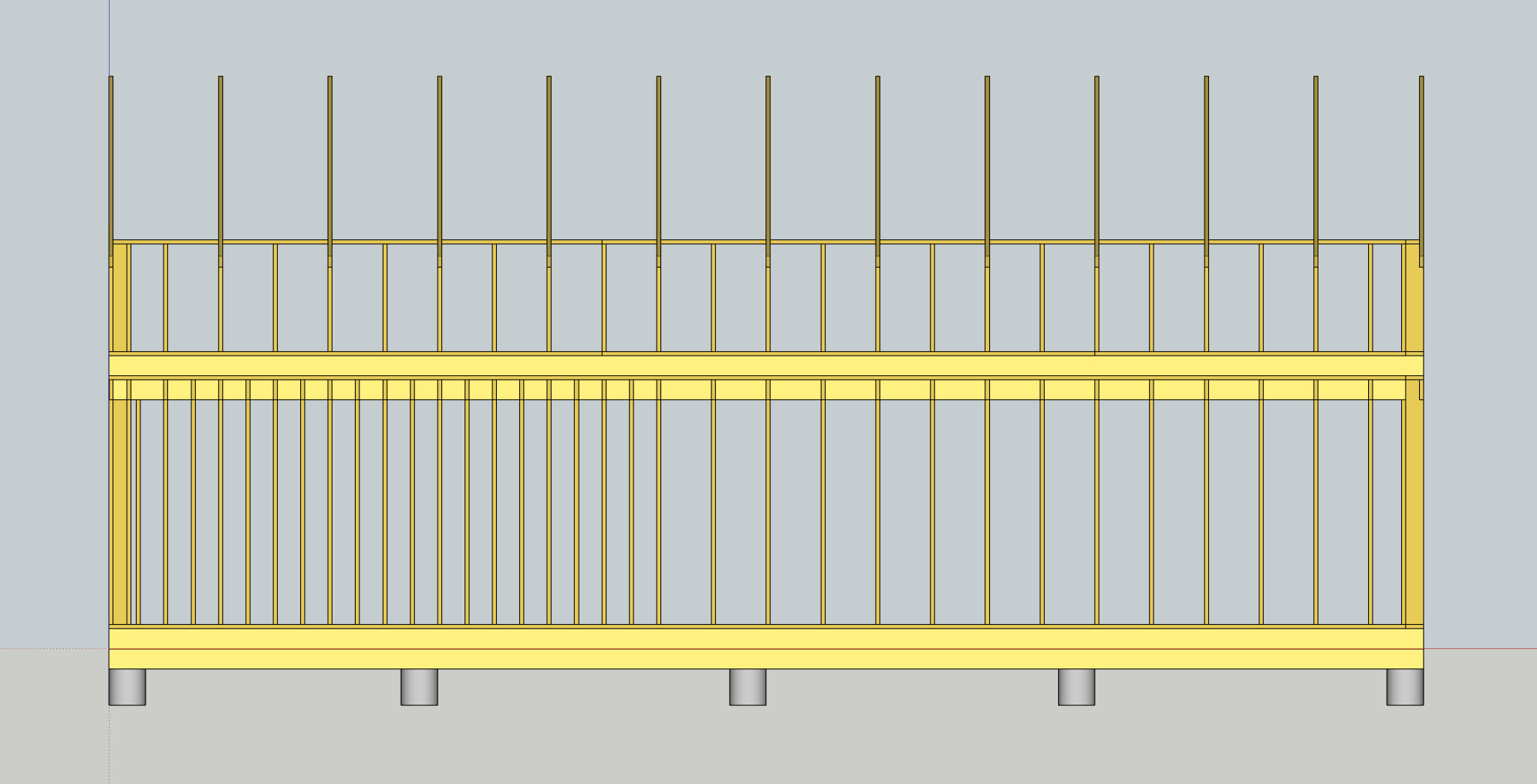
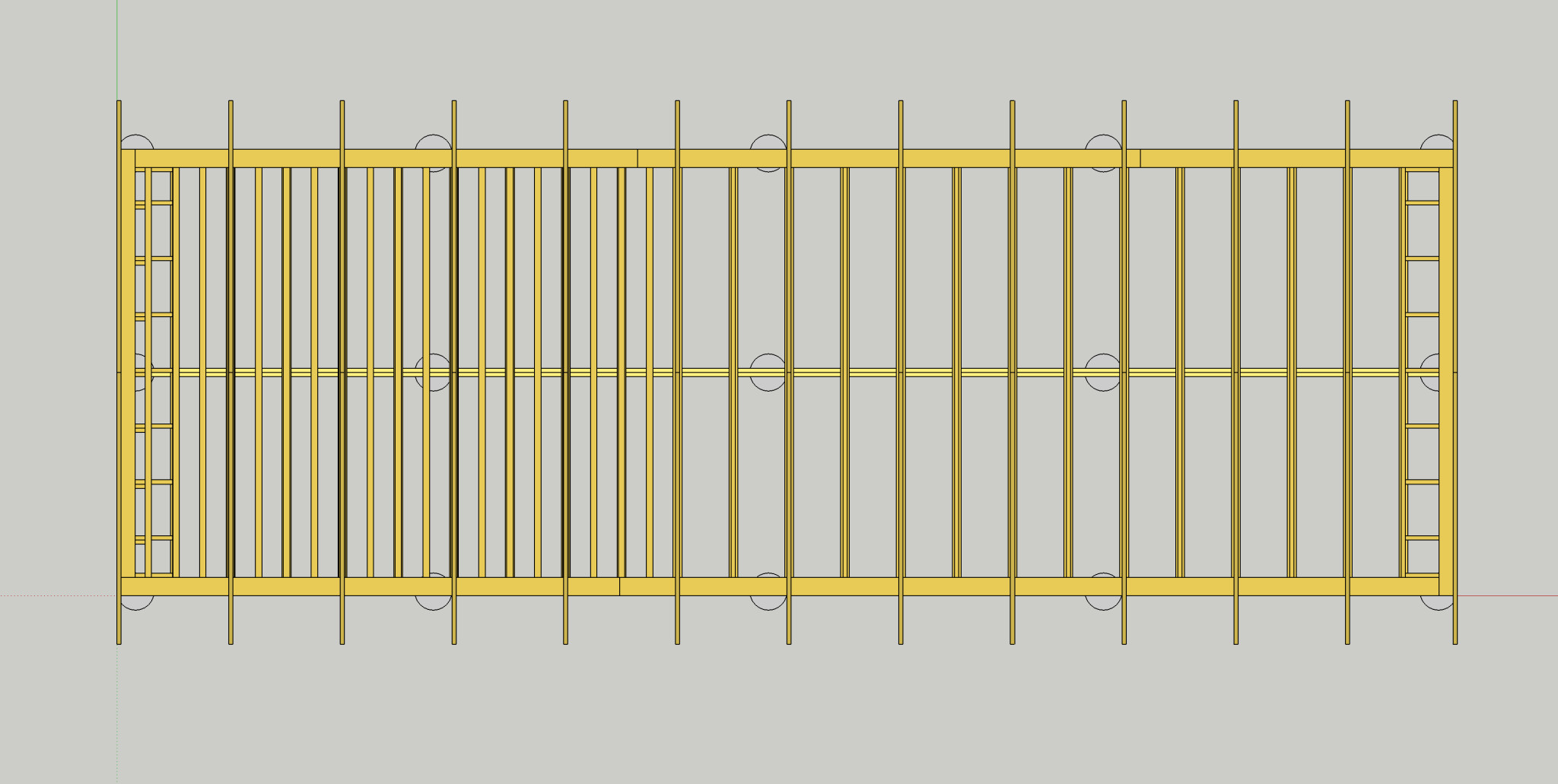
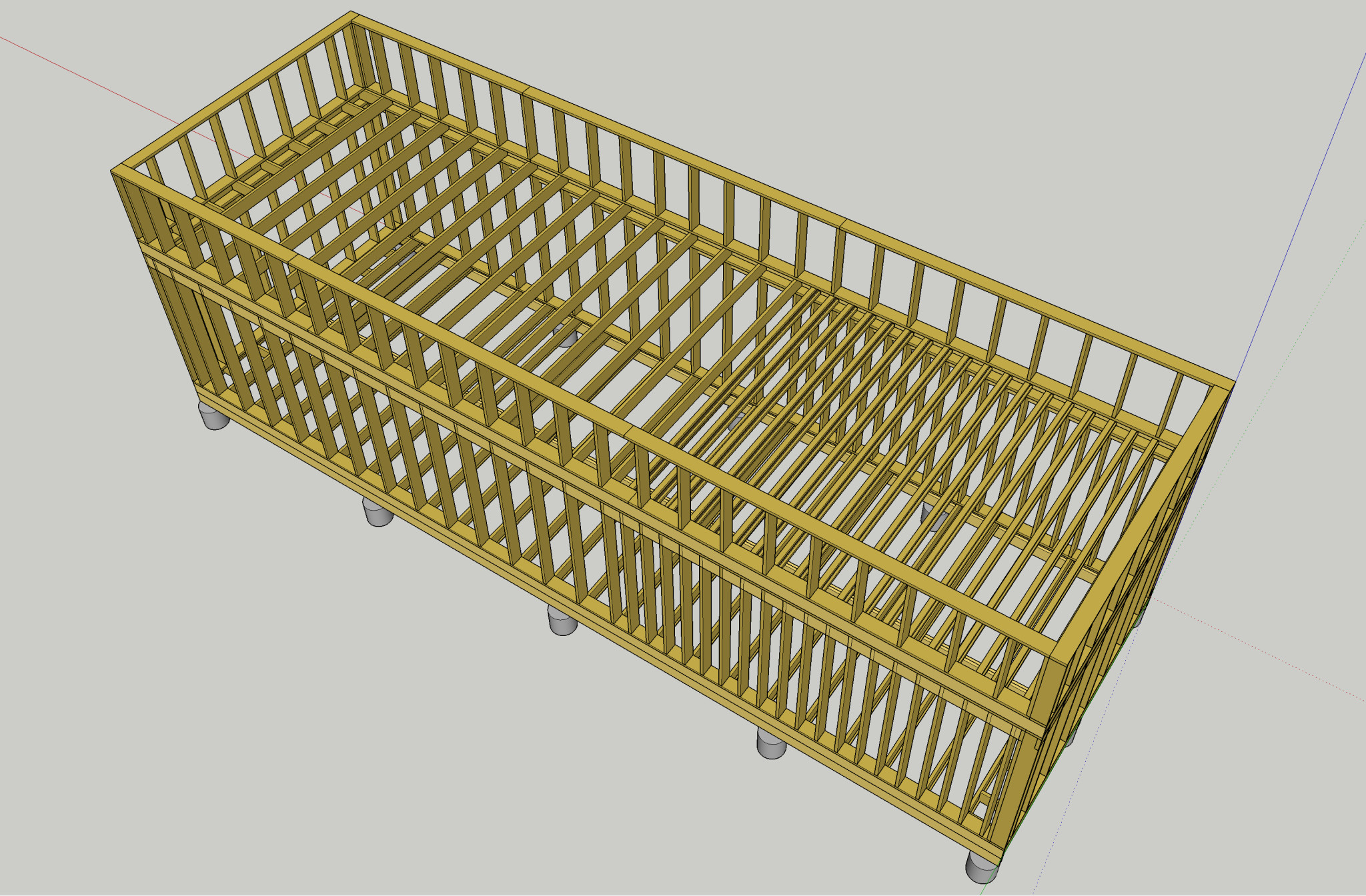
Hi, I've been considering building a vacation home, and like many others, I love the barn house aesthetic and the simple construction. After a lot of research, I'm leaning towards building with loose timber, but that requires good groundwork since I haven't built an entire house before. This past week I've been sketching in SketchUp. The idea is to include as much as possible, i.e., electricity, plumbing, and calculate material requirements, etc. All to make the construction less difficult.
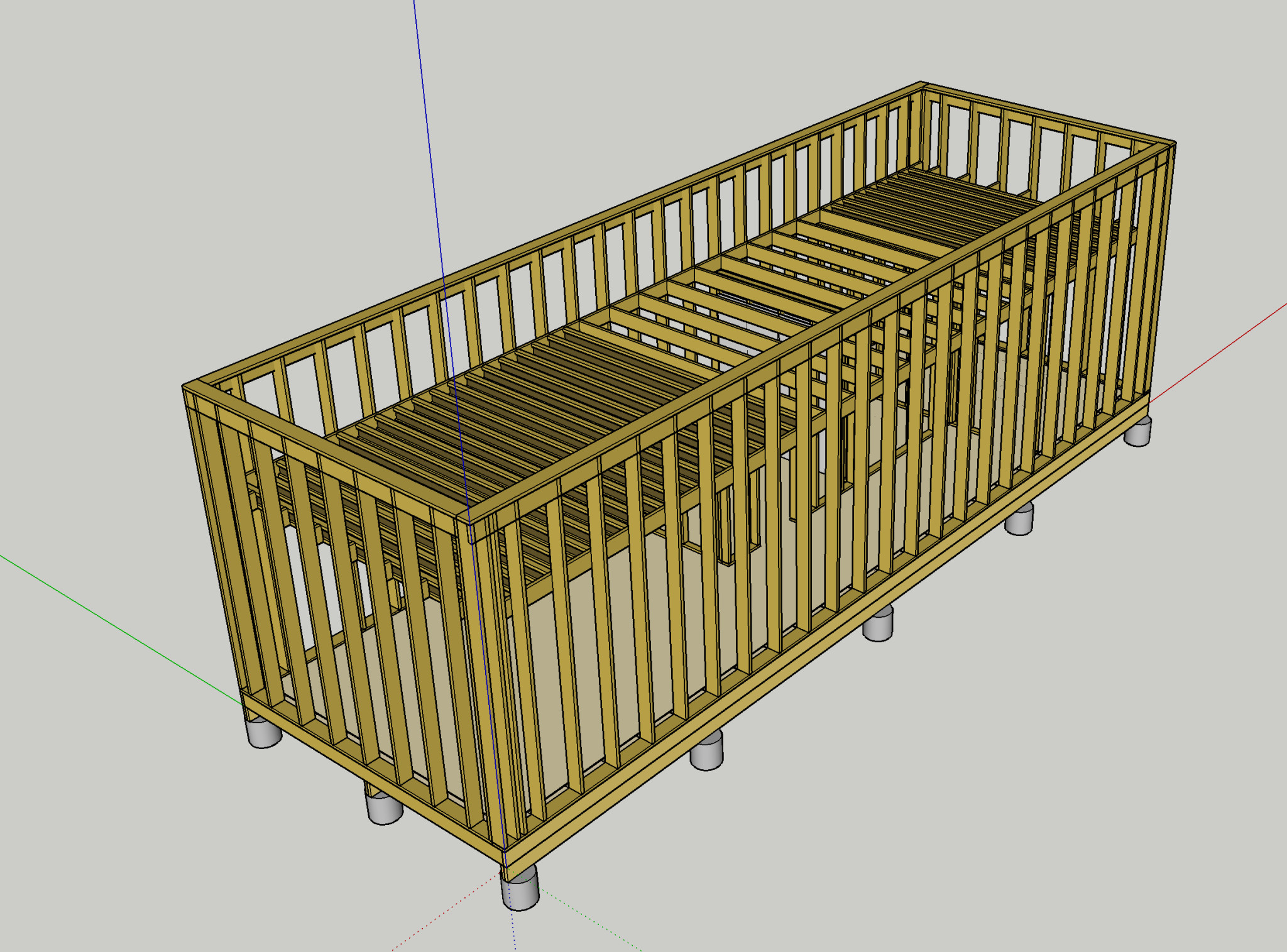
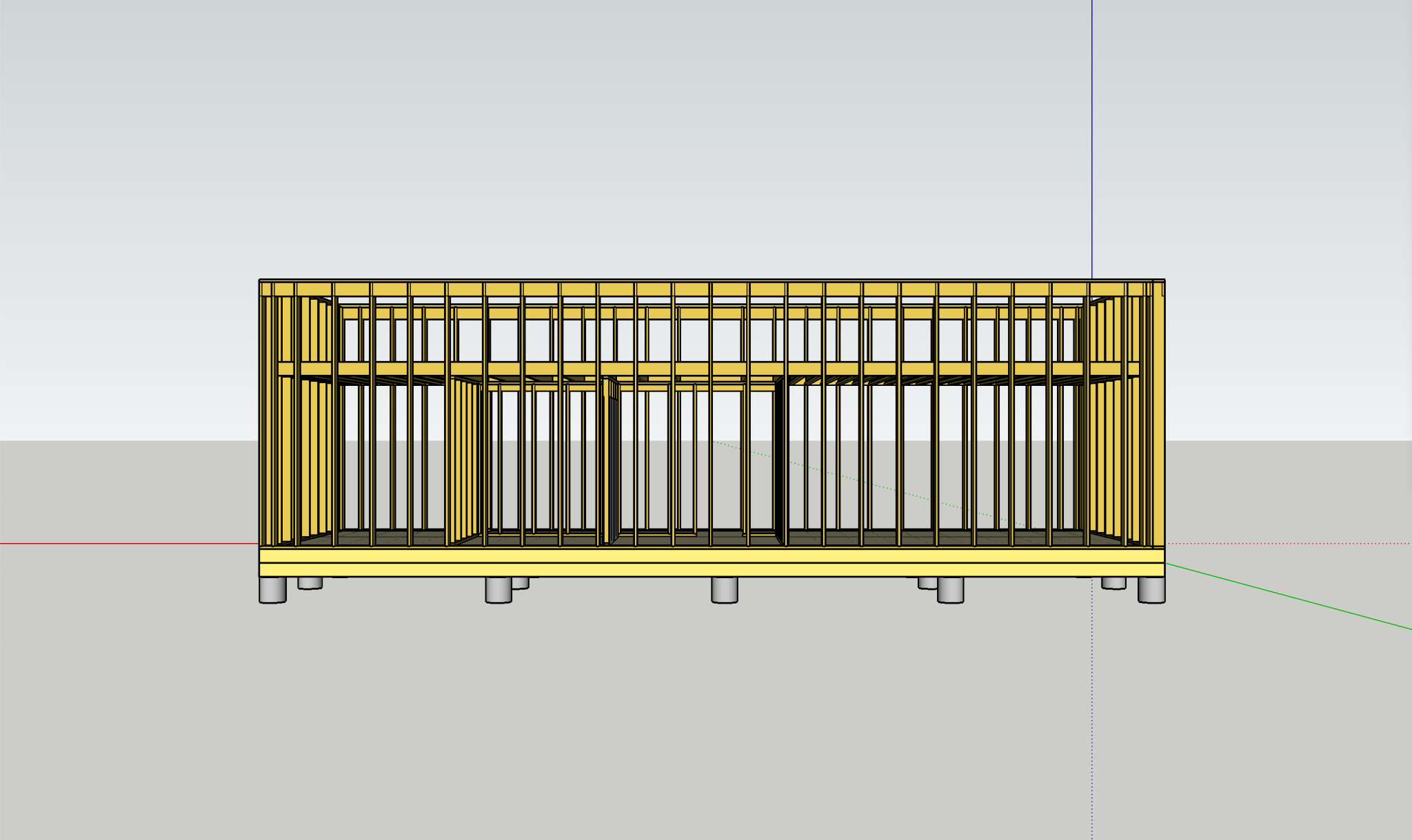
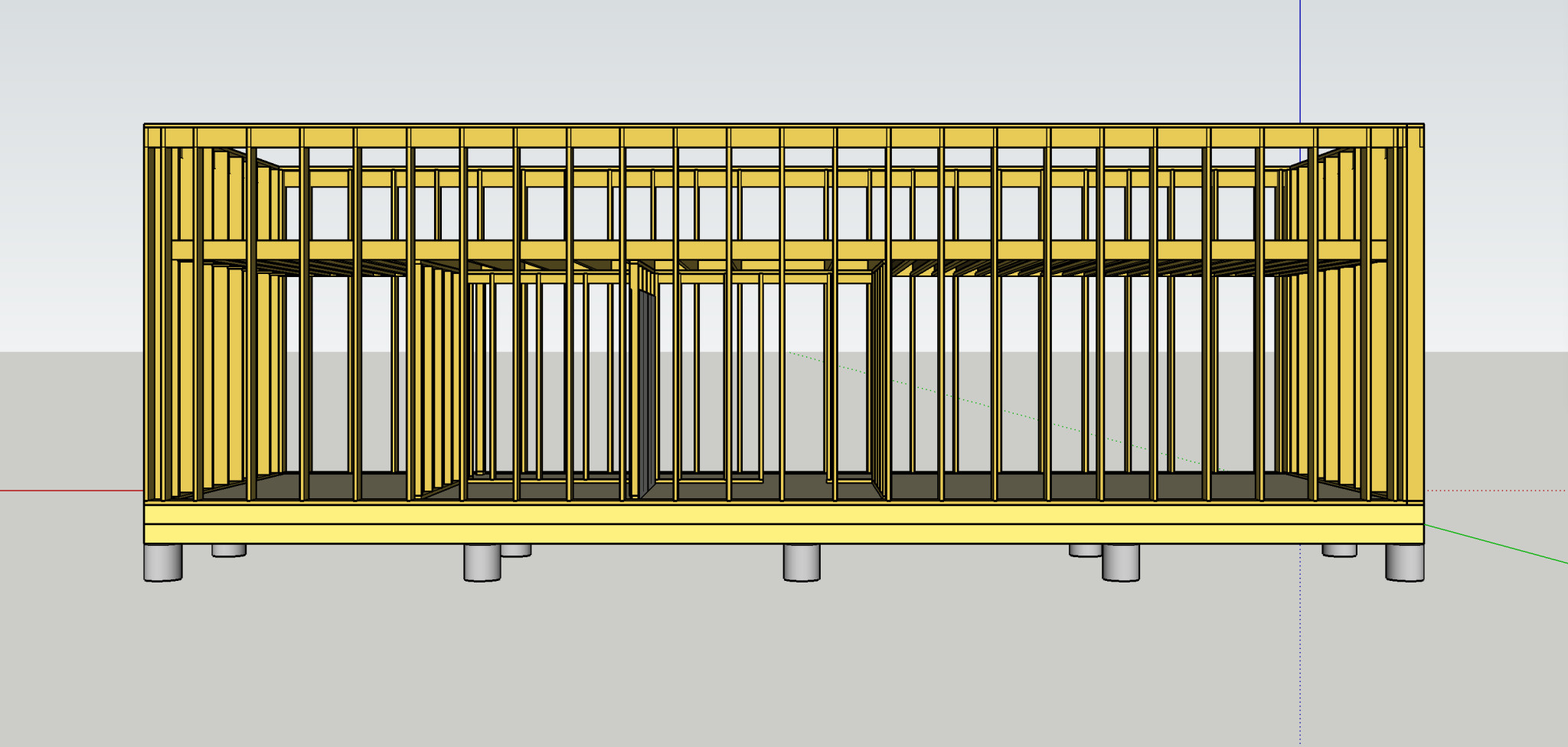
Now I've sketched out a frame (though without windows and doors) that I'd like feedback on. I will check everything with a constructor first but I think there are a lot of wise people here.
Outer dimensions: 4800x14000
Load-bearing beams: 45x220
Floor joists have cc600, 45x220
Wall frame: 45x195
Intermediate floor: 45x220 cc600 + Lättbalk BI220 cc300. Interior walls will support the section with cc600
I've probably made mistakes and forgotten things, that's why I'm asking here
The lower joist, the one resting on the piles, probably needs to be stronger, a bit depending on how you calculate its interaction with the other longitudinal 45x220.
You don't need more posts in the wall where the joists are s300. It is already heavily over-dimensioned with 45x195 at s600. (But it is needed for insulation thickness)
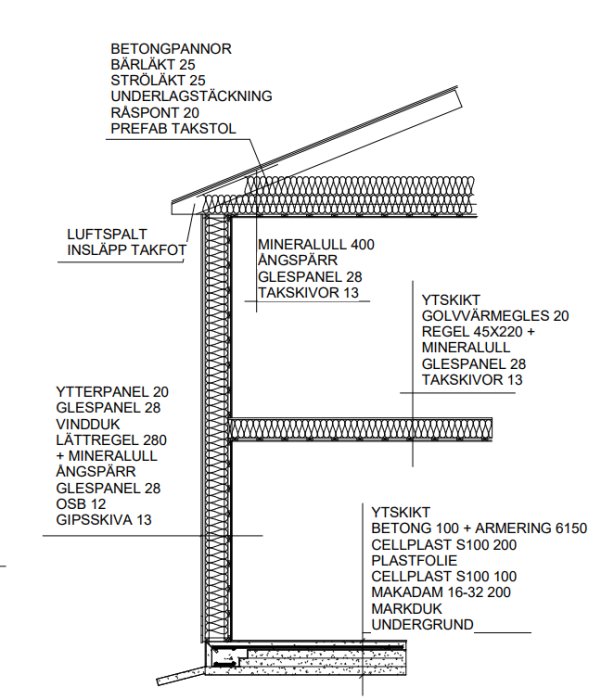
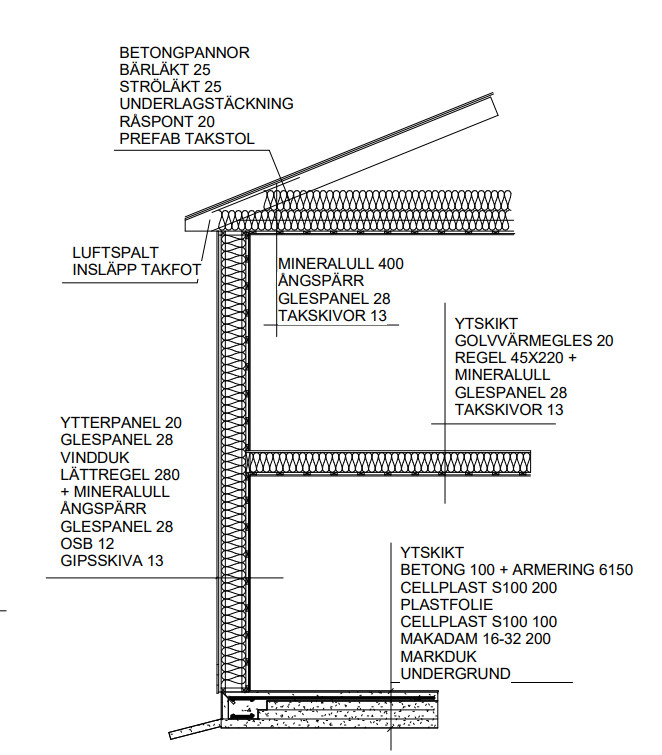
As I can see, you have 4 longitudinal studs at the intermediate floor, this results in both unnecessarily much material and an unnecessary thermal bridge. It will be best insulated and use the least material if you let the outer wall studs go all the way up and place the supporting beam for the intermediate floor inside.
compare this construction where the joist is located inside.
The lower support beam, the one resting on the plinths, probably needs to be stronger, depending a bit on how you calculate that it collaborates with the other longitudinal 45x220.
You don't need more posts in the wall where the floor joists are s300. It is already significantly over-dimensioned with 45x195 at s600. (But it is necessary for insulation thickness)
As I can see, you have 4 longitudinal studs at the mid-floor level, which results in both unnecessary material and a needless thermal bridge. The best insulation and least material occurs if you allow the external wall studs to go all the way up and place the mid-floor support beam internally.
compare this construction where the floor joists sit internally.
[image]
Great, I'll sketch out a new version with your feedback in mind.
Thank you! It is SketchUp Make 2017. All the components (studs, paneling, insulation, sheet material, etc.) are made as "components," so if you change the master, they all change, quite convenient. The idea is to also draw in the electrical, water, and ventilation; everything should sort of be there. I think this minimizes the number of unforeseen events, even though they will certainly appear anyway
The lower support beam, the one on the plinths, probably needs to be stronger, depending slightly on how you calculate its cooperation with other longitudinal 45x220.
You don't need more posts in the wall where the floor joist is s300. It is already heavily over-dimensioned with 45x195 at s600. (But it's necessary for the insulation thickness)
As I can see, you have 4 longitudinal studs at the intermediate floor, this becomes both unnecessarily much material and an unnecessary thermal bridge. Best insulated and with the least material is achieved if you let the external wall studs go all the way up and place the support beam for the intermediate floor internally.
compare this construction where the floor is attached internally.
[image]
I believe in that.
Less material
Fewer thermal bridges
And less work.
Also faster to put on the roof during the construction phase.
One might consider replacing the two 45x220 at the bottom with a glulam beam, thereby reducing the height a bit and perhaps making it easier to make it stable.
(Trying in this category instead, sorry for double posting :/)
Hi, I've been considering building a vacation home for a while. Like many others, I like the barn house aesthetic and the simple construction. After a lot of research, I'm leaning towards building with loose timber, which requires good preparation since I haven't built a whole house before. Over the past week, I've been sketching in SketchUp. The idea is to include as much as possible, such as electricity, plumbing, and calculating material needs, to make the construction less difficult.
Now I've sketched a frame (but without windows and doors) that I would like feedback on. I will check everything with a structural engineer, but I think there are many wise people here.
External dimensions: 4800x14000
Load-bearing beams: 45x220
Ground floor joists have cc600, 45x220
Wall frame: 45x195
Intermediate floor: 45x220 cc600 + Light beam BI220 cc300. Interior walls will support under the section with cc600
I've surely made mistakes and forgotten things, that's why I'm asking here
Shouldn't you draw your floor plan and the outer surfaces first, before making a super detailed frame?
Shouldn't you draw your floor plan and the exterior surfaces first, before making a super-detailed frame?
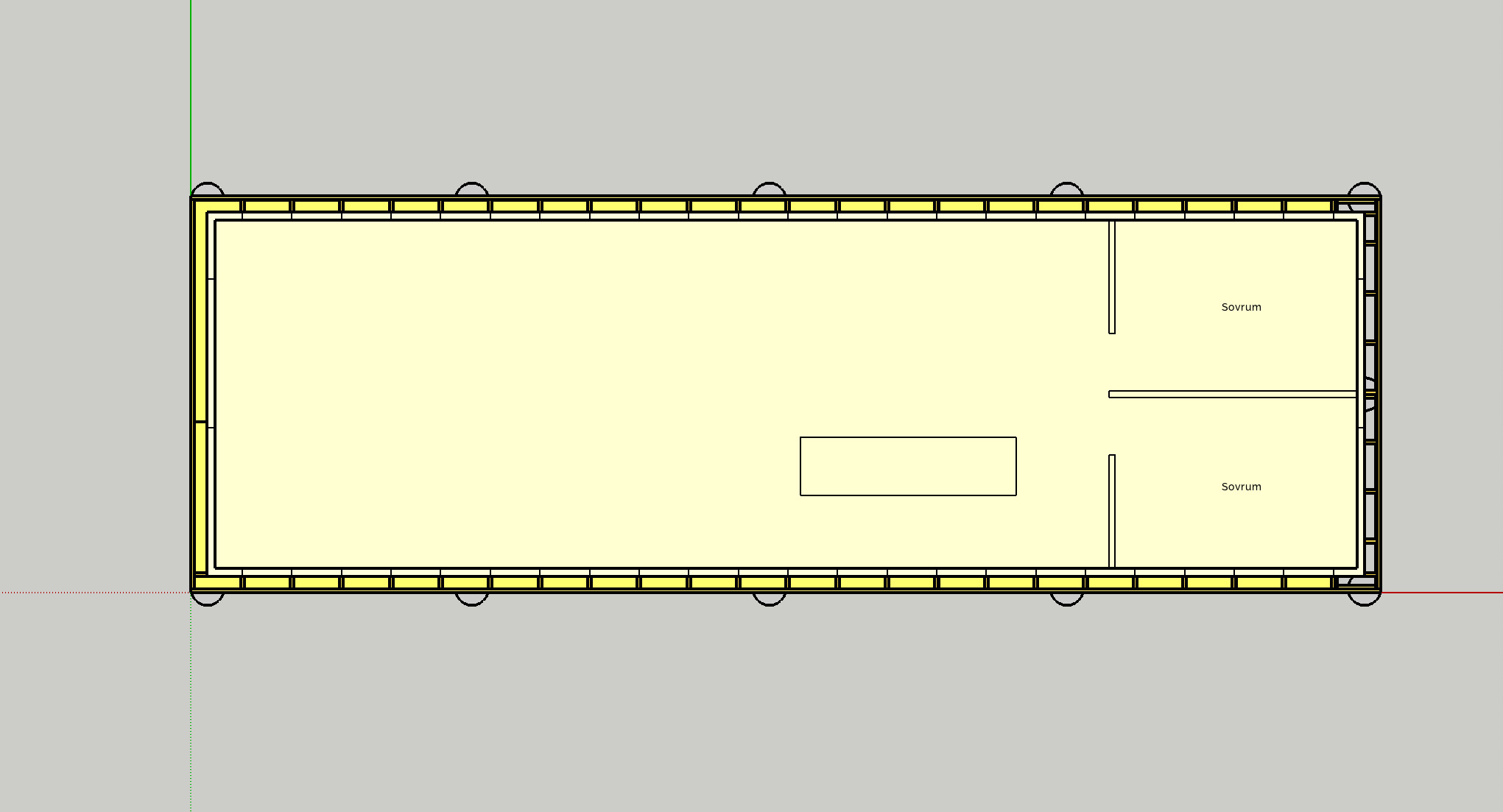
Here comes the floor plan (which surely has room for improvement. However, the size and dimensions of the house are set. I have looked at Arvesund's barn house and taken inspiration from them.
Nice model. I was thinking of two things, you mention load-bearing inner walls in the first post. You need to include those in the framework as well.
Then there are relatively few foundation points which result in high load concentrations. What is the ground like? Considering the ground pressure and settlements.
Nice model. I thought of two things, you mention load-bearing inner walls in the first post. You need to include them in the framework as well.
Then there are relatively few foundation points, which leads to high load concentrations. What type of soil is it? Consider ground pressure and settlements.
Good point! I'll draft a sketch including load-bearing inner walls.
I now realize the foundation points are completely undersized for my choice of bearing beam (Träguiden's dimensioning table). I don't know the ground conditions since I don't currently have a plot, but I'm looking at plots with rock, though it will need to be adapted when I know the base
Click here to reply
Vi vill skicka notiser för ämnen du bevakar och händelser som berör dig.




larsbj said:
The lower support beam, the one resting on the plinths, probably needs to be stronger, depending a bit on how you calculate that it collaborates with the other longitudinal 45x220.