
2,301 views ·
6 replies
2k views
6 replies
Floor Construction in Risk Structure
Hello everyone!
My partner and I are looking to buy a notorious 70s house, and I'm now trying to get an advance insight into the various steps required to get it the way we want. I think I have a decent grasp on most of it, except for the floor construction. Uninsulated slab on grade, no basement. Embedded rot-proof treated nailers on the entire entrance level that we want to chisel out. The demolition is straightforward, no questions there.
But! When it's time to rebuild, there are many more questions! I've read numerous threads on different forums, but there seem to be 10 different ways to solve the problem, and different people say different methods are best... The clear choice that never seems to fail is a ventilated floor, like Nivell, Jape, Granab. Unfortunately, my partner and I are just tadpoles in age (23, 24 years) and are already stretching our budget quite a bit with this house. Money is of the essence! It will need to be a cheaper variant, and we'll be completely satisfied if it lasts 15-20 years.
So, I have a few different setups!
Method 1:
-Surface layer
-Foam
-Floor chipboard
-Studs
-Insulation (not against the concrete, needs to be mounted so there's an air gap against the slab)
-Sealant paper
-Concrete slab
So, more or less the same construction that's held for 50 years, but without the chemicals from the rot treatment and with a moisture barrier between the concrete and wood. Opinions on Method 1?
Method 2:
-Surface layer
-Foam
-XPS at least 100mm, like EPS200?
-Platon mat
Cheaper variant, which many still seem satisfied with. Opinions? I can imagine the Platon mat prevents moisture from escaping the slab and instead finds its way to the wall? The sill is untreated, but unfortunately not on sealing paper. Is there perhaps a risk that moisture is pushed into the sill with this method?
Anyone have opinions or other suggestions? And it's clear that you should do it "right" from the beginning with a ventilated floor... But that option will be difficult. It's either a budget solution or going with the concrete slab
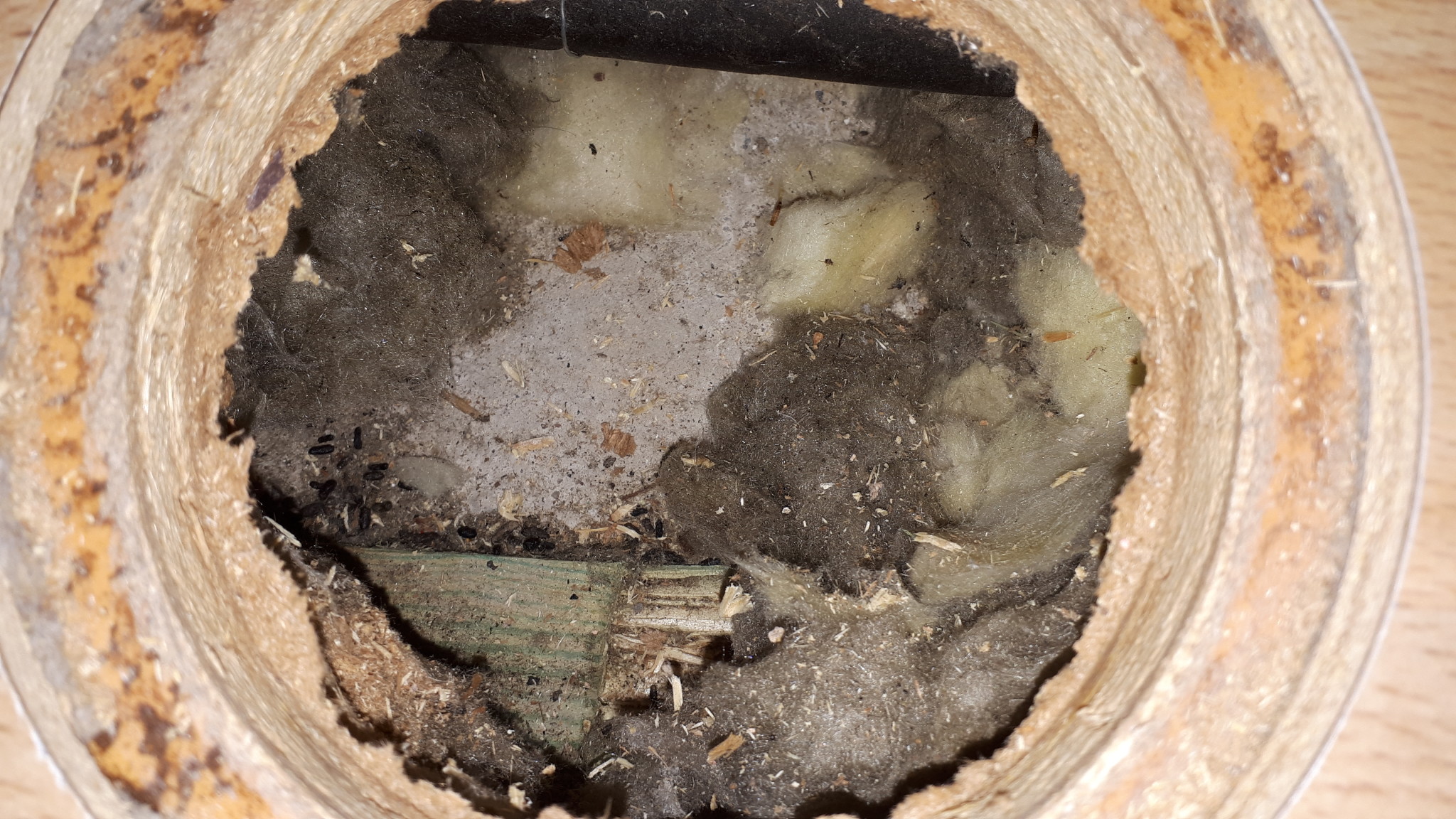
The picture is from the house inspection, down into an inspection hole.
My partner and I are looking to buy a notorious 70s house, and I'm now trying to get an advance insight into the various steps required to get it the way we want. I think I have a decent grasp on most of it, except for the floor construction. Uninsulated slab on grade, no basement. Embedded rot-proof treated nailers on the entire entrance level that we want to chisel out. The demolition is straightforward, no questions there.
But! When it's time to rebuild, there are many more questions! I've read numerous threads on different forums, but there seem to be 10 different ways to solve the problem, and different people say different methods are best... The clear choice that never seems to fail is a ventilated floor, like Nivell, Jape, Granab. Unfortunately, my partner and I are just tadpoles in age (23, 24 years) and are already stretching our budget quite a bit with this house. Money is of the essence! It will need to be a cheaper variant, and we'll be completely satisfied if it lasts 15-20 years.
So, I have a few different setups!
Method 1:
-Surface layer
-Foam
-Floor chipboard
-Studs
-Insulation (not against the concrete, needs to be mounted so there's an air gap against the slab)
-Sealant paper
-Concrete slab
So, more or less the same construction that's held for 50 years, but without the chemicals from the rot treatment and with a moisture barrier between the concrete and wood. Opinions on Method 1?
Method 2:
-Surface layer
-Foam
-XPS at least 100mm, like EPS200?
-Platon mat
Cheaper variant, which many still seem satisfied with. Opinions? I can imagine the Platon mat prevents moisture from escaping the slab and instead finds its way to the wall? The sill is untreated, but unfortunately not on sealing paper. Is there perhaps a risk that moisture is pushed into the sill with this method?
Anyone have opinions or other suggestions? And it's clear that you should do it "right" from the beginning with a ventilated floor... But that option will be difficult. It's either a budget solution or going with the concrete slab
The picture is from the house inspection, down into an inspection hole.
With method 2 you need to use self-leveling compound on the floor first. The slab is rough-cast and the joists are the only thing that is really level in the old construction.
Method 1: Put plastic across the entire concrete slab (don't let moisture rise into the construction), new joists resting on plastic wedges (which are also needed to get them level), insulation (place it directly on the plastic).
Method 1: Put plastic across the entire concrete slab (don't let moisture rise into the construction), new joists resting on plastic wedges (which are also needed to get them level), insulation (place it directly on the plastic).
GoC said:
With method 2, you have to self-level the floor first. The slab is rough-cast and the joists are the only truly level parts in the old construction.
Method 1, secure plastic on the entire concrete slab (do not allow moisture to rise into the construction), new joists resting on plastic wedges (which are also needed to level them), insulation (which you place directly on the plastic)
Self-leveling sounds no fun... There's a risk it could turn out badly since I've never self-leveled before
About the plastic over the entire slab, can't that also lead to moisture seeking out to the sill plate standing without a moisture barrier directly against the slab? Isn't ventilation preferable?
Regarding whether it smells or not in the house, well, sort of. There's one room, a storage linked to the laundry room, that lacks a concrete slab. It's asphalted, with impregnated joists as a sill plate around the entire outer wall. It smells like a chemistry lab in there. In the rest of the house, it smells like an old lady and gym bag. We want to remove all rot protection just to prevent problems with odor contamination in the future.
If nothing has happened in 50 years, nothing is likely to happen suddenly. The smell, moisture, and mold problems occurred within 5-10 years after the houses were built. I worked in the early '80s inspecting these houses that had developed mold damage with odor problems. But it was primarily floating floors, i.e., styrofoam on concrete slabs and chipboard on top. Leftover sawdust and untreated sills directly on the concrete were the biggest sources of problems. So my advice, do nothing at all with the floors. You are most likely never going to have any problems with them. But if you want to create work and expenses for yourself, you can tear them up. However, doing it halfway is completely wasted, it won't be any better than it is today.
We're kind of thinking along the same lines anyway, that it's worked for half a century. But sooner or later, we want to get rid of those KP-cuprinol treated beams anyway, as it is simply a bad material to have in the house... Feel that it's easier now before we've managed to furnish these rooms.If nothing has happened in 50 years, nothing is likely to suddenly occur. The odor and moisture and mold problems came within 5-10 years after the houses were built. I worked in the early 80s inspecting these houses that had then developed mold damage with odor issues. But it was primarily floating floors, i.e., polystyrene on a concrete slab and chipboard on top. Left-behind sawdust and untreated sills directly on the concrete were the biggest sources of problems. So my advice, do nothing at all with the floors. You are most likely never going to have any problems with them. But sure, if you want to create work and expenses for yourself, then break them up. But doing it half-heartedly is completely wasted, it won't be any better than today.
Why, any harmful substances have definitely diminished over the years. And above all, they are in the floor construction, not inside the house and you never find yourself down there anyway. Spend some of the money on slightly better ventilation instead.S StorBagaren said:
Click here to reply