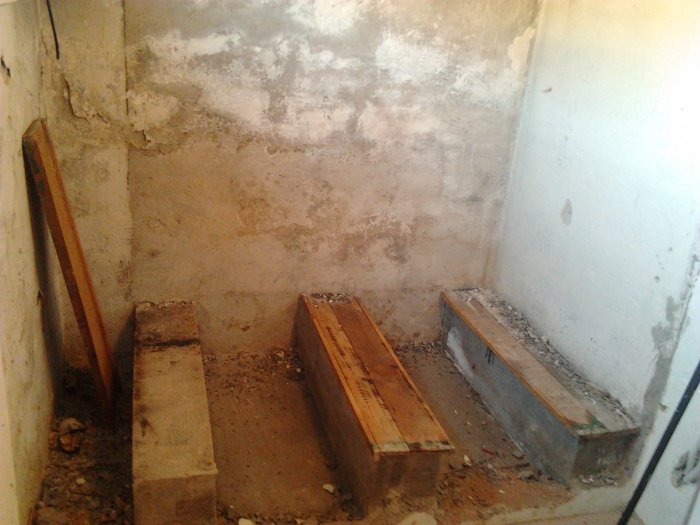
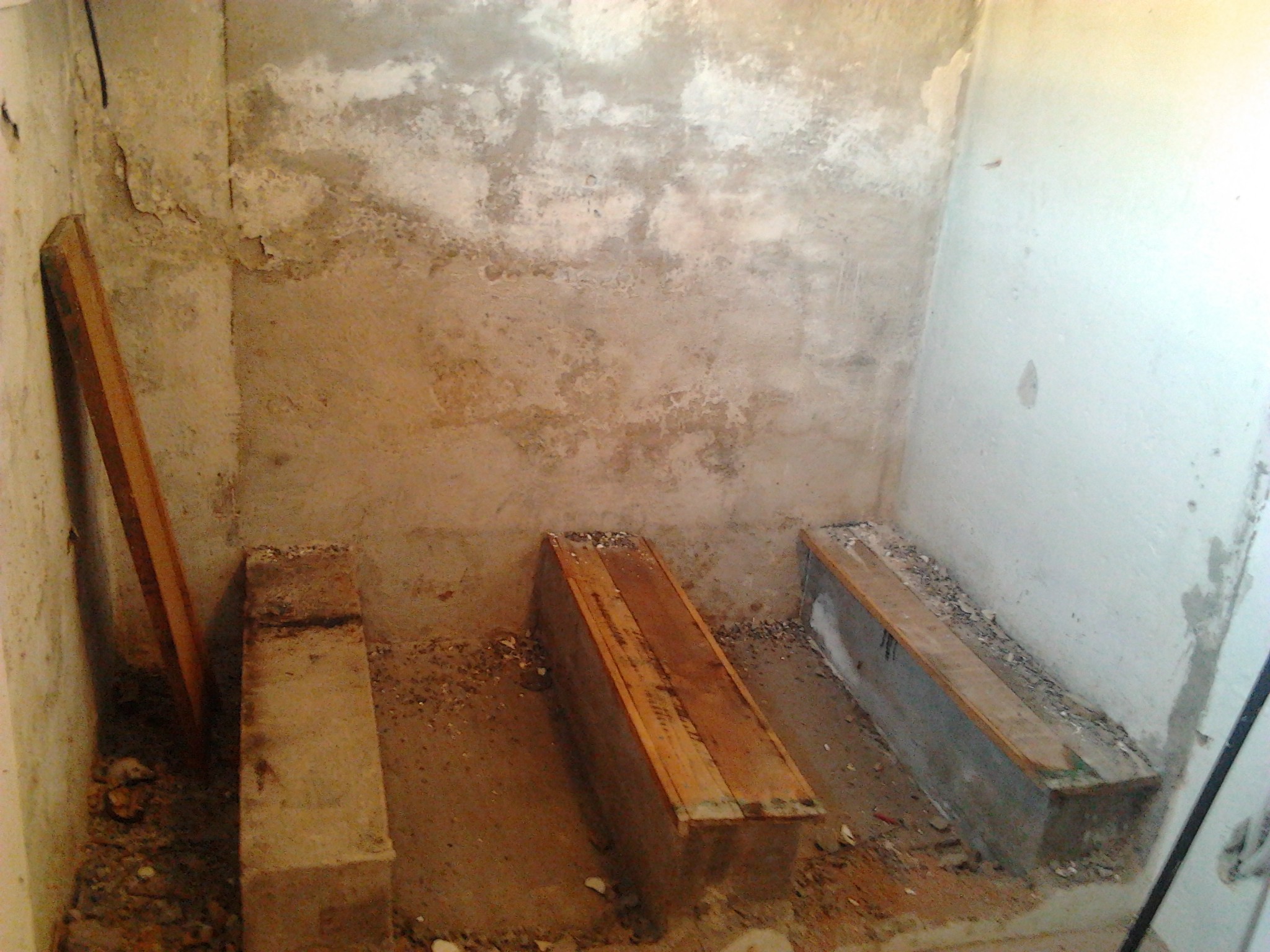
I have just removed an old oil tank from my basement. The house was built in 1939, and today we use part of the basement as living space. Now that I have removed the unsightly oil tank, we are considering how we can use the space. We are thinking of moving the washing machine and dryer in and making it a small laundry room.
Left on the ground are three "foundations," how do you remove these appropriately?
The wall hasn't been touched since 1939, so it could use a bit of fixing. Should I use kalkfix? I then plan to paint the wall and floor. The idea is a fairly simple laundry room, no tiles or anything like that on the walls...
I don't know if the foundations have any function or if there are pipes or similar in them, but assuming they have no function, I would break them up with a jackhammer. Then I would probably sand the walls where needed with a concrete grinder and then finish them. And then prime and paint the walls. With silicate or silicate emulsion paint that breathes.
Laundry room, you said, is there a floor drain for the washing machine? Water?
I don't know if the foundations have any function or if there are pipes or similar in them, but assuming they don't have any function, I would have demolished them with a demolition hammer. After that, I would probably grind the walls where needed with a concrete grinder and then smooth them out. And then prime and paint the walls. With silicate or silicate emulsion paint that breathes.
Laundry room you said, is there a floor drain for the washing machine? Water?
Thanks for the answer.
I'm pretty sure there's nothing in the foundations, so it will be about demolishing them. Renting a machine is probably best? What size do I need? Can I manage it? I can handle quite a bit but have never used a demolition hammer before, or is it better to hire someone to do it?
I'll have to rent a concrete grinder too (?), but probably do that after I've removed the foundations.
The water enters the house in this room where the boiler currently stands. So there's plenty of water. There's drainage too (although it's just a hole in the concrete floor now). It's the electricity that I'll need to hire an electrician to get into the room. But the electrical panel isn't too far away, so it should be fine.
If you save some of the foundations and fill in a bit between them, it will make a nice height to have the machines on later. I would have tried with a large angle grinder and sledgehammer to start with. And since it seems to be quite a small room, I would have gone with tiles without it being too expensive.
Buy a rotary hammer with a chiseling function for about 350 SEK at Jula. Works well. I have two have done a lot of chiseling with them. Or rent a bigger one to make it go faster.
Angle grinder in combination with chiseling is probably the fastest, meaning cutting out blocks and then chiseling away.
You actually also need to arrange a waterproofing layer on the floor and 5 cm up on the wall according to wet room regulations. And then preferably tiles on top. At least if you want to do it correctly.
Do you have insulation under the slab? If the house is from 39, you probably don't, and then you can skip the waterproofing layer. However, I would still put some around the drain and lay tiles on the floor so the floor can breathe/allow moisture through. Laying tiles yourself is not particularly difficult as long as you are careful, measure properly, do a test layout without adhesive, etc.
Good idea to keep the foundation, but would it be too high to place a countertop over it and still be able to, for example, fold laundry on it? How would you "fill in between"? Build it up with bricks?
It's not such a large wall, so tiling wouldn't be too expensive. More a question of whether I can do it myself. But you learn all the time! What do you need to do to tile? Sand down and then plaster before setting the tiles?
Arkenfall, I don't think there's any insulation under the slab, but how can I know? I’ll check out Jula's rotary hammer with chiseling function. Thanks for the tip.
A moisture barrier should only be used in the shower area when installing a wet room in the basement, right? I don't see any practical reason to have a moisture barrier just for the washing machine in the basement. If a washing machine were to start leaking water, the damage should be very limited in a basement. A moisture barrier also runs the risk of trapping ground moisture.
Sure, it seems nice to have the washing machine at a better working height, but I would have still removed the bases completely and placed the machines on the floor with a countertop on top so that you get a substantial workspace for folding and sorting laundry. Washing machines are normally 80 cm high and 90 cm is the standard height for countertops. Maybe you can put up some wall shelves or kitchen cabinets above as well.
How do you think about laundry sorting, folding, drying, etc.?
Pelpet, I also think that moisture barrier is a bit overkill for the washing machine. I think I'll skip it.
I'm still considering the pros and cons of an elevated washing machine. Since the laundry corner will be quite small anyway, you want to have a counter to fold clothes and also set up shelves or cabinets above. Raising the machines probably costs quite a bit of workspace/counter space.
In an adjacent room, we have a "walk-in closet". So that's where we sort the laundry and we also have space to hang some clothes there if needed. But most of the laundry goes in the dryer, except in the summer when we hang some. Folding would be nice to do in the laundry corner, so it's good to have a counter over the machines.
It would be nice to have some sort of sink that doesn't take up much space and can be mounted on the wall. Does anyone have tips on where to find one at a reasonable price?
I would still have applied a waterproofing membrane around the floor drain. In our case, for some reason, it started to rise around the floor drain, and the edge that formed caused more water to stand around the drain instead of flowing down, which also reached the concrete. The concrete was so porous that you could have dug out the upper part around the floor drain with a shovel. So now we are waterproofing around the drain when we replace it, and the floor can breathe in the rest of the room.
Same here. Waterproofing around the well but not in other parts. If it had been a wooden beam structure, I would have applied it everywhere and 5 cm up the wall. It is so simple to roll on the waterproofing around the well that I would have done it - even if it might be okay without it too. Just to be a bit more cautious. And from a moisture migration point of view, I don't think it affects at all since the area is so small.
I have knocked off all the loose plaster with a hammer and screwdriver. About 50% of the plaster is left and holds well. Should I try to remove that as well or can I apply new plaster only where it's needed?
How should I think regarding the tiles? Should I tile the entire wall or skip where the washer and dryer stand? It's not a big cost, but I'm not sure what will be best?
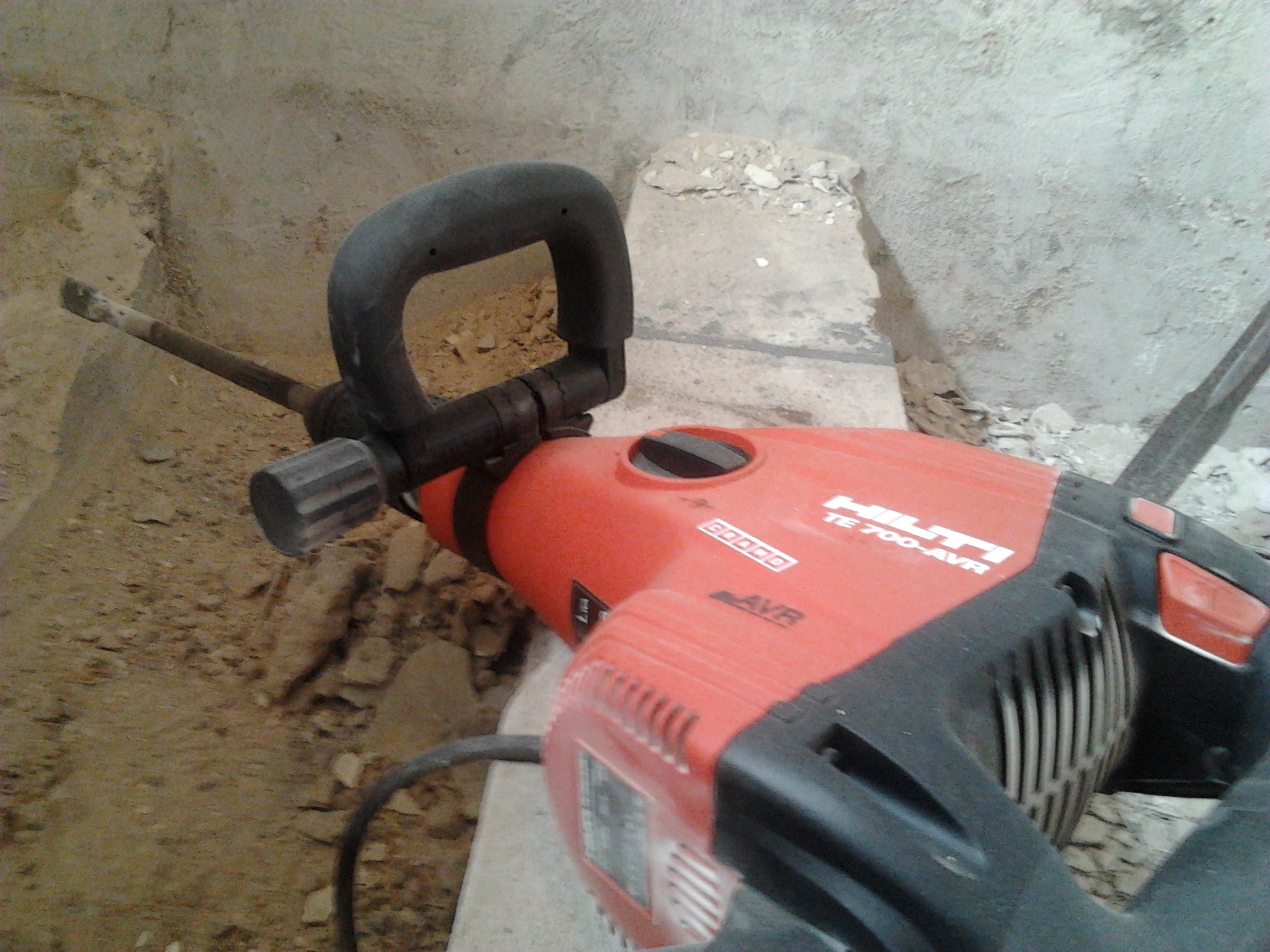
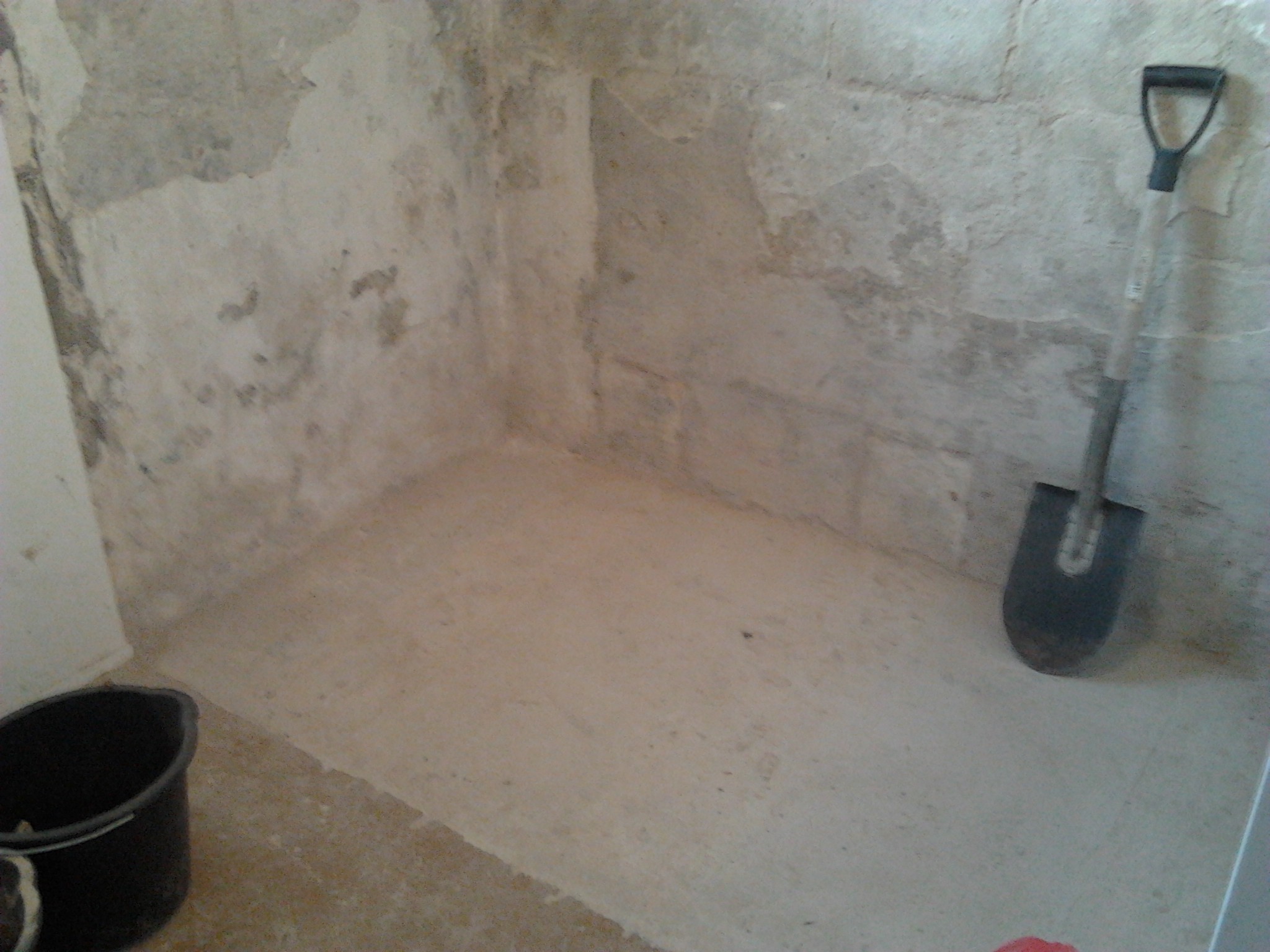
Small update. Not much happened until now. Finally rented a machine for the job of removing the oil burner foundations. Thought there were some blocks underneath, but they were solid cast and hard. It would have been really tough with a "simple" machine. So it was good that I rented a hefty one. Went through the floor a bit in some places. Should I fill in with cement or concrete?
Vi vill skicka notiser för ämnen du bevakar och händelser som berör dig.


 have done a lot of chiseling with them. Or rent a bigger one to make it go faster.