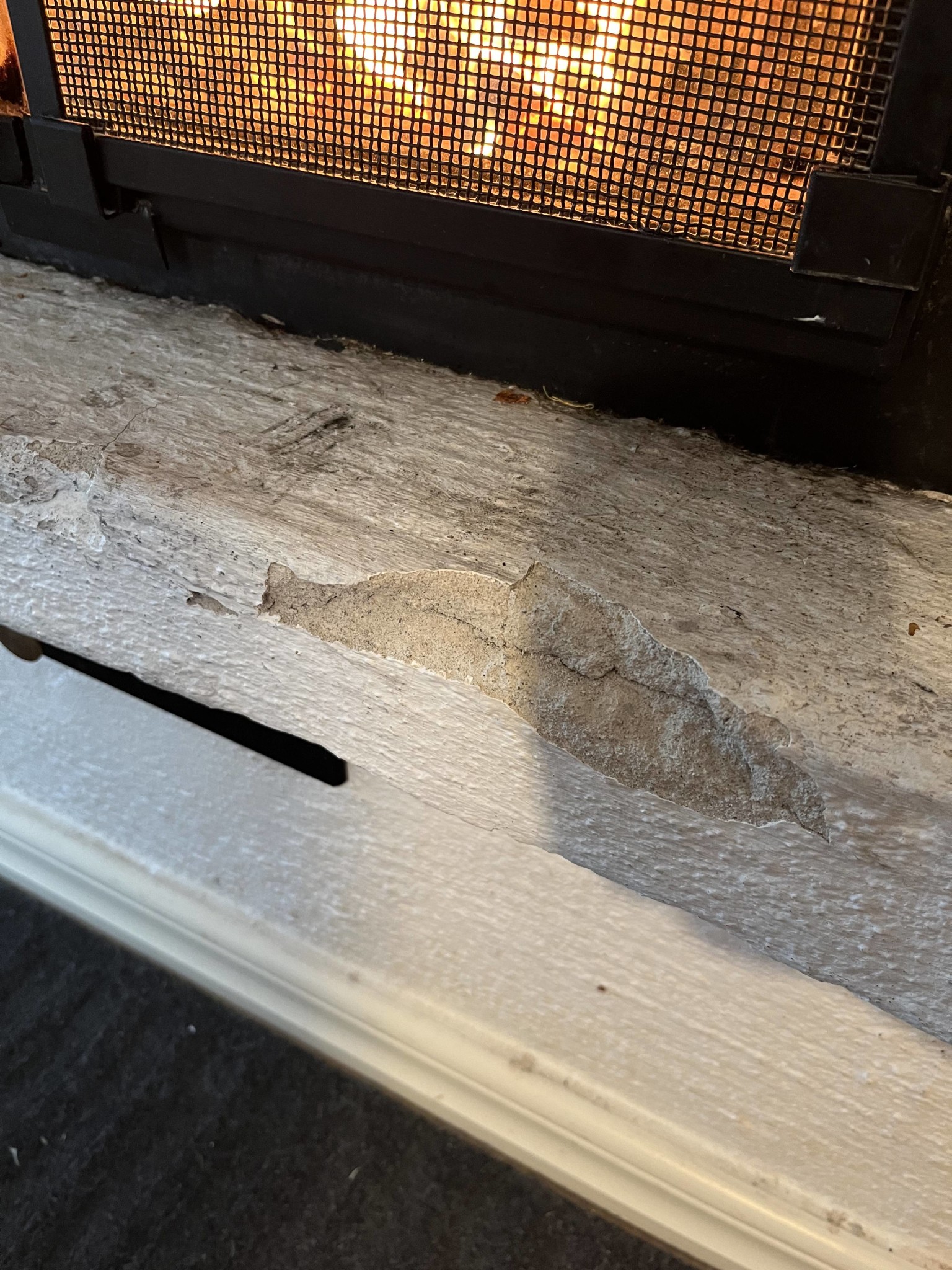
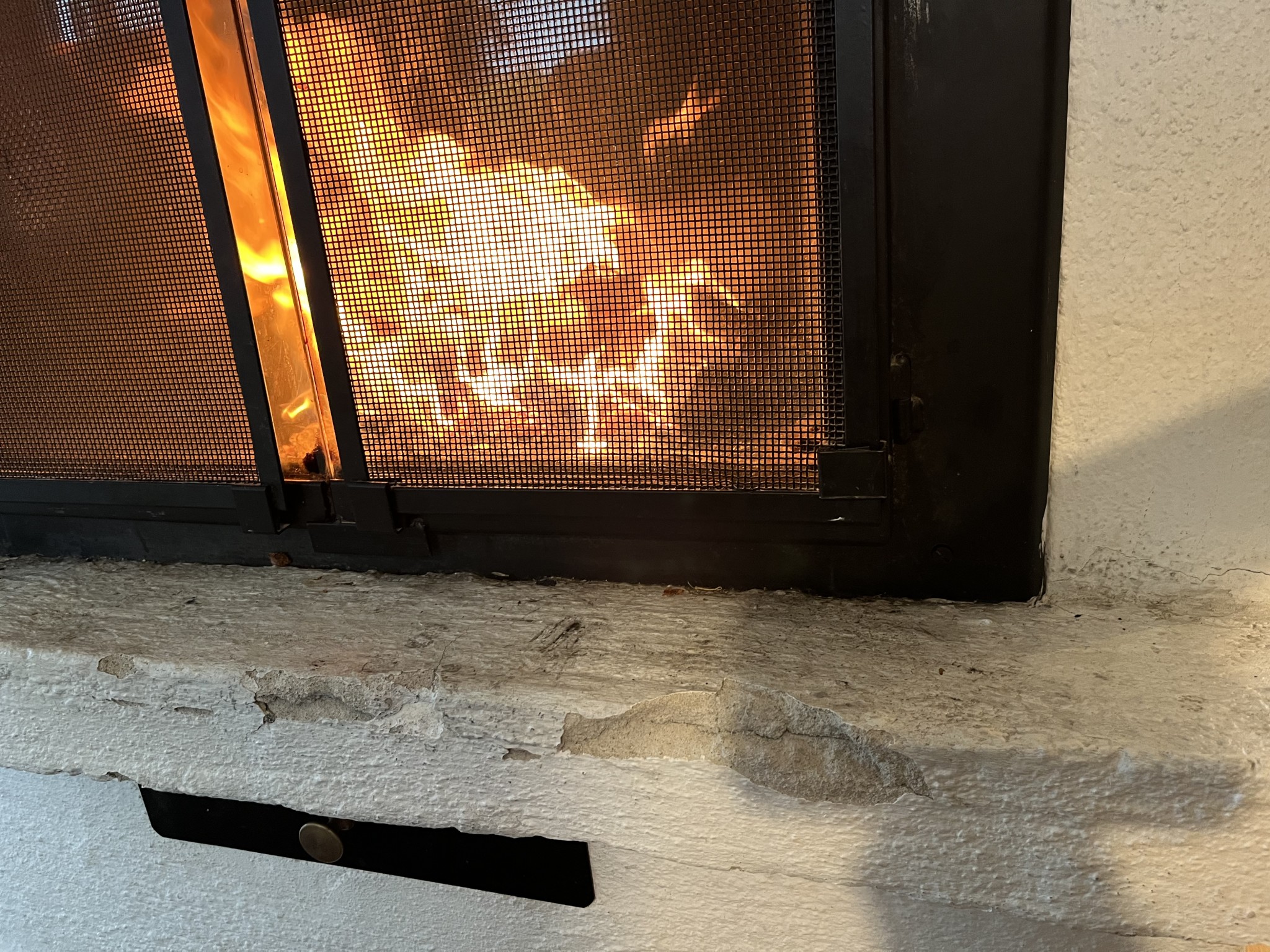
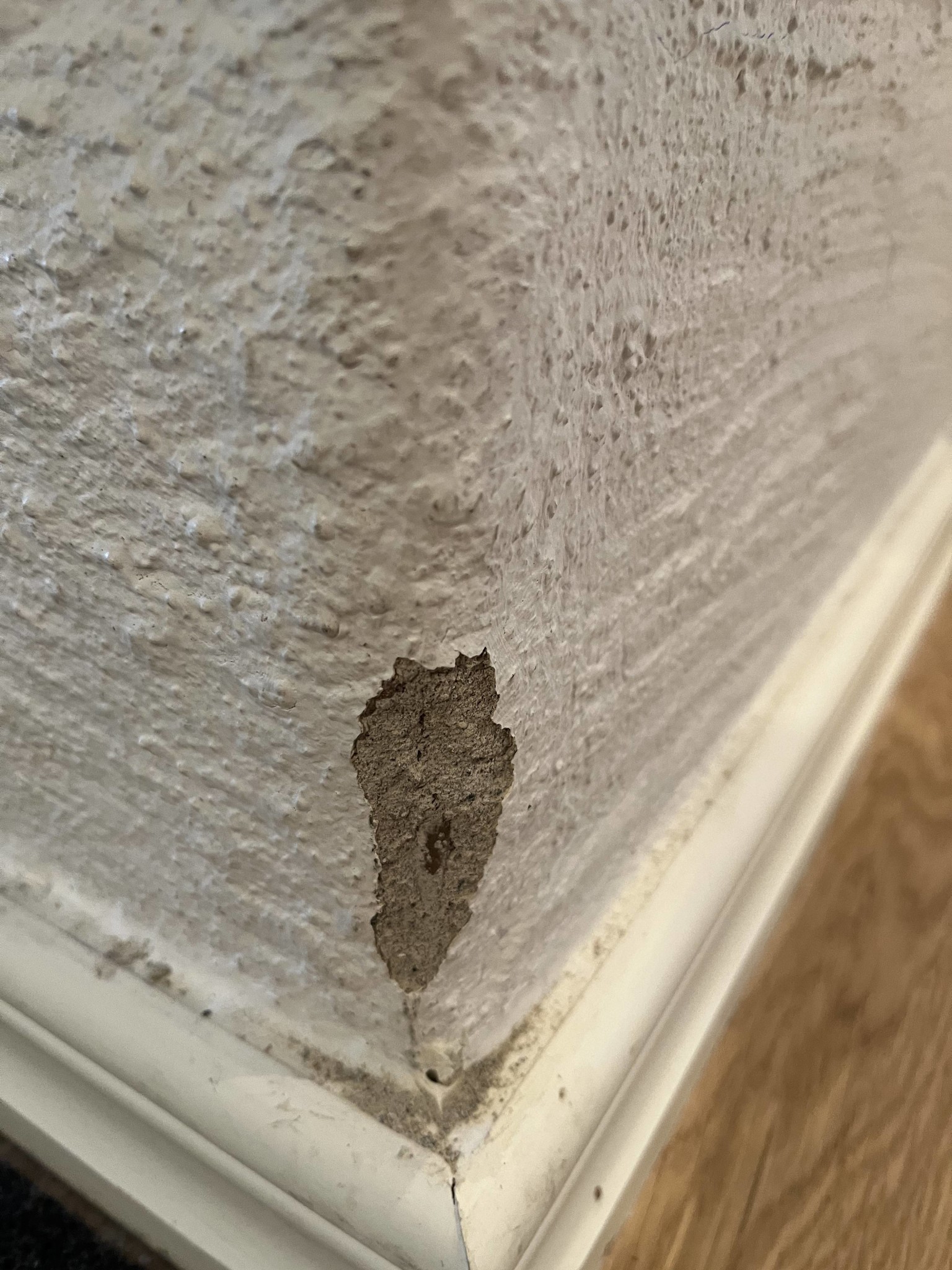
Hello! Our son has been on the chimney and driven his walker into it, then picked off a lot of plaster. So the question now is what I should use to try to restore it, what type of plaster should I use, and how should I go about getting it as good as possible?

Grateful for an answer.
 
  • Damaged plaster on a fireplace mantel with exposed underlying surface, due to a toy collision, seeking repair advice.
  • Damaged plaster on a fireplace surround, near burning logs behind a protective mesh screen.
  • Damaged corner of a wall with missing plaster near baseboard.
Boring answer, but do nothing at all before the little hooligan stops walking around with the walking wagon, risk of more damage until then ;).
 
  • Like
Daggan Maggan and 2 others
  • Laddar…
If you tap the plaster, it should sound solid; if it sounds hollow, more will come loose.

If you're going to repair it, I would start with mortar c or kc.
 
Ok, but then I should
A Alexn72 said:
If you tap on the plaster it should sound solid; if it sounds hollow, more will come loose.

If you're going to repair it, I would start with mortar c or kc
ok, but then I knock off the loose/hollow parts and then simply apply the mortar. What is the difference between c - kc? Then when it has dried, can I just paint it?
 
B Blomsterbladh said:
Ok, but then I should


ok but then I knock off the loose/hollow and then I simply apply the mortar. What is the difference between c -kc? Then when it has dried, can I just paint it?
C is common and kc is more lime.
C is harder than kc.
You want the weakest on the outside. That is, if yours is built with b mortar, you should repair with c.
Knock off.
Wet the surface thoroughly.
Plaster. Keep it moist for at least 1 day. Let dry slowly.
Wait a week and then paint.
 
If it is very brittle, I would guess more that it is hydraulic lime mortar...... Cement becomes hard and rarely crumbles like that just from a little child's play.
 
  • Like
cpalm
  • Laddar…
S Stefan1972 said:
If it is very brittle, I would guess more that it is hydraulic lime mortar......Cement becomes hard and rarely crumbles from just a little child's play.
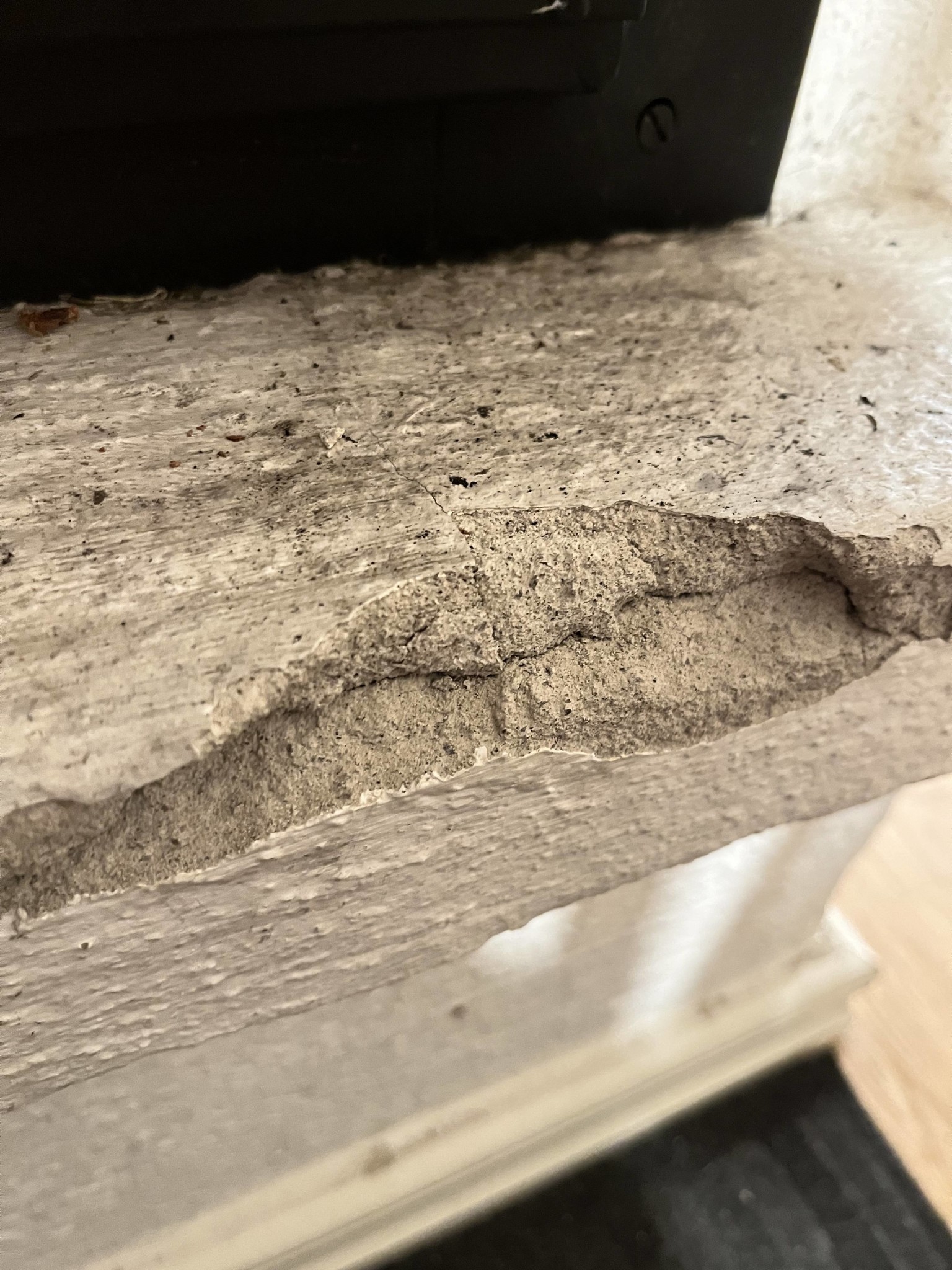
hmm hard to determine, if you poke it, small grains come off,
 
  • Close-up of a textured wall or surface with a chipped portion, showing small loose grains, possibly indicating wear or damage.
Lime mortar is so soft that you can easily scrape with something sharp and dig into the material. You can't do that if it's cement mortar. It becomes rock hard.
 
Click here to reply
Vi vill skicka notiser för ämnen du bevakar och händelser som berör dig.