
10,002 views ·
19 replies
10k views
19 replies
Fix joint between stringer and wall
Hello
I don't know if this is the right forum, but I'll give it a try.
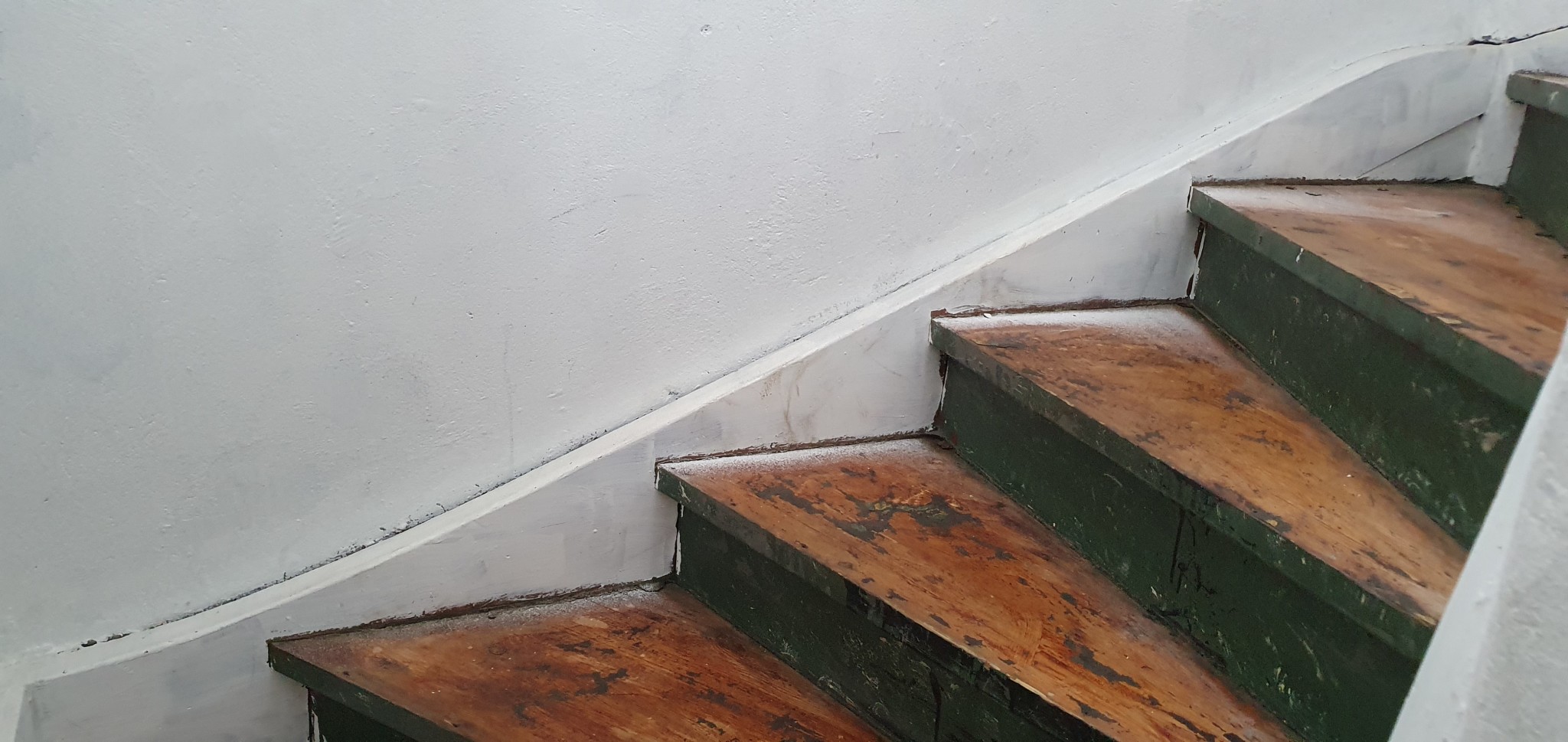
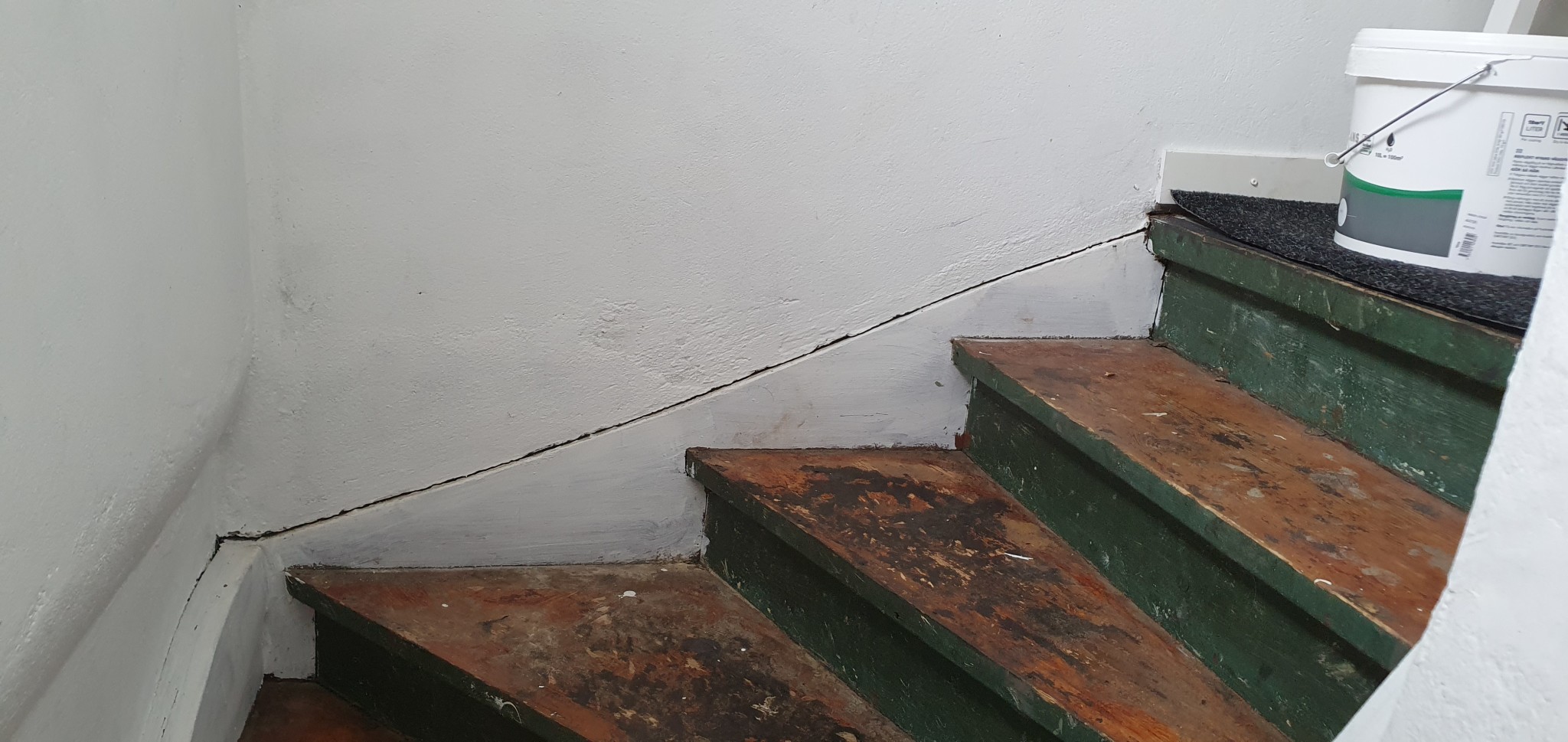
We are going to freshen up the staircase leading down to the basement by laying needle felt and repainting, etc., but I'm completely out of ideas on how to create a nice and natural transition between the stringers and the walls.
The top stringer is sort of plastered into the wall while the other two are outside. The gap is quite large in some places. Is there anything I can use to fill it that won't crack, or should I install a trim?
All ideas are gratefully received.
Best regards
I don't know if this is the right forum, but I'll give it a try.
We are going to freshen up the staircase leading down to the basement by laying needle felt and repainting, etc., but I'm completely out of ideas on how to create a nice and natural transition between the stringers and the walls.
The top stringer is sort of plastered into the wall while the other two are outside. The gap is quite large in some places. Is there anything I can use to fill it that won't crack, or should I install a trim?
All ideas are gratefully received.
Best regards


Yes, latex sealant was my first choice too but I got very poor answers from the building supplies store on which sealant is best suited. Do you have any tips on which sealant I should choose that can handle the flex and is paintable?
Regards
Regards


I appreciate the input and will try with a really good latex sealant; if the stuff starts to crack, a trim will go on top of it.
Best regards
Best regards
Not at home to measure now but would guess about 10 mm.
Regards
Regards
In our previous house, we had a similar staircase. There was already a trim that unfortunately didn't survive the crowbar when we renovated. I replaced it with a new, thin trim and it turned out very well.
I had the same situation when I renovated the staircase in my house. The staircase was not attached to the wall in any way but was located about 10mm away from the wall. I planed spacers that I pressed in between at several places and then screwed the entire stringer into the studs in the wall. Finished with a cover strip against the wall both on top and below. The feeling of walking on the staircase went from somewhat shaky to very solid.

I recently faced the same issue. I ended up using Tec7 to seal instead of bending strips.
I used Tec7 instead of latex putty because it accommodates 25% movement compared to latex/acrylic, which is somewhat more rigid (in most cases 12.5%). Additionally, latex/acrylic isn't as age-resistant and will dry/crack over time.
Now to my somewhat more "speculative" arguments: I've gotten the impression that latex/acrylic has a greater tendency to mold when in contact with a potentially damp basement wall. MS-polymer has been used in marine environments for a long time and should therefore be more resistant. Tec7 is at least approved according to ISO 846 regarding resistance to mold and bacteria (whatever that means). Tec7 handles joint widths up to 20mm according to their tables, while I've seen latex putty listed at a maximum of 10mm.
I used Tec7 instead of latex putty because it accommodates 25% movement compared to latex/acrylic, which is somewhat more rigid (in most cases 12.5%). Additionally, latex/acrylic isn't as age-resistant and will dry/crack over time.
Now to my somewhat more "speculative" arguments: I've gotten the impression that latex/acrylic has a greater tendency to mold when in contact with a potentially damp basement wall. MS-polymer has been used in marine environments for a long time and should therefore be more resistant. Tec7 is at least approved according to ISO 846 regarding resistance to mold and bacteria (whatever that means). Tec7 handles joint widths up to 20mm according to their tables, while I've seen latex putty listed at a maximum of 10mm.