
1,314 views ·
3 replies
1k views
3 replies
Fix interior wall after water damage?
Hi,
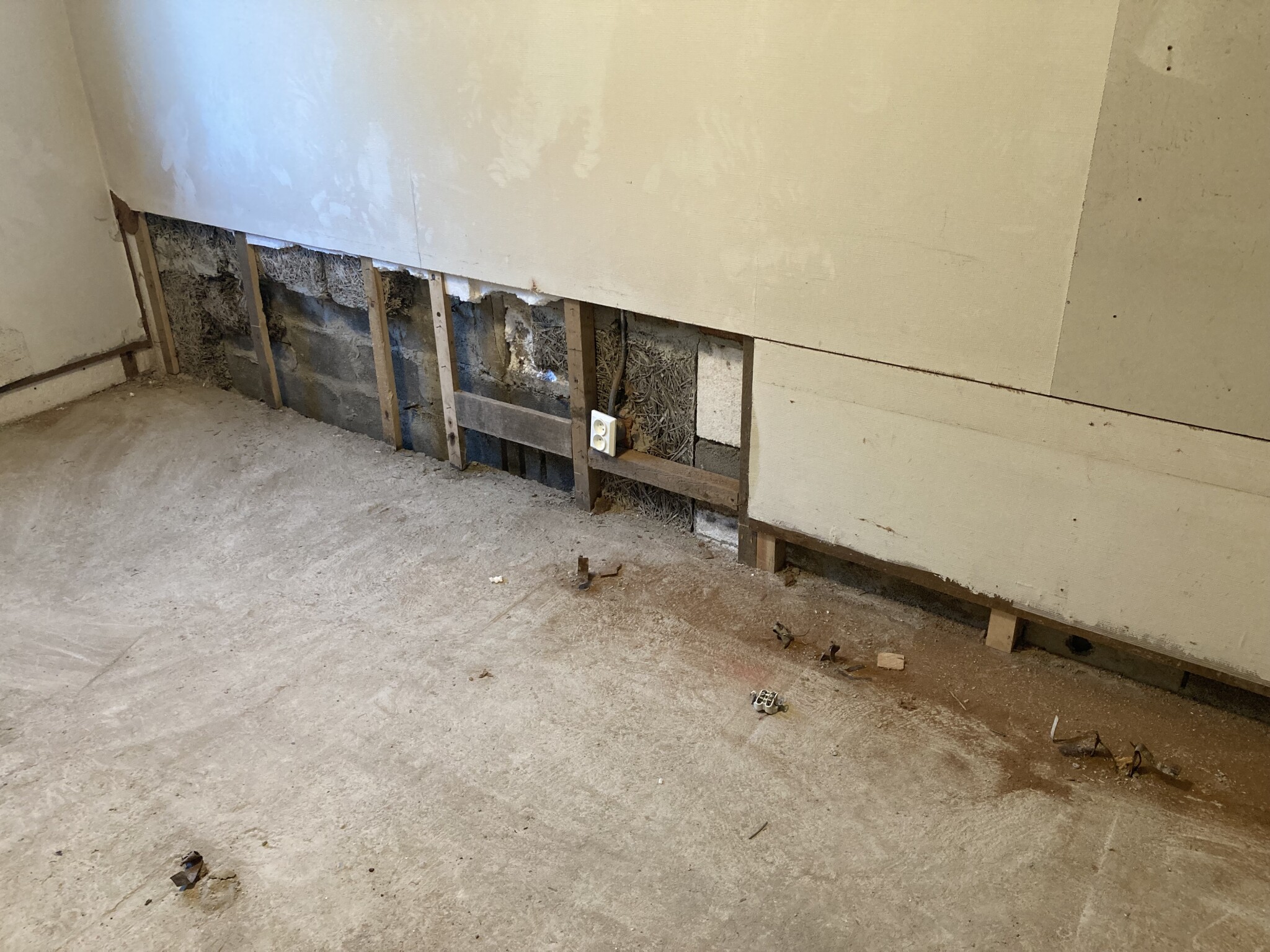
I have had a moisture damage in a room at the basement level that was discovered after I ripped out the old raised floor and opened up the bottom of the wall. It has been open for about 2 months and has now dried out well. Externally, I have repaired the damage in the foundation and placed Platon and diverted water from a downspout that had washed a hole in the foundation.
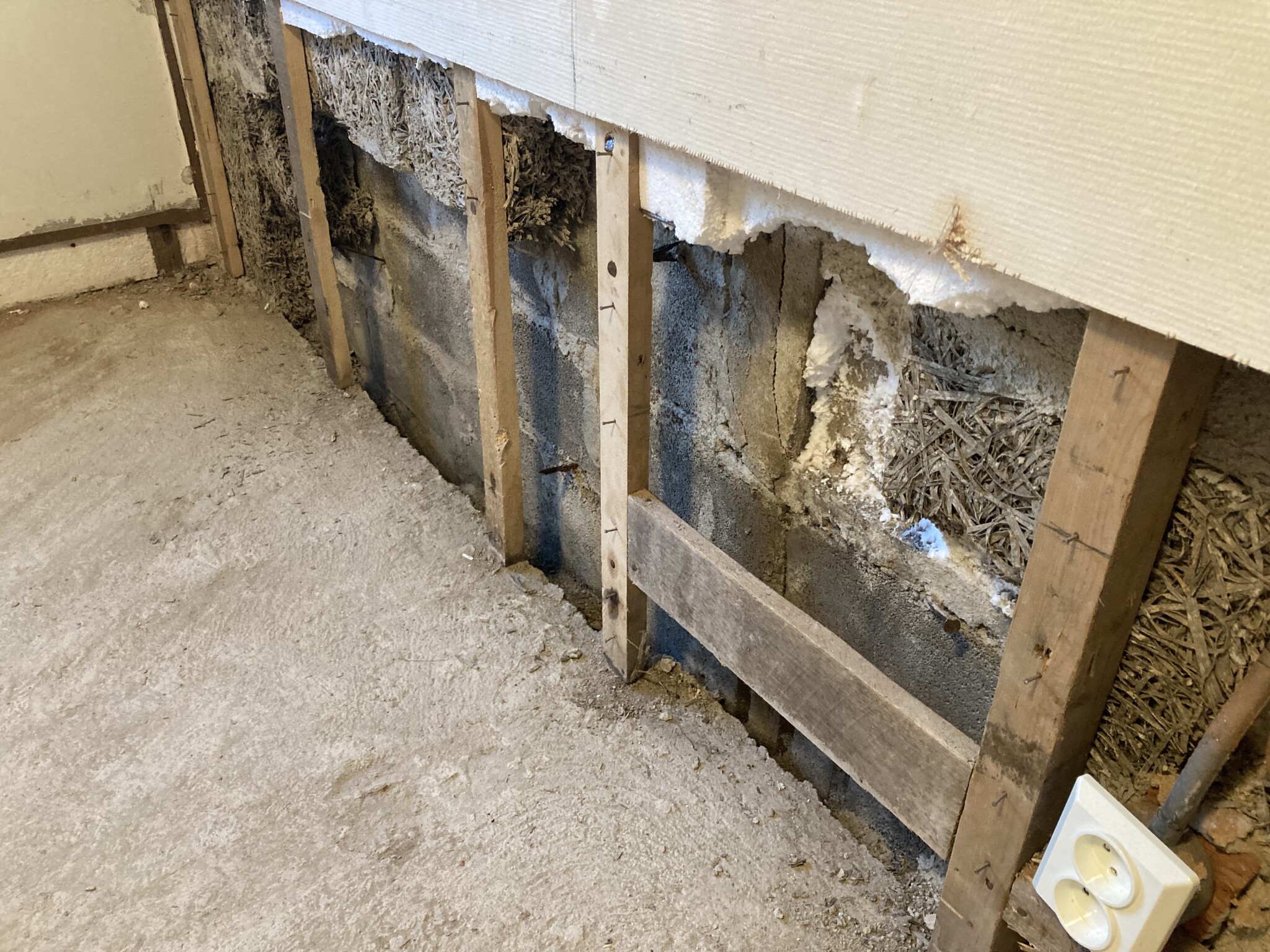
Internally, I am now a bit unsure of how to proceed in the best way. As seen, I have ripped out the wood wool up to about ground level. To the right in the picture, it is not actually an exterior wall as it is a row house with a slight protrusion between the building units, so half the wall is towards the neighbor's crawl space.
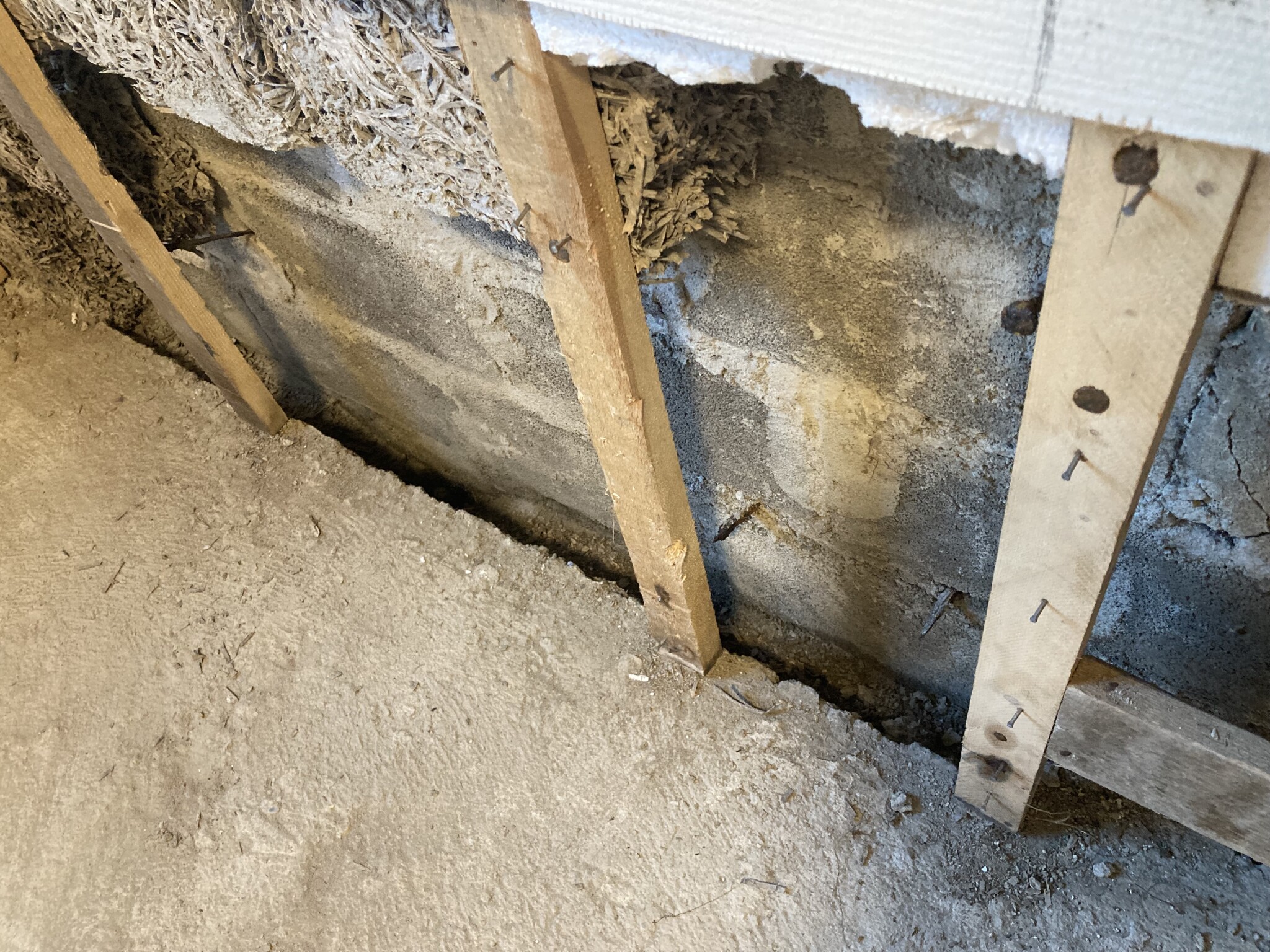
Based on the inspector's recommendation, we plan to lay gravel and then pour concrete to fill the trench you see between the floor and the wall on the part that is a real exterior wall. Then the question is how to handle insulation and framing.
Should I simply remove the last wood wool below ground level and leave it uninsulated there, or should I put some foam insulation? The existing wood studs are not flush against the concrete wall but are nailed through wood wool where it's an exterior wall. One thought was to leave these as they are but cut them at the bottom and place a metal stud under them (perhaps with spacers to ventilate the wall). After that, close up with a board the part that has been torn out at the bottom and then 6mm drywall over everything. Is this reasonable, and which board would be suitable at the bottom?
The other option is to tear down the entire wall to frame with metal, but it's a bit tricky since the wall is not entirely even and has different levels where it transitions from exterior wall to bordering the crawl space. Then we would almost have to attach the metal studs in the same way as the wood studs are today, i.e., through the wood wool, and I don't know if it would provide a good enough fastening to hang a large closet/shelf system on the wall, which is the plan.
I will lay a subfloor when the walls are finished, likely without a fan, as all the craftsmen who have looked at it have recommended.
Grateful for tips.
Best regards,
Klas
I have had a moisture damage in a room at the basement level that was discovered after I ripped out the old raised floor and opened up the bottom of the wall. It has been open for about 2 months and has now dried out well. Externally, I have repaired the damage in the foundation and placed Platon and diverted water from a downspout that had washed a hole in the foundation.
Internally, I am now a bit unsure of how to proceed in the best way. As seen, I have ripped out the wood wool up to about ground level. To the right in the picture, it is not actually an exterior wall as it is a row house with a slight protrusion between the building units, so half the wall is towards the neighbor's crawl space.
Based on the inspector's recommendation, we plan to lay gravel and then pour concrete to fill the trench you see between the floor and the wall on the part that is a real exterior wall. Then the question is how to handle insulation and framing.
Should I simply remove the last wood wool below ground level and leave it uninsulated there, or should I put some foam insulation? The existing wood studs are not flush against the concrete wall but are nailed through wood wool where it's an exterior wall. One thought was to leave these as they are but cut them at the bottom and place a metal stud under them (perhaps with spacers to ventilate the wall). After that, close up with a board the part that has been torn out at the bottom and then 6mm drywall over everything. Is this reasonable, and which board would be suitable at the bottom?
The other option is to tear down the entire wall to frame with metal, but it's a bit tricky since the wall is not entirely even and has different levels where it transitions from exterior wall to bordering the crawl space. Then we would almost have to attach the metal studs in the same way as the wood studs are today, i.e., through the wood wool, and I don't know if it would provide a good enough fastening to hang a large closet/shelf system on the wall, which is the plan.
I will lay a subfloor when the walls are finished, likely without a fan, as all the craftsmen who have looked at it have recommended.
Grateful for tips.
Best regards,
Klas
What caused the damage? External climate or a broken pipe?K KlasseT said:Hello,
I had a moisture damage in a room at basement level that was discovered after I tore out the old raised floor and opened up the base of the wall. It has been open for about 2 months and has now dried out well. Externally, I have repaired the damage to the foundation and laid Platon and diverted water from a downspout that had washed a hole in the foundation.
Internally, I'm a bit unsure of how to remedy it in the best way. As you can see, I have removed the träullit up to about ground level; to the right in the picture is not really an exterior wall as it's a terraced house with a bit of protrusion between the building sections so half of the wall is against the neighbor's crawl space.
Upon the recommendation of the inspector, we plan to lay gravel and then pour concrete again into the channel you see between the floor and wall on the section that is a true exterior wall. Then the question is how to handle insulation and framing.
Should one simply remove the remaining träullit that is below ground level and leave it uninsulated there, or should some foam insulation be laid? The existing wood studs are not flush against the concrete wall but are nailed through träullit where it is an exterior wall. One thought was to leave these as they are but cut them at the bottom and insert a metal stud beneath them (perhaps with spacers to ventilate the wall). Afterward, refill with a board what has been removed at the bottom and then 6mm gypsum over everything. Is this reasonable, and which board would be suitable at the bottom?
The other option is to tear down the entire wall to frame with steel, but that's a bit tricky as the wall is not completely even with different levels where it transitions from an exterior wall to abutting a crawl space. In that case, we would almost need to attach the metal studs in the same way as the wood studs are today, i.e., through the träullit, and I'm not sure if it provides enough anchoring to confidently attach a large wardrobe/shelf system to the wall, which is the idea.
I will lay a subfloor when the walls are done, likely without a fan based on what all craftsmen who've looked at the entire project have recommended.
Grateful for tips.
Best regards,
Klas
P Pluto11 said:
Sorry, I was a bit hasty there.K KlasseT said:Hi,
I had a moisture damage in a room at the basement level that was discovered after I tore out the old raised floor and opened up the bottom of the wall. It has been open for about 2 months and has now dried out well. I have repaired the damage on the exterior foundation and laid Platon and diverted water from a downspout that had washed a hole in the foundation.
Internally, I am now a bit unsure of how to best remedy it. As seen, I have torn out the wood fiber insulation up to about ground level. To the right in the picture, it is actually not an external wall as it's a row house with some protrusion between the house bodies, so half of the wall is up against the neighbor's crawl space.
Following the inspector's recommendation, we are planning to lay gravel and then cast concrete over the channel you see between the floor and wall on the section that is a true external wall. Then the question is how to deal with insulation and framework.
Should one simply remove the last of the wood fiber insulation that is below ground level and leave it uninsulated there, or should one use some polystyrene foam? Existing wooden studs are not directly against the concrete wall but are nailed through the wood fiber board where it is an external wall. One idea was to leave these in place but cut them at the bottom and insert a metal stud beneath them (perhaps with spacers to ventilate the wall). Then, replace what has been removed at the bottom with a panel and then 6mm drywall over everything. Is this reasonable, which panel would be suitable at the bottom?
The other option is to tear down the whole wall to frame with steel, but that's a bit tricky since the wall is not entirely even but has varying levels where it transitions from an external wall to bordering a crawl space. We would almost need to fix the metal studs in the same way the wooden studs are attached today, that is, through the wood fiber board, and I'm not sure if that provides a good enough attachment to safely mount a large wardrobe/shelving system on the wall, which is the plan.
I will lay a subfloor when the walls are finished, probably without a fan as recommended by all the craftsmen who have looked at it.
Grateful for tips.
Best regards,
Klas
If the wall is below ground level, you should never have organic material. Tear down all wood, drywall, etc.
Plaster the wall and paint with the correct breathable paint.
Yes, exactly. Now, it's only the last 45cm of the wall that is below ground, so it's a relatively small part. Furthermore, the wall, as I mentioned, is partly an outer wall to the left in the picture and partly against the neighbor's crawl space to the right in the picture. Hence the level difference in the middle, which makes it not simply a matter of plastering; otherwise, you would need to extend half of the wall in some way. In short, we will probably frame the wall, even though I understand that the safest is to plaster.P Pluto11 said:
Click here to reply