I have some thoughts on how to best (or for that matter, most easily) install the smoke pipe in the hood of our fireplace.
(The stove is a Keddy SK2002 Panorama. The chimney has been pressure tested and approved.)
In my naivety, I initially thought (before reading up on it) that I could install the smoke pipe from the inside, that is, push it up into the flue. I now understand that I should make a hole in the hood and insert the pipe down to the cassette. How should I think when measuring for the hole? And how is it intended that the pipe should be "locked" in its position, with extra insulation so that it seals completely around?
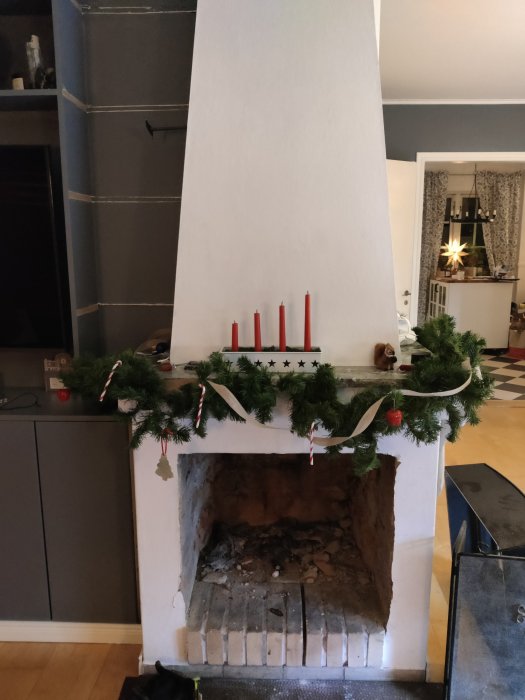
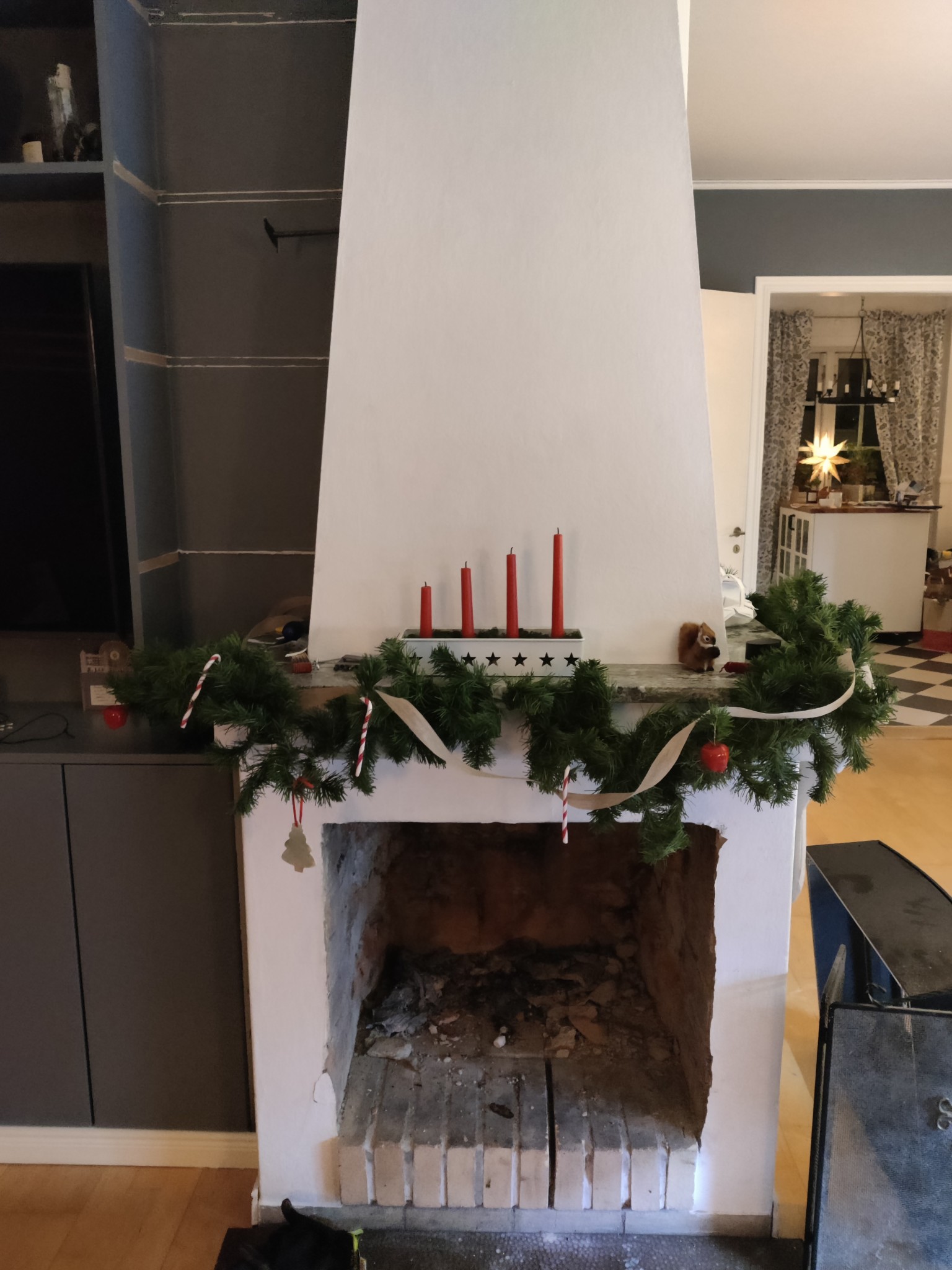
The included smoke pipe is about 120-140cm and should reach up to the damper you can see on the left side in the picture.
The damper should, of course, be removed, and I need to cut it from the inside in some way; we'll see how well you can reach with the reciprocating saw.
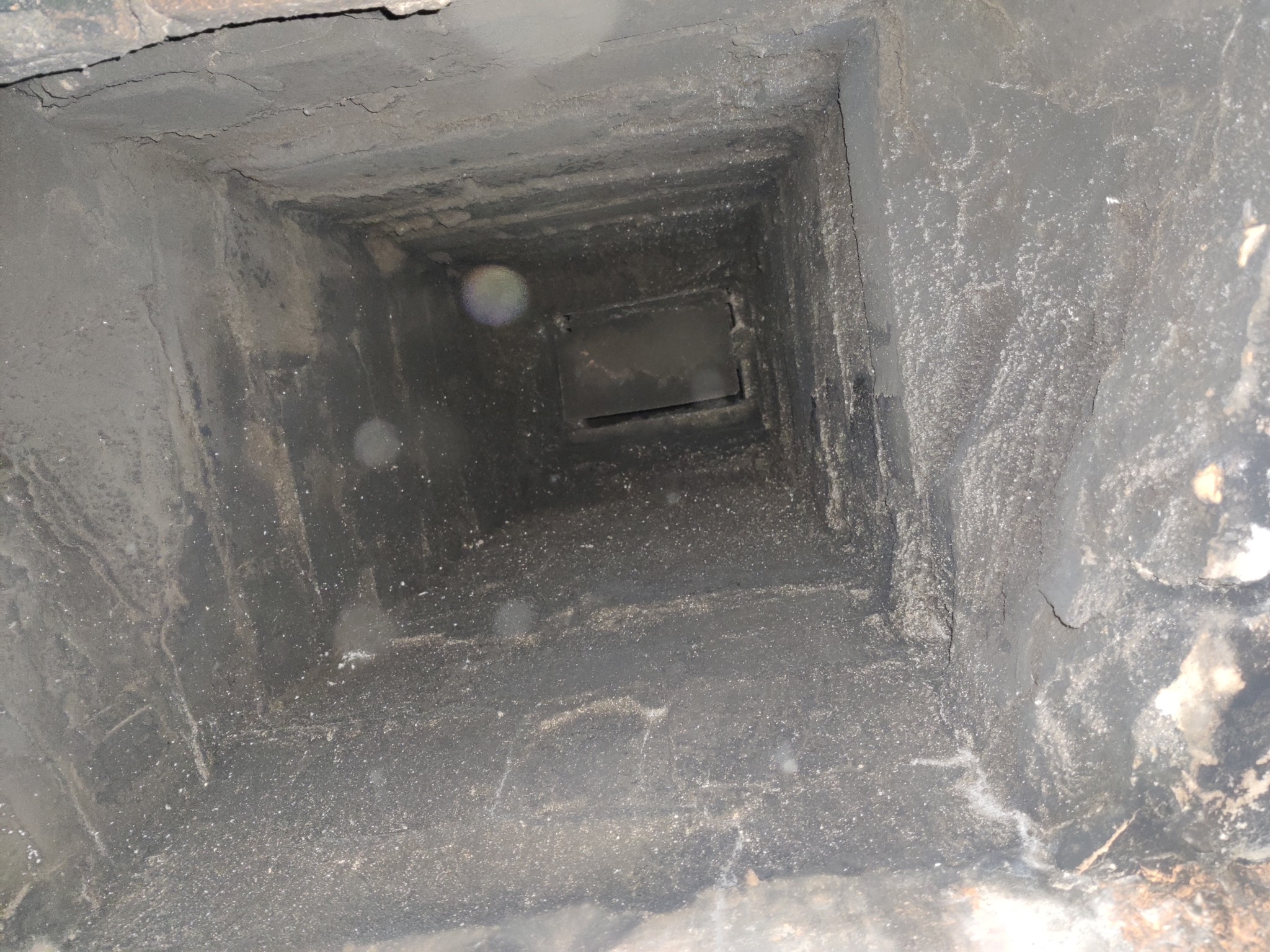
In the picture below, you can see the damper, and it's sitting in a small collar; should I try to get the smoke pipe past this collar, or what's actually best? Perhaps I should make it flush with the collar? It's probably tight to reach up there; worst case, I may need to buy a longer pipe.
In the assembly instructions I have looked at, the flue pipe is inserted from below and adjusted to the height it should have for the final assembly, then you slide in the cassette and lift it up to place it on blocks/feet.
In the installation instructions I have looked at, the flue pipe is inserted from below and set to the height it should be at for final installation, then you slide in the cassette and lift it up, placing it on blocks/feet.
As an alternative two (2), Keddy suggested what you mentioned, to make a hole in the hood,
[link]
Exactly, it seems to be an option, which we did not get (or even knew existed until we picked up the stove).
In an optimal world, I would prefer not to make a hole in the hood, so I might try to find out how much the accessory kit might cost. However, I am unsure if I will be able to reach the damper without making a hole in the hood...
However, it is good to make one or several openings with a grid as high up as possible in the hood, but under the insulation, to extract as much heat as possible.
However, it is good to make one or more openings with a grille as high up as possible in the hood, but under the insulation, to get out as much heat as possible.
We received a grille (although not very fancy) for this but also got explained to us that it probably won't be needed. Then it raises another question, if it's a hassle like crazy to install such a thing AFTERWARDS without taking down the entire insert again...
But have I understood it correctly that I "lock" the end of the smoke pipe in the chimney with mineral wool? An included insulation mat was provided so that should of course be used but it probably won't be enough to hold the pipe in place in the flue.
Have investigated a bit further and I'm definitely not going to be able to cut the damper from the inside, I'm perhaps a decimeter short in reach. It might work if I sit inside the fireplace but it feels unpleasant to risk a damper on the head.
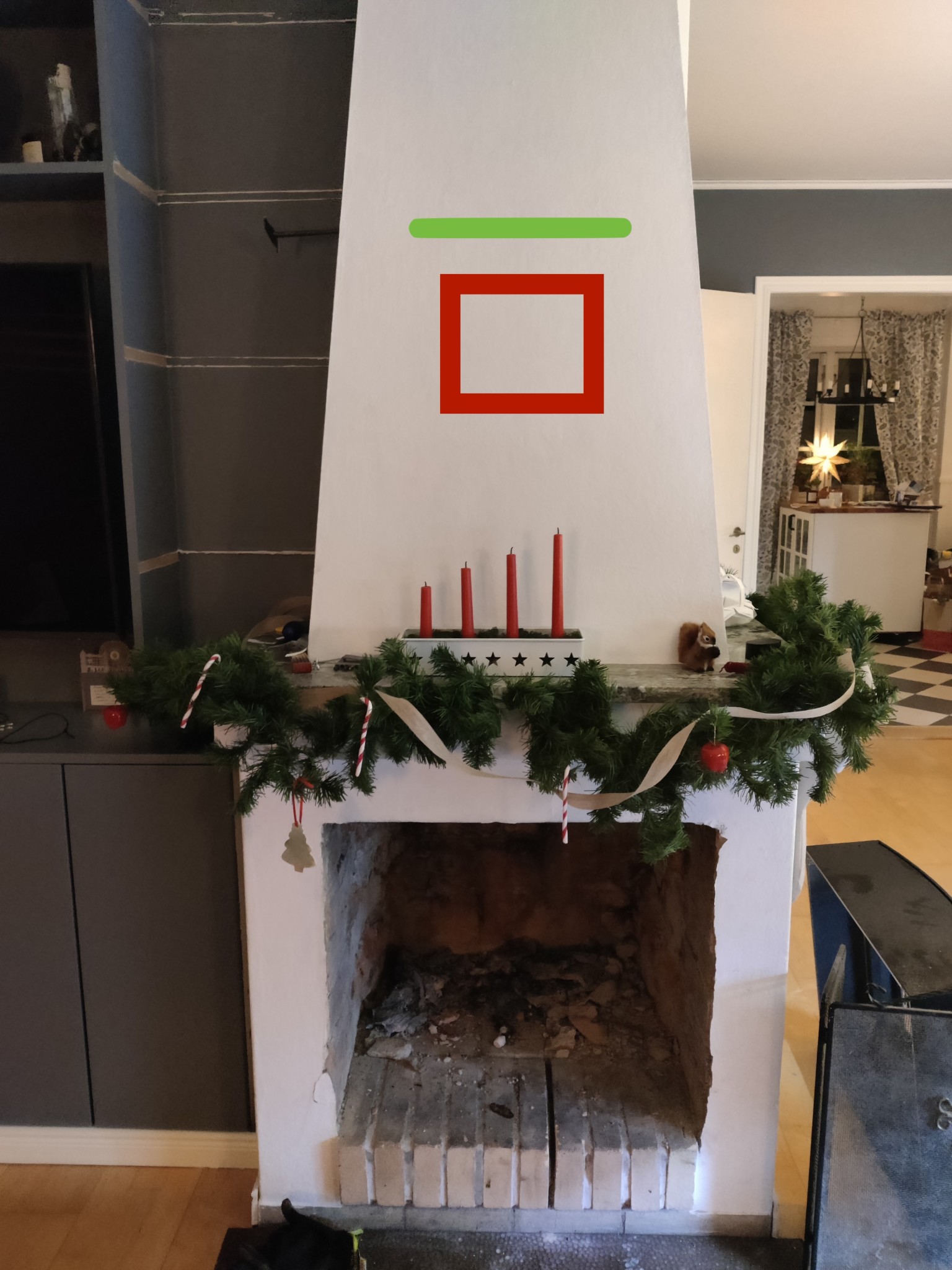
So I'm thinking, if I go into the hood at the red marking (green is the damper), which is about 10cm below the damper, is that the right height for the flue pipe? Or should it be placed even higher up in the chimney?
As mentioned, it seems like there's a bit of a collar where the damper is located, that collar will probably have to stay when the damper is removed, but I think I should aim to line up the flue pipe with the collar, insulate tightly, and seal it up. Is that a bad idea?
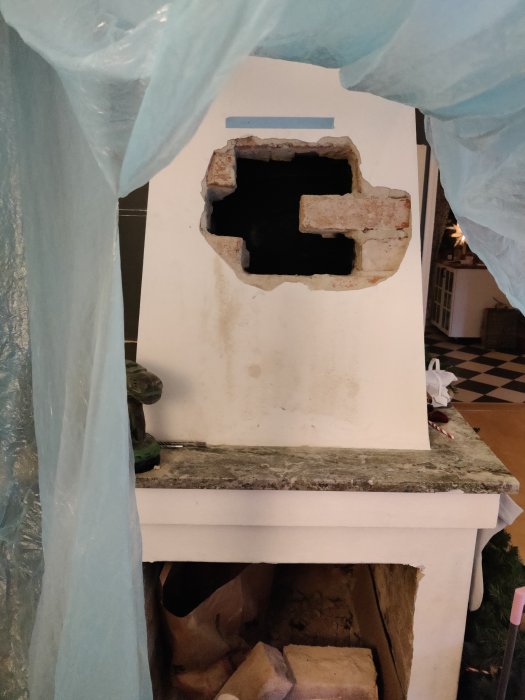
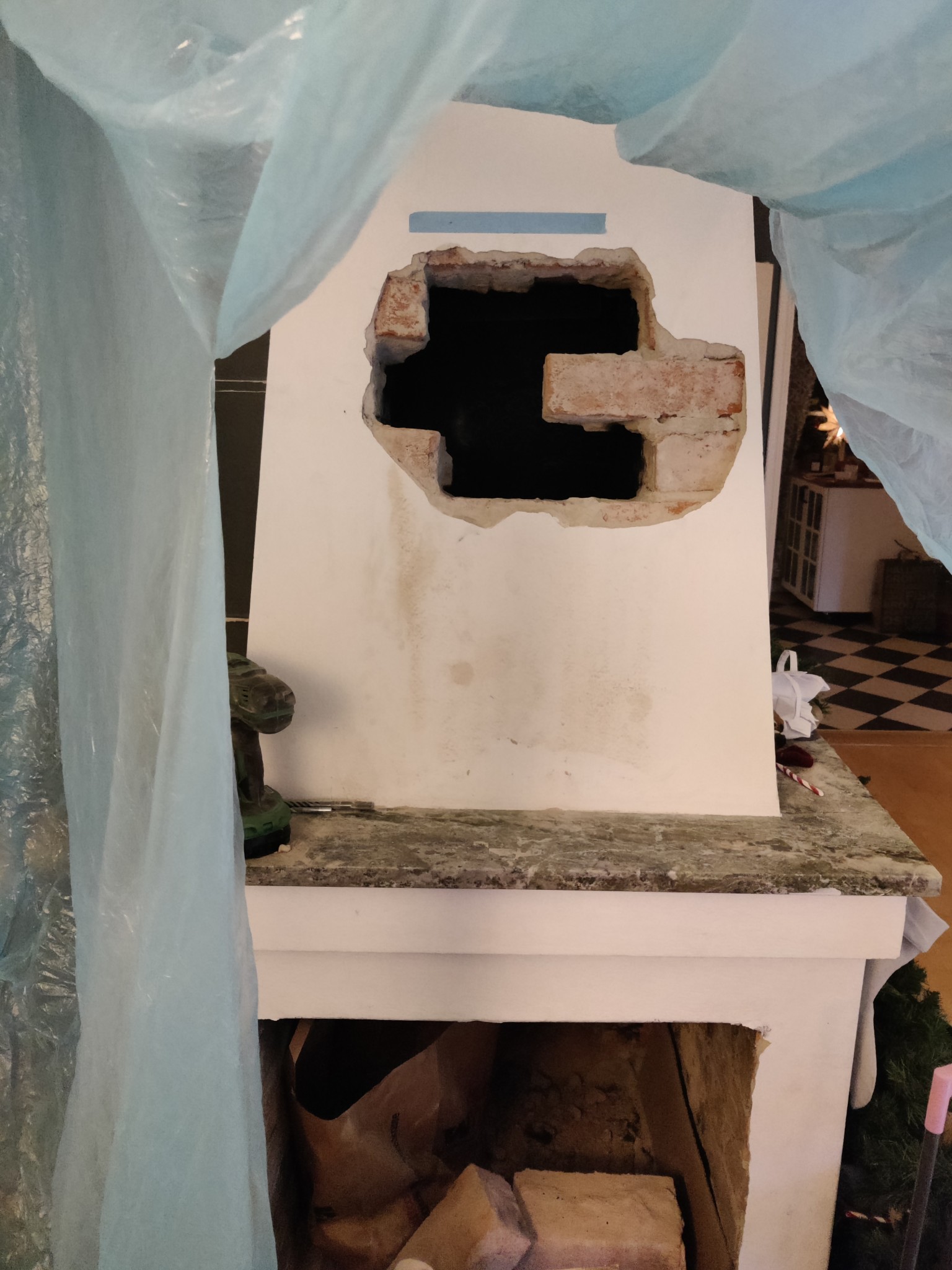
Exciting stuff! Flue cut and removed.
But then, perhaps one of my final considerations, how high does the flue pipe need to go? Are there any guidelines that I've missed? I've searched like crazy but find nothing and interpret that as it's a bit "up to you"?
The chimney is sealed and nice as it is, so I don't need a pipe all the way up, right? Preferably, I'd like to place the top of the flue pipe at the height of the blue tape here.
Ok, continuing the monologue here and asking questions openly since the local chimney sweep is closed until Tuesday.
Should the entire flue pipe be insulated with the included insulation mat? They are the same length, so I'm wildly guessing.
I also find some older threads where it seems people double insulate the flue pipe, i.e., 2x30mm thickness, but I can't find anything that says it should be like that, nor anything that says how it actually should be.
Ok, continuing the monologue here and asking questions openly since the local chimney sweep is closed until Tuesday.
Should the entire flue pipe be insulated with the accompanying insulation mat? They are the same length, so I'm wildly guessing.
I've also found some older threads where it seems people double insulate the flue pipe, i.e., 2x30mm thickness, but I can't find anything saying it should be like that, nor anything saying how it actually should be.
But why insulate the flue pipe??
Seems crazy.
The idea is that the warm pipe should give off heat to the air that through convection goes up and out through the hole/grill in the hood.
Getting the pipe to fit with the chimney at the blue tape a bit above the hole in the hood seems wise to me.
Because you’re not planning to seal the hood with masonry, are you...
But why insulate the flue pipe??
Seems crazy.
The idea is that the warm pipe should emit heat to the air that through convection rises and exits through the hole/grill in the hood.
From the installation instructions:
"Then install the flue pipe up to the point where you want to insulate against the existing chimney with mineral wool. Ensure that the insulation fits tightly against the existing chimney and that it aligns with the top edge of the pipe so that no 'soot pockets' can form beside the pipe."
That combined with a lot of reading about different installation methods might have caused me to misunderstand. So, it's at the top of the flue pipe that it should be insulated to "shield off," and it can be done somewhat arbitrarily as long as it fits tightly?
Sealing the hood is probably the idea, but we haven't made a final decision there yet. Mostly because we can't reach very high up in the chimney from the current opening. It might give a somewhat odd look with a warm air grille at eye level.
From the installation instructions:
"Then install the flue pipe up to the point where you want to insulate against the existing chimney with mineral wool. Make sure the insulation fits snugly against the existing chimney and aligns with the top of the pipe so that no 'soot pockets' can form beside the pipe."
Combined with a whole lot of reading about different installation methods, I might have gotten it wrong. So it's at the top of the flue pipe that it should be insulated to "shield off," and it can be done somewhat arbitrarily as long as it fits snugly?
Sealing off the cap is probably the idea, but we don't have a final decision on that yet. Mostly because we can't reach that high up the chimney based on the current opening. It might give a slightly odd look with a warm air grille at eye level.
Not an expert. Just installed and got approval.
I jammed the pipe up in the chimney and insulated/sealed the top with mineral wool.
Avoiding a "soot pocket" is tricky. But the chimney sweep approved…
See nothing wrong with a grille "at eye level."
Not an expert. Just assembled and got approval. I stuffed the pipe up in the chimney and insulated/sealed the top with mineral wool. Avoiding a "soot pocket" is tricky. But the chimney sweep approved... Can't see anything wrong with a grate "at eye level".
Sounds absolutely excellent, I'll simply do that. Did you clean anything in the chimney beforehand? I've brushed off the worst soot but nothing more than that.
I found the grate we got with the order and set it up in the existing opening, it doesn't look too bad, but I'll see if I can find one that fits better aesthetically...
Having an uninsulated flue pipe is certainly not a disadvantage, on the contrary, especially if you're going to have a warm air grille!
You need to insulate above the grille, and depending on the dimension of the chimney, different amounts of insulation will be needed, so that's probably why you received the amount you did.
It's frustrating to stand there and realize you have to buy a new pack because you're missing a few centimeters.
As long as you make a nice-looking grille, it won't look odd, as many stoves have this type of solution. Moreover, it will significantly increase air circulation in the room.
That the flue pipe is uninsulated is no disadvantage, on the contrary, especially if you're going to have a warm air grille!
You need to insulate above the grille, and depending on the dimension of the chimney, different amounts of insulation are needed, so that's probably why you have been provided with the amount you have.
It's frustrating to realize you have to buy a new bale because you're missing a few centimeters.
As long as you get a nice grille in place, it won't look odd, as many stoves have that kind of solution. It will also provide significantly more air circulation in the room.
Then, theoretically, it would be sufficient with ten centimeters (in height) of insulation, as long as it stays sealed?
The more it's discussed, the more it leans towards installing a grille. I've also tested setting the stove's front, and there's not much leeway, just a couple of centimeters all around, so a warm air grille might be more of a necessity than a "nice to have."
Click here to reply
Vi vill skicka notiser för ämnen du bevakar och händelser som berör dig.


Demmpa said:
In the installation instructions I have looked at, the flue pipe is inserted from below and set to the height it should be at for final installation, then you slide in the cassette and lift it up, placing it on blocks/feet.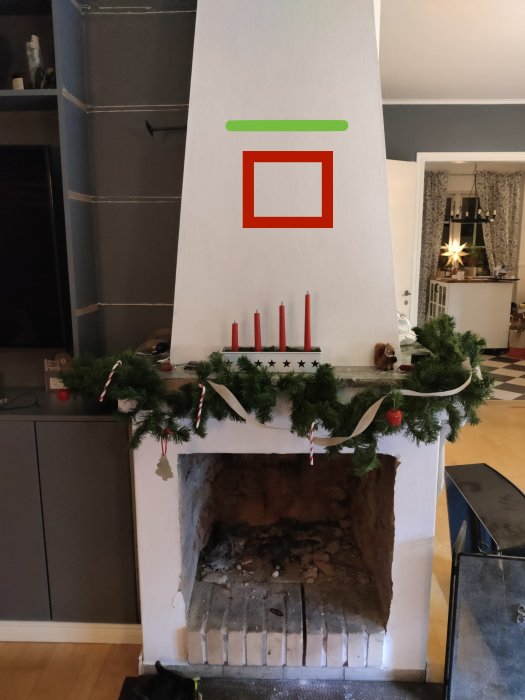

Dowser4711 said:
That the flue pipe is uninsulated is no disadvantage, on the contrary, especially if you're going to have a warm air grille!