
Hi, I have covered a door with chipboard and plaster. The door is still in place. Interior wall. Now there is a gap between the plasterboard and the door frame that I want to fill. The gap is 2cm deep and up to 5mm wide. Should I use plaster or fill it with something like newspaper and wood glue before I apply filler? I want to avoid cracks since I plan to wallpaper or paint afterward.
Best regards,
Susanne
Best regards,
Susanne
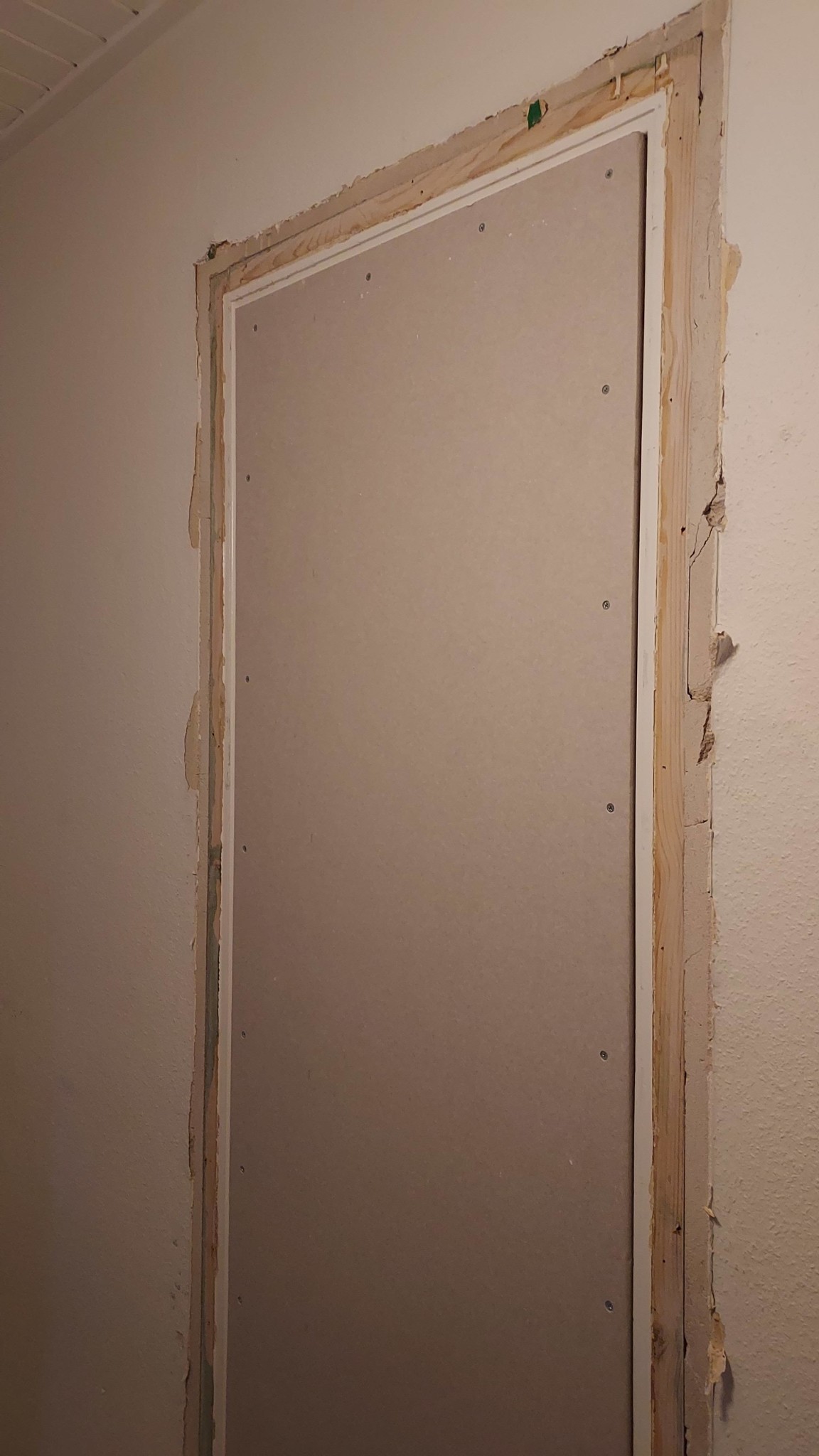
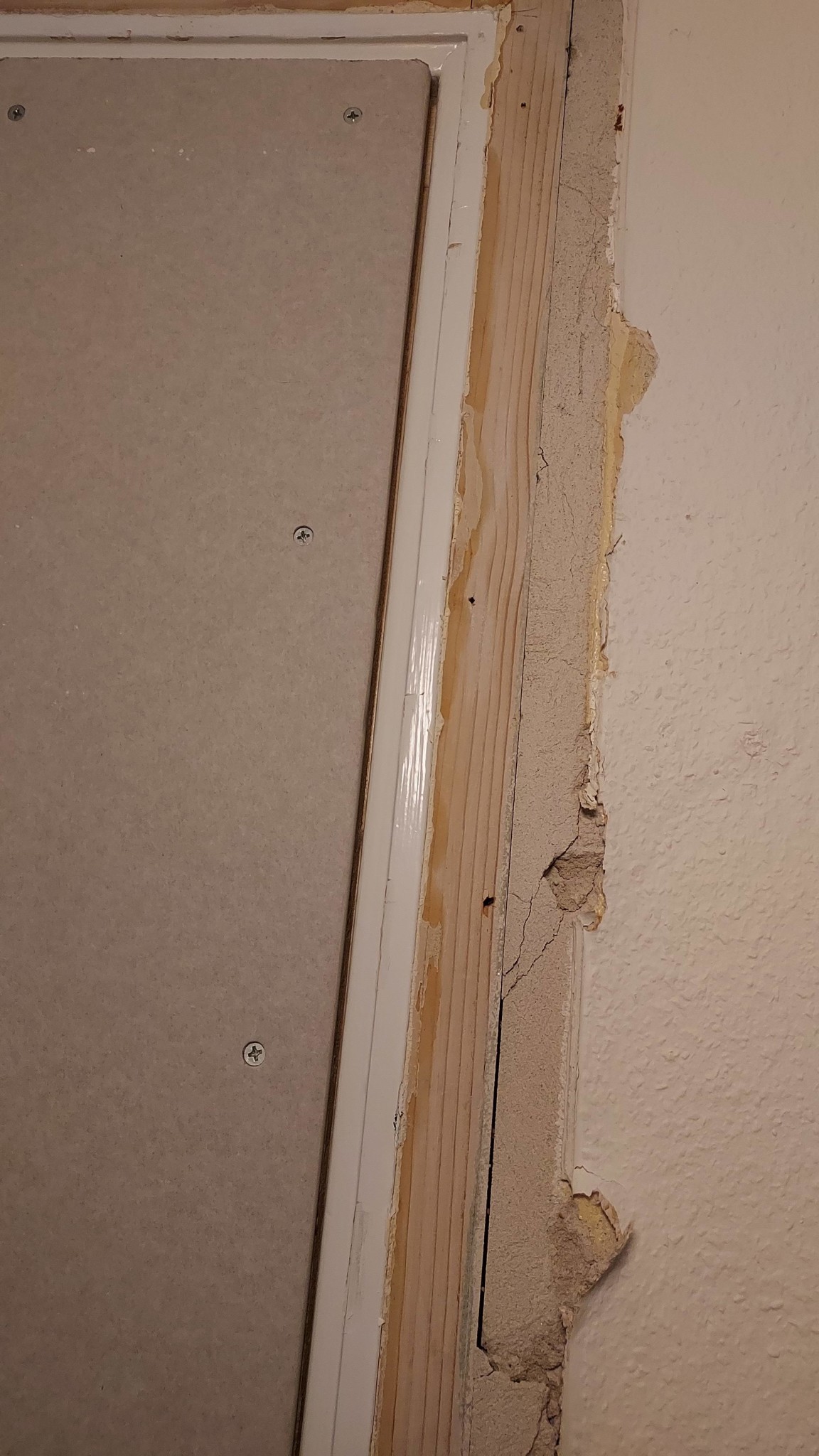
Assuming that it is intended to plaster over the door frame to achieve a smooth, even surface between the wall gypsum and the new gypsum board, and that this filling is supposed to prevent the plaster from going down into the gap? Then it's fine to use insulation or some form of trim.
Even if the door is 100% fixed to the door frame so it cannot move, it is still a wide joint over wood, which is known to move with variations in humidity over the year. Therefore, I am skeptical that it is possible to avoid the wallpaper cracking there over time.
What reinforcement of the plaster is intended to be used? I'm mostly curious since I only know about the narrow (about 5 cm) strips of paper or fiberglass mesh.
Even if the door is 100% fixed to the door frame so it cannot move, it is still a wide joint over wood, which is known to move with variations in humidity over the year. Therefore, I am skeptical that it is possible to avoid the wallpaper cracking there over time.
What reinforcement of the plaster is intended to be used? I'm mostly curious since I only know about the narrow (about 5 cm) strips of paper or fiberglass mesh.
That will crack no matter how you fill the seam.
Is it a really long wall? The best is probably to drywall the entire wall. But then, of course, both the floor and ceiling moldings are affected, plus you'll have issues with electrical outlets, etc.
Wouldn't it be easier to remove the frame completely?
Is it a really long wall? The best is probably to drywall the entire wall. But then, of course, both the floor and ceiling moldings are affected, plus you'll have issues with electrical outlets, etc.
Wouldn't it be easier to remove the frame completely?
heyS Svalan69 said:Hi I have closed a door with chipboard and plasterboard. The door is still there underneath. Interior wall. Now there is a gap between the plasterboard and the door frame that I want to fill. The gap is 2cm deep and at most 5mm wide. Do I have plaster or should I fill with something like newspaper and wood glue before plastering? I want to avoid cracks as I plan to wallpaper or paint afterward.
Best regards
Susanne
the gap between the plasterboard and frame will crack
the gap between the frame and plaster will crack
What you should do to prevent it from cracking is to buy paper tape, glue them with waterproof glue
I would do it in the following order:
clear everything so nothing bulges out (otherwise it will become bumps)
fill the gaps once with plaster
glue the tape
thinly plaster over the tapes 2-3 times until it's ready for sanding and painting/wallpapering
regards the painter
ThanksL Lechuza said:hello
the gap between drywall and frame will crack
the gap between frame and plaster will crack
What you should do to prevent it from cracking is to buy paper tape, glue it in place with wet room glue
I would do it in the following order:
clean everything so nothing bulges out (otherwise it will become lumpy)
fill the gaps 1 time
glue the strips in place
thinly fill over the strips 2-3 times, then it's ready to sand and paint/wallpaper
regards the painter
 Then I don't need to fill the entire depth. Not mesh tape but paper tape, right?
I was planning on using medium plaster and fiberglass mesh. Yes, it would probably have been best to remove the entire frame, but now a potential next owner can see that there was a passage there. The door is now inside a closet.Oldboy said:
I assume the intention is to plaster over the door frame to create a smooth, even surface between the wall gypsum and the new gypsum board, and that this filling is to prevent the plaster from going down into the gap?
In that case, it's fine to use insulation or some form of trim.
Even if the door is 100% fixed to the door frame so that it can't move, it's still a wide joint over wood which is known to move with the humidity variations throughout the year. That's why I'm skeptical that it's possible to avoid the wallpaper eventually cracking there.
What reinforcement of the plaster is intended to be used?
I'm mostly curious since I only know of the narrow (about 5 cm) strips of paper or fiberglass mesh.
Regards, Susanne
I also think there is a risk of cracks, but if it's too big of a job to put drywall on the entire wall, you can always try with renovation wallpaper (e.g. https://www.jula.se/catalog/bygg-oc...apet/vav-och-tapeter/renoveringstapet-500424/). In that case, it's probably a good idea to fill the seams before you apply the renovation wallpaper. Once that's done, you can wallpaper or paint.
Thanks for the tip. Heard that renovation wallpaper can shed a lot of fibers. I think I will seal and fill, then use fiberglass mesh, and then fill again with multiple layers. It's an internal wall, so hopefully, not as high humidity. If it doesn't work, I'll apply renovation wallpaper. Best regards, SusanneD Dublin said:I also believe there is a risk of cracks, but if it's too big a job to put plaster on the entire wall, you can always try with renovation wallpaper (e.g. [link]). In that case, it's probably a good idea to fill the joints before you put up the renovation wallpaper. Once that's done, you can wallpaper or paint.
Click here to reply