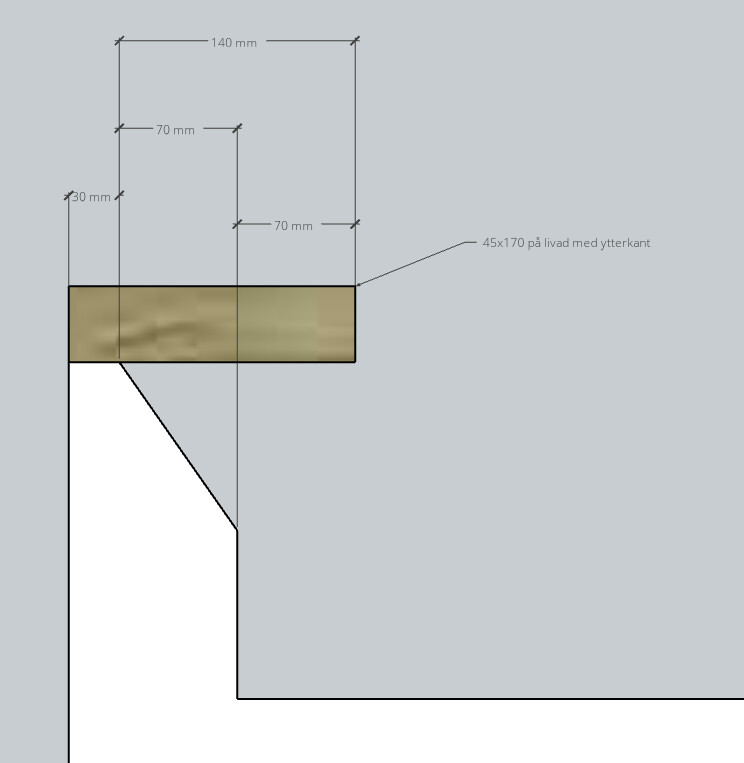
I have drawn up a storage unit 6x2.4 where I'm planning for 120+45 walls. I'll be pouring the slab here in a few days.
I used Sundolit's edge elements but realized today that if the sill is made the same as the walls, 120mm, there isn't much concrete to anchor it in?
Are the options:
- To use 170 for the sill and then 120+45 for the walls?
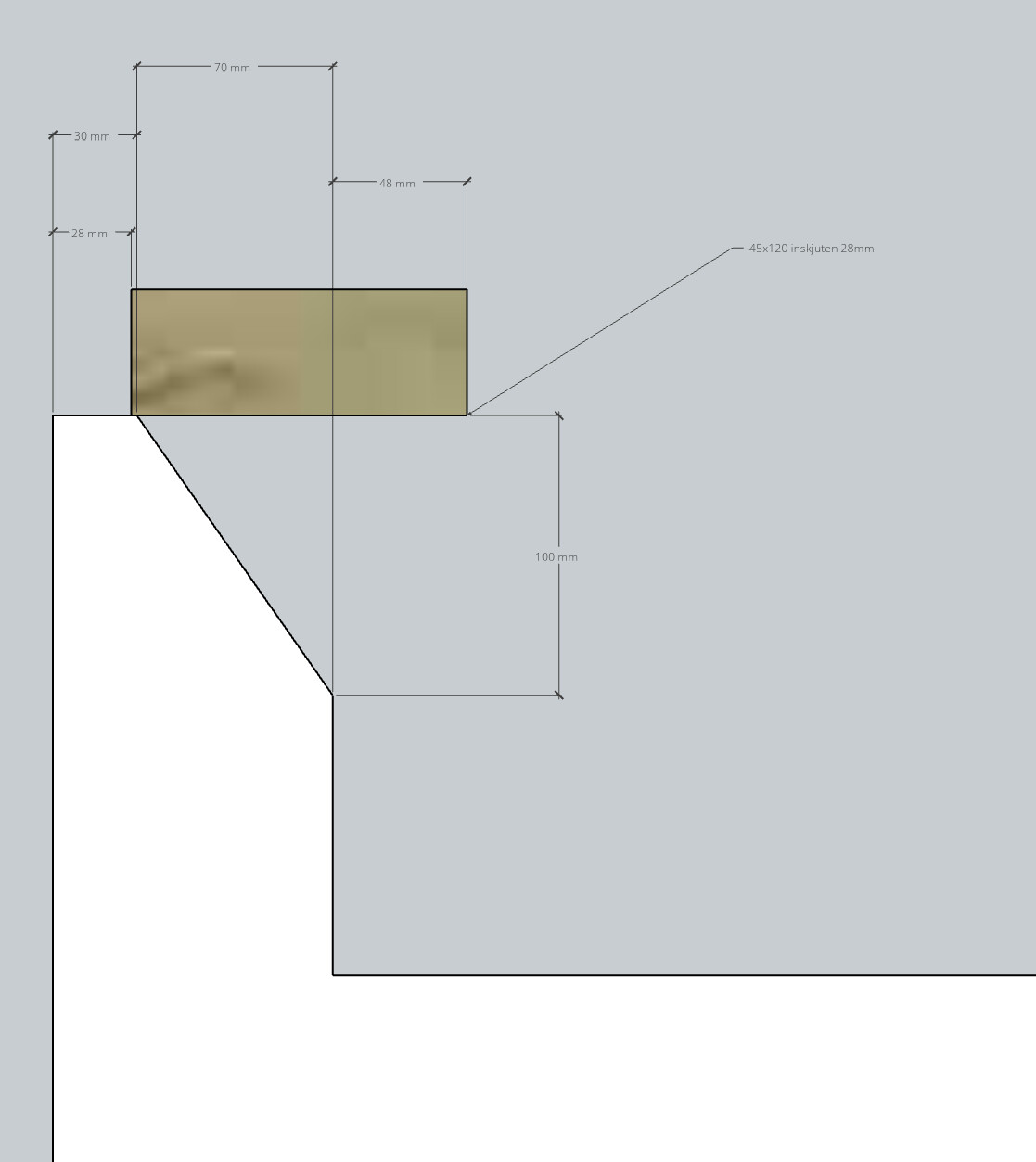
- Move the sill inward since the air gap (28x70) will still allow the panel to come out over the edge?
I have drawn up a storage shed 6x2.4 where I planned 120+45 walls. I'm casting the slab here in a few days.
I've used Sundolits edge elements but it struck me today that if the sill is made the same as the walls, 120mm, there isn't much concrete to anchor it in?
Are the options:
- To use 170 on the sill and then 120+45 on the walls?
- Move the sill in slightly since the air gap (28x70) will anyway bring the panel out over the edge?
[image]
Thanks in advance!
In my garage build, I chose 145*45 for the sill and it was then flush with the outer edge of the edge element.
With a 145*45mm sill, there's only a 25 mm difference compared to 120*45 wall studs. Perhaps you can place OSB + Gypsum on the ledge so it almost evens out 😀
In my garage build, I chose 145*45 for the sill, and it was then flush with the outer edge of the edge element.
With a 145*45mm sill, there's only a 25 mm difference against 120*45 wall studs. Maybe you can place OSB + Gypsum on the edge, and it almost evens out 😀
Thanks for the input! After much searching, I found a similar thread where they built with 95x45 and angled into the concrete. I think the sill doesn't need much to grip properly, so with 120 or if I step up to 170 and appropriate CC, it should be good.
170 sill with 120+45+OSB+Gypsum, and it should be resolved.
Thanks for the input! After a lot of searching, I found a similar thread where they built with 95x45 and screwed into the concrete. I think that the sill doesn't need much to hold firmly, so with 120 or if I step up to 170 and appropriate CC, it should be good.
170 sill with 120+45+OSB+Gips, it should be solved.
I have a vague memory that 2/3 of the sill should be over the bracket in the edge element. At least with higher loads, but I don't have any sources on that 😀 but this was a storage...
I would place the 120mm foundation beam 150mm in from the outer edge of the element and then have a 45x45 lying or standing outside depending on which panel you're going to use, then you get some air between the panel and the element.
I would have set the 120mm sill 150mm in from the outer edge of the element and then had a 45x45 lying or standing outside depending on which panel you will have, then you get some air between the panel and the element..
Wouldn't it be more appropriate to have the sill 45 mm inside the outer edge of the concrete slab and the battens and panel outside the slab when 45*45 is nailed on?
Wouldn't it be more appropriate to have the sill 45 mm inside the outer edge of the concrete slab and the battens and cladding outside the slab when 45*45 is nailed on?
If he's going to have battens and yes, but I see a simpler construction with a 45x120 frame, wind protection, and nail batten 45x45 and then cladding..
The L-element is never perfectly straight, which is why you can't set the nail batten to start 45mm in..
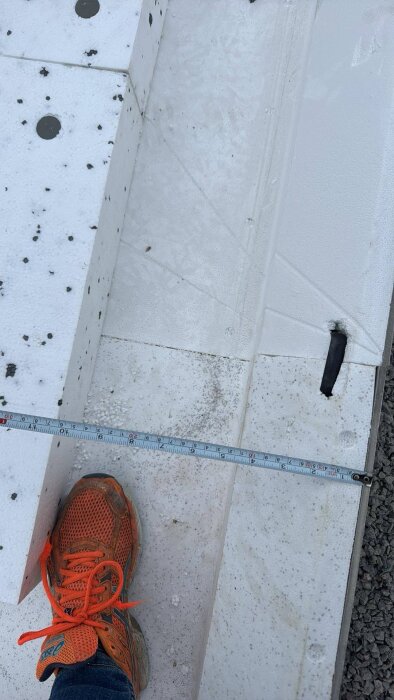
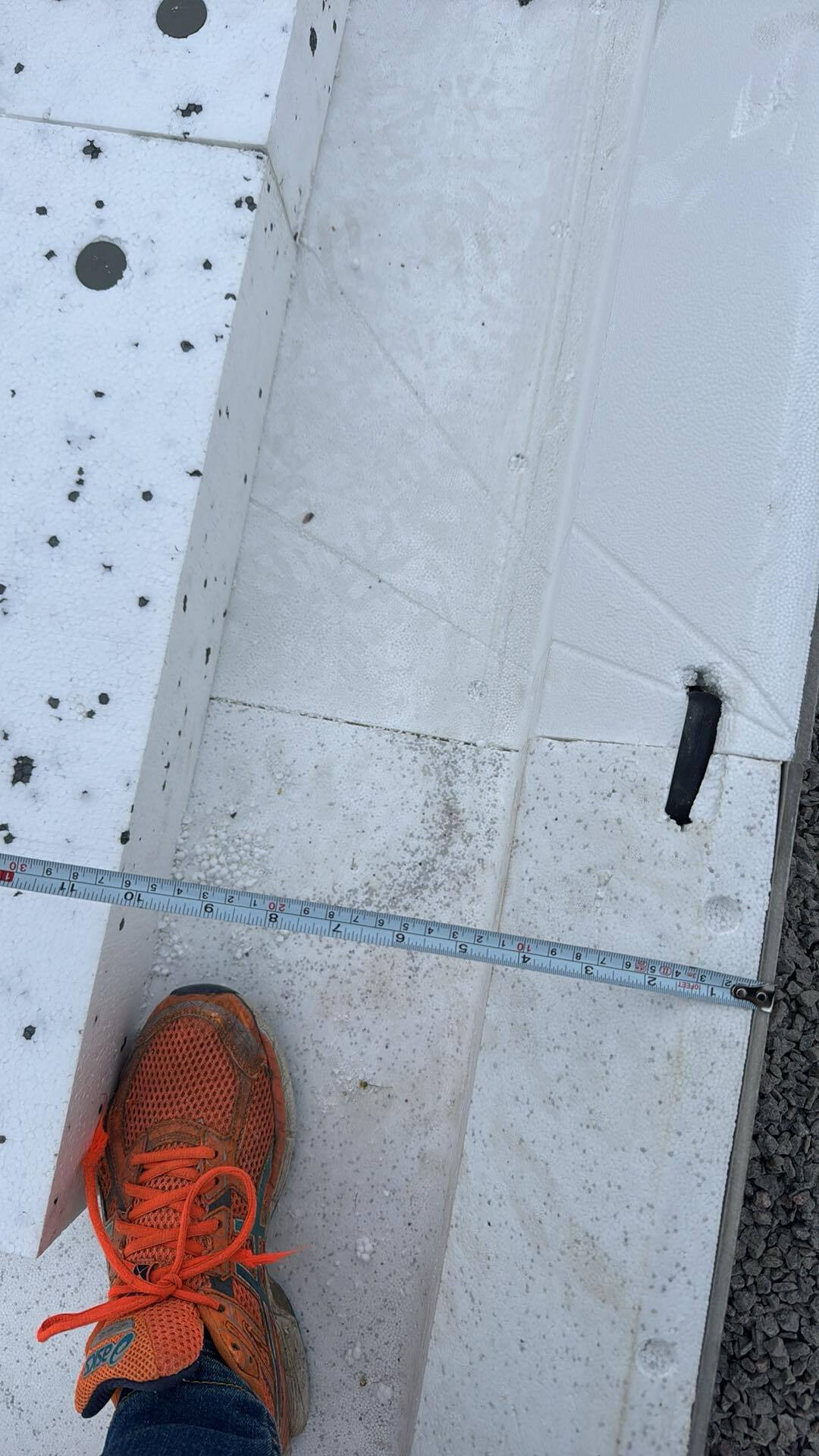
Just went out and measured quickly.
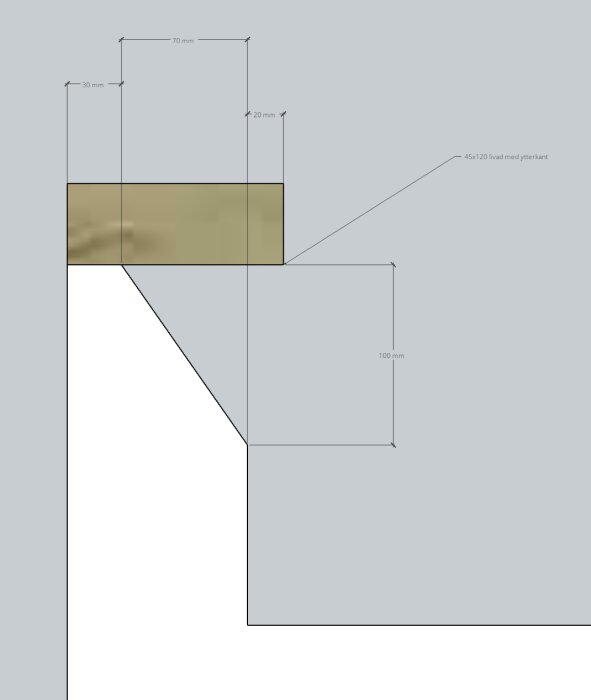
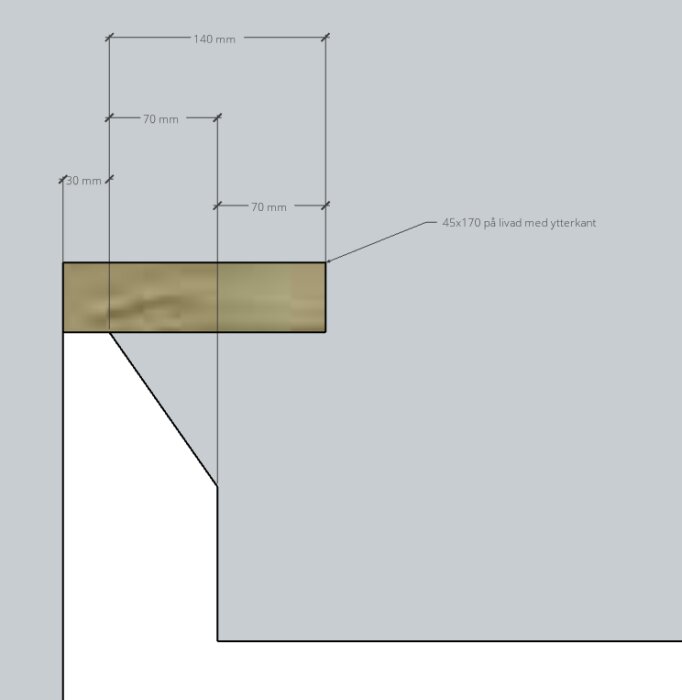
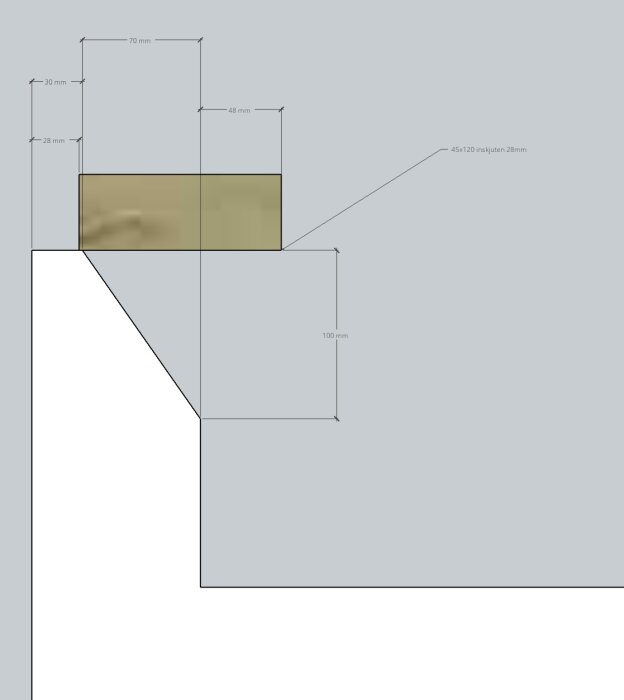
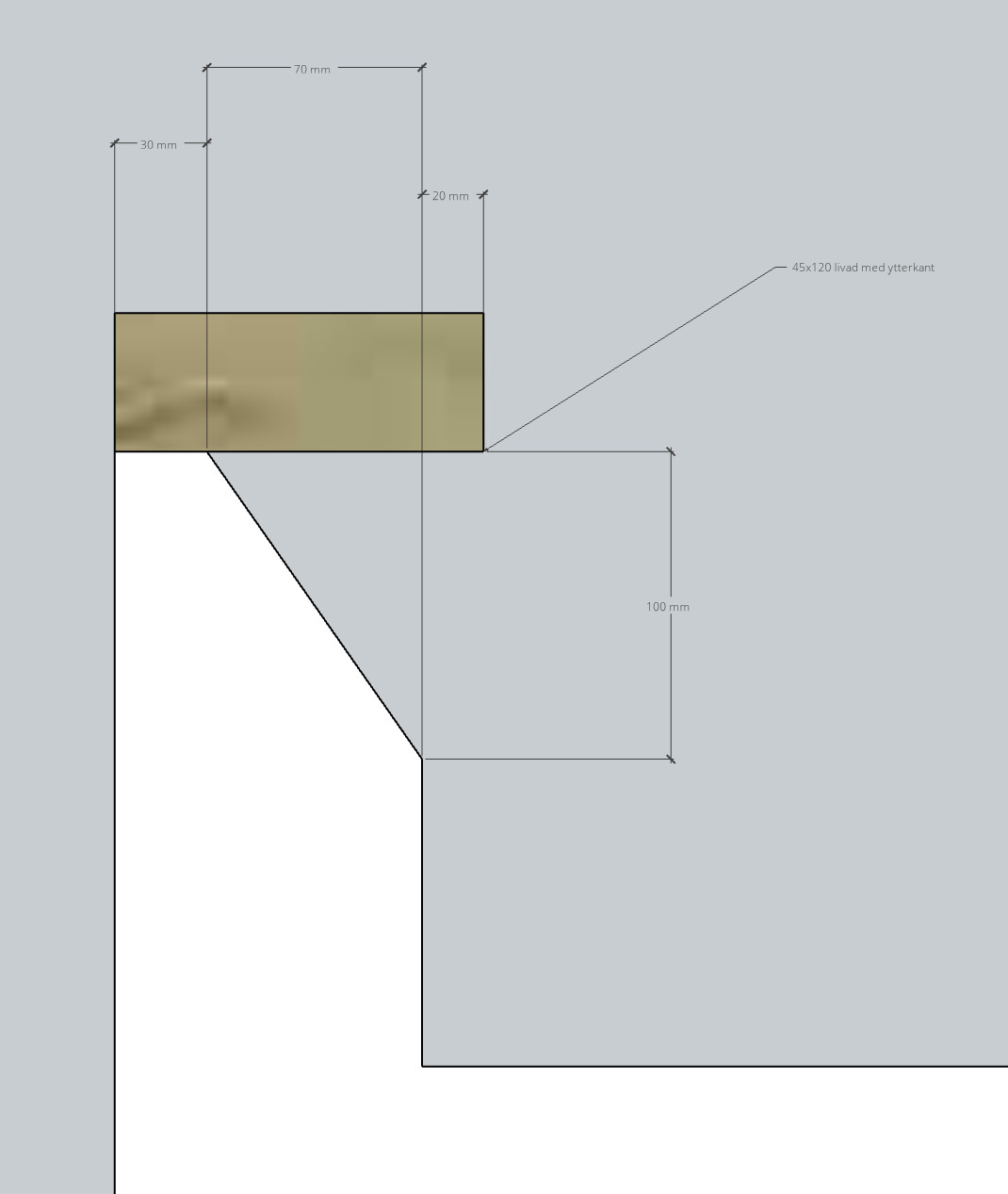
The outermost insulation is 30mm, then it steeply goes 100mm (55-degree slope).
I was thinking of 28x70 for nail battens with a horizontal panel.
With a 120x45 aligned with the outer edge, it gives about 20mm above the vot/kantbalk, but the center of the 120 gives about 50mm of concrete over the insulation to screw into if one were to screw in the center.
With a 170x45 aligned with the outer edge, it gives about 70mm above the vot/kantbalk, but the center of the 170 gives about 80mm of concrete over the insulation to screw into if one were to screw in the center.
With a 120x45 recessed 28mm for the air gap, it gives 48mm above the vot/kantbalk, but the center of the recessed 120 gives about 80mm of concrete over the insulation to screw into if one were to screw in the center.
You cannot assume that the panel should be against the L-element, after casting there can be some variation in straightness, so it is usually said that the panel should start about 15mm outside the element...
If he wants it sparse and yes, but I see a simpler construction with a 45x120 frame, weather protection, and a 45x45 nail rule, and then panel..
The L-Element is never perfectly straight, which is why you can't place the nail rule so that it starts 45mm in..
Hild said:
- Move the sill inwards somewhat since the air gap (28x70) will make the panel come out over the edge anyway?
To me, it's obvious that TS should have a 28 mm sparse as an air gap/nail rule, I think it can be outside the concrete slab.
Sometimes you have to rethink when your ideas don't work out as well in reality; cost-wise, there's almost no difference between a 45x45 and 28x70, so in this case, the 45 is better for obvious reasons.
Sometimes you have to rethink when your ideas don't turn out as good in reality, cost-wise there's almost no difference between a 45x45 and 28x70 so in this case, the 45 is better for obvious reasons..
Are you suggesting that TS should have a 45*45 as an air gap or did you just miss that it says in post #1 that it should be a 28mm air gap?
Click here to reply
Vi vill skicka notiser för ämnen du bevakar och händelser som berör dig.

Hild said:
Hello,