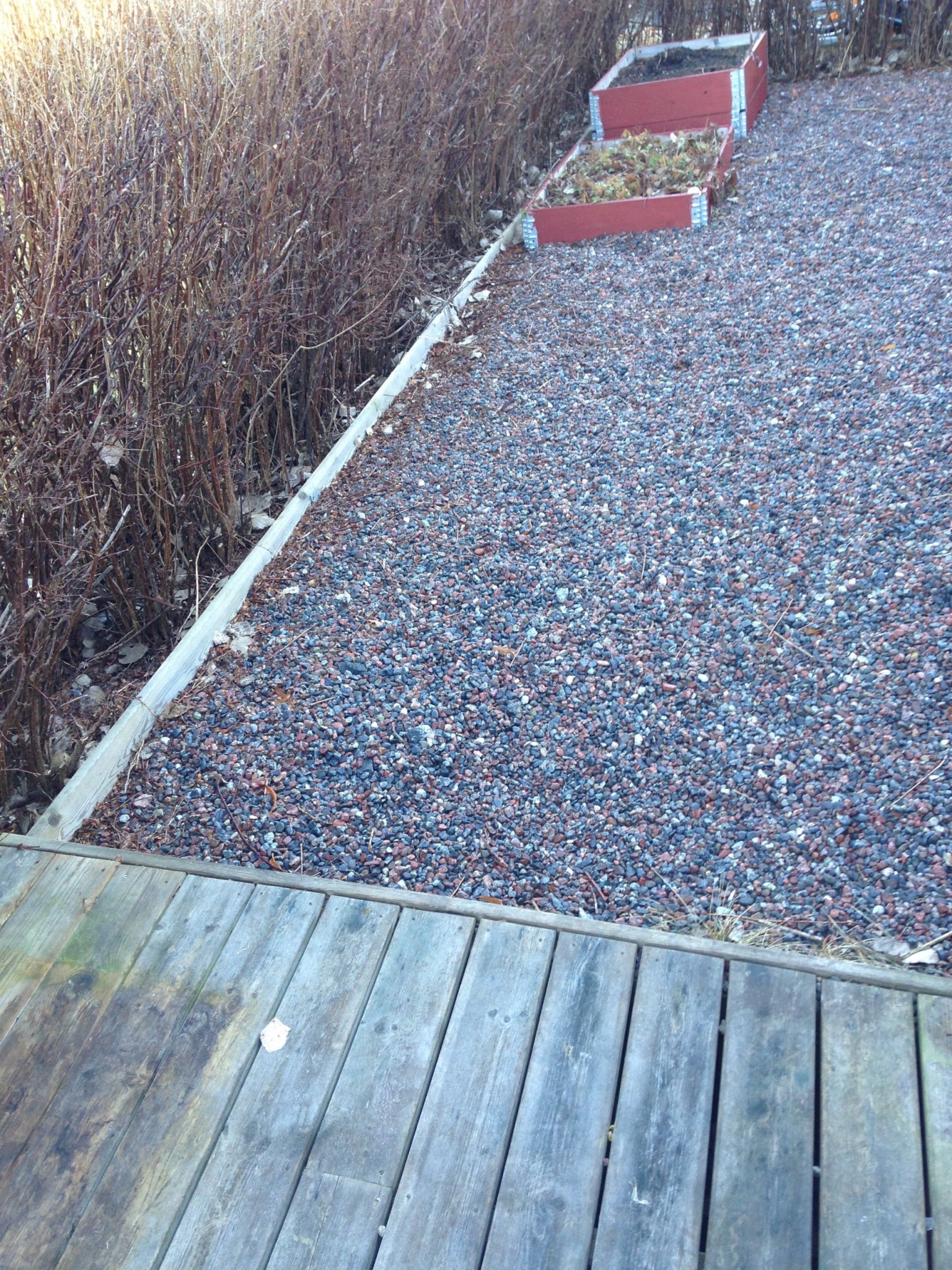
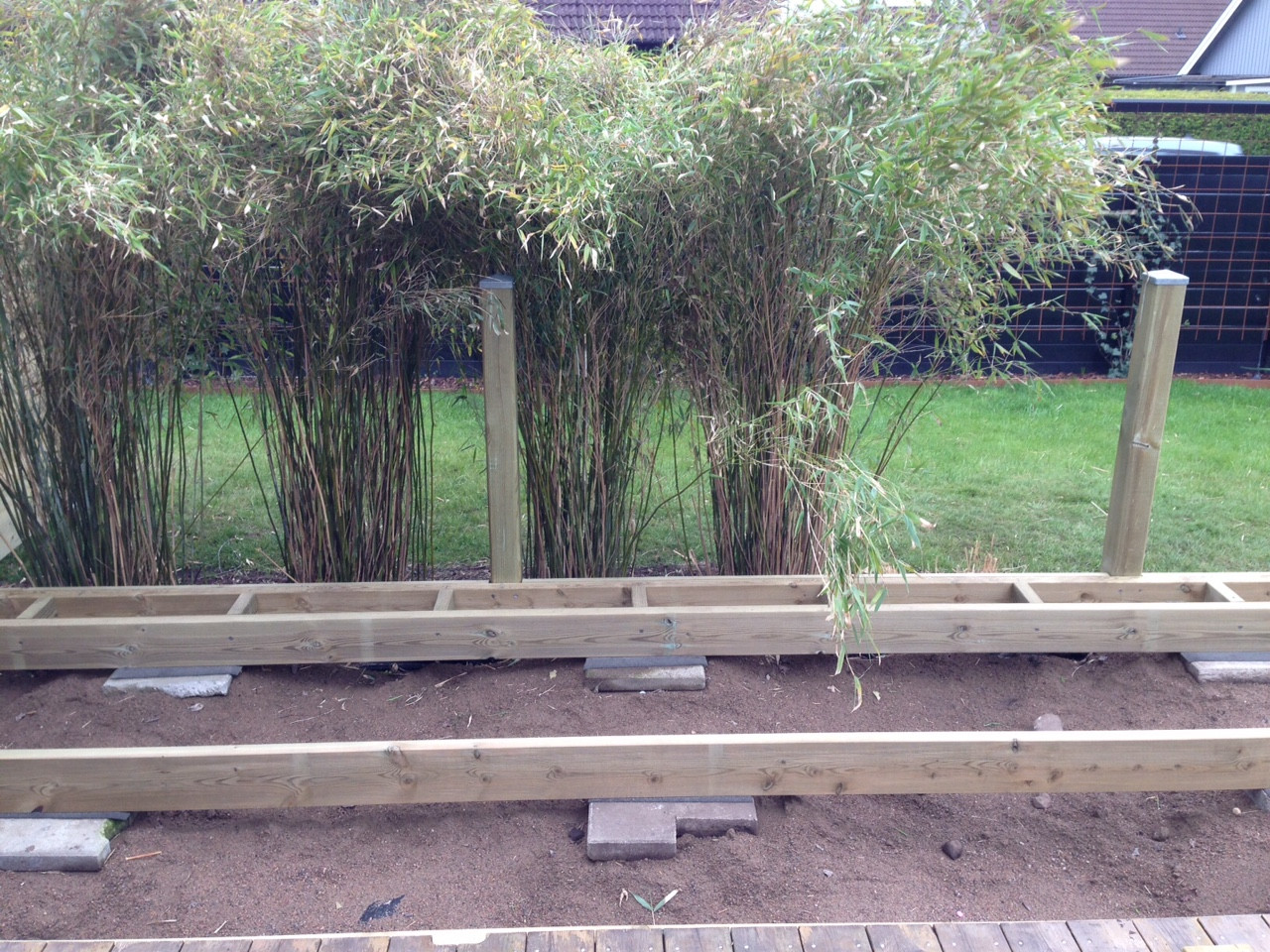
Hello! I'm thinking of extending our deck. In the picture, you can see the existing deck and a stone area where I plan for the new deck to be. There are already stones there that the previous owner of our house put in place. And underneath the stones, there seems to be some kind of landscape fabric - but it doesn't seem completely effective as weeds are growing here and there.
Now I'm seeking advice on how I should proceed. Should I add more sand, crushed stone, or perhaps landscape fabric on top of the existing stones? Or remove all the stones (a lot of work) and replace the landscape fabric?
I'm also wondering if there is any good trick to get the new deck to be on exactly the same level as the existing one.
And one last question: should I remove the edge of the old deck when I extend it? What would be best/nicest?
How big is the existing deck and how big will the new section be? If the existing one isn't too large, I would probably take the opportunity to redo it as well. In the picture, it looks quite old and a bit worn (maybe just locally, right there?), and it would definitely look nicer if the entire deck had the same appearance, in terms of wear.
Getting the new section to be at the same level as the old one is really just about calculating how high its support stones/piers need to be, and then you need to know the height of the beams and the thickness of the decking. Good groundwork is also required to avoid settling in the new section.
If you don't redo the old section at the same time, I would place a border board between the old and the new, instead of end to end.
The stones that the previous owner placed there, do you mean the gravel, or are there, for instance, paving stones under the gravel that could serve as support plates for the deck's framework?
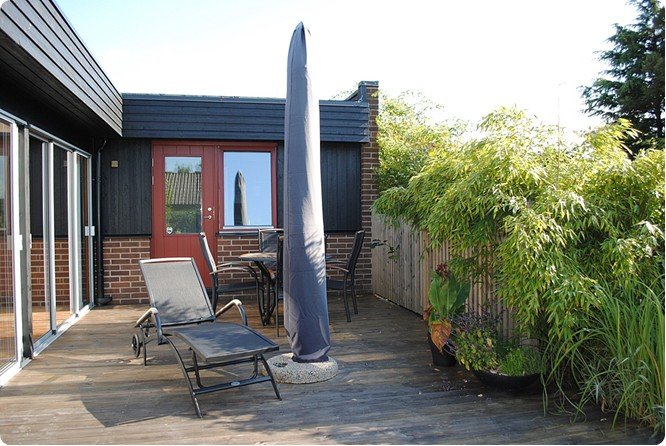
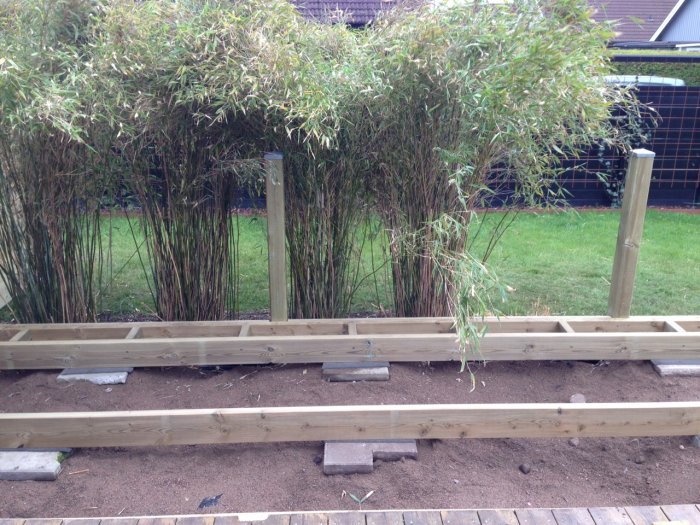
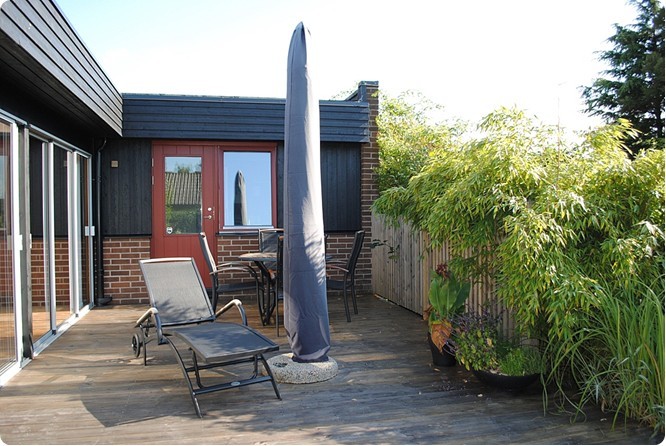
I have done what you were planning to do.
Attach a floor joist to the outside of the existing deck and then support the floor joists on slabs to the right level.
Now, a year later, the new decking almost has the same gray hue as the old one!
Edit: The last picture (below) is when the decking was just laid, about 1 year ago.
Thanks for the response. What I'm mainly wondering about is the first step. How do I avoid weeds - and can I lay support stones directly on the existing gravel? Should I cement the support stones in place?
By stones in my original post, I mean the gravel. Under the gravel, there's currently some sort of landscape fabric, which unfortunately doesn't seem to work 100% because it lets weeds through.
The weeds might have a hard time growing since it will be relatively dark under the decking, but if you're unsure, throw on a landscaping fabric on top of the gravel (doesn't cost much) and then lay concrete slabs on the fabric, which you can then use to prop up the floor joists. I guess the gravel is quite packed after all the years of walking on it, so it should be fine, but if you're worried, buy finer gravel and lay it under the concrete slabs.
The ground conditions you already have with fabric and gravel are almost overkill or at least "by the book."
If you have some vegetation coming up now, it will most likely die when you remove the light source; if any stubborn dandelion shows up anyway, you might be able to get an arm under the deck and spray some weed killer on it so you never see it again.
I personally built with prefabricated plinths, but given your situation, I would probably do as Lexington with slabs. However, I don't think you should place the slabs on the gravel but rather scrape away the gravel down to firm ground before laying down the slab. It can be a bit tricky to get everything on a completely even level that way.
To achieve an even level with the current deck, you'll need a stick, a mason's string, and a nail.
Hammer the nail furthest from the end that is to be extended and tie the string (drive the nail between the existing decking into the joist so you avoid a hole in the decking), pull the string over the entire deck, and tie a loop larger than the stick; drive the stick straight into the ground about 2 meters further out than the new deck will be. Then move the string up on the nail so it is exactly 20mm up on the nail, and adjust on the post so the whole string runs exactly 20mm above the existing deck.
If you use 28*120 decking, you now know that the framework should be 28+20mm below the string all the way, so you get everything at the same level with the same slope.
Weeds won't grow there once the deck is in place.
If you want to make the transition from the old to the new section as seamless as possible, you can unscrew and flip the old boards since the underside of treated wood often looks new for many years. If you do unscrew the old boards once, you might also be able to stagger the seams so they're not all in the same place, making it unnoticeable that the deck has been patched at all.
Moreover, I don't think the weeds today are due to holes in the existing landscape fabric but rather that they are growing directly in the stones on top of the fabric. Unfortunately, weeds tend to be able to grow everywhere.
If you remove the light, nothing will grow under there, regardless of the landscape fabric!
Is it possible to stack multiple plates on top of each other, or how do I get the plate to the exact right height? Do you adjust with syllpapp? Sorry if it's a dumb question - but I've read through your advice and I'm not quite sure about that part.
One option is to align your tiles with the joist and drive a bunch of French screws into the bottom of the beam, which you then adjust out/in with a wrench (a kind of poor man's leveling). I helped my father-in-law do this, and it was super easy. It can be difficult to level the tiles in the gravel and get them to the right height, and you avoid much of that if you do it this way.
Click here to reply
Vi vill skicka notiser för ämnen du bevakar och händelser som berör dig.