
3,195 views ·
10 replies
3k views
10 replies
Experience with Pro fit hole saw?
I am planning to open up a couple of 105mm holes to improve the natural ventilation in the house. Last time, I used a cheap Jula hole saw with lots of teeth, and it was drywall on the inside, then OSB, insulation, and 22mm paneling. The hole saw seized up quickly and twisted the drill out of my hands. I ended up having to drill small holes around in a circle and fiddling.
Now it's an older wall with some tretex (?) on the inside, then standing 3" thick planks, and then I'm a bit unsure what's outside that. Outermost is 22mm paneling. Total thickness about 32cm.
I have read that Pro fit is supposed to be a good hole saw, and I wonder if it would work better in this wall than the cheap hole saws with lots of teeth? Does anyone have experience with them in similar materials? It costs around 700kr with the holder...
Now it's an older wall with some tretex (?) on the inside, then standing 3" thick planks, and then I'm a bit unsure what's outside that. Outermost is 22mm paneling. Total thickness about 32cm.
I have read that Pro fit is supposed to be a good hole saw, and I wonder if it would work better in this wall than the cheap hole saws with lots of teeth? Does anyone have experience with them in similar materials? It costs around 700kr with the holder...
Unfortunately, it will probably catch rather quickly. It's difficult to control with a handheld machine, and then it gets stuck in the saw track.
I have done similar maneuvers and regularly removed the contents, for example per layer. It's easier to control and there's less risk of catching.
If you have the possibility to use a torque limiter on a screwdriver or drill, it is recommended, as it reduces the risk of wrist twisting.
I have done similar maneuvers and regularly removed the contents, for example per layer. It's easier to control and there's less risk of catching.
If you have the possibility to use a torque limiter on a screwdriver or drill, it is recommended, as it reduces the risk of wrist twisting.
Bumping my thread from last fall.
Corre responded then that I should use a drill/driver with a torque clutch. That's when it releases when there's more resistance than what's set, right? And then you have to take a new grip in the hole and continue, etc.
But I read somewhere else that you should have a clutch in the driver - what is that? Isn't that exactly what happens when you use torque and it releases, that it disengages?
Corre responded then that I should use a drill/driver with a torque clutch. That's when it releases when there's more resistance than what's set, right? And then you have to take a new grip in the hole and continue, etc.
But I read somewhere else that you should have a clutch in the driver - what is that? Isn't that exactly what happens when you use torque and it releases, that it disengages?
Torque lock and clutch release are two different concepts on the same theme.
Clutch release is more common on mains-powered machines, and is a maximum value that cannot be adjusted. Simply a wrist protection.
On a battery-powered machine, you more often have an adjustable torque lock. It wears down if used frequently against it. The clutch release also wears down, but perhaps not as much.
Clutch release is more common on mains-powered machines, and is a maximum value that cannot be adjusted. Simply a wrist protection.
On a battery-powered machine, you more often have an adjustable torque lock. It wears down if used frequently against it. The clutch release also wears down, but perhaps not as much.

I recently drilled a series of holes to improve ventilation and I bought the Pro-Fits deep hole saw. Gypsum, Tretex, 1" inner panel, Tretex, log wall, old outer panel, and finally new outer panel were the layers it had to chew through. I find that regular toothed hole saws catch more easily than Pro-Fit. I didn't have much trouble cutting through the aforementioned layers. Sure, you can't just stand around; you have to hold onto the machine...
I'm without a drill driver and I'm thinking of getting one on a limited budget, mainly for regular screwing, but it would be nice if it could also work to make holes in the wall. With the Pro-fit hole saw.
I received a leaflet from Bolist featuring a Hitachi for 990 SEK and an Einhell for 1390 SEK. Would you recommend one over the other, or something entirely different for that money? I absolutely want to stay under 1500...there isn’t much screwing. I’ve managed for a long time with a small blue Bosch 10.8V that has torque but only one speed. So, the requirements are essentially a faster machine with the same quality.
I’m inserting the products from Bolist.
https://bolist.se/produkt/borrskruvdragare-ds18djl-15ah-hitachi-18v/
Couldn't find the Einhell in the leaflet, on their website, so here's the same product at the top right on some internet version of a different leaflet than the one I received..
https://view.publitas.com/olinders/bolistkatalogen/page/4-5
A hammer drill function is not really necessary since I have a regular 230v drill without torque that probably works better. (But it's the one I think will really bite into the wall with the hole saw.)
I received a leaflet from Bolist featuring a Hitachi for 990 SEK and an Einhell for 1390 SEK. Would you recommend one over the other, or something entirely different for that money? I absolutely want to stay under 1500...there isn’t much screwing. I’ve managed for a long time with a small blue Bosch 10.8V that has torque but only one speed. So, the requirements are essentially a faster machine with the same quality.
I’m inserting the products from Bolist.
https://bolist.se/produkt/borrskruvdragare-ds18djl-15ah-hitachi-18v/
Couldn't find the Einhell in the leaflet, on their website, so here's the same product at the top right on some internet version of a different leaflet than the one I received..
https://view.publitas.com/olinders/bolistkatalogen/page/4-5
A hammer drill function is not really necessary since I have a regular 230v drill without torque that probably works better. (But it's the one I think will really bite into the wall with the hole saw.)
Last edited:
I don't think those machines can handle drilling 105mm holes in solid old and real wood... Go for a corded one, but there's also a risk that they burn out pretty quickly...
Just like the previous speaker, you need a more robust machine than a screwdriver! I use a low-speed old Makita that has been used for log construction (dowel holes). There are some threads about which machines might be suitable.

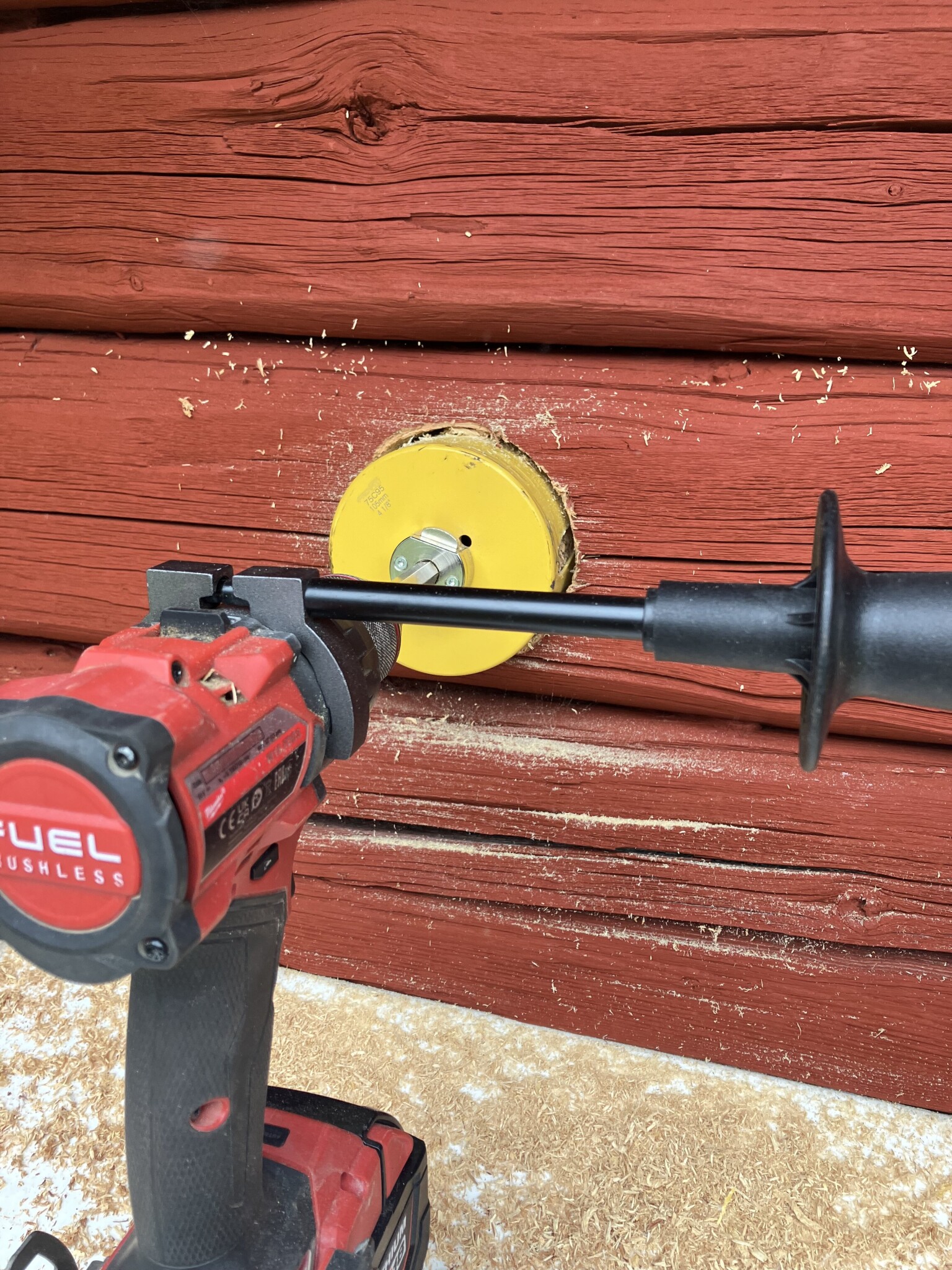
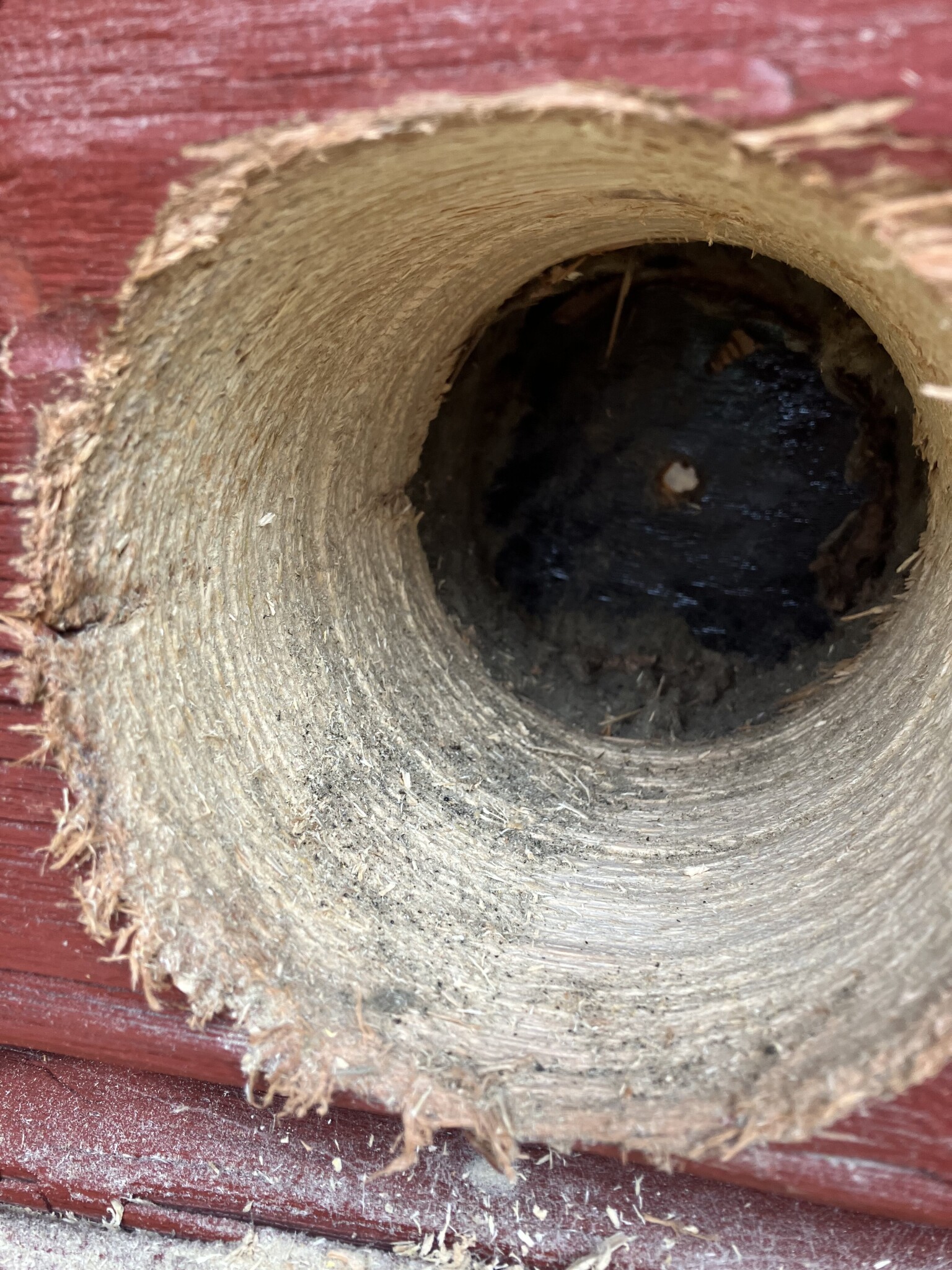
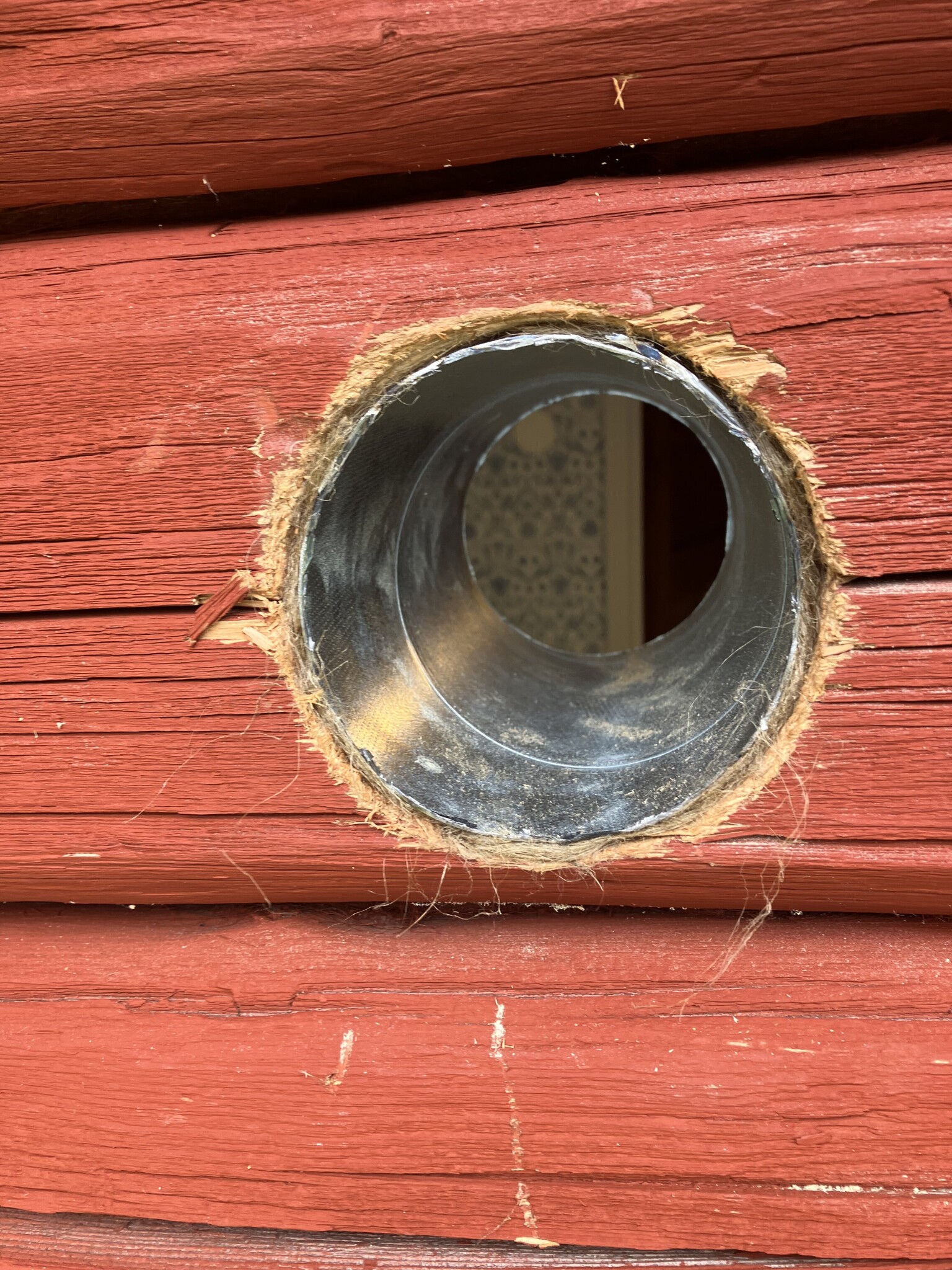
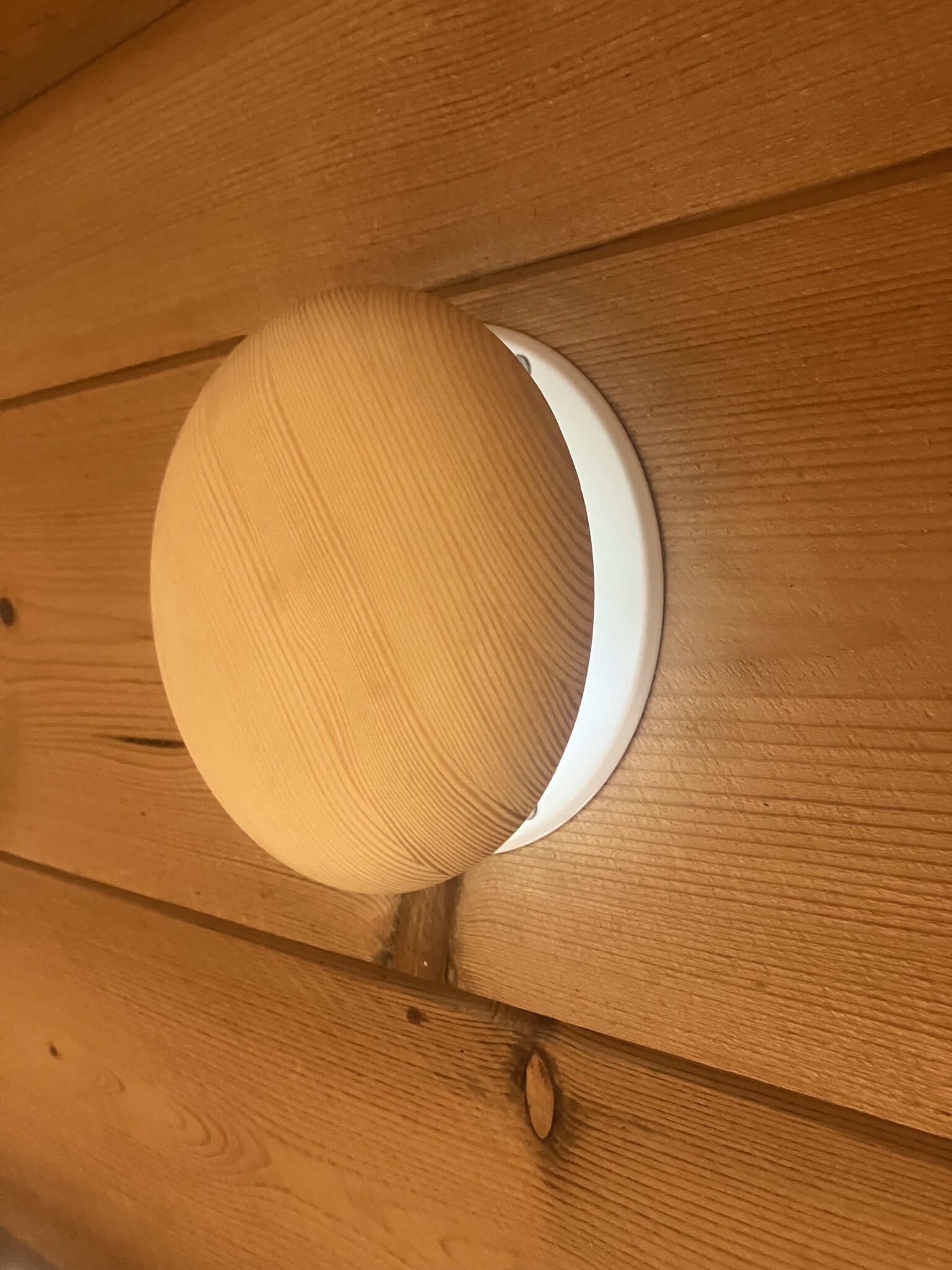
Good info Tore! Did you snag the drill for yourself?
Since I started the thread, I still haven't done any hole sawing but I got a Bosch blue hammer drill GSB 24-2, which has some anti-kick function. Hope it will work well with Pro fit, when I finally get around to it
Since I started the thread, I still haven't done any hole sawing
but I got a Bosch blue hammer drill GSB 24-2, which has some anti-kick function. Hope it will work well with Pro fit, when I finally get around to it Hah, yes for me it took 7 years before I sorted out the problem..G gluecifer said:
It snagged 2-3 times but it was mainly when cutting into new materials. It also has some kind of anti-kick function that shut off the machine, so there were no crazy snags.
Click here to reply