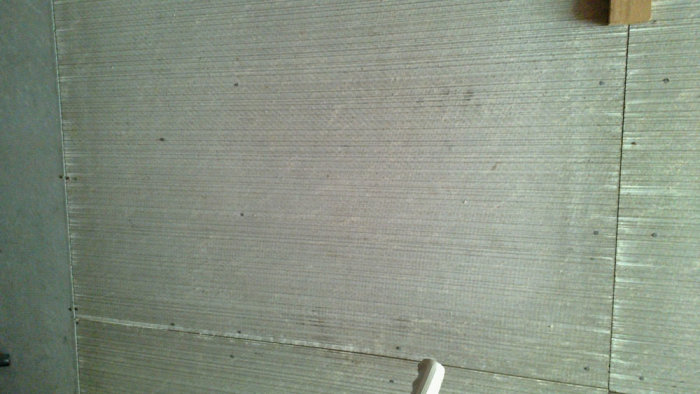
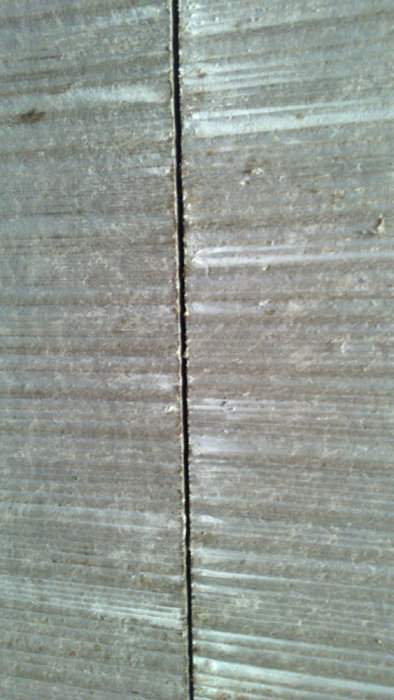
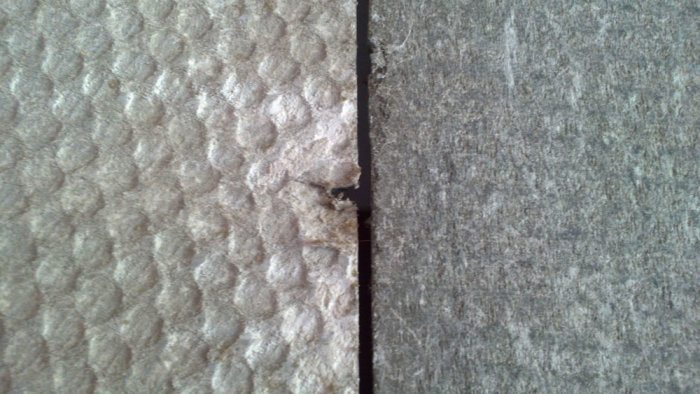
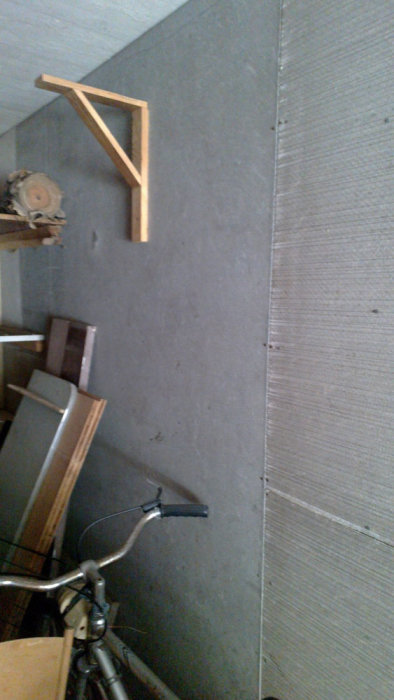
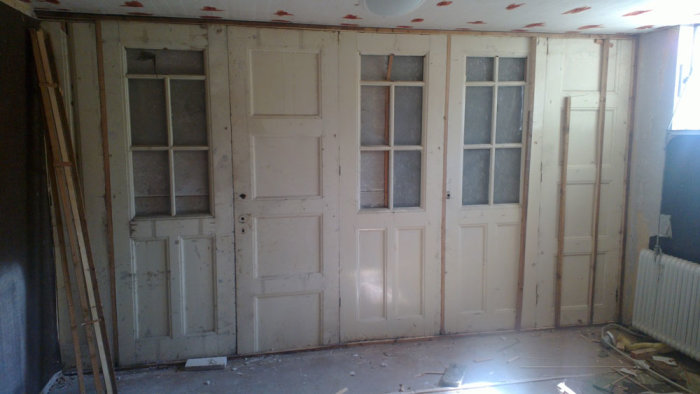
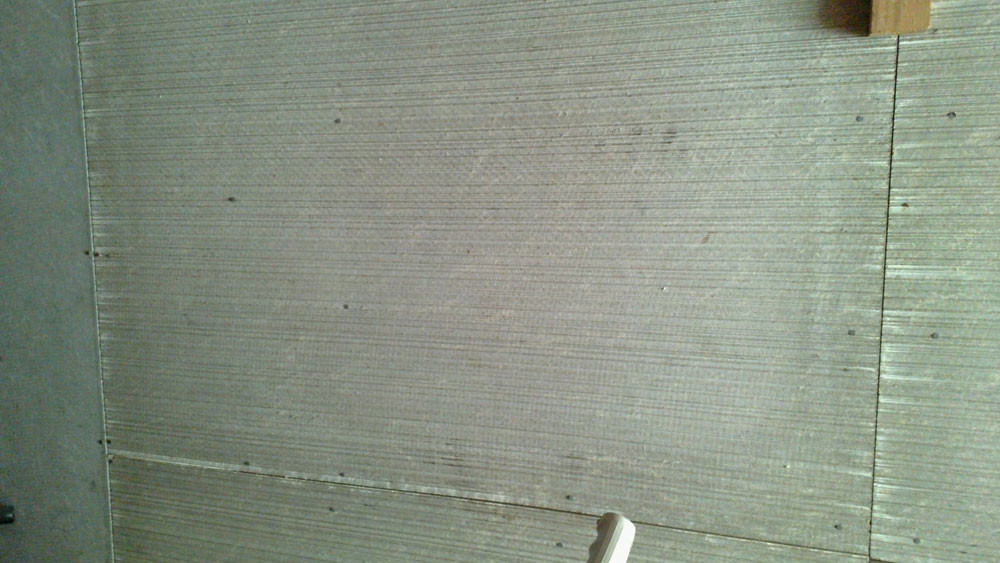
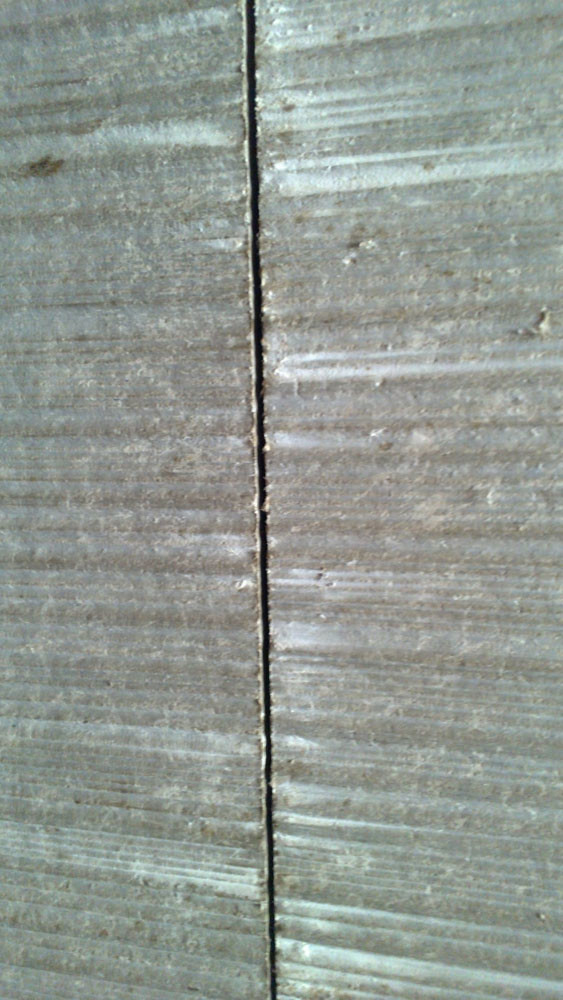
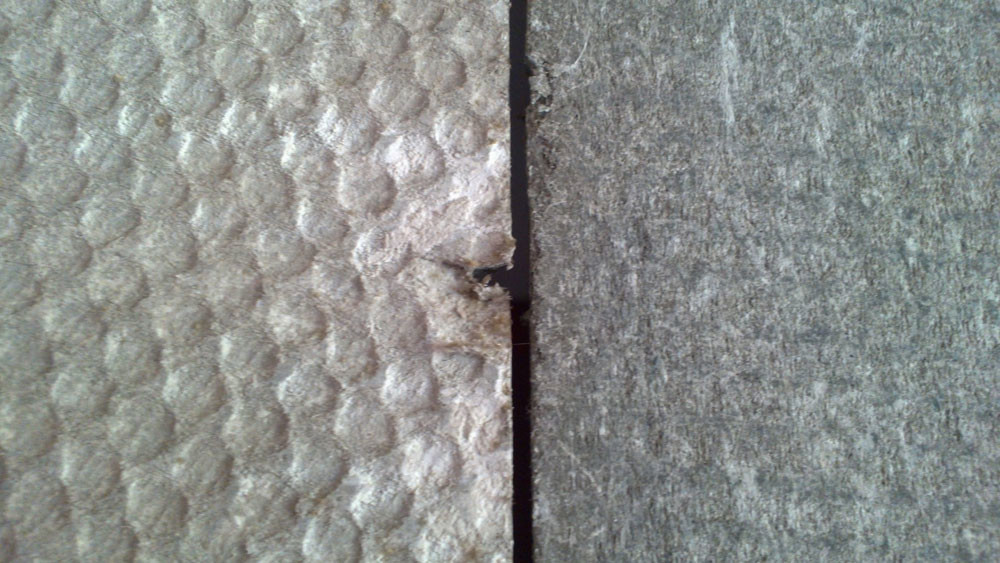
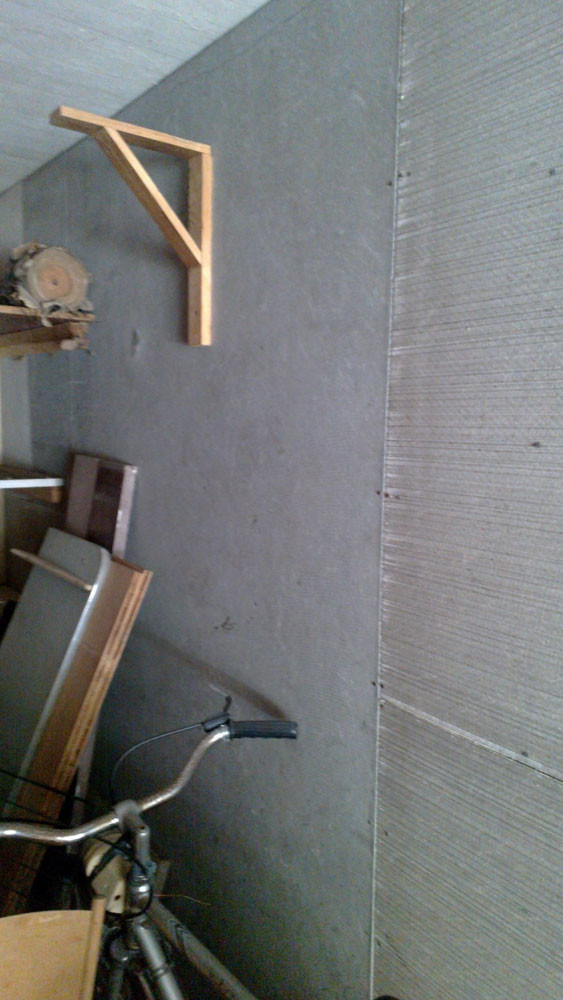
I was about to tear down a wall in my basement in a hobby room that faces a smuck in the garage and became a bit confused by what I found in the wall. However, I don't know if they are eternit boards. I'm attaching some pictures here so that someone knowledgeable can evaluate.
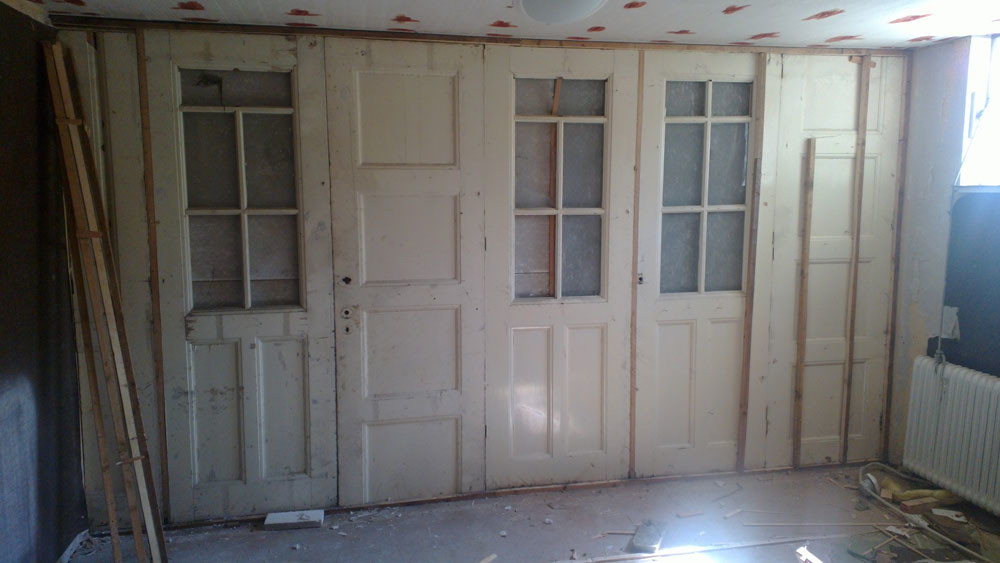
After removing some wooden beams and insulation, it turned out that the wall was built from 5 old doors, and on the backside (garage wall side) of these doors, boards are attached with nails and screws. Most of the boards are about 104cm wide, 106cm high, and around 4-5mm thick. A slightly darker board is 120cm wide and 220 high. Do you think these are Eternit boards?
Why, why, why build a wall of doors and fiber cement boards? I want to vomit on it. It is admittedly only 4 meters wide, but I don't think I dare to remove the boards myself.
Nah, I know. I have a shed standing on the property that I started to demolish which has eternit... I also need to find someone who wants to take it down.
Why, why, why build a wall of doors and fiber cement panels? I want to vomit on it. It's admittedly only 4 meters wide, but I don't think I dare take down the panels myself.
We had fiber cement panels on our house, I took them down myself this summer and it went fine. Make sure to use a mask and it's no problem.
My records are indoors in the basement, and from what I understand, you should wear full-body disposable clothing, a full-face mask with a good particle filter, wet the material, pack it in plastic, etc., etc. Feels like the moon landing in 1969 was a fart in space in comparison.
I took down an asbestos cement roof of ~280 m2 this spring. As previously mentioned, go to a proper building supply store and buy a proper face mask, a half mask with a particle filter. Tell them it's for asbestos cement so they give you the right filter.
Those full-body suits, packaging in plastic, etc. are for people who work 8 hours every day with asbestos. For us who do it once, it is a bit less sensitive. But have respect for it!
Well, that may be true, but it still feels a bit inconvenient if it starts to dust when you remove the panels since it's indoors and the particles won't disappear into the open air... and you can't vacuum up the particles with a regular vacuum cleaner either. Hereby, I nominate eternit as renovation killer number one.
Has anyone hired a decontaminator to remove eternit? I've mostly read about people who have removed it themselves when I've searched in the forum.
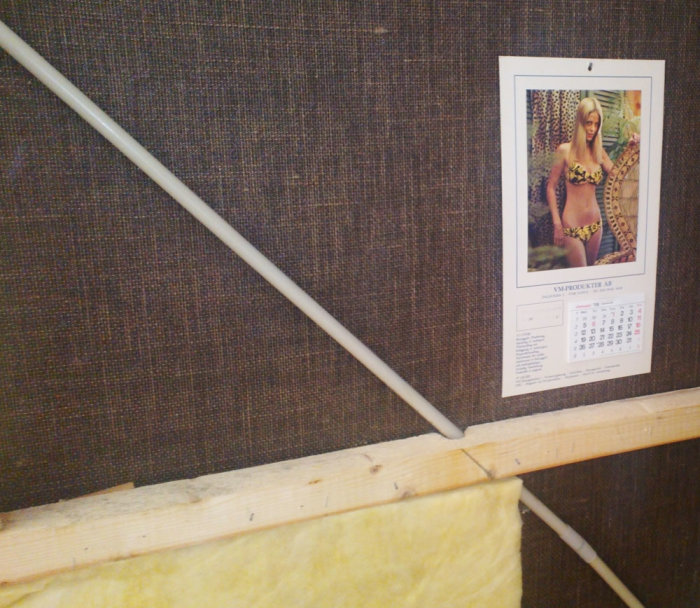
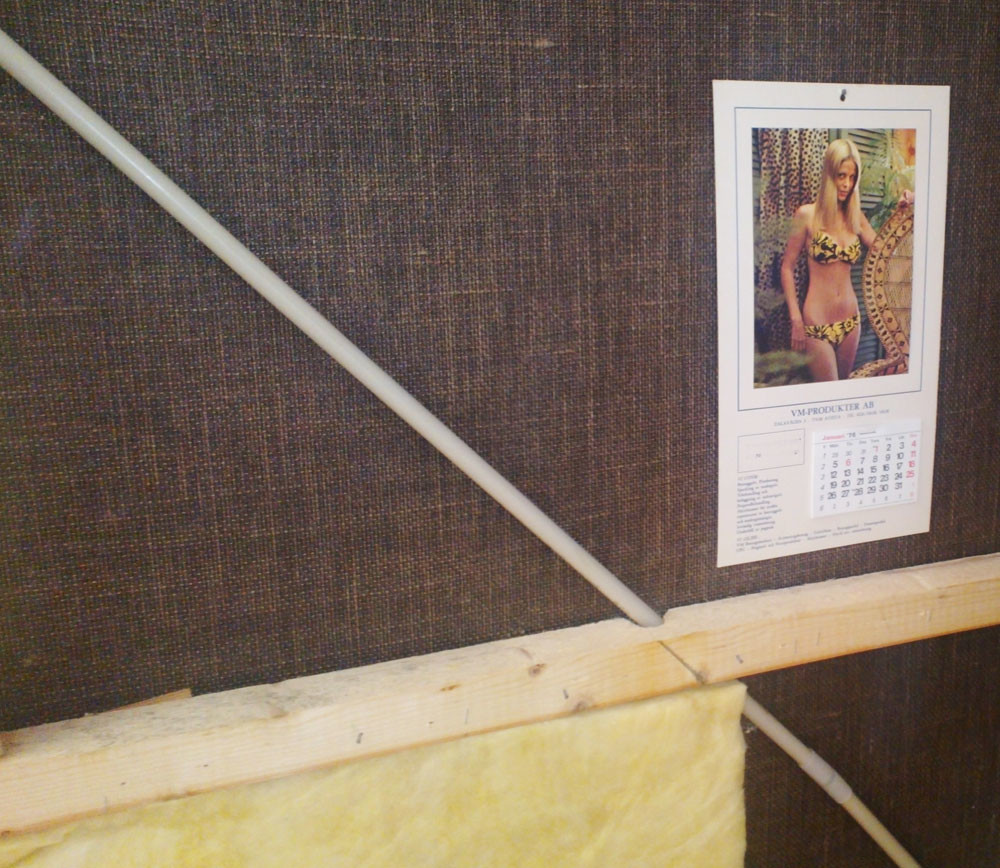
When I removed the insulation from one of the other walls, I found the following calendar from 1976. A little fun amidst all the misery at least
The thing with full-cover suits, wrapping in plastic, etc. is for people who work 8 hours every day with asbestos. For us who do it once, it's a bit less sensitive. But respect it!
When it comes to wrapping in plastic, it may very well be that the municipality requires it to accept the material. Check what is required in that municipality and if there is a cost to leave it.
Sent from my Lumia 800 using Board Express
Has anyone hired a remover to clear asbestos? I've mostly read about people removing it themselves when I've searched the forum.
Yep, I've done both. That is, I both hired a company and did it myself. For the company, two men came in for a day and it cost 8000:- (a few years ago). I had planned for them to take down entire sheets (located in the ceiling of the former boiler room and laundry room), but they smashed most of it with a hammer... I spent between 60-80 hours cleaning after them.
In hindsight, I should have done the whole thing myself. You can find information on how to do it by searching online (Arbetsmiljöverket). As mentioned, it's not a catastrophe, but it requires some work. You should have a mask with a P3 filter (particle, fineness grade 3). Also, use a disposable overall (dust-tight). Build an "airlock" out of construction plastic and ensure you have negative pressure in the room you are decontaminating. You can rent fans with filters, vacuum cleaners, etc. But I actually cheated and used an old junk one with a long hose and placed it outside in the rain. Just make sure you don't spread the mess inside the house while working on it (and use vacuum cleaners with a HEPA filter for general cleaning so you actually capture the fibers in the future). The goal of the decontamination is for it to be clean and dust-free when you're done. That means all gray should be gone, surfaces brushed, scrubbed, and dust-washed with a cloth. Think as if you were removing plague bacteria. No power tools (the guys who came had hand-sanded the entire Kungälv municipal house because at some point in the 60s, the painter used asbestos in the paint to prevent dripping).
As mentioned, as long as you have reasonable respect and do as directed, there's no danger for anyone involved.
Getting rid of the mess afterward is, as mentioned, more difficult (and will get worse). Check with your municipality before starting. Many require double plastic bags with labeling on the inner and outer ones, etc. It varies and costs more money. The requirements for handling have only become stricter, so the tip is to dispose of it as soon as possible, as it will likely not get any easier or cheaper.
So, from someone who's been there (that is, discovered asbestos in the ceiling with a hole saw), breathe, take it easy. It's not a catastrophe and can be handled/removed for a reasonable price.
Vi vill skicka notiser för ämnen du bevakar och händelser som berör dig.