
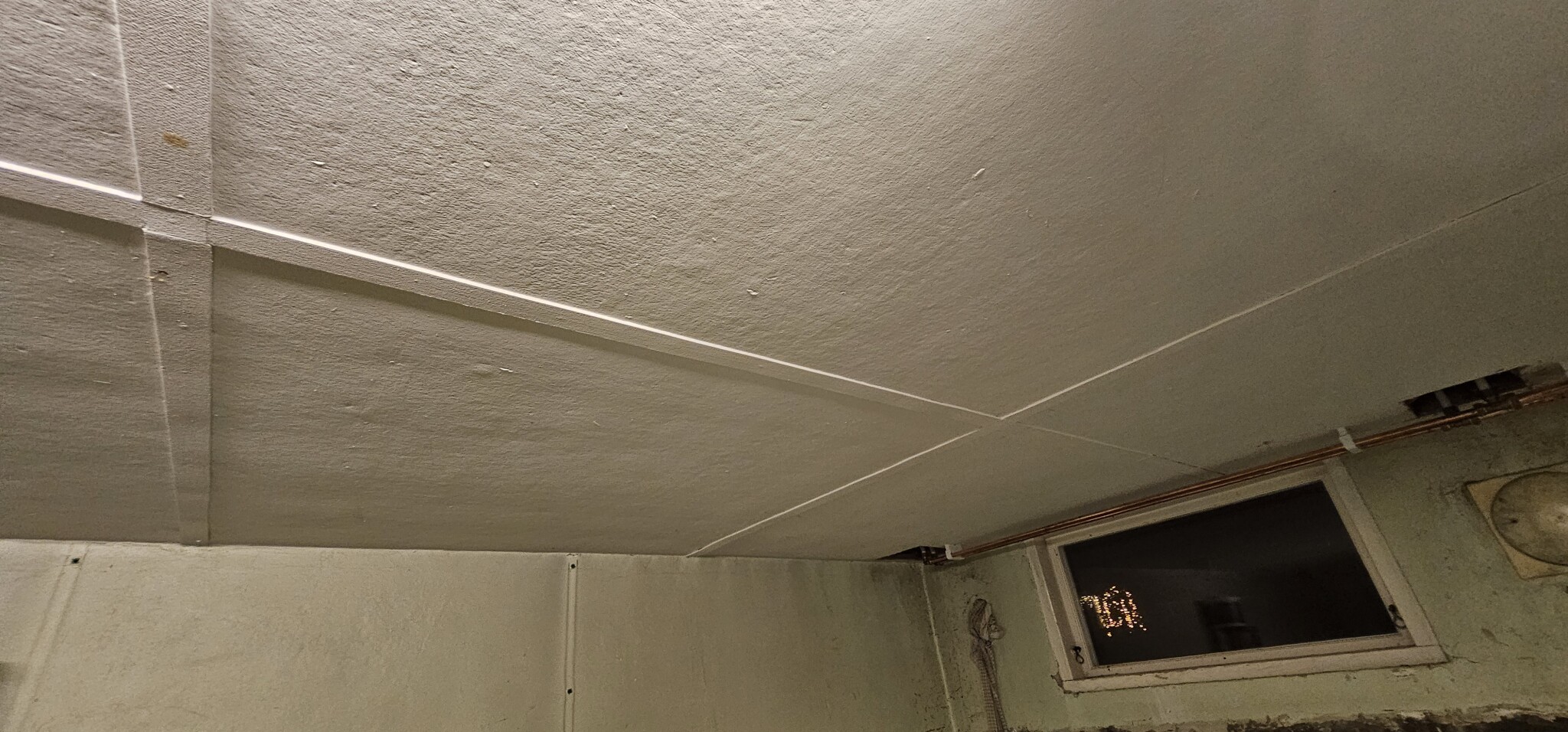
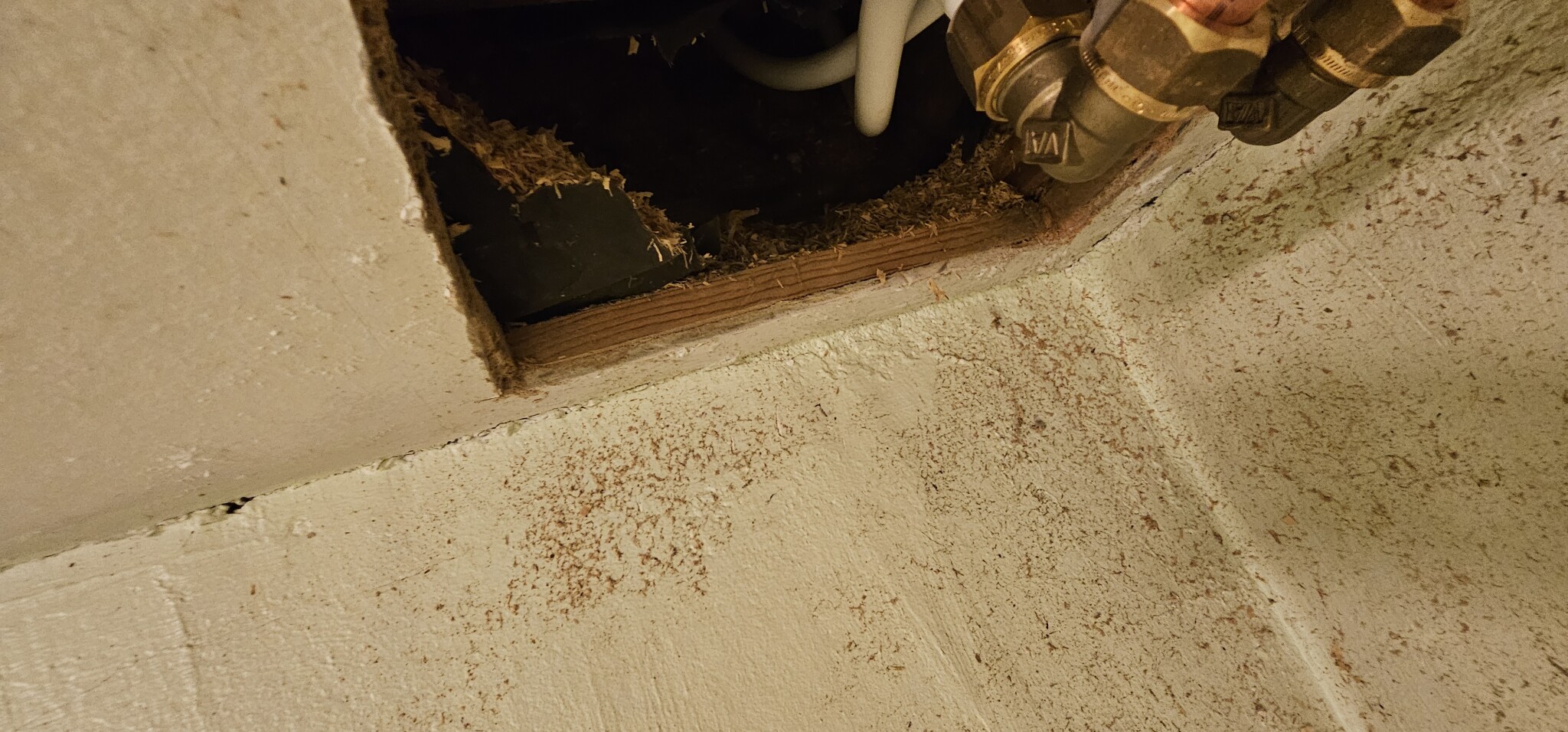

Having Eternit in the basement ceiling is often because it's a boiler room, fire protection from older days. It can be a little surprise. Also, it's not good to work with it. Underneath, it is certainly a plank ceiling and above, perhaps sawdust. It's not easy to try to trace anything. So it might be wise to rethink a bit; recessed spotlights will likely be more work than you realize.
Ok, thanks for your input, maybe better to add some framing and accept the height. The Eternit panels don't add much, maybe 1cm.J jonaserik said:Having eternit on the ceiling in a basement is usually because it's a boiler room, fire protection like in the old days. A little surprise it can be. And it's not good to work with it. Underneath there's likely a wooden ceiling with possibly sawdust above. It's not good to try to trace anything. So you'll probably need to rethink a bit, having recessed spotlights might be more work than you realize.
What do you think about spraying water/dish soap on the panels and renting a central fan & using a mask and overalls to drill holes instead of the missing part?
Instead of tearing down the ceiling, remove the battens, paint it with something you have left in the storage, then a fine batten at least 16 mm maybe 22 mm and a gypsum board on that, then there is space in between to lay pipes/hoses. To bypass the regulations, they should be at 12 V and then you can splice without a junction box in the ceiling. Low ceilings usually require a few more and not so strong lights, should be dimmable for the right light. 22 batten and 13 gypsum gives 35 mm for installation and there are those that can handle it. You can also drill an 80 mm hole in the eternit with a core drill, but then you’ll need protective clothing since it contains asbestos and is not good to process, resulting in dust. It becomes a choice between the lesser of two evils with the job.
No, don't drill holes in them. That will expose a lot of fibers. Also, it's not wise to build them in when the next person will need to open the ceiling for some reason.T Tummenmitthand said:
Take them down; they are probably just screwed on and easy to remove. Make sure to have proper protective gear and be careful not to damage them. Someone has already cut into them for the pipes, which is less than ideal.
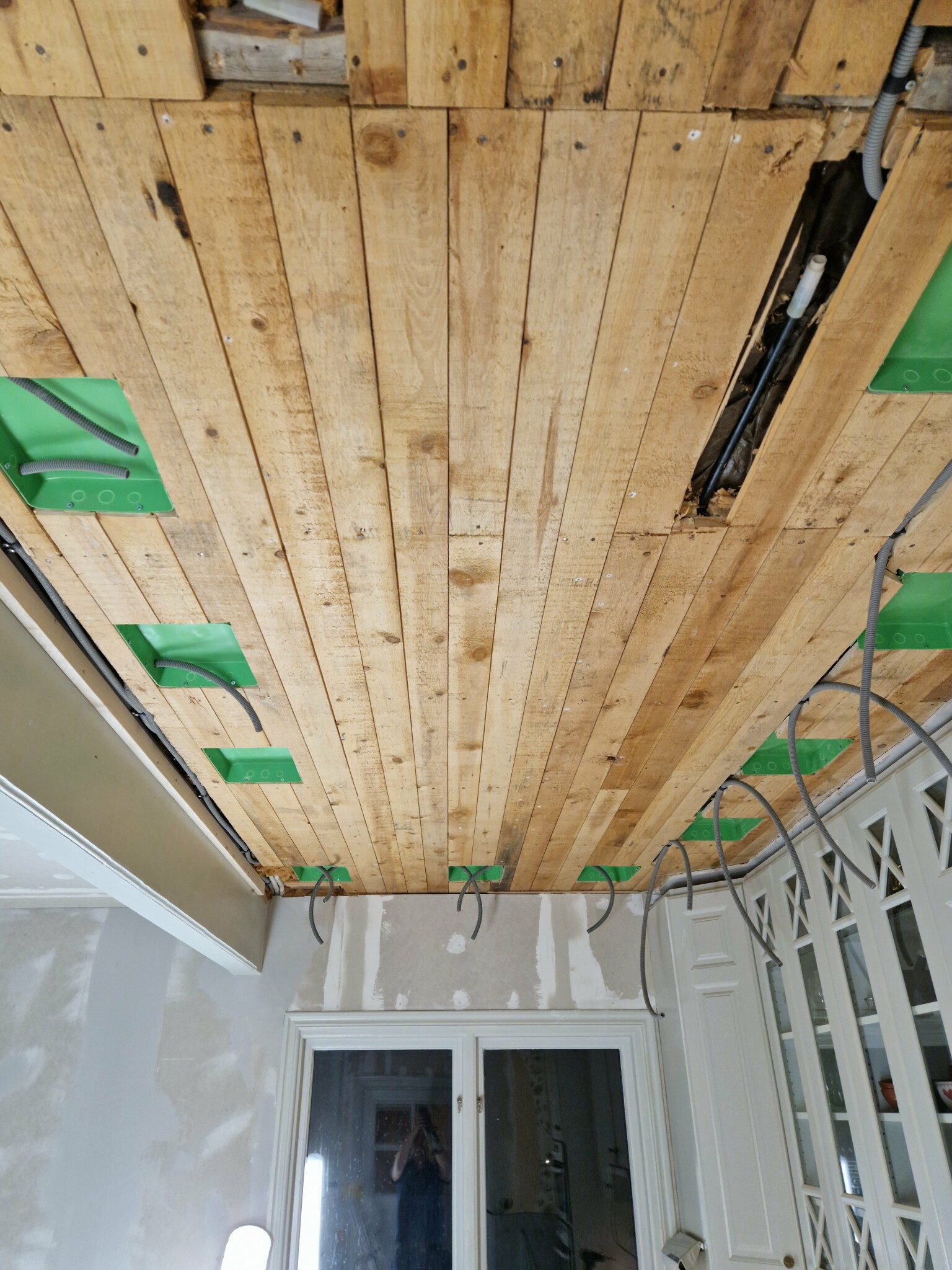
Afterwards, you probably have a rough sawn board roof. I would take square pots, mark in the ceiling with a pen, and carefully saw out for them, remove the rough sawn board and push the pot up. If careful, the insulation won't fall down as the wind barrier holds it in place. Then you can either fish the flexible conduits for the electricity over the rough sawn board or chase in the rough sawn board. Along the rough sawn board (across the beams), you can chase easily by sawing into the tongue with a circular saw; across the rough sawn board (along the beams), it will probably be relatively easy to fish.
But it won't be faster than framing down, quite the opposite, but you save 45 mm of ceiling height.
Then screw drywall over everything and drill for the spotlights afterwards.
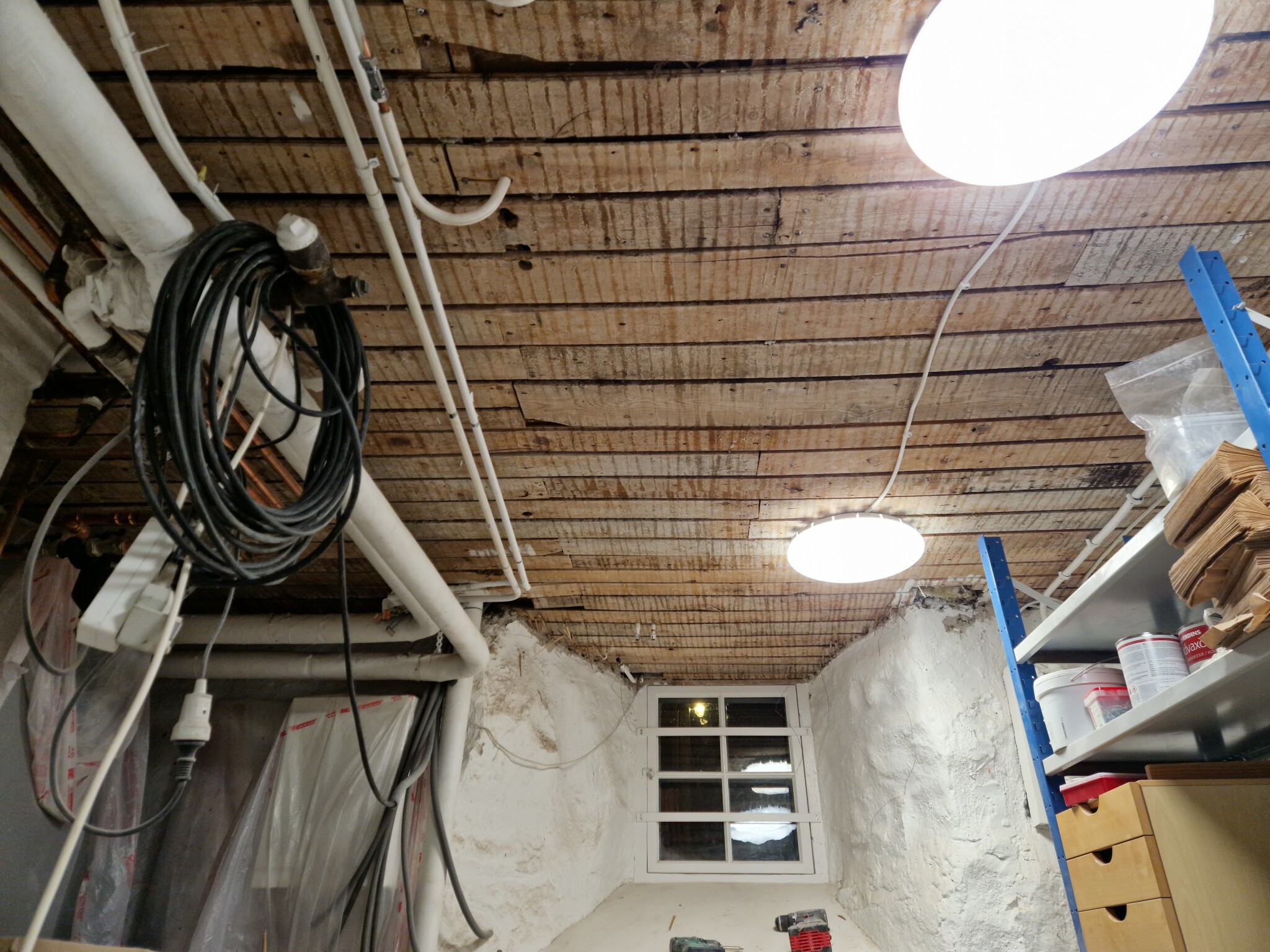
They are not "just screwed on the edge" but in all likelihood nailed in a few rows in the middle as well. If you don't need to remove them, leave them be. Otherwise, carefully piece by piece without breaking too much.
Click here to reply