
1,213 views ·
6 replies
1k views
6 replies
Eternit or asbestos in the summer cottage's shower room?
I have only heard of eternit and asbestos - have no idea what it looks like..
The idea is to fix up a "junk room" in the summer house and the construction company that's going to fix the surfaces asked me to try to tear out as much tile, vinyl flooring, etc. to make it easier and keep costs down.
In one corner there has been a shower and when I tore out the vinyl flooring there was some form of concrete slab underneath. It doesn't dust but cracks quite easily. I will send a piece of the material for testing on Monday, but I wanted to see if anyone here can identify and confirm if it is eternit? Or is it some other more harmless form of concrete-like moisture barrier/insulation?
The main cabin is from the 60s but has been extended and modified several times since then. This particular bathroom is in an external building that was added later, but unfortunately, I don't know when.
The idea is to fix up a "junk room" in the summer house and the construction company that's going to fix the surfaces asked me to try to tear out as much tile, vinyl flooring, etc. to make it easier and keep costs down.
In one corner there has been a shower and when I tore out the vinyl flooring there was some form of concrete slab underneath. It doesn't dust but cracks quite easily. I will send a piece of the material for testing on Monday, but I wanted to see if anyone here can identify and confirm if it is eternit? Or is it some other more harmless form of concrete-like moisture barrier/insulation?
The main cabin is from the 60s but has been extended and modified several times since then. This particular bathroom is in an external building that was added later, but unfortunately, I don't know when.
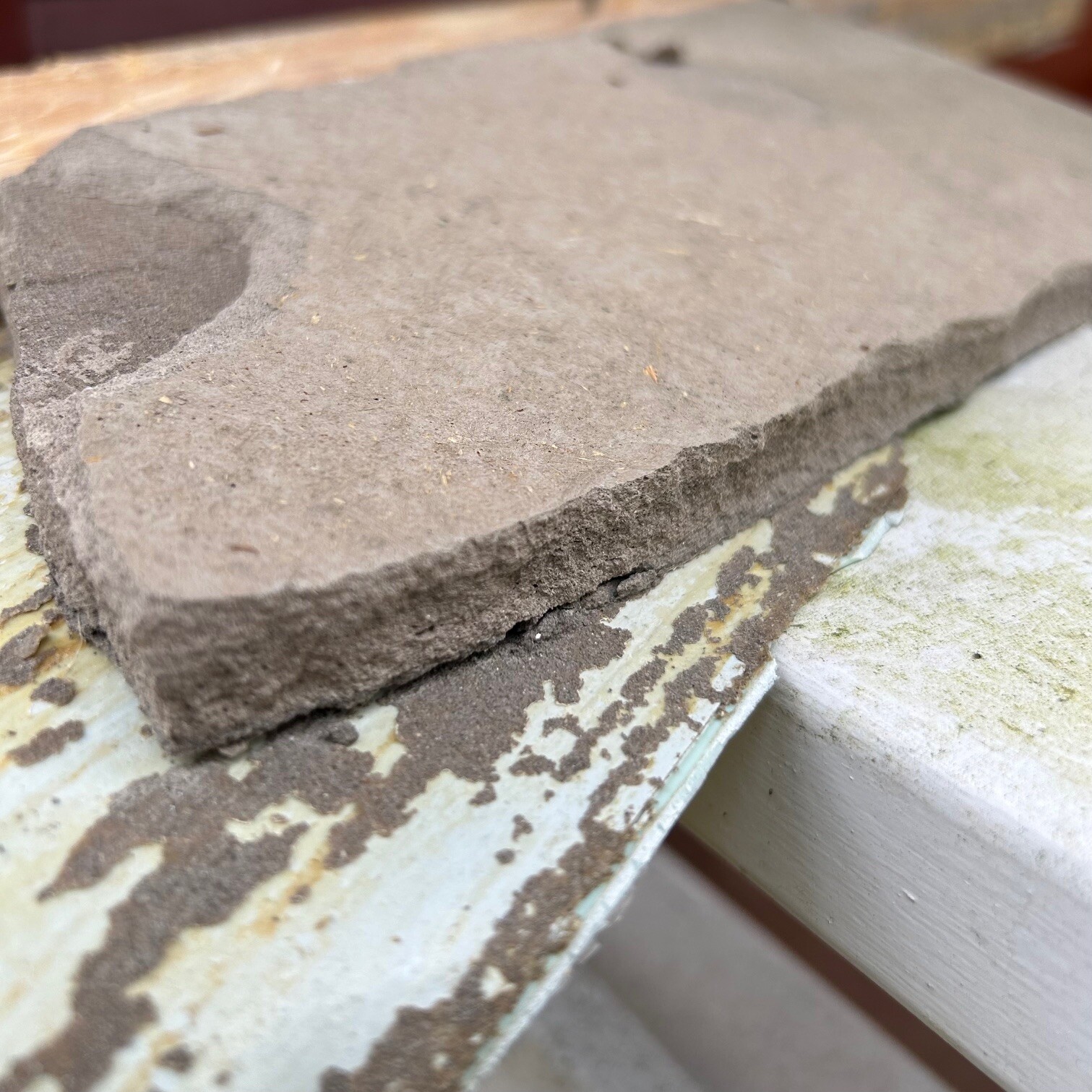


Big thanks for the reply! I showed the picture to a carpenter and he said the same thing. I'll continue, but a bit more cautiously and with a newly purchased mask just to be safe.Demmpa said:

It is important to know if the material contains asbestos when it is to be taken to the recycling center. It's not a good idea for asbestos-containing material to be burned, spreading asbestos fibers into the air, which is why asbestos-containing waste should usually be packaged in double layers of plastic, marked as containing asbestos, and deposited at a designated place so it can be sent to a landfill. Check with the local recycling center for the specific rules that apply there.johnnur said:
That's true! Good thinking.BirgitS said:
It is important to know if the material contains asbestos when it is submitted to the recycling center. It is unwise for asbestos-containing material to be burned so that asbestos fibers are spread in the air, and therefore asbestos-containing waste should often be packaged in double layers of plastic, labeled as containing asbestos, and left at a special place so it can be sent to a landfill. Check with the local recycling center for the specific regulations that apply there.
I'm sending in samples of (what is most likely) leveling compound, grout, and plastic flooring. It would be good to know when I go to the recycling center, of course. I guess you can't label the bag "maybe asbestos"
 I just hope there won't be any sampling fees...
Click here to reply