
4,515 views ·
40 replies
5k views
40 replies
Equivalent anchor compound in drywall

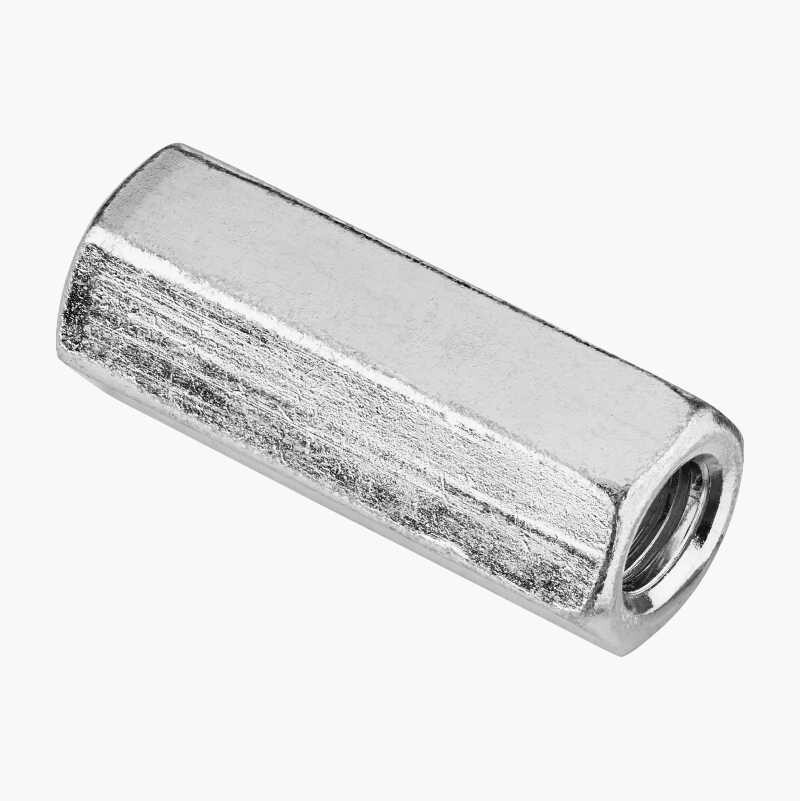
I had planned to replace it with a Molly. Today it's held up with a 3/8'' bolt with a 3/8'' extension nut.K Kane said:
So if I instead buy a similar m10 it might also work. (it would then be a different shade than the old ones, but it's better than nothing)
like this one:
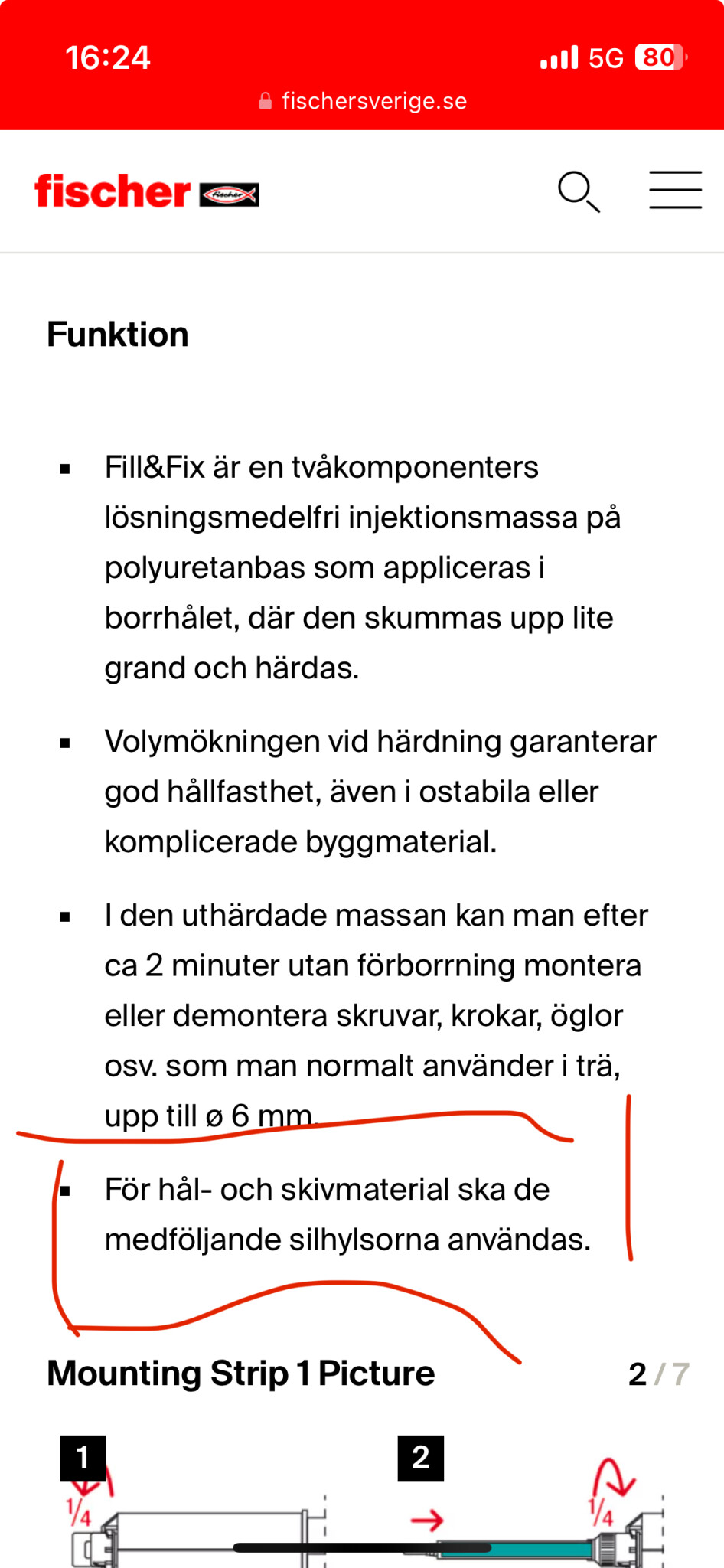
Insert the perfo sleeve into the hole, fill with the mass that expands and hardens. It looks like a coarse screw, so it's best to pre-drill once the mass has hardened. A "regular" screw could be screwed in without pre-drilling.
https://www.beijerbygg.se/privat/sv...t_gd=56622A7951B49B6B4A40897601D4737F3E13A939
https://www.beijerbygg.se/privat/sv...t_gd=56622A7951B49B6B4A40897601D4737F3E13A939
Do you think it's a good idea to dispense that material into a large cavity behind a drywall?Nicro said:
It's meant to fill and "repair" holes. In this case, the "hole" is 0.5x2.4m?
It's an excellent material if we were talking about some form of concrete or similar.
It expands through the perforated sleeve and takes "support" behind the drywall.Dowser4711 said:



Member
· Västra Götaland
· 1 716 posts
A suggestion: Enlarge the hole enough (maybe 50 x 100 mm) to be able to insert a joist/wood piece. It is screwed in place with drywall screws through the drywall, then put a new piece of drywall in, spackle, and paint. If the wall is newly painted, the shades should match.
Some work, of course, but probably faster than dealing with a lot of special solutions. And you'll get a really good wood piece to attach the handrail to.
Some work, of course, but probably faster than dealing with a lot of special solutions. And you'll get a really good wood piece to attach the handrail to.
Do you mean that you should attach it to a stud that's only screwed into drywall?M martinradbo said:One suggestion: Enlarge the hole enough (maybe 50 x 100 mm) to fit in a stud/wood piece. Attach it with drywall screws through the drywall, then place a new piece of drywall, spackle, and paint. If the wall is freshly painted, the shades should match.
A bit of work, of course, but probably quicker than dealing with lots of special solutions. Plus, you get a really solid wood piece to attach the handrail to.
Member
· Västra Götaland
· 1 716 posts
Absolutely. It works well if you just have a sufficiently large stud piece. Drywall is strong in that direction. It's a bit like a molly plug, which makes the contact area against the drywall, so to speak, larger. And the wooden piece has an enormously larger surface than the molly plug.