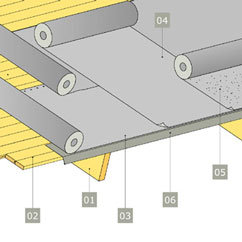
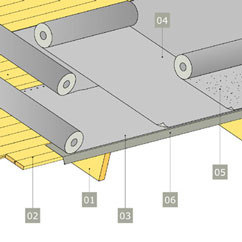
Shouldn't the drip edge be installed under the roofing felt, for example according to:
where 06 is the drip edge and 03 is the roofing felt. I currently have 06 over 03 when I look outside at what the metal worker has done.
You can have roofing felt both over and under the sheet metal. I believe that's the result if you follow some installation instructions properly. For example, I have it on the garage: first a (narrow) strip of felt, then sheet metal, then underlay felt. Then battens and tiles as usual.
But there are certainly possible solutions and shortcuts that work well in practice. But why not simply follow the installation instructions, as this holds the manufacturer to a certain warranty responsibility, and the roof is considered professionally installed, which means nothing for a potential future hidden-defects-obsessed buyer to complain about.
What is important in any case is that at least the last layer of felt, top or underlay, lies on top of the drip edge. Because you can't have a construction where water running down the roof is pushed in under the sheet metal.
Davidw said:
where 06 is the drip edge and 03 is underlay felt. I currently have 06 over 03 now when I look out at what the roofer has done.
OK? Not ok?
Oops, I was careless when I read the first post. You are completely right. He's done it wrong.
Will there be top felt later? In that case, it's probably still wrong, but maybe not so very serious. If there will be battens + tiles or battens + metal roof, it's very wrong.
Is there going to be surface felt on later?
If so, it's probably still wrong, but maybe not very serious.
If it's going to be battens + tiles or battens + metal roof, it's a big mistake.
Yes, I said we would felt, but now that I've received the quotes at 300kr/m2, I realize metal is much more interesting.
Can it be fixed now? I assume the felt is penetrated, so to speak.
Depends, I would say. According to the installation instructions for Plannja roofs, the base plate is placed on the bottom batten. See page 6. http://www.plannja.com/upload/se/documents/montering/monteringsanv_07.pdf For surface felt, it's better to have the base plate above the underlay because you heat the felt onto the plate. This way, the wind has no chance to get under the felt and tear off the surface felt. If it were done the other way around, the underlay felt would need to be nailed extremely tightly to provide a good base for the surface felt.
Fairly easy to fix, I would think. Cut the cardboard along the top edge of the base plate and insert a new strip of cardboard. Any nails in the joints should be carefully removed.
Pretty easy to fix, I would think. Cut the roofing felt along the top edge of the footplate and insert a new strip of felt. Any nails at the seams should be carefully removed.
Exactly.
However, it has now become expensive felt instead. So maybe that's for the best.
Thanks a lot for your opinions, they are worth a lot.
A small post here.
The reason your tinsmith has placed the drip edge on top of the roofing felt is to avoid having metal against wood. This is because the metal can condense and then the plywood becomes damp. A common alternative is to place an extra strip of felt under just the drip edge and then the roofing felt on top.
When laying roofing membrane, the drip edge should be placed on top of the underlay so that the roofing membrane can be properly welded to the drip edge. As mentioned above, you can "Cut the membrane along the top edge of the drip edge and insert a new strip of membrane," but you shouldn't cover too much of the drip edge with the membrane. Then I think it's not necessary, water won't get under the membrane since cutting it open just increases the risk of water reaching the sheathing.
Shouldn't the eave flashing be installed under the underlay felt, for example according to: [image] where 06 is eave flashing and 03 is underlay felt. I currently have 06 over 03 when I look at what the metal roofer has done.
Okay? Not okay?
Not
Click here to reply
Vi vill skicka notiser för ämnen du bevakar och händelser som berör dig.


 You are completely right. He's done it wrong.
