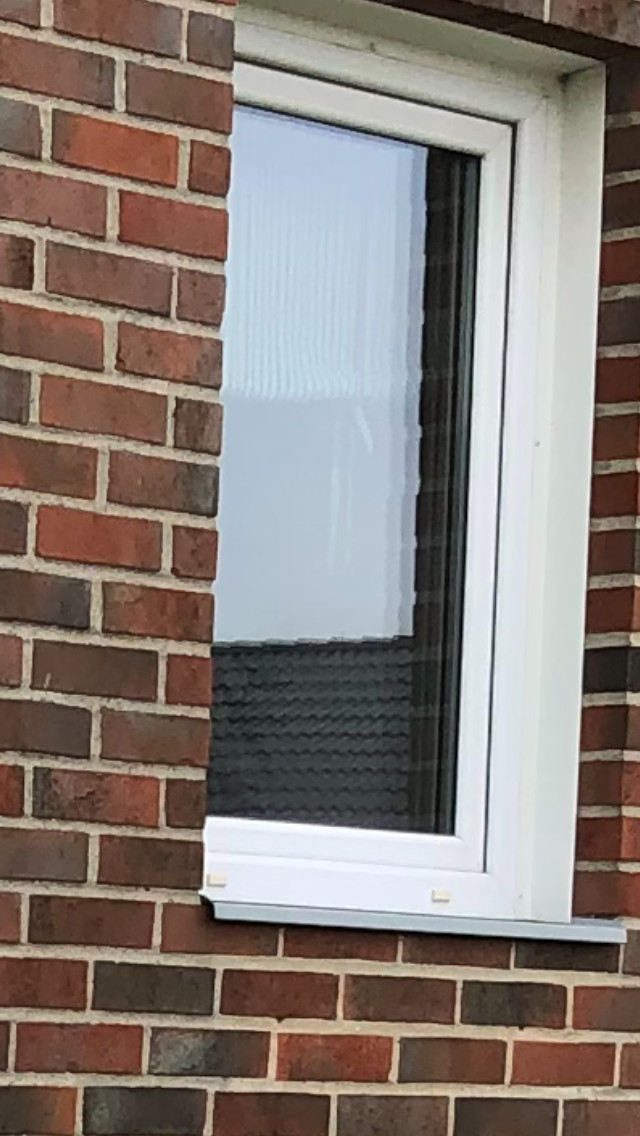
Hello, my windows have been installed "on top" of the window sills. My carpenter says that's incorrect and that the windows shouldn't have been mounted directly on the sills. But is it really wrong? I've been taught that in my windows (which by the way are made of composite material), there is a groove at the bottom of the window for the sill to "hook into." The sills are bent 90 degrees at the back. The reason it was said to be wrong is that I've had leakage at one of the windows. But I'm wondering how they should have been installed otherwise?
Composite window installed above metal window sill on brick wall.
 
To my knowledge, the flashing is mounted "on the outside" with a notch for the flashing to fit in. There are probably other variations...

Could the leakage not have occurred on the sides, or could it have blown in under the flashing? Is there a slight slope outward under the flashing?
 
I have a similar version myself that works great. However, I have a significant slope on the windowsill and the sill has a bent edge that connects to the groove at the bottom of the window.

Your sill seems to be too flat so water can accumulate under the window. Also, there's no upward bend of the sill towards the bottom window groove which adds to the concern a bit more. Doesn't look right!
 
It is properly mounted. There is a groove at the bottom edge where the fold of the sheet goes in.
 
  • Like
nyrrol
  • Laddar…
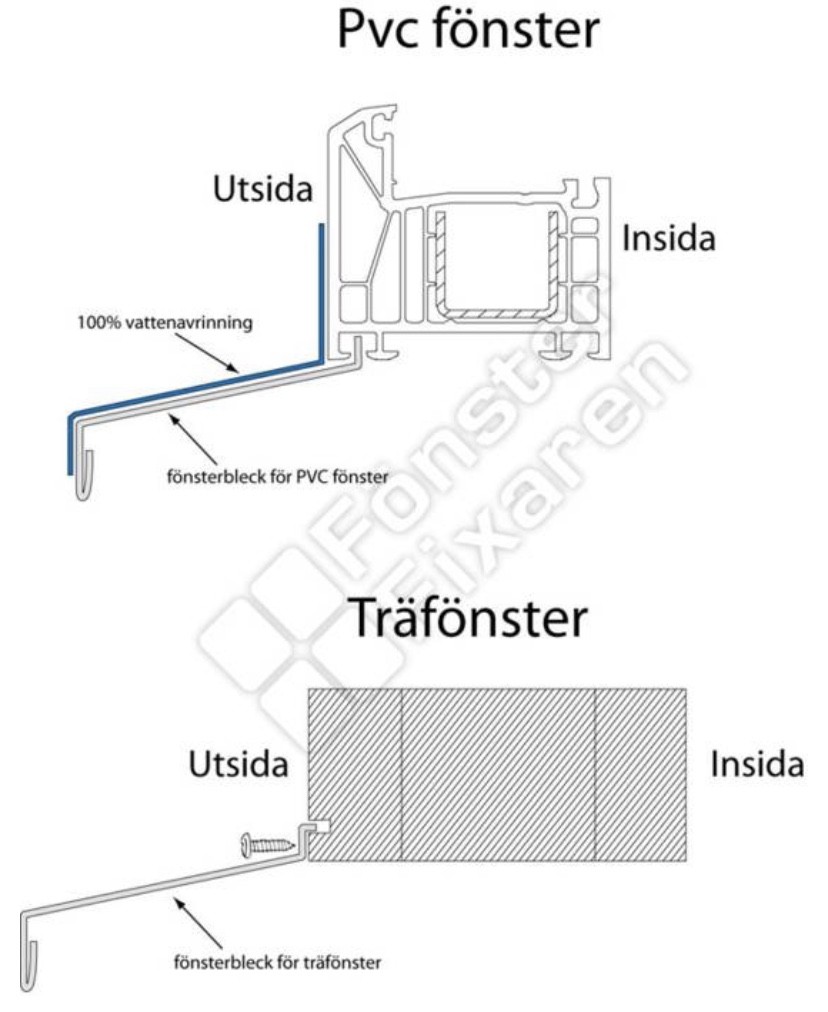
I don't dare to answer regarding composite materials, but for PVC windows, it's common for the sheet to be attached underneath!
 
  • Illustration comparing PVC and wooden window sections, showing exterior window ledges and drainage, with labels for outside and inside.
  • Like
Jonobe
  • Laddar…
Fällebyggarn Fällebyggarn said:
To my knowledge, the flashing is mounted "on top" with just a groove for fitting the flashing. Other variants likely exist...

Couldn't the leakage have occurred at the sides or been blown in under the flashing? Is there a slight slope outward under the flashing?
Yes, leakage at the sides (by the metal sheet) is what I suspect. Sealed with caulk. Waiting for rain and wind....
 
N NoUseForAUsername said:
I have a similar variant myself that works great. However, I have a proper slope on the windowsill, and the sill has a bent edge that connects to the groove at the bottom of the window.

Your sill looks way too flat, so water can get trapped under the window. I also don't see any upward bend of the sill towards the bottom edge of the window groove, which adds to the concern a bit. Doesn't look right!
But you can't see the upward bend? Because the upward bend is "under" the window? In the window groove. The slope could possibly be better, though.
 
S sepani said:
but you can't see the hem? Since the hem is "under" the window? In the window groove. The slope could possibly be better, though.
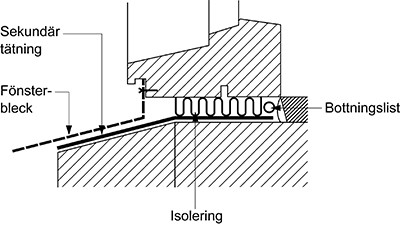
this is how it should look. There should be a small hem up before they disappear under the window. And quite a bit more angle than what you have.

Diagram showing window sill installation with proper angle, highlighting secondary sealing, window flashing, and support foam for insulation.
 
Note my "should" regarding the fold. However, the slope is more of a must-character.
 
Click here to reply
Vi vill skicka notiser för ämnen du bevakar och händelser som berör dig.