
5,866 views ·
31 replies
6k views
31 replies
Dimensional planning woodshed
However, I would like to have a nice woodshed.
I'm completely new to building things, so I'm probably a typical person to buy over-sized timber.
I will also build a clothesline and saw this drawing, here it is also glulam and maybe oversized? https://www.byggbeskrivningar.se/bygg-med-limtra/bygg-en-torkstallning/
The reason I'm asking about dimensions and the like is more about learning than getting it right; I also understand that a woodshed isn't that critical.
I'm completely new to building things, so I'm probably a typical person to buy over-sized timber.
I will also build a clothesline and saw this drawing, here it is also glulam and maybe oversized? https://www.byggbeskrivningar.se/bygg-med-limtra/bygg-en-torkstallning/
The reason I'm asking about dimensions and the like is more about learning than getting it right; I also understand that a woodshed isn't that critical.
Just add a middle post, then the snow load on such a small roof should be minimal. 90x45 should be enough for both the roof and the posts, especially if you place it against a wall.J jehr said:Hi,
I want to use this firewood shed design: [link]
But I'd like to increase the width from 2230 mm to 5000 mm.
Will the glulam posts 115x115 and the glulam beam 90x180 handle it, or should I go up a dimension?
The snow zone is 2.5.
I tried looking at Svensk Trä for spans but I don't know if 90x180 is an unusual dimension since I couldn't find it.
If I have to go up a dimension, it might look odd, and it might simply be better to build two firewood sheds according to the dimensions in the drawing.
Grateful for input
If you want it free-standing, you should secure it firmly to the ground so it doesn't topple over when it gets windy. Cheap ground screws?

Yes, you should hang laundry, not knight armor😆J jehr said:However, I want a nice woodshed.
I am completely new to building things, so I am probably a typical person to buy overly thick timber.
I am also going to build a drying rack and saw this drawing, here it is also glulam and maybe oversized? [link]
The reason I'm asking about dimensions and such is more about learning than getting it right, I also understand that a woodshed is not so critical.
J jehr said:However, I want a nice woodshed.
I am completely new to building things, so I am probably a typical person to buy oversized timber.
I am also going to build a laundry drying rack and saw this drawing, here it's also glued laminated timber and maybe overdimensioned? [link]
The reason I'm asking about dimensions and the like is more about learning than getting it right. I also understand that a woodshed is not that critical.
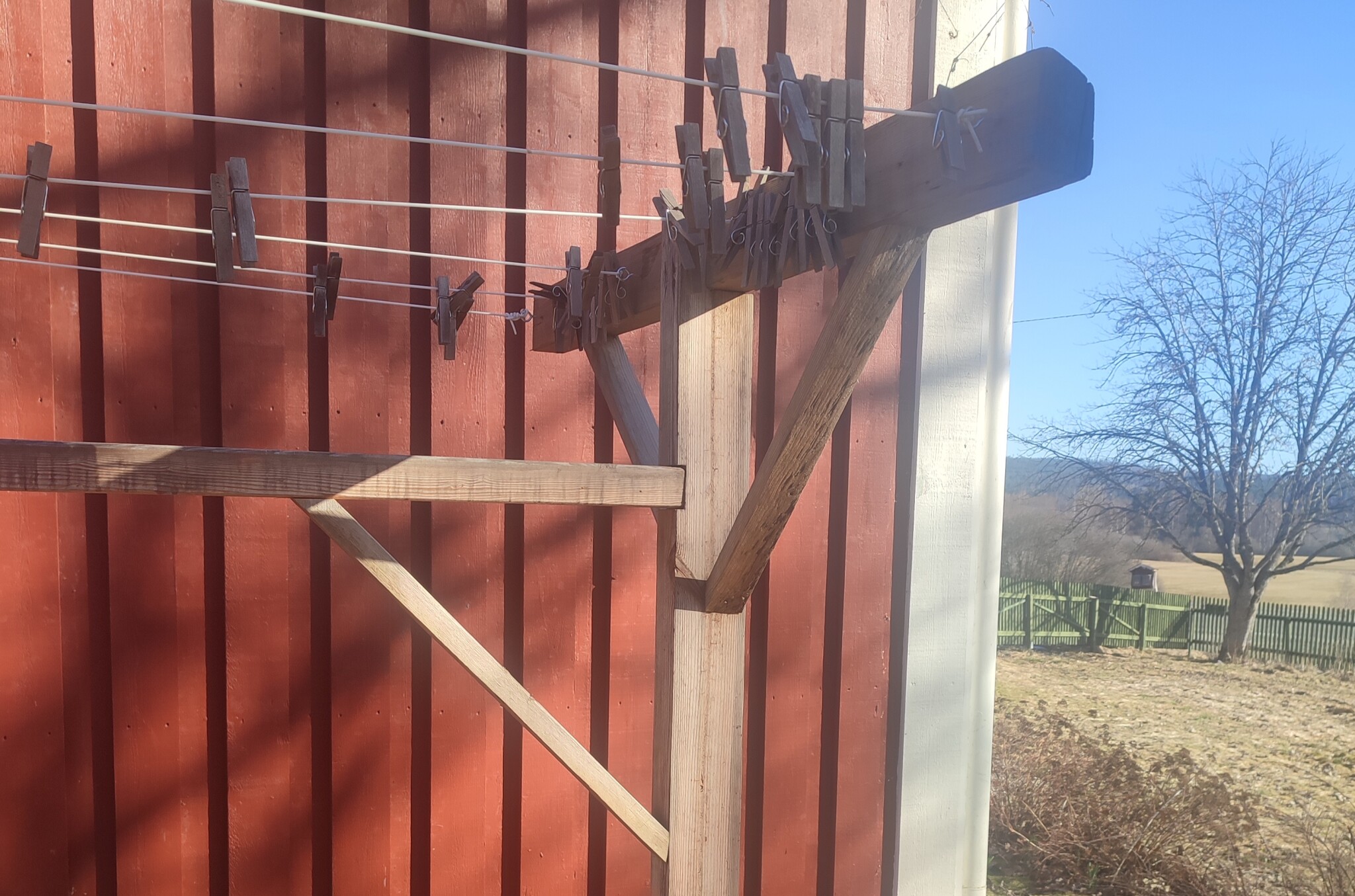
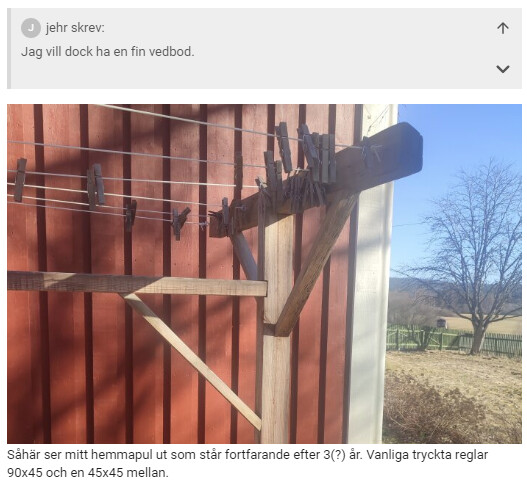
This is what my home-built looks like, still standing after 3(?) years. Regular pressure-treated studs 90x45 and a 45x45 between.
That's exactly how I did it.F fribygg said:
I remember using 45x70 studs, and even though I don't have the same span, glued laminated timber feels excessively built and unnecessarily expensive.
That is of course a matter of taste, but in relation to effort and cost, I still think mine turned out fairly okay.J jehr said:
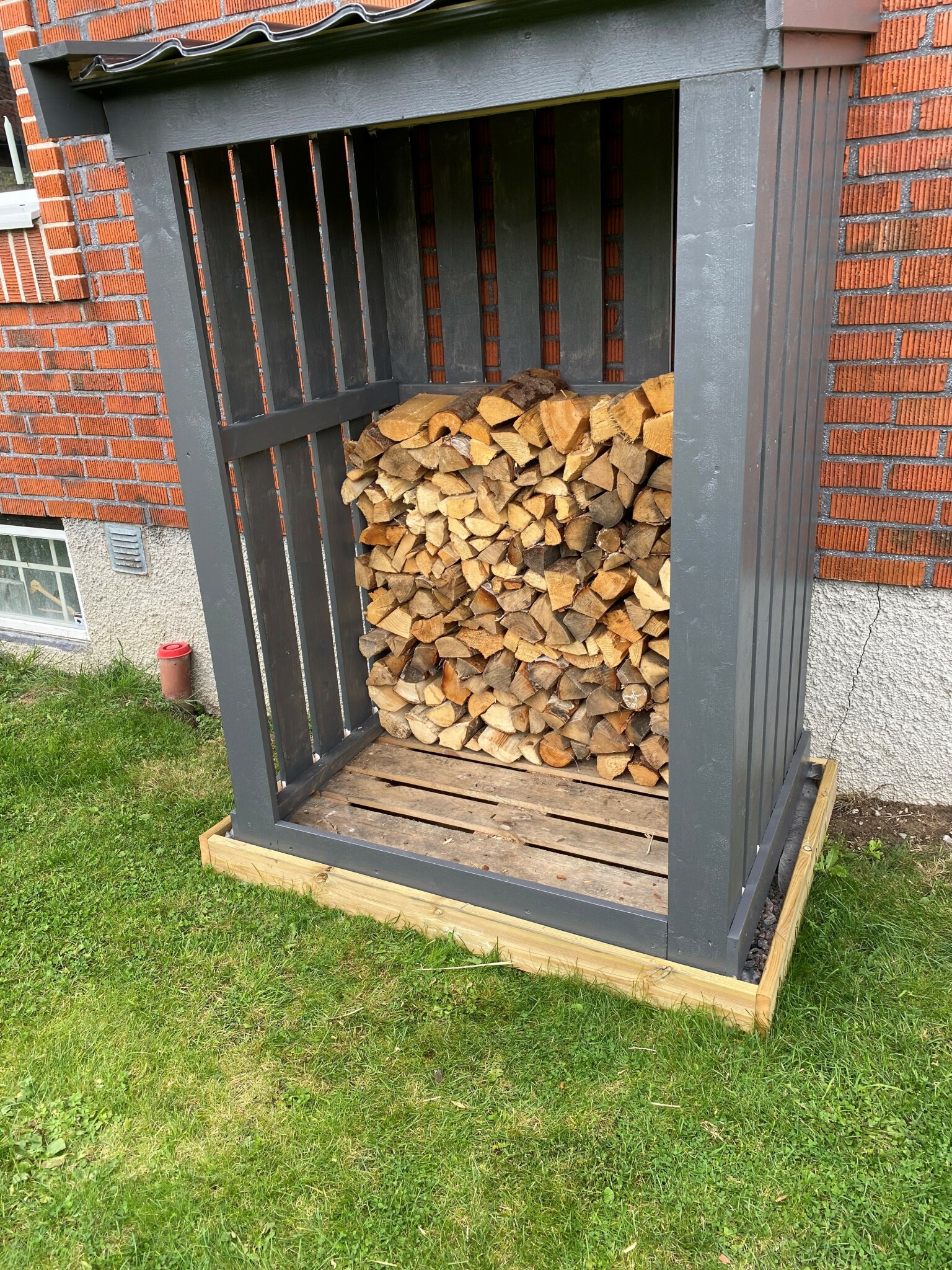
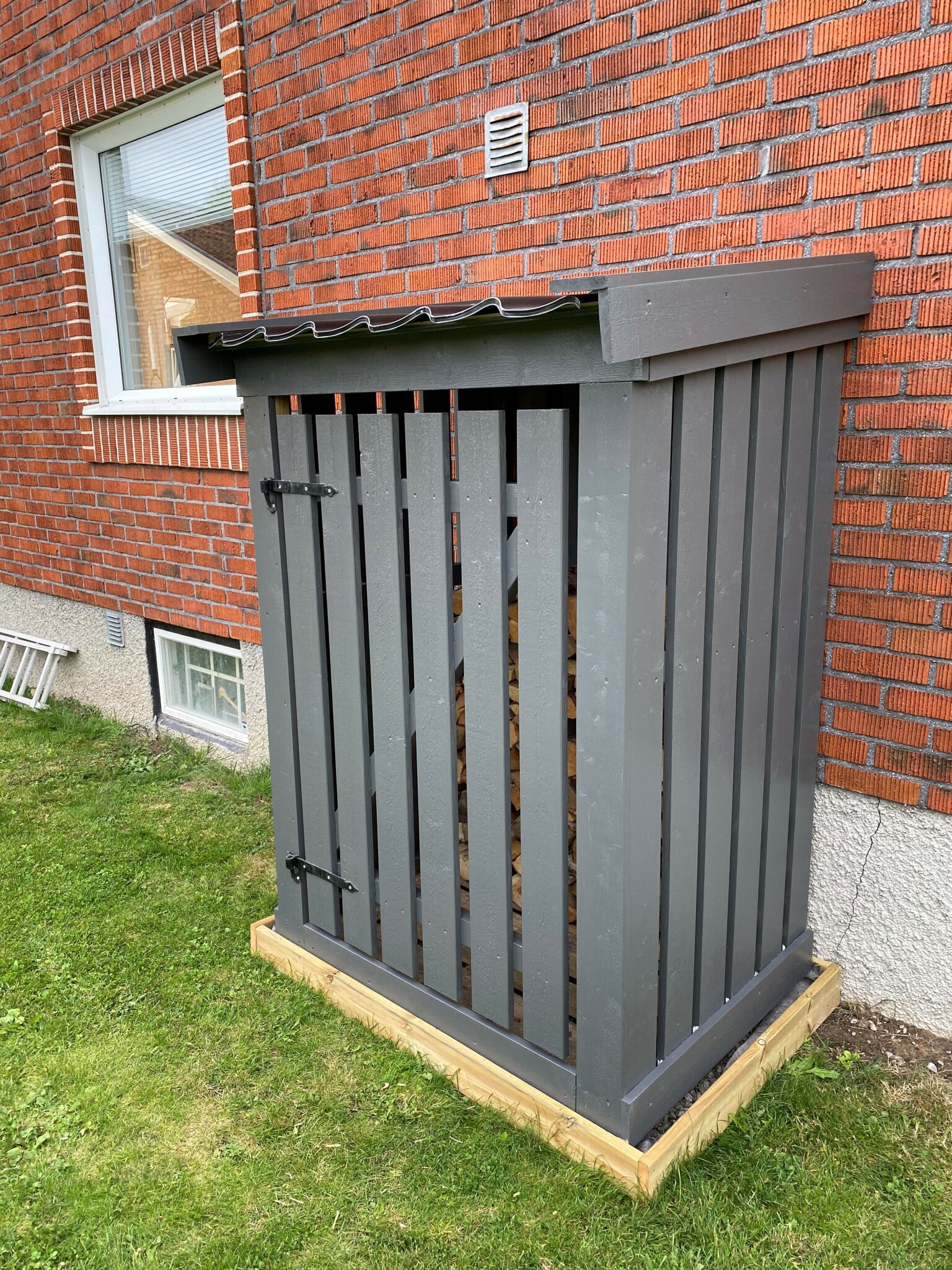
It often looks nicer with some solid dimensions, but to invest in 90*180 glulam if you already have 45*145 in sufficient amount and length is unnecessary.J jehr said:
Where in the world are you home-tinkering? 45* 95 is a significantly more available dimension in Sweden if you want to replicate your neat construction.M Mach77777 said:
You're in a section called “build with glulam,” so my guess is that all drawings and suggestions on that page will be based on glulam…J jehr said:However, I want a nice woodshed.
I am completely new to building things, so I'm probably the typical person to buy for coarse timber.
I’m also going to build a clothesline and saw this plan, it's also glulam and maybe oversized? [link]
The reason I ask about dimensions and the like is more about learning rather than getting it right; I also understand that a woodshed is not so critical.
For the floor, I suggest using three regular pallets in a row.
They should not be the type with compressed sawdust in the "blocks." They can't handle moisture.
Set everything up on something like bricks so the pallets don't absorb water.
Toe-nail (at an angle) the pallets together with 4" nails. About 5 nails per pallet should be enough. That is, 10 nails. Nails are expeeeensive😋
Then set up posts flush with the edges on top of the pallets.
45 x 90 for everything would be nice, or whatever you have.
Toe-nail them into the pallets.
If you want it stable, insert some diagonal braces, one on each side and one in each corner of the back wall.
Decide if you want three or four large openings at the front.
Between the openings, you place posts of the material you have.
Put a header on the front that is lower than the back.
Build the openings at least 1.8 m high to avoid hitting your head.
Then lay 5 rafters on top.
Make them long enough to extend at least 40 cm forward, so rain doesn't get in.
Equally as far on the sides.
Sparse boards on top to support the roof sheets. Maybe 5 pieces.
Soon, you'll have the frame you want.
Clad the walls with simple boards. All the way down to the pallets for sturdiness.
Leave gaps of about 3 - 4 cm between each board. No battens, so it dries well.
There will be a pilgrimage to admire your creation.
Nail. Don't screw, so it's easy to dismantle in about 20 years.
They should not be the type with compressed sawdust in the "blocks." They can't handle moisture.
Set everything up on something like bricks so the pallets don't absorb water.
Toe-nail (at an angle) the pallets together with 4" nails. About 5 nails per pallet should be enough. That is, 10 nails. Nails are expeeeensive😋
Then set up posts flush with the edges on top of the pallets.
45 x 90 for everything would be nice, or whatever you have.
Toe-nail them into the pallets.
If you want it stable, insert some diagonal braces, one on each side and one in each corner of the back wall.
Decide if you want three or four large openings at the front.
Between the openings, you place posts of the material you have.
Put a header on the front that is lower than the back.
Build the openings at least 1.8 m high to avoid hitting your head.
Then lay 5 rafters on top.
Make them long enough to extend at least 40 cm forward, so rain doesn't get in.
Equally as far on the sides.
Sparse boards on top to support the roof sheets. Maybe 5 pieces.
Soon, you'll have the frame you want.
Clad the walls with simple boards. All the way down to the pallets for sturdiness.
Leave gaps of about 3 - 4 cm between each board. No battens, so it dries well.
There will be a pilgrimage to admire your creation.
Nail. Don't screw, so it's easy to dismantle in about 20 years.
Last edited: