Currently building a house with a major house manufacturer and visited the site today.
It is a house with a completed frame and finished exterior walls. Interior walls are being built on-site.
I think the carpenters have made a major mistake that could result in serious moisture damage?
From what I understand, it's very important that the vapor barrier is sealed tightly everywhere.
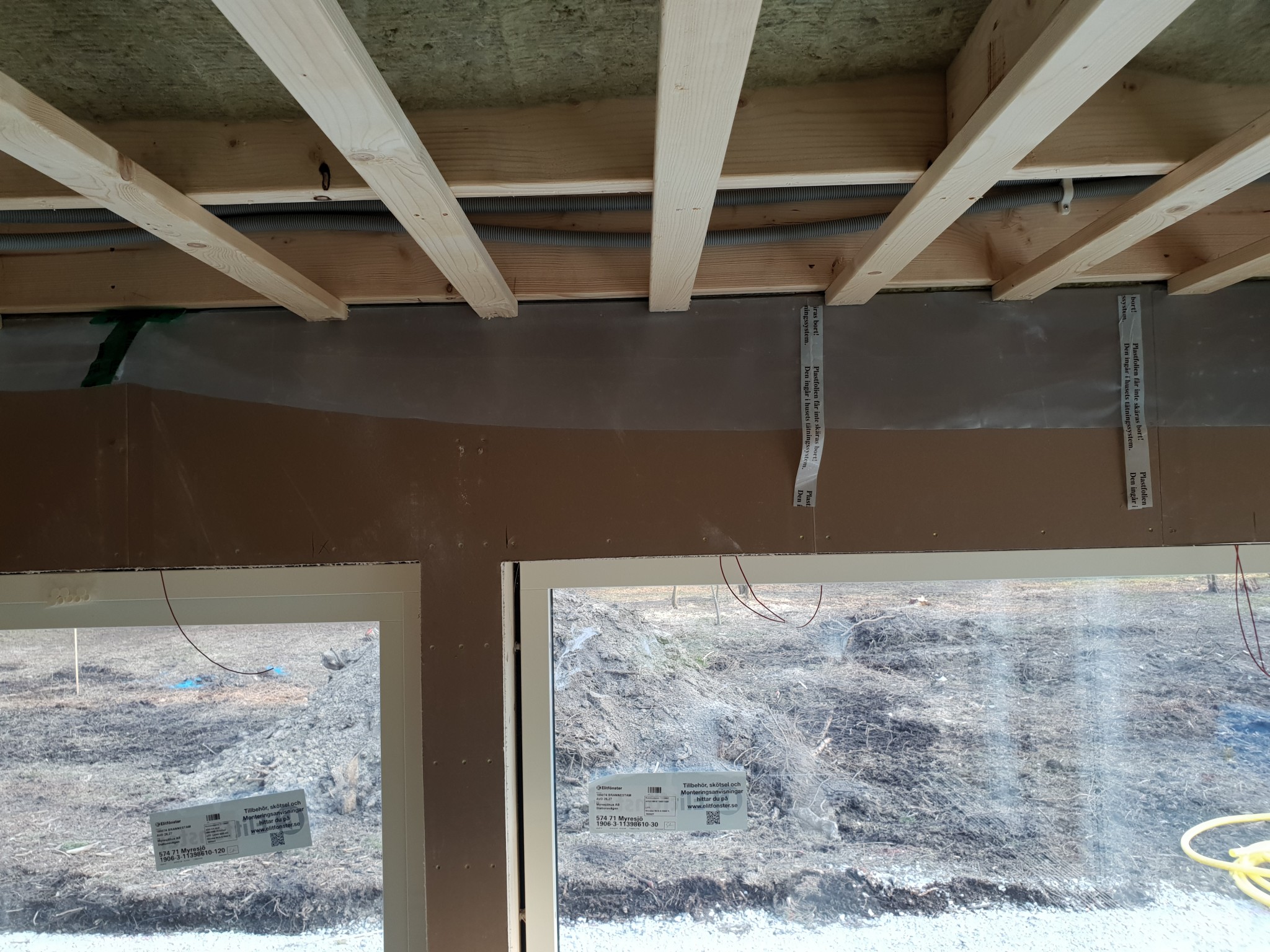
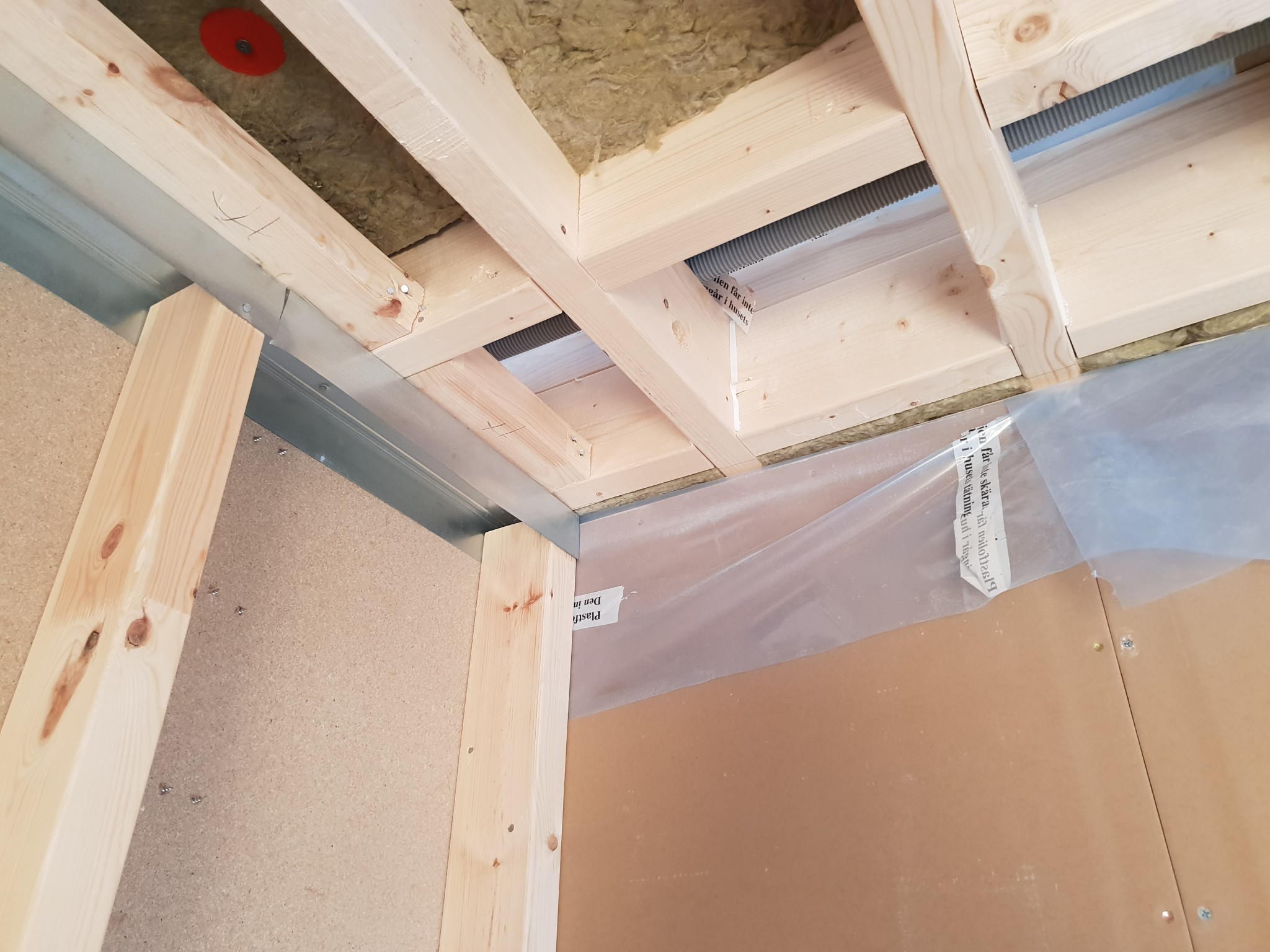
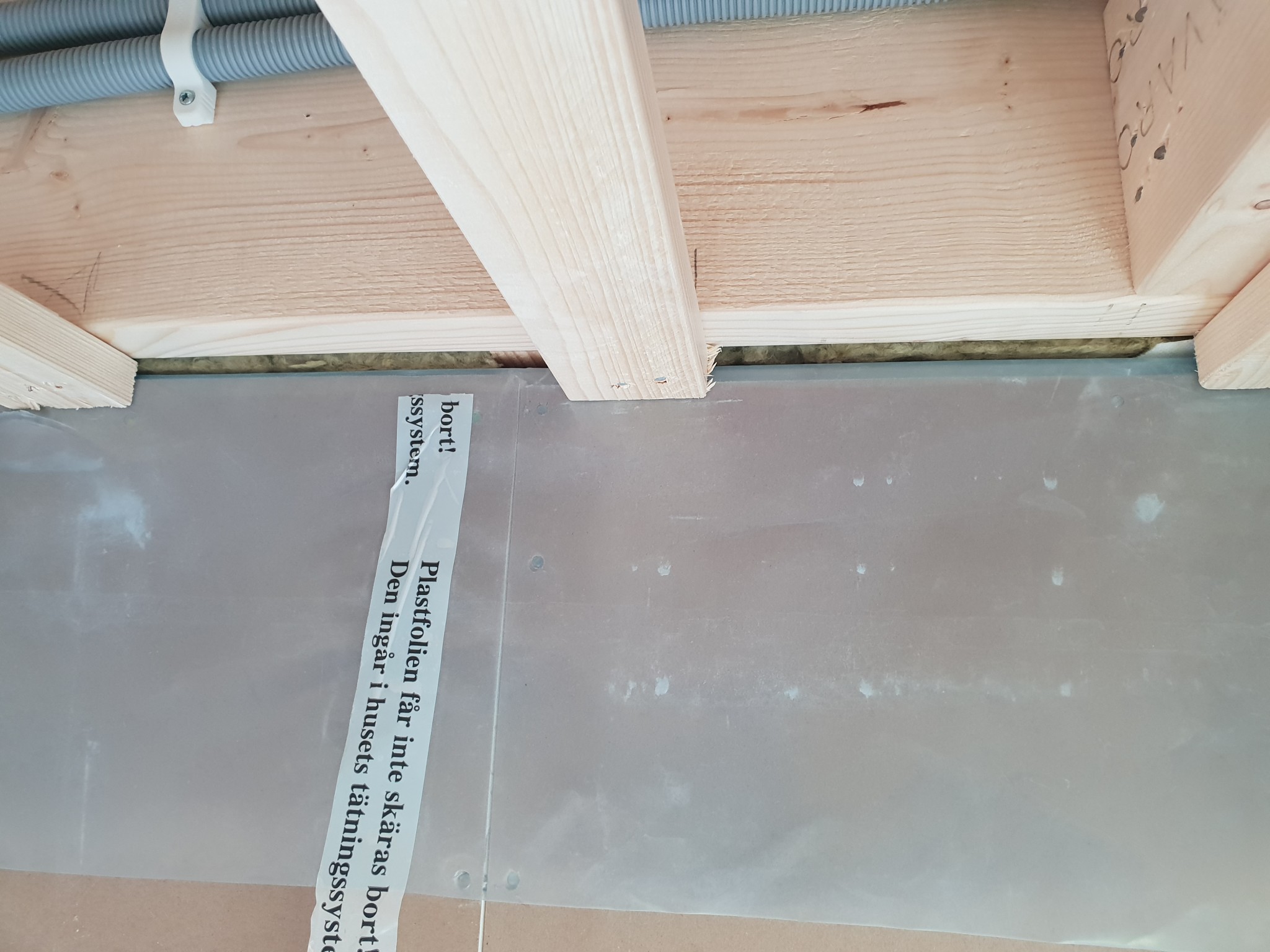
They have not folded out the vapor barrier from the exterior walls when installing the spaced paneling and interior walls. It will never be sealed to the exterior wall when they fold up the plastic under the ceiling gypsum. The worst part is on the short side of the spacing.
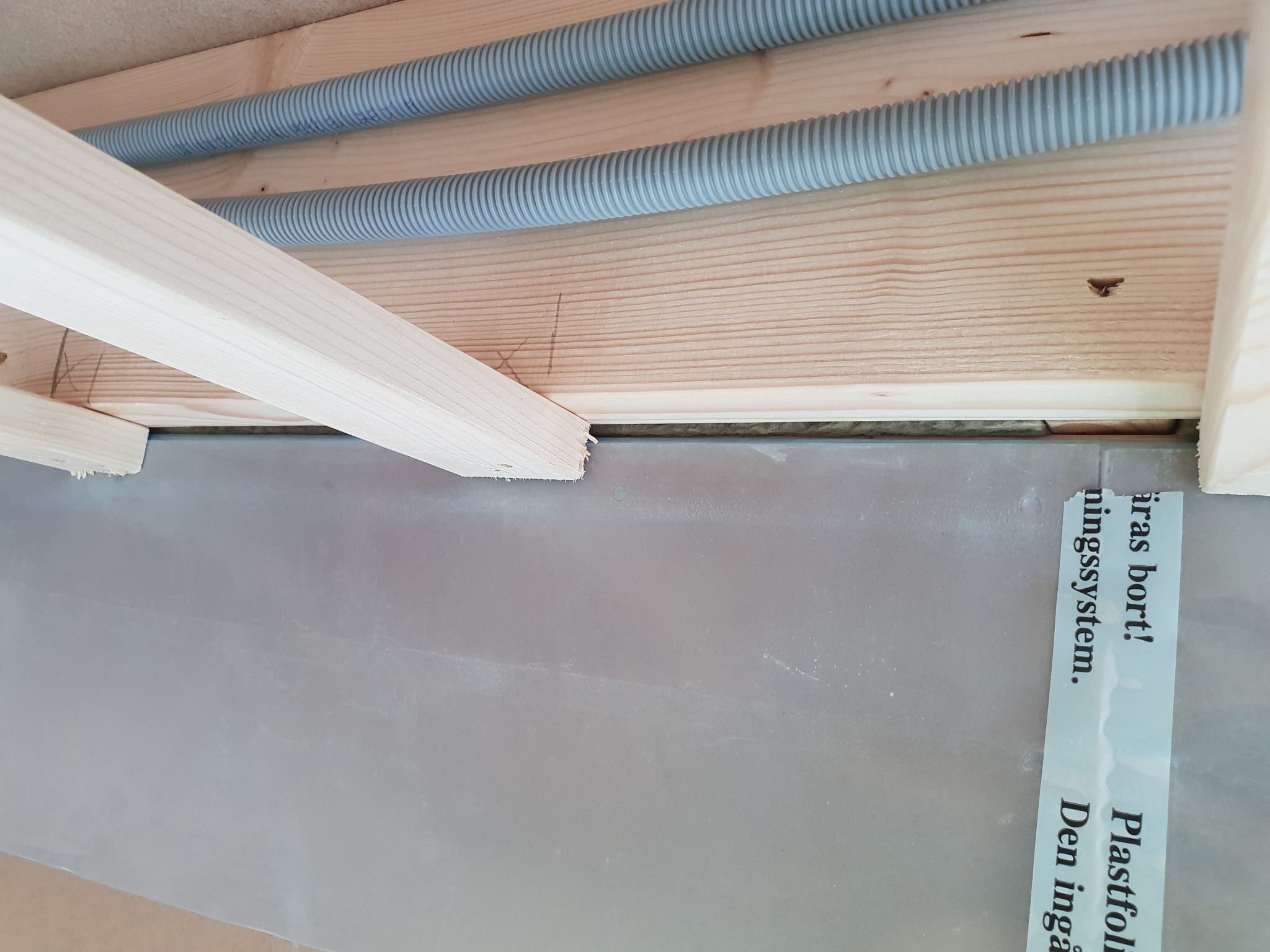
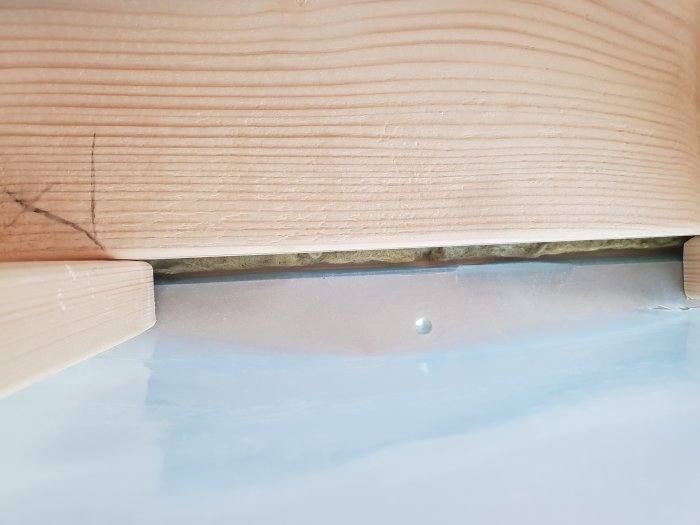
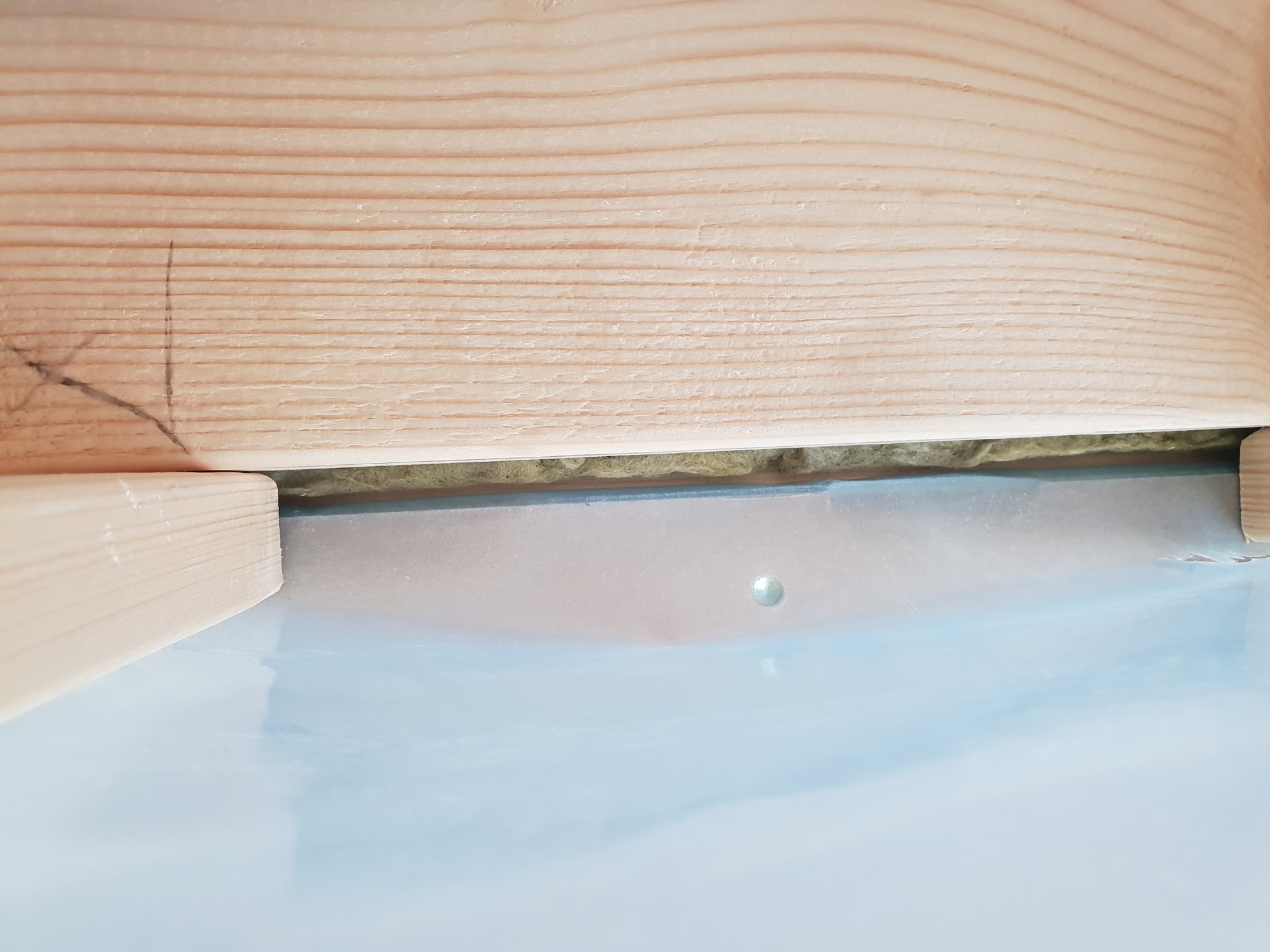
There will be a 1.5cm gap straight out to the insulation in the exterior walls.
This is in the intermediate floor of a two-story house.
How is it usually done?
Have they placed the spacing on the wrong side of the vapor barrier?
I want more facts before I call them tomorrow.
See attached images.
The vapor barrier has dual purposes in a modern house: to prevent condensation in the envelope's insulation and to ensure that the house meets airtightness requirements. Ensuring that the vapor barrier is properly sealed is more important in terms of the airtightness requirement than the risk of condensation. When building multi-story houses where the upper floor is to be furnished from the start, problems always arise around the attachment of the inter-floor beams to the exterior walls. In theory, the vapor barrier should first be tightly applied to the inside of the exterior walls, then holes are made to attach the floor joists of the inter-floor structure to the frame of the exterior walls. However, this is very impractical. It is simpler to complete the entire frame and then insulate and install the vapor barrier. Sometimes the foil is folded out on the top and bottom sides of the inter-floor structure, accepting that there is an opening in the vapor barrier inside the inter-floor structure. The inter-floor structure is usually insulated to full height closest to the exterior wall. Having it completely open along the edges of the inter-floor structure is wrong. The risk of rot damage due to this is, however, quite small.
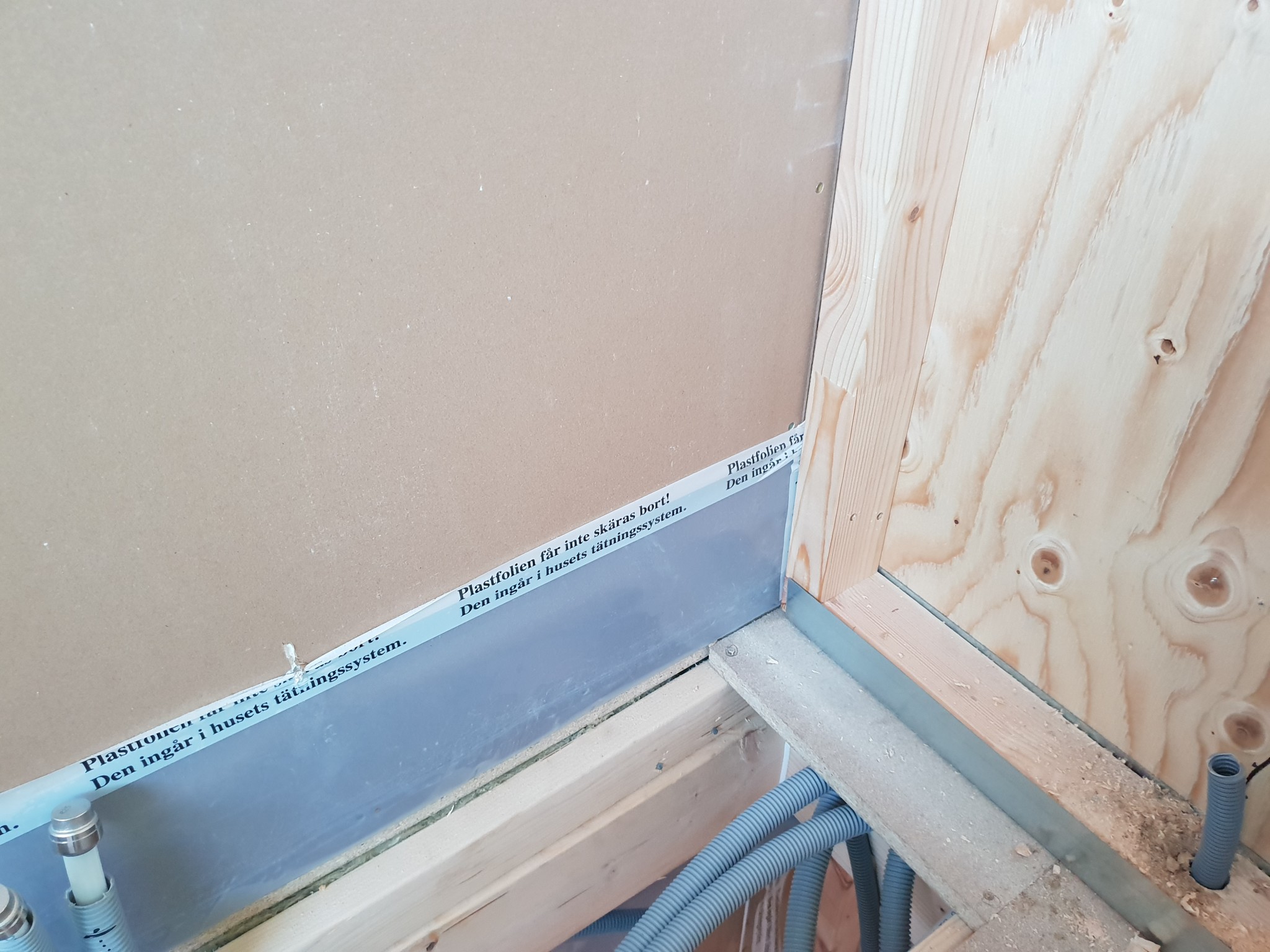
The house was delivered with prefabricated exterior walls clad with a layer of gypsum with a vapor barrier plastic under the gypsum. The plastic was folded over the edge of the gypsum. See photos. Then they didn't unfold the plastic before installing interior walls and furring strips. Error?
The floor structure came in prefabricated modules.
They have done the same on the upper floor but it's a bit better since the plastic on the ceiling is under the furring strips.
The problem is worst in the floor structure on the short sides of the furring strips where a gap of 1.5cm is created between each furring strip when they fold up the plastic under the ceiling gypsum. Should the plastic have been folded up before the furring instead? It wouldn't have been entirely sealed anyway. How is this usually resolved? Do they usually tape between each furring strip? It won't be sealed between the stud and plastic even if it had been under the furring instead.
The house is to be airtightness tested. Is this done before or after the ceiling gypsum is installed? They should notice this problem then.
The other problem is that they haven't unfolded the plastic under or over interior walls. So the plastic must be cut at each wall to be folded down under the parquet or ceiling gypsum.
This is what it looks like if you fold up the plastic against the furring strips The picture is taken over the plastic towards the wall.
If I had done this, I would have folded up the plastic before the furring strips and taped it to the stud in the floor structure.
As an outsider, it's a bit difficult to get an overview, but that's always a problem with construction kits. Scissors and tape are probably what's needed. Pressure testing before all surfaces (except paint and wallpaper) are in place is pointless and is hardly in the builder's interest.
I have received information that pressure testing will be done.
I thought they would do it before the loose-fill insulation is sprayed?? And before the ceiling is installed?
But if it's done as late as before the surface layers, after all the drywall is installed, how are they supposed to fix leaks then?
Then they can never address and seal holes.
No, haven't received any detailed drawings since we are buying a turnkey house. Just wanted to check if it is done correctly or not and see how it should have been done. So I know what to say to the carpenters.
I am not an expert on pressure testing, but there are rules for it (in SS-EN 13829). When you do it depends on the building method. Everything that matters for the tightness should reasonably be in place. If you have bought a turnkey house, it is the builder's responsibility to make the improvements required for approval.
No, haven't received any detailed drawings since we are buying a turnkey house. Just wanted to check if it's done right or wrong and see how it should have been done. So I know what to say to the carpenters.
Then the simplest is to ask them to show you their drawings and the detail. Don't you have a construction manager? Of course it's wrong, there will be very high values during the pressure test. And the pressure test should be done when the electricity and plumbing are finished and before the loose fill.


Sonny Brannestam said: