
1,421 views ·
2 replies
1k views
2 replies
Different quotes regarding load-bearing wall.
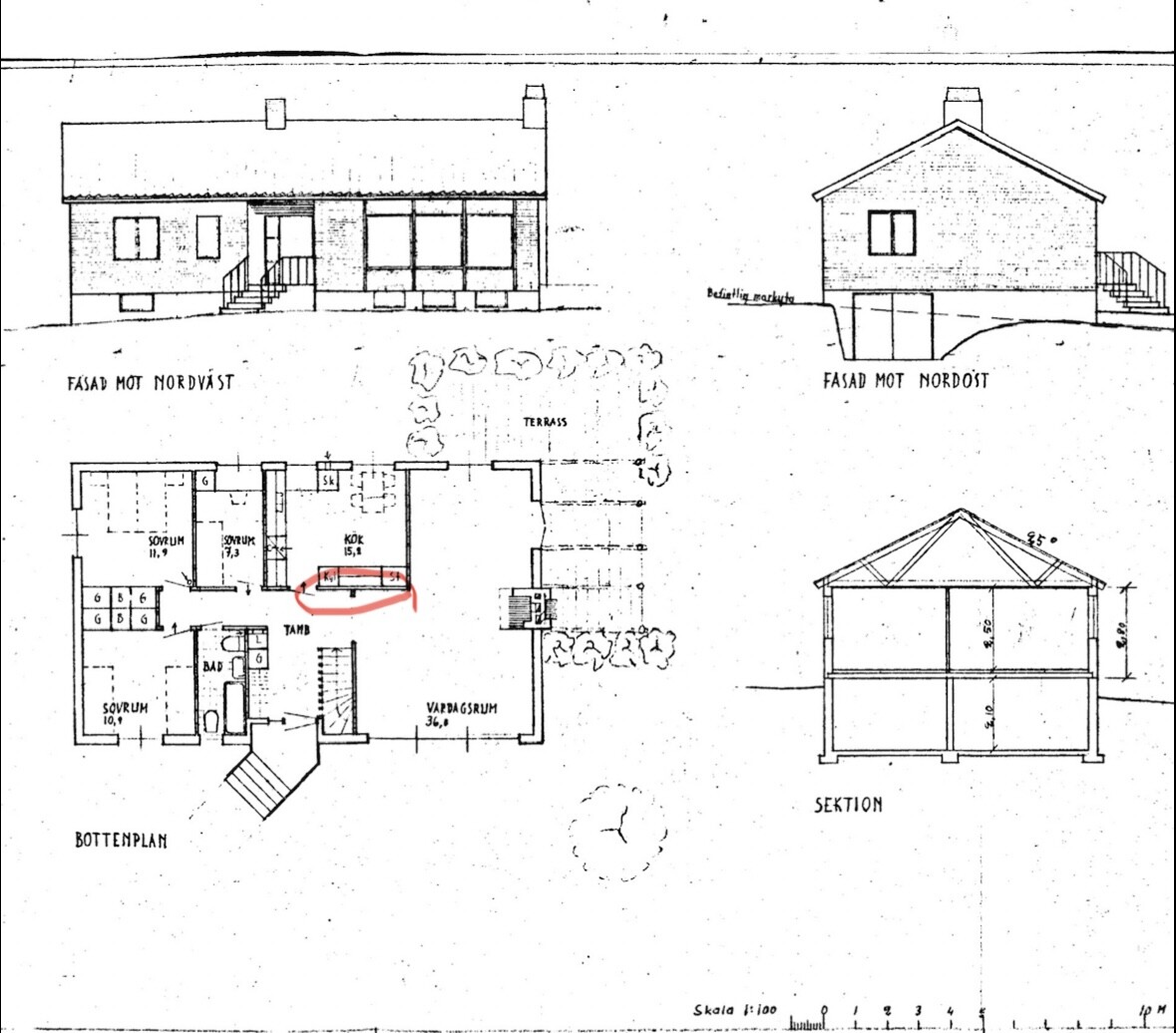
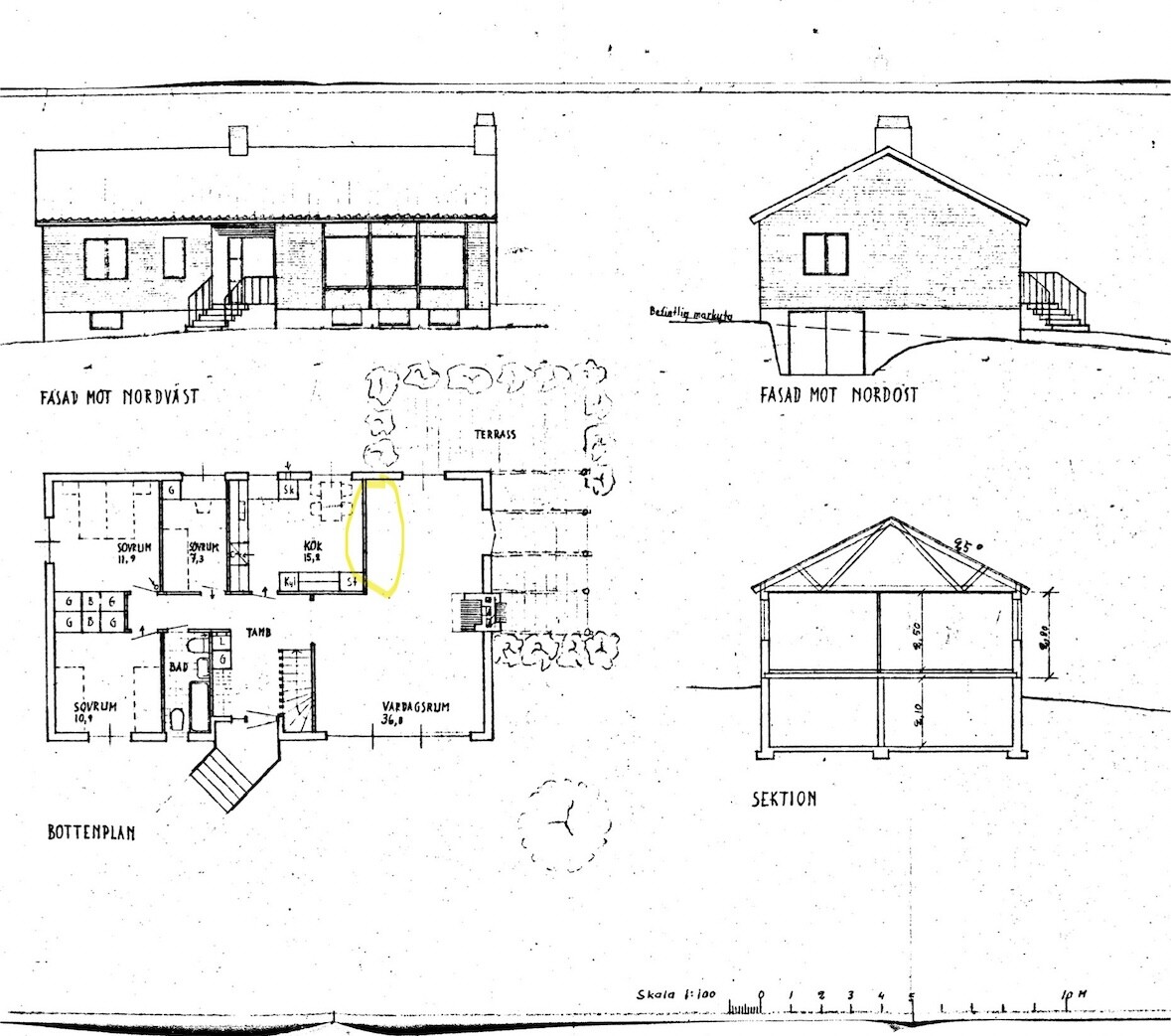
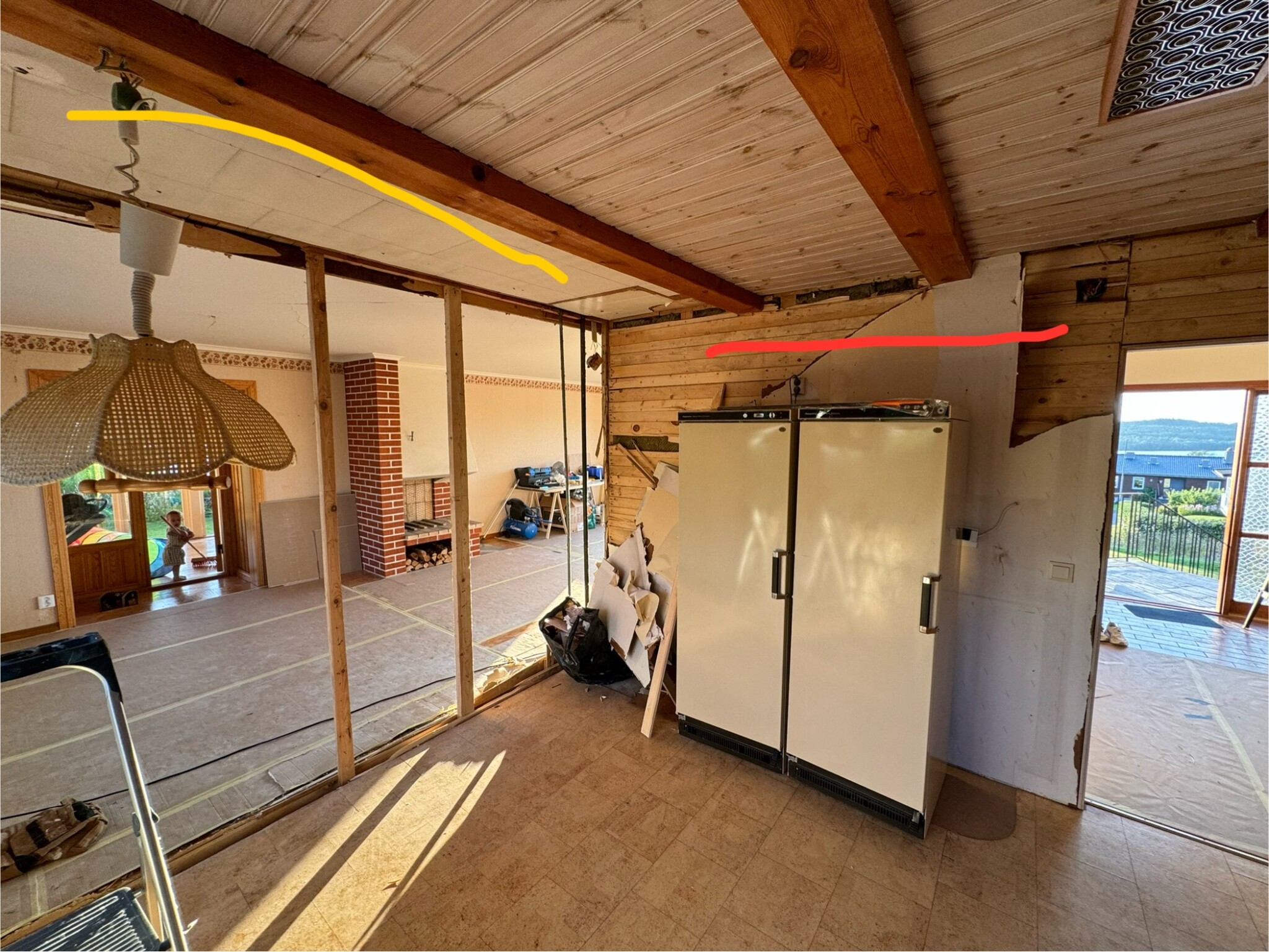
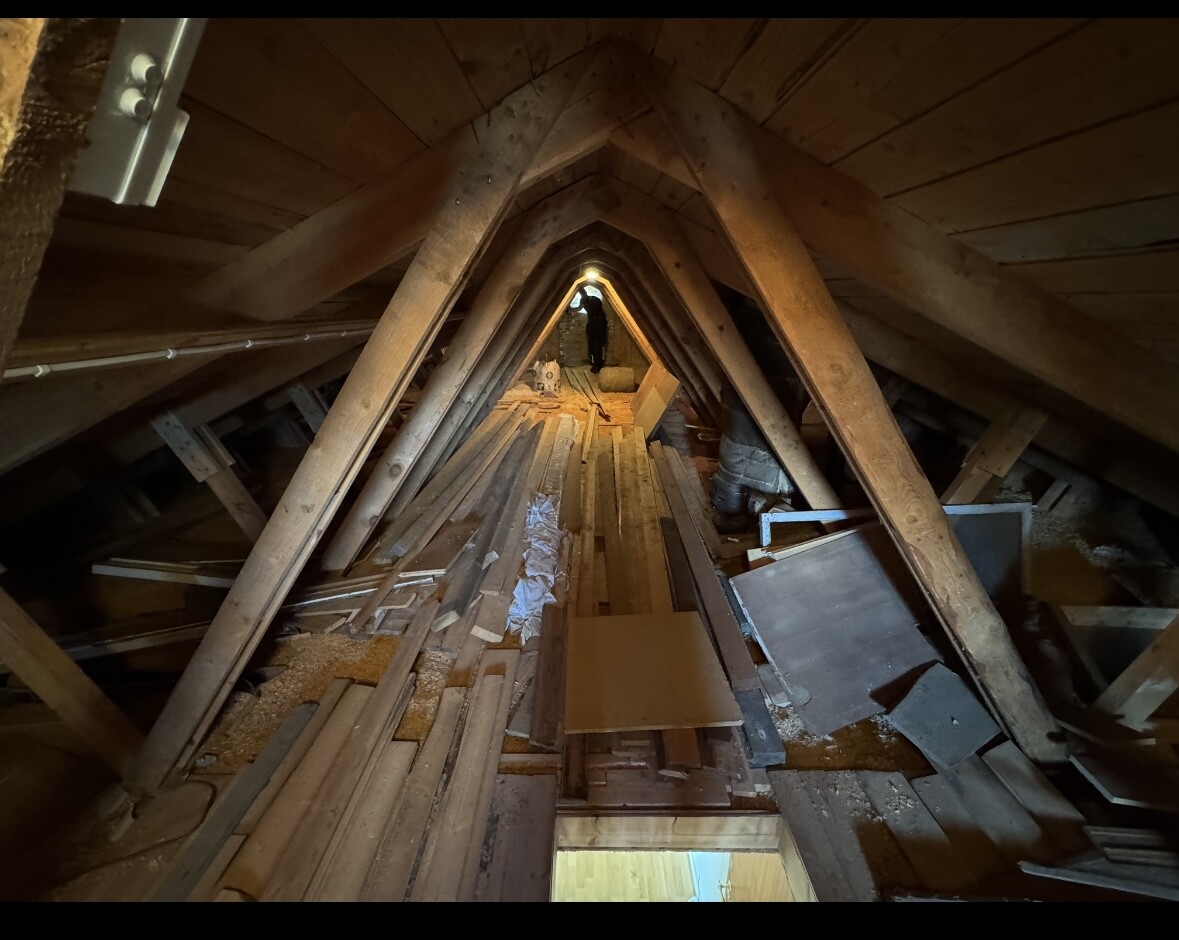
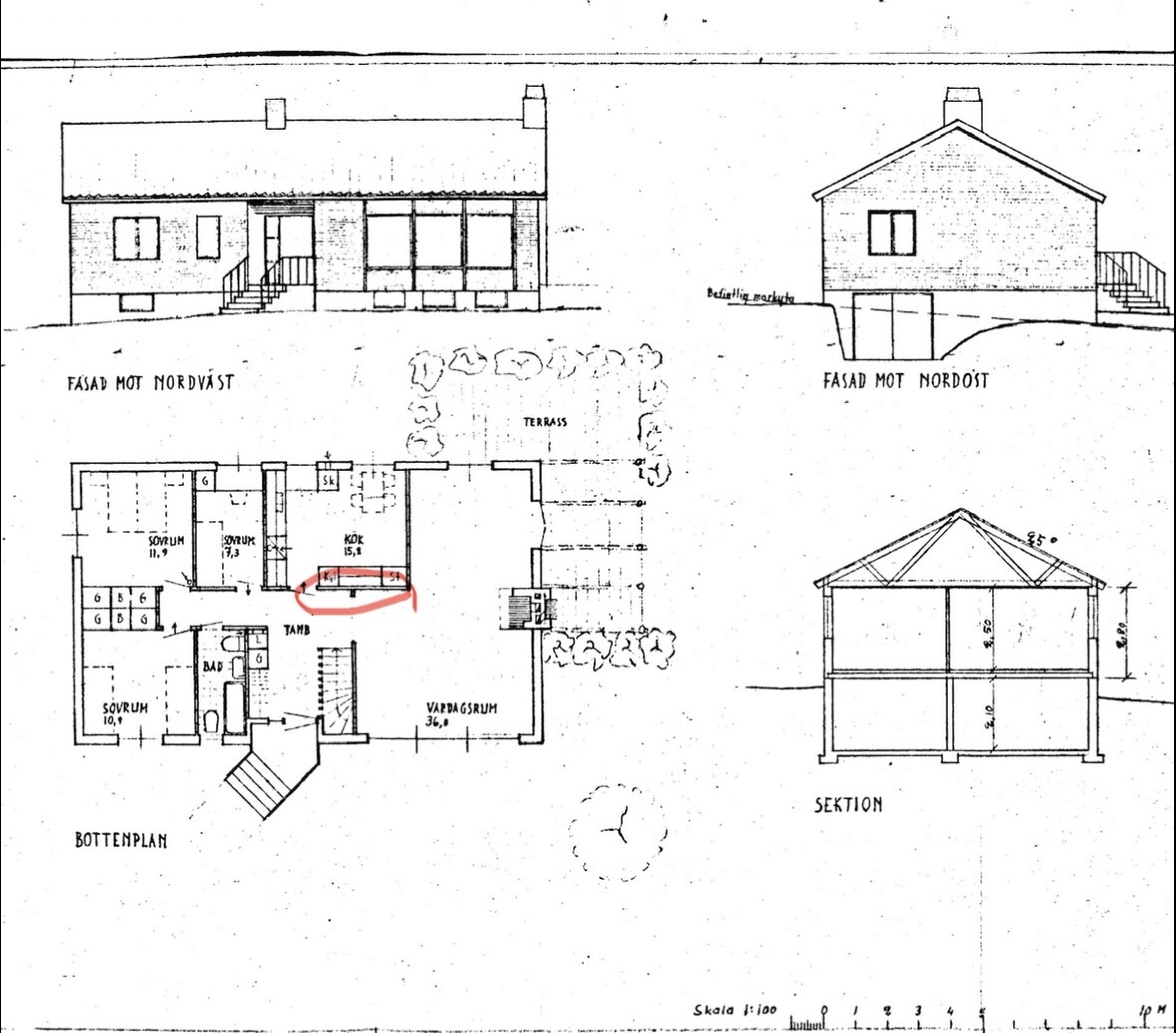
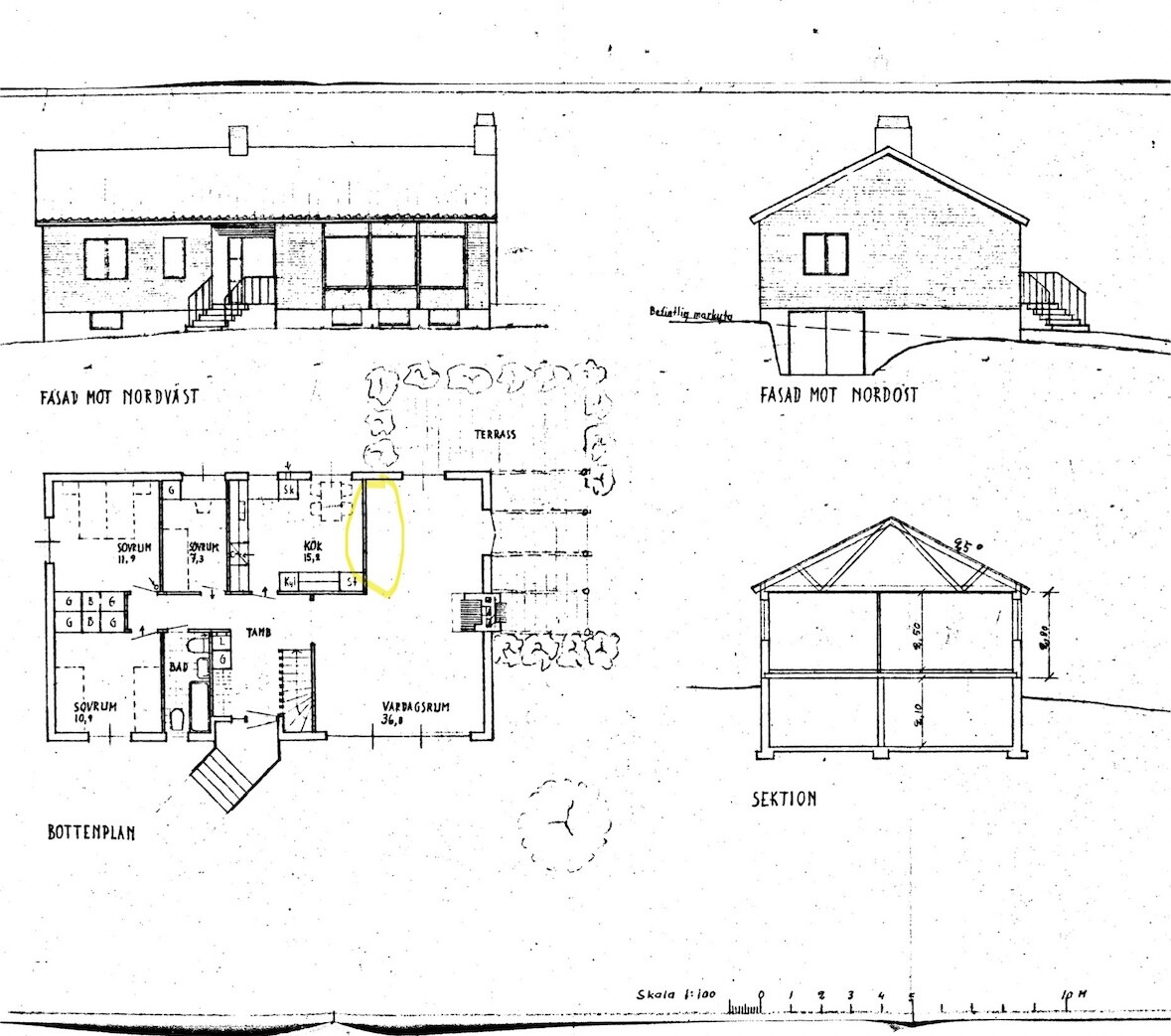
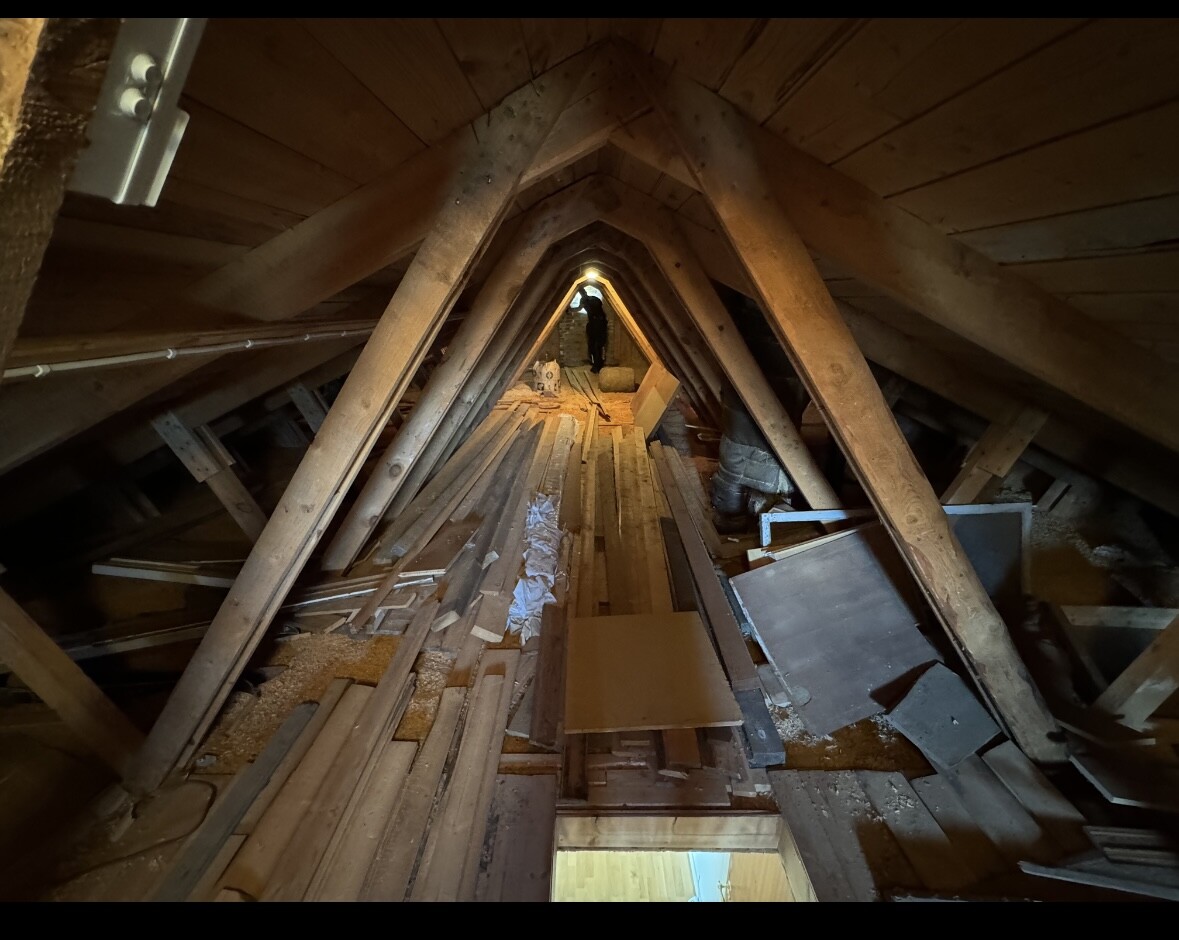
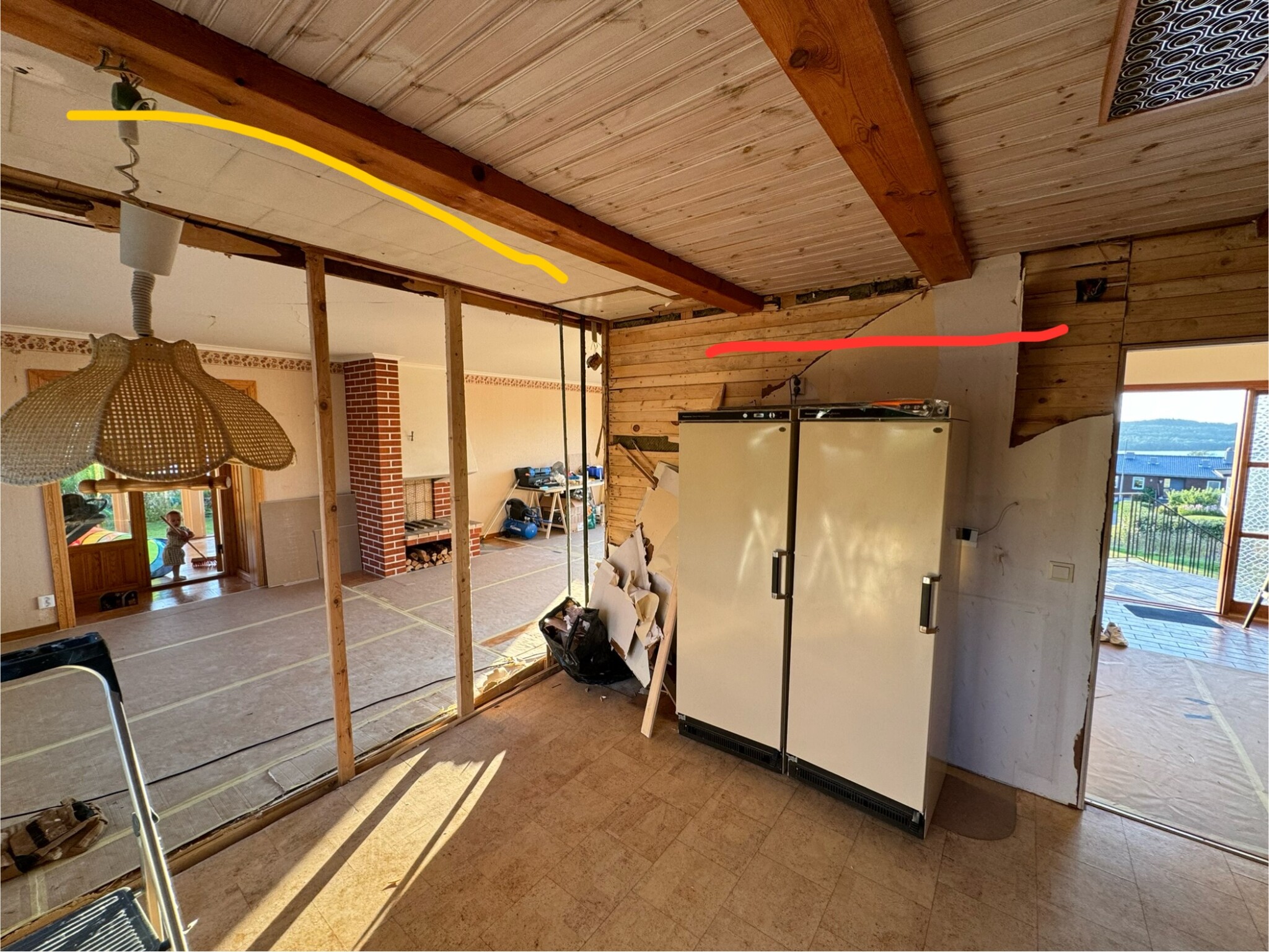
I now have a concern about a wall in my newly purchased house. I have asked carpenters, acquaintances who are building engineers, and thoroughly read the forum. I have a one-story house with a basement built in 1963. W-type trusses. 14 m long, 8.5 m wide. I get different opinions about one of the walls. There is consensus that the wall running parallel to the trusses (yellow) can be demolished. The wall running across (red), however, brings different opinions. Some claim self-supporting trusses, others say it is a load-bearing heart wall. Since I opened up a bit in the wall, I see that the stud frame is nailed to the ceiling just like the other one. I can't find anything in the attic that would show that there is a column going up to the roof ridge. I'm not really getting anywhere right now. Is the grand finale to hire a structural engineer?
Regards
Rasmuz
Regards
Rasmuz

Best answer


According to the structural engineer who previously answered questions about load-bearing walls in the forum, it happened that the house designer drew the wall under the ridge even though it is not load-bearing.
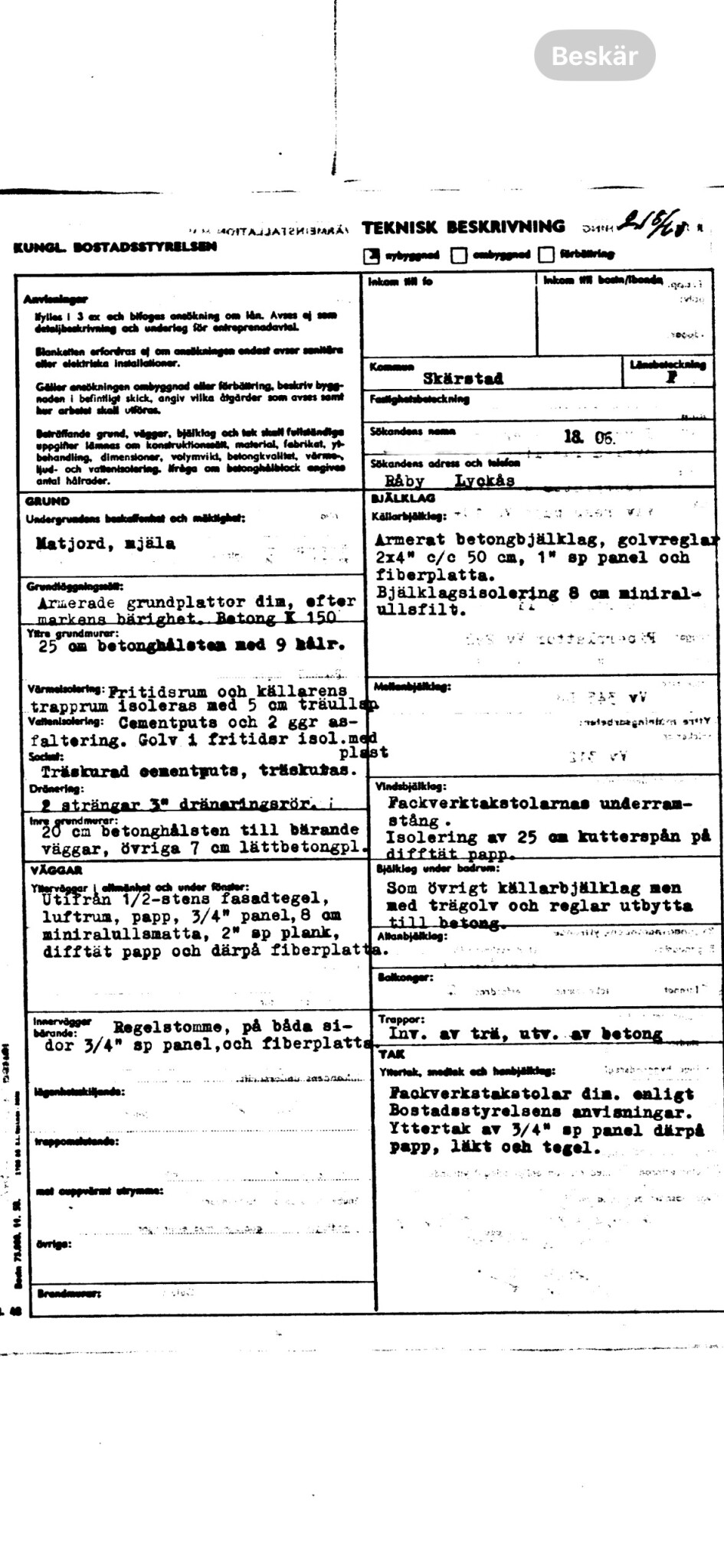
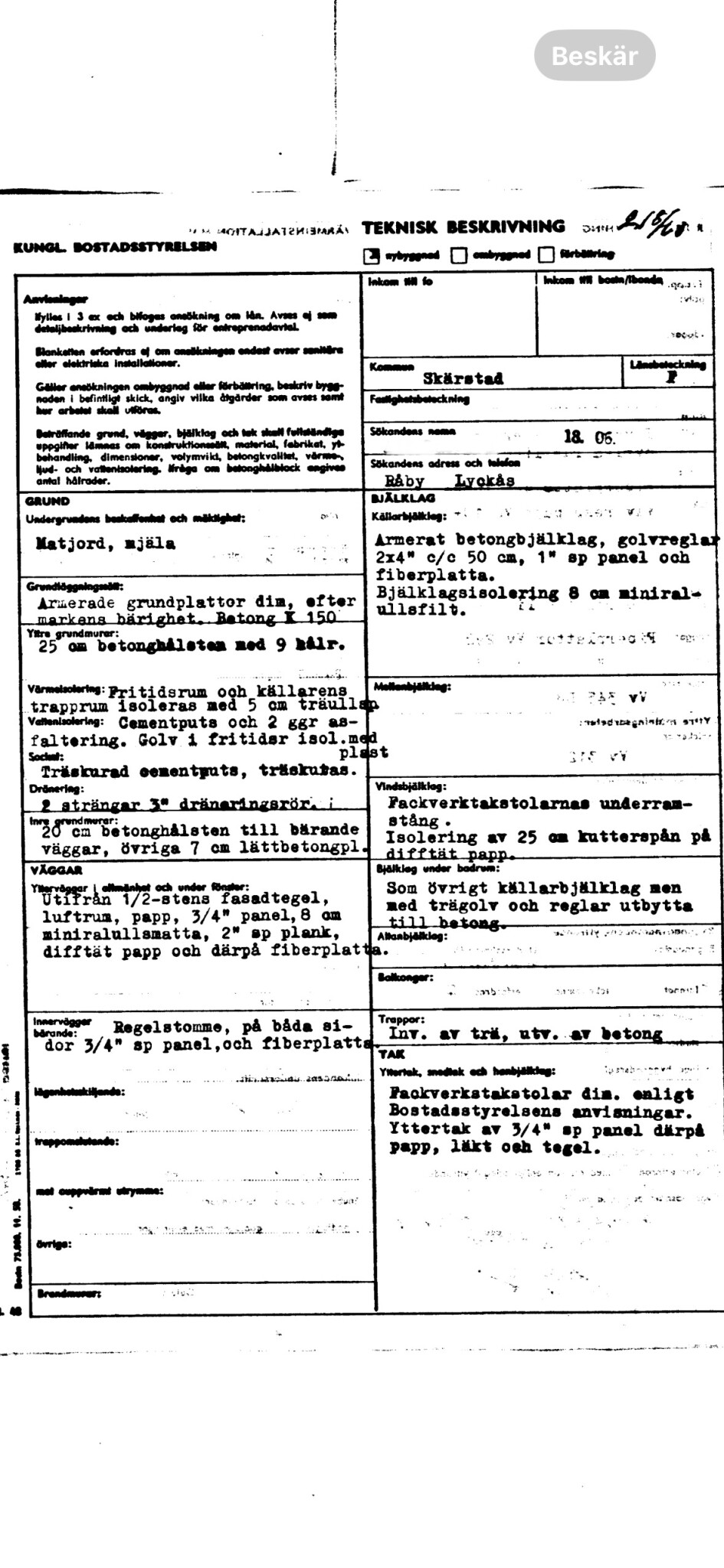
According to the technical description, there are load-bearing interior walls.
If there is a beam in the living room ceiling (visible or embedded in the floor structure) in the continuation of the red wall, it means that the red wall is load-bearing, and probably vice versa.
If you want to be sure and because there are signs pointing in different directions, it is safest to hire a structural engineer to look at it on-site.
According to the technical description, there are load-bearing interior walls.
If there is a beam in the living room ceiling (visible or embedded in the floor structure) in the continuation of the red wall, it means that the red wall is load-bearing, and probably vice versa.
If you want to be sure and because there are signs pointing in different directions, it is safest to hire a structural engineer to look at it on-site.
Click here to reply