Hello.
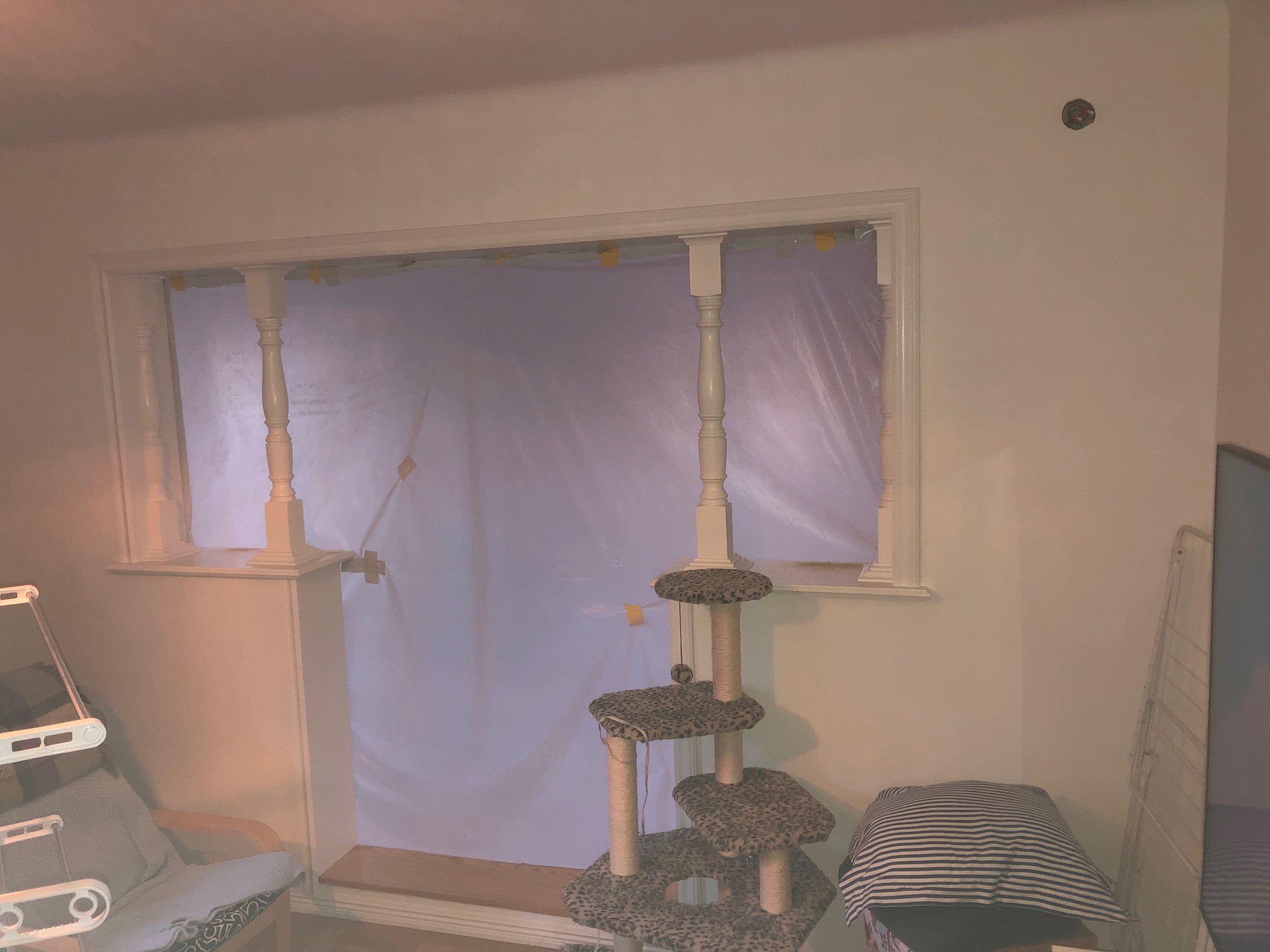
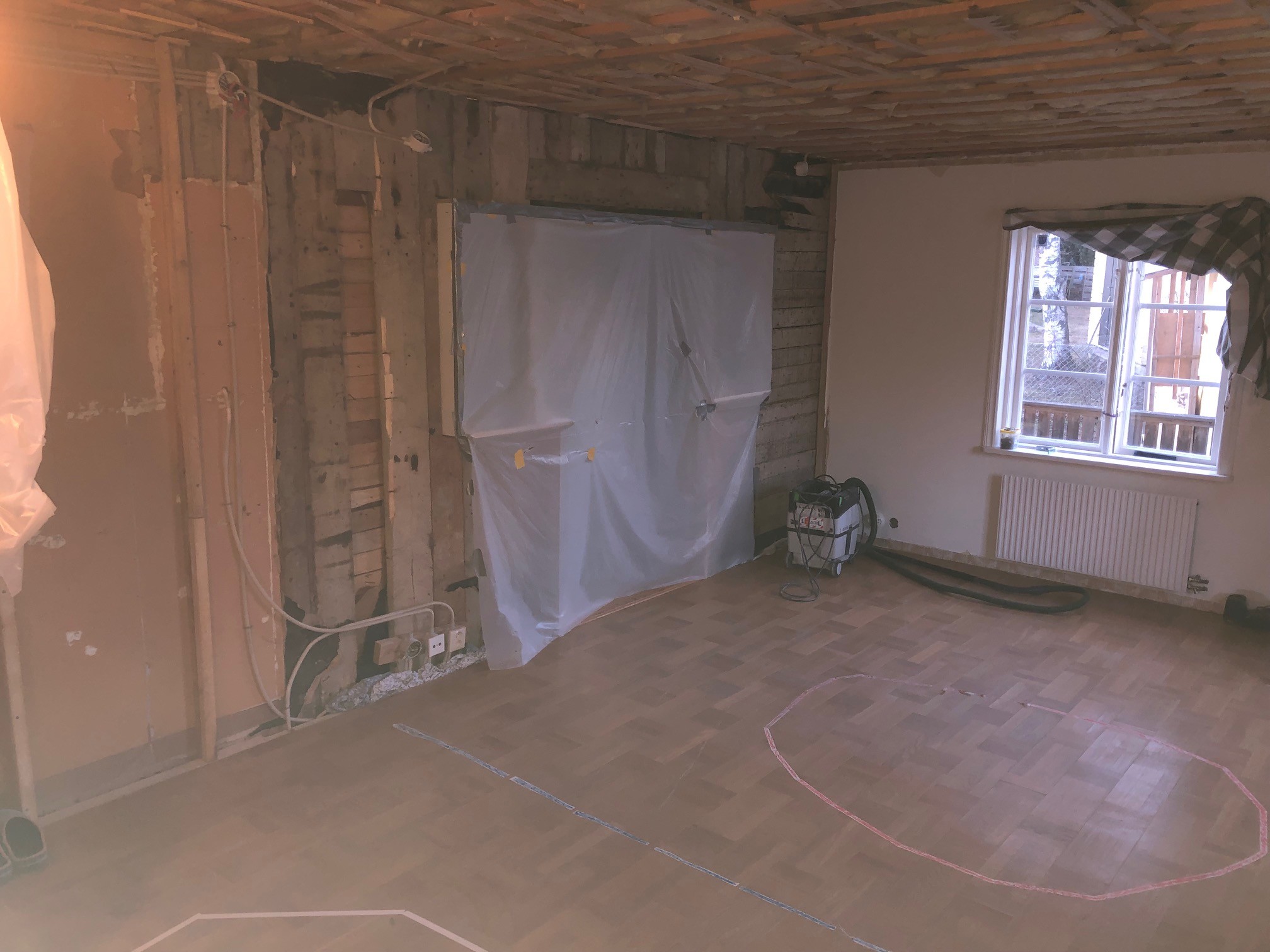
We have been living in our 1928 house for over 3 years, and now we are going to move the kitchen to another room, and at the same time, we are going to replace/move some windows and take down a load-bearing wall. I thought I would ask for some help and good advice now that I am going to remove the load-bearing wall, which is the old exterior wall (gable wall) that is now an interior wall due to the extension of the house (done in 1979-80).
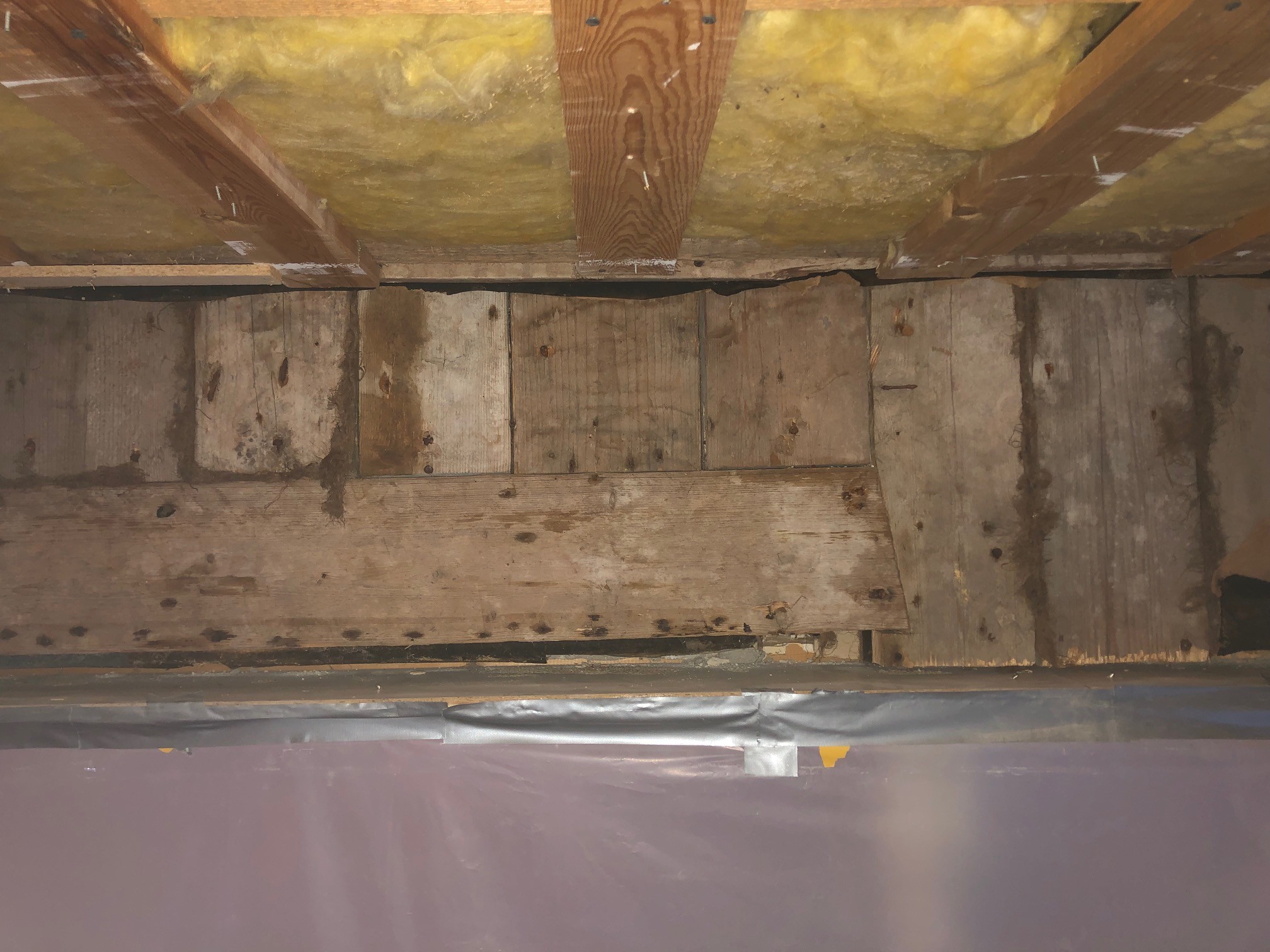
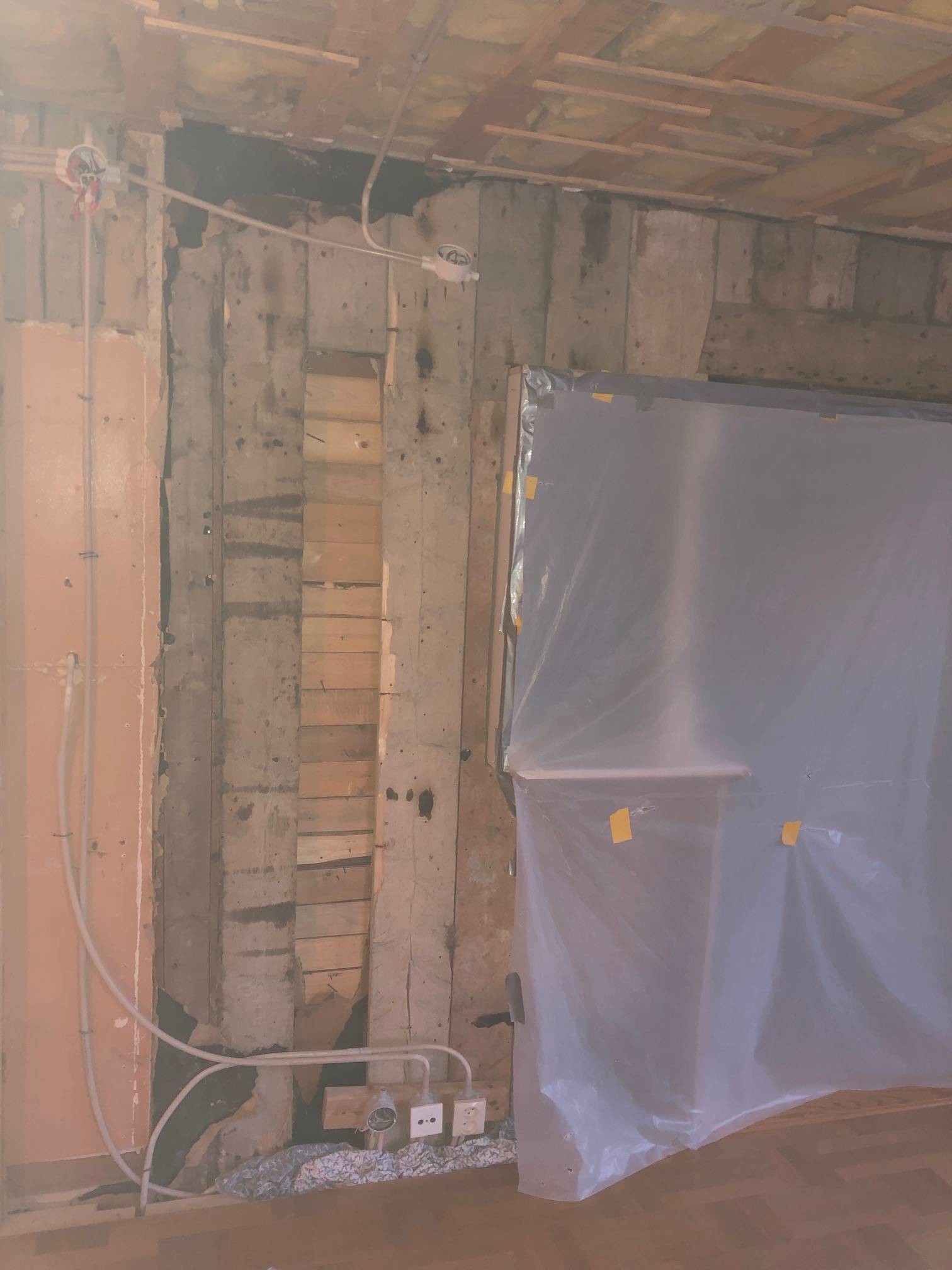
I have started clearing one side of the wall that is to be demolished and supported to see how it looks.... As seen in the pictures, there is already an opening in the wall. Since the other side of the wall has not been demolished yet, I don’t know how much of the thickness is for any "installation space" (electrical boxes, etc.)
The part of the wall that needs to be supported is about 3.8m, and I plan to copy most of the construction from forum member "Copello2," but I intend to use an HEA 160 steel beam instead of an HEA 180.
I am wondering how I can know that the truss, etc., on the floor above does not put so much load that the "ceiling/floor" sags when I saw away the wall? Of course, shoring on both sides of the wall. Tips? Anyone with experience with something similar?
You need to contact a structural engineer who can calculate the specific loads in your case and what it means for the size of the beam and whether reinforcements are needed under the beam's endpoints to prevent future problems. Before you start, you need an approved building permit that includes dimensioning calculations etc.
Click here to reply
Vi vill skicka notiser för ämnen du bevakar och händelser som berör dig.