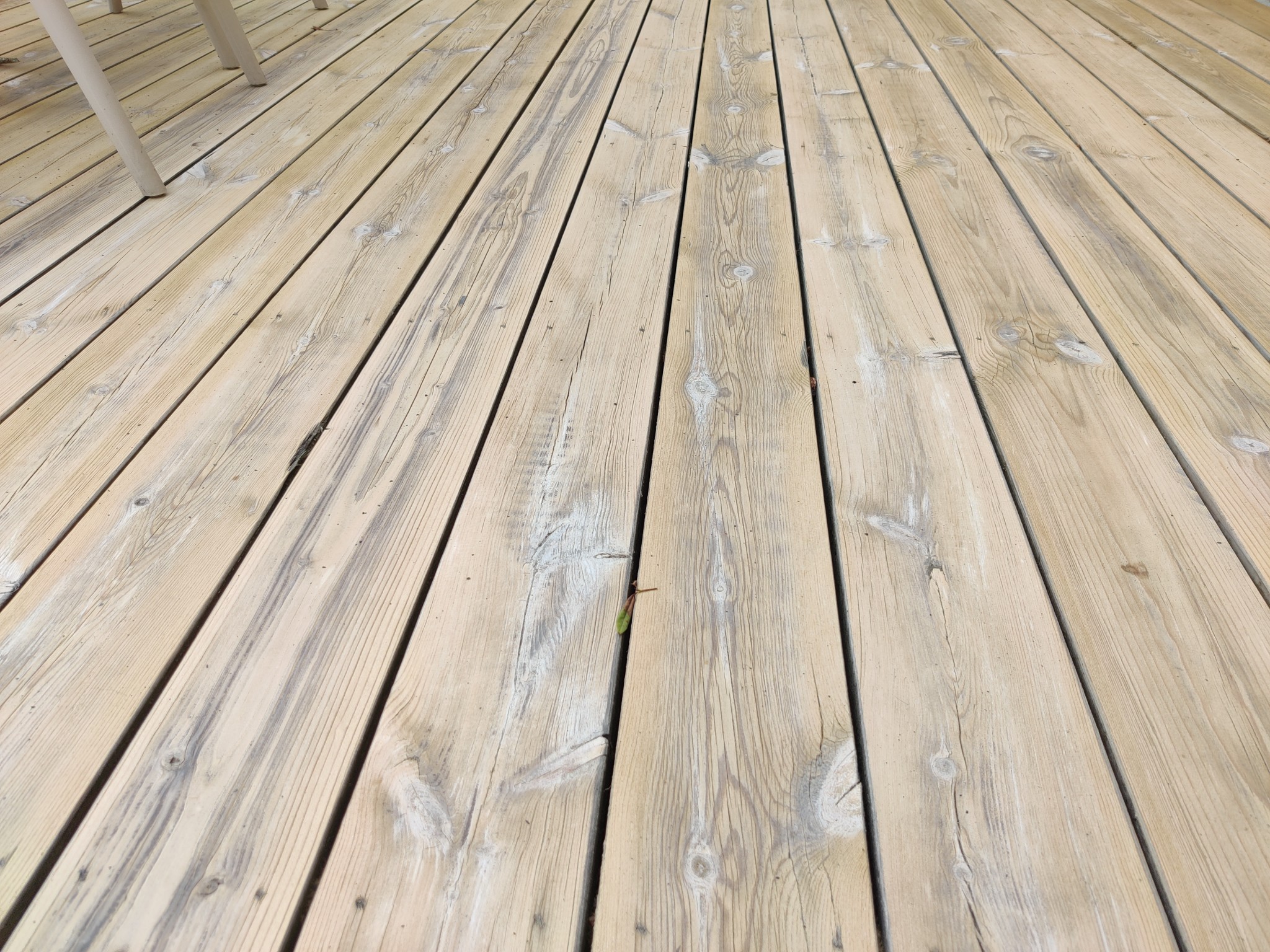
During its lifespan, timber (28 and 34) naturally swells and twists with greater force than what a screw and screw head can withstand. The stronger the screw, the larger the head the timber has to grab and tear off. It's possible to reduce the likelihood by allowing the timber to have even conditions, oiling and protecting it in various ways.
For the patience-lacking, like myself, the solution is a 5' nail.
Drive it into the decking.
If you need to loosen or retighten the screw later, use an impact wrench instead of a regular screwdriver if you have access to one.
When the frame dries, it clamps the screw, and with a screwdriver, you risk twisting off the screw. The impact wrench is more gentle.
I had this experience during dock renovation and when switching to the impact wrench, all screws came up, and they were also star screws.
Thanks for all the input. Instead of responding to each one individually, I'll summarize most of it here. Sorry if I missed anyone.
Type of decking screw:
* Decking Screw Wood Turbo A2 (4.8 x 75) - i.e., not the cheapest or smallest screw. The dealer suggested the smaller dimension 4.2x57, but I played it safe and went up a size. During installation, I've perhaps encountered at most 2-3 screws that have broken or bent, so the quality of these should be high.
Type of decking:
* So-called "Härjedalstrall" of premium quality 28x120 (I was clear that I didn't want the cheapest decking)
Screwing technique:
* All screws were driven about 2mm into the wood, i.e., not flush with the decking. There is some variance, so say +/- 1mm.
* All screws near end grain were pre-drilled.
* All screws were driven in at the lowest speed on the screwdriver.
Happy or sad face:
* Best-looking side up!
I quickly realized that, to follow a line, e.g., "happy face," would result in an unreasonable amount of waste.
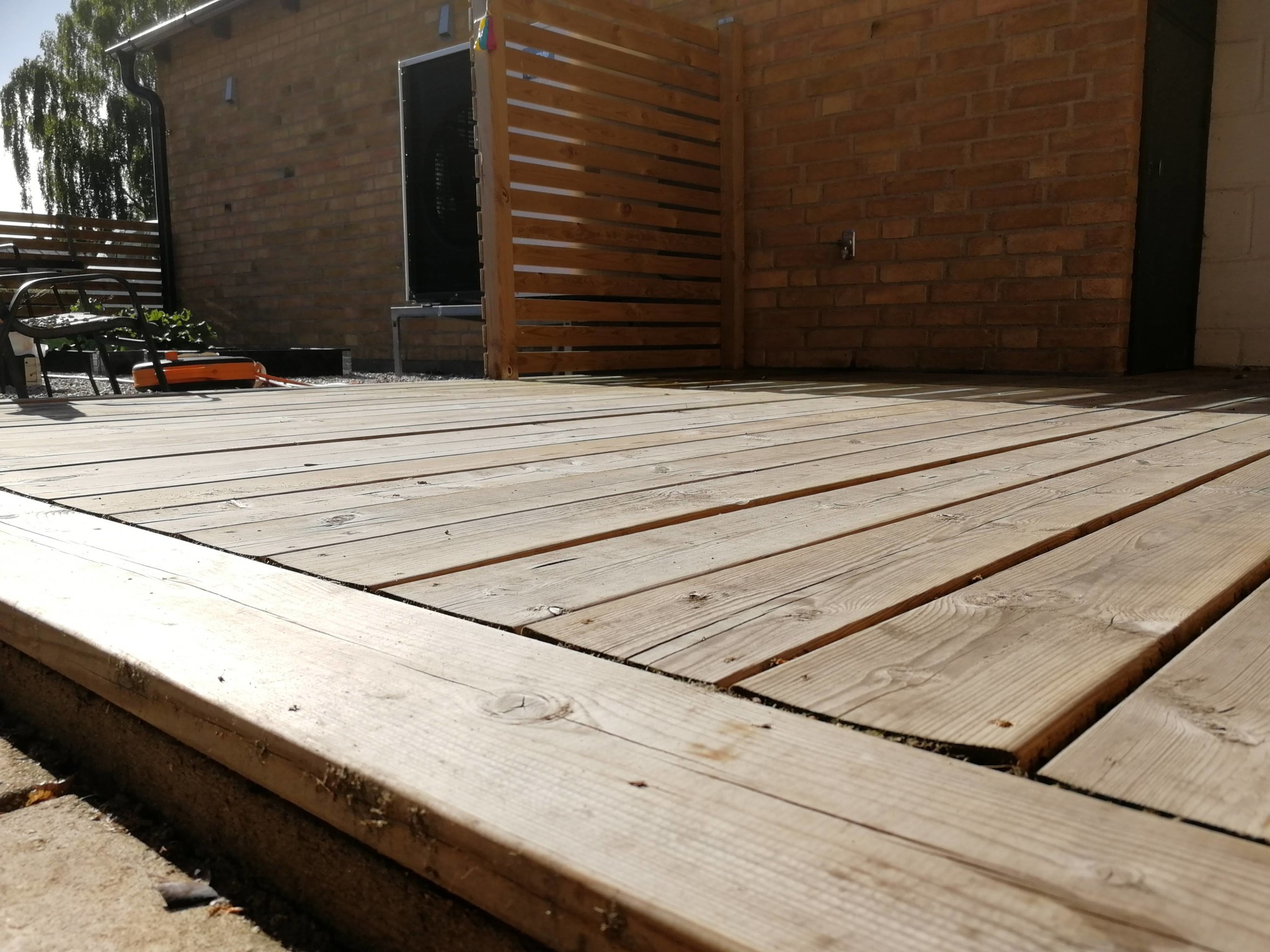
It's so darn frustrating when you've been meticulous from the start and this happens. It was so straight and nice when it was newly installed.
The only thing I see is to replace boards that are warped... sigh.
And... I can imagine the other newly installed section done this year... That it will become the same next year. Sigh again.
Thanks for the feedback.
So you mean that's where the problem lies?
In that case, why hasn't 75% of the rest of the decking been negatively affected? I think I understand what you mean and I understand that it's to prevent potential cracks at the end grain that you have at least 30mm.
The phenomenon of twisted boards is also present in the middle of the deck's length.
Thanks for the feedback. So you mean that's where the problem lies? In that case, why hasn't 75% of the other decking been negatively affected? I think I understand what you mean and have understood that it's to prevent potential cracks at the end grain that you have at least 30mm.
The phenomenon of twisted boards also exists in the middle of the decking's length.
Still, just want to highlight the facts.
Yes, with too moist decking nothing works! The industry must get its act together! What can be done is like the thread from Norrtälje with ordinary wood of extra prime quality and dimension and plan the construction so that movements and other factors are absorbed by the construction! We'll see how that deck terrace holds up?
Probably don't quite understand. The screws can't move upward; it's the wood that has dried, which apparently makes it look like the screws have moved. According to Svenskt Trä, screws should be placed 30mm from the edges. Normally, it's 10-20mm, which means the board's cupping is better prevented by the screw head. Hidden mounting is 0mm from the edge...
Unfortunately, I have no suggestion on how to fix it,
Thank you for all the input. Instead of responding to everyone individually, I’ll summarize most of it here. Sorry if I missed anyone.
Type of decking screw:
* Decking Screw Wood Turbo A2 (4.8 x 75) - i.e. not the cheapest or smallest screw. The dealer suggested the smaller dimension 4.2x57 but I played it safe and went up a size. During installation, I might have encountered at most 2-3 screws that broke or bent, so the quality of these should be high.
Type of decking:
* So-called "Härjedalstrall" of premium quality 28x120 (I was clear that I didn’t want the cheapest decking)
Screwing technique:
* All screwed down about 2mm into the wood, i.e. not completely level with the decking. There is some variance, so say +/- 1mm.
* All screws near end grain, there the decking was pre-drilled.
* All screws were screwed in with the lowest speed setting on the screwdriver.
Happy or sad face:
* Prettiest side up!
I quickly noticed that, to follow a line, e.g. "happy face," would result in an unreasonably high amount of waste.
It’s so damn frustrating when you’ve put in the effort to do it carefully from the start and then this happens. It was so straight and nice when it was newly laid.
The only thing I see is to replace boards that are warped...sigh.
And... I can see the other newly laid section done this year... That it will end up the same next year. Sigh again.
Looks carelessly screwed. Also, the decking boards are far too close together.
I can add that when our house was built, the builders nailed decking flush with the wood. A year later, I had to use a hammer and punch to drive them down so we wouldn't tear our feet on protruding nail heads. In 1985, nails were the standard. Screws are not as sharp, but I think that Svenska trä's recommendations for nails level with the decking are rubbish. A desk product without grounding in reality. Decking dries out, and then the nail heads stick up. Very few probably lay a deck with dried wood.
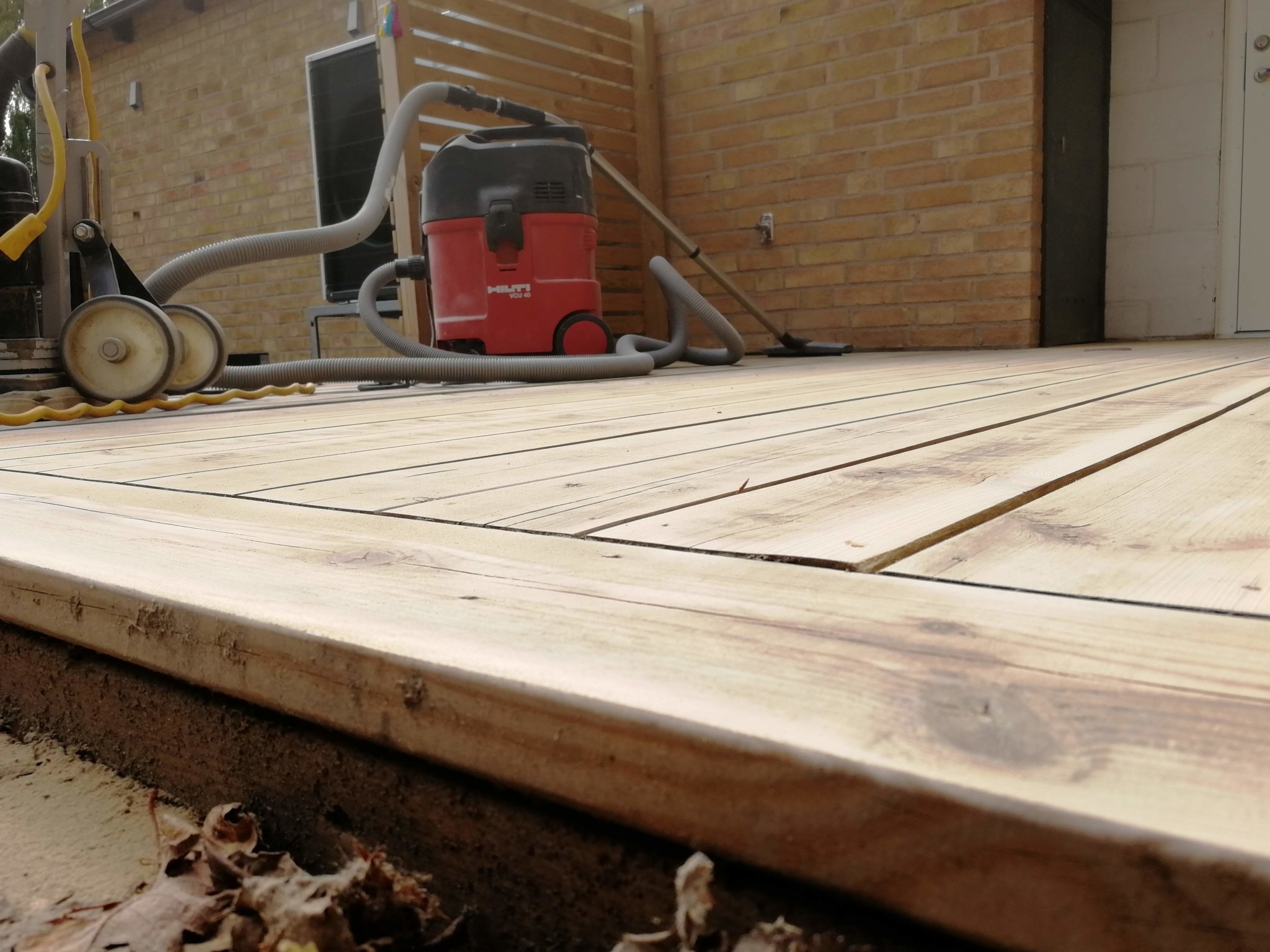
My deck floor looked just like yours. Left it for 1-2 years so that it "settled down" and then went over it with a floor sander to remove the worst ridges. Finished it off by applying Nitor woodprotection.
Looks carelessly screwed. Then, it's too close together between the decking.
Not too close at all if it is freshly treated (moist) wood.
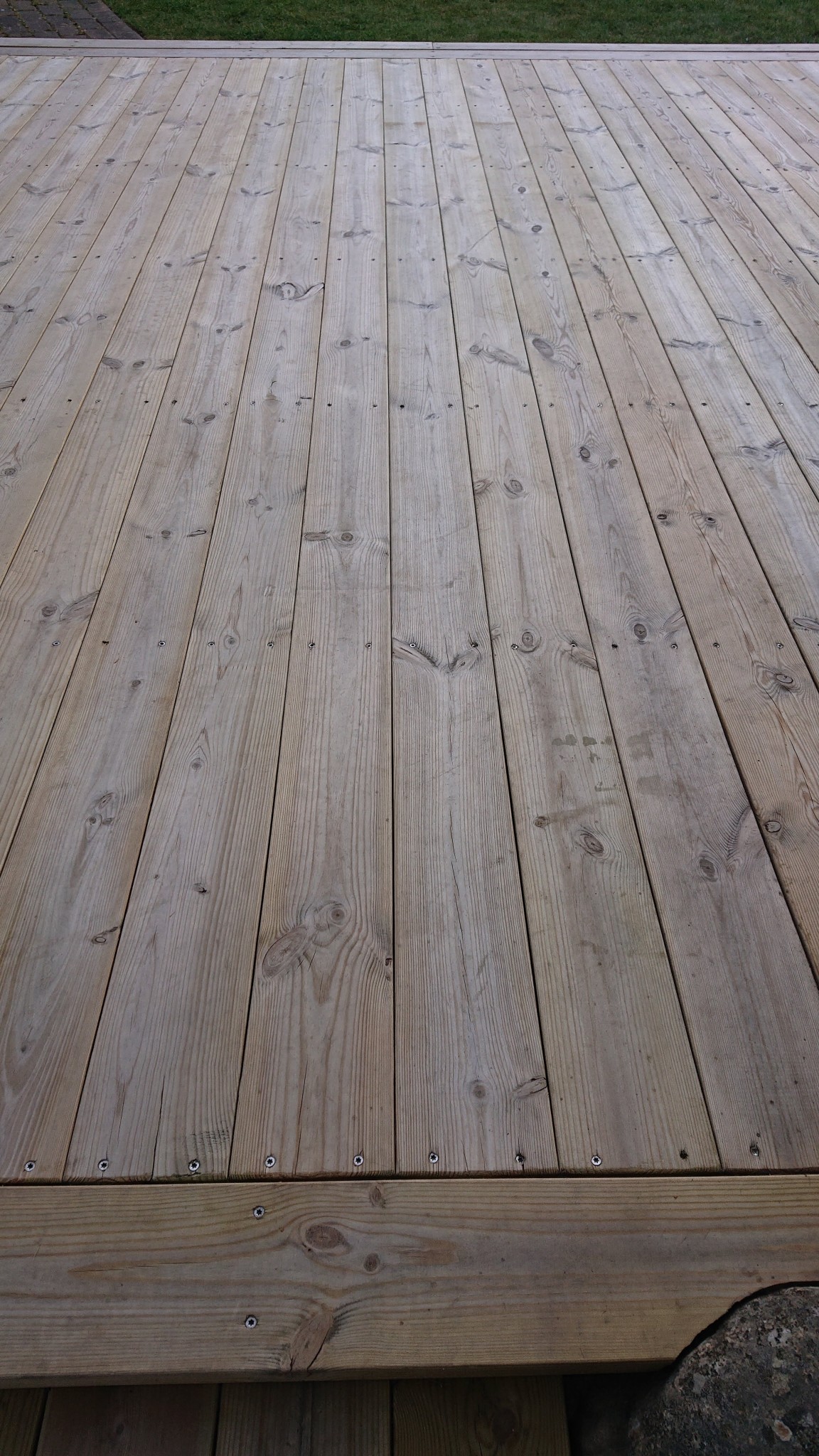
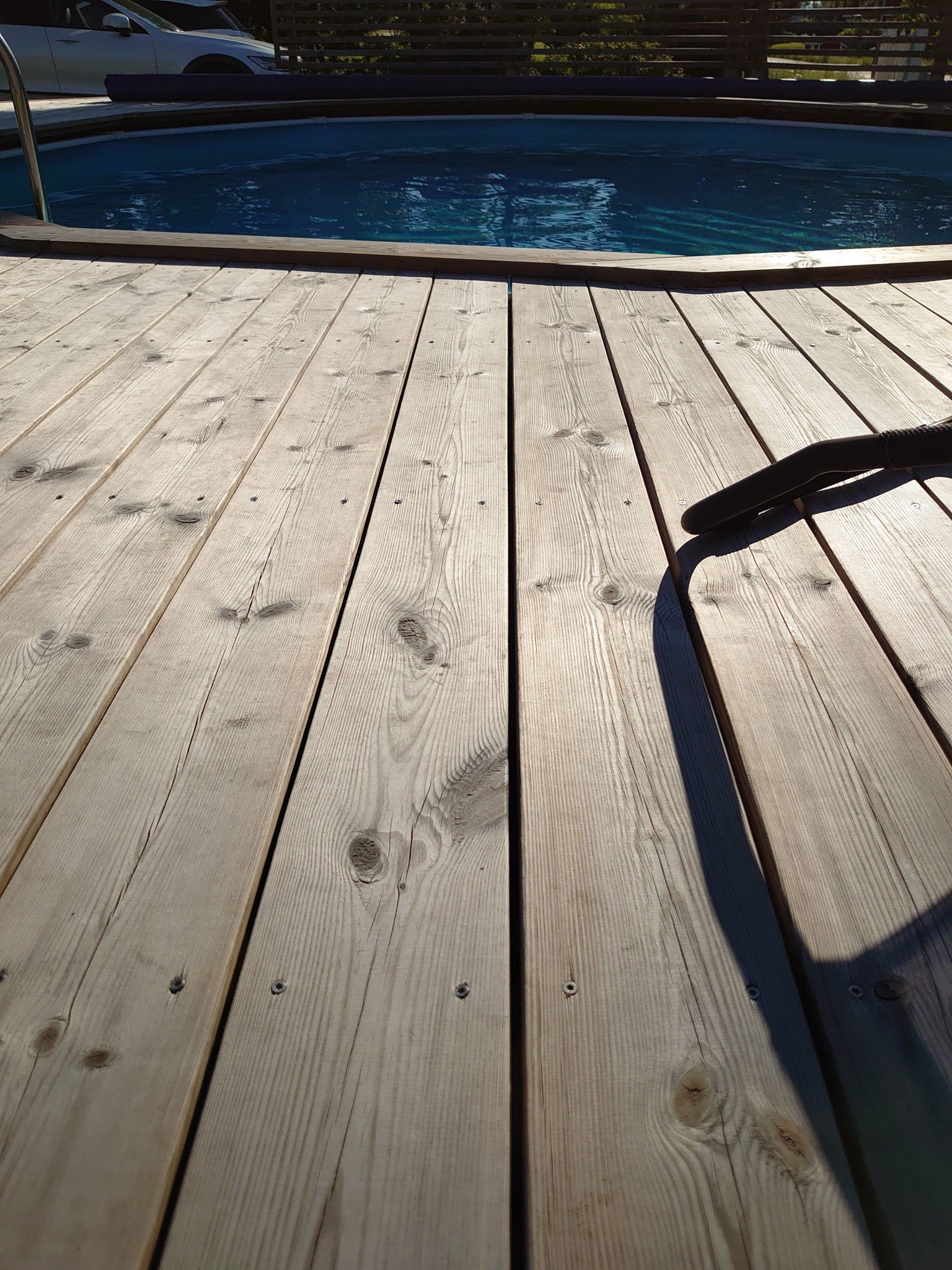
This decking was laid 3 years ago, completely edge to edge. Now there's at least a 5mm gap between the boards. So no, lay them completely together if it's moist decking, that's my tip.
Absolutely not too tight if it is freshly sawn (moist) timber.
[image]
This decking was laid 3 years ago, completely snug. Now there is at least a 5mm gap between the boards. So no, lay completely together if it's moist decking is my advice.
So no, lay them entirely together if it's damp decking is my tip.
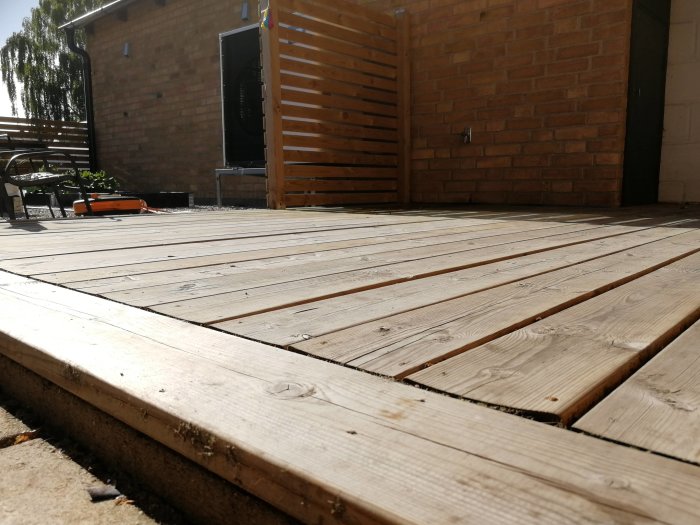
I agree. Laid mine close as well, looks like this 4 years later
Just the right size gaps. If I had laid with 6mm(?) as the guidelines are now, I would have over a cm large gaps...
Agree. I laid mine tight as well, looks like this 4 years later
[image]
Just the right size gaps. If I had laid it with 6mm(?) as the guidelines are now, I would have had over a cm wide gaps...
There is nothing that says 6 mm but 126 mm from edge to edge, often the decking is wider than 120 mm when it is freshly pressed.
Vi vill skicka notiser för ämnen du bevakar och händelser som berör dig.




FredrikR said: