A year has passed since the deck was installed, according to, as far as I know, all the rules of the craft.
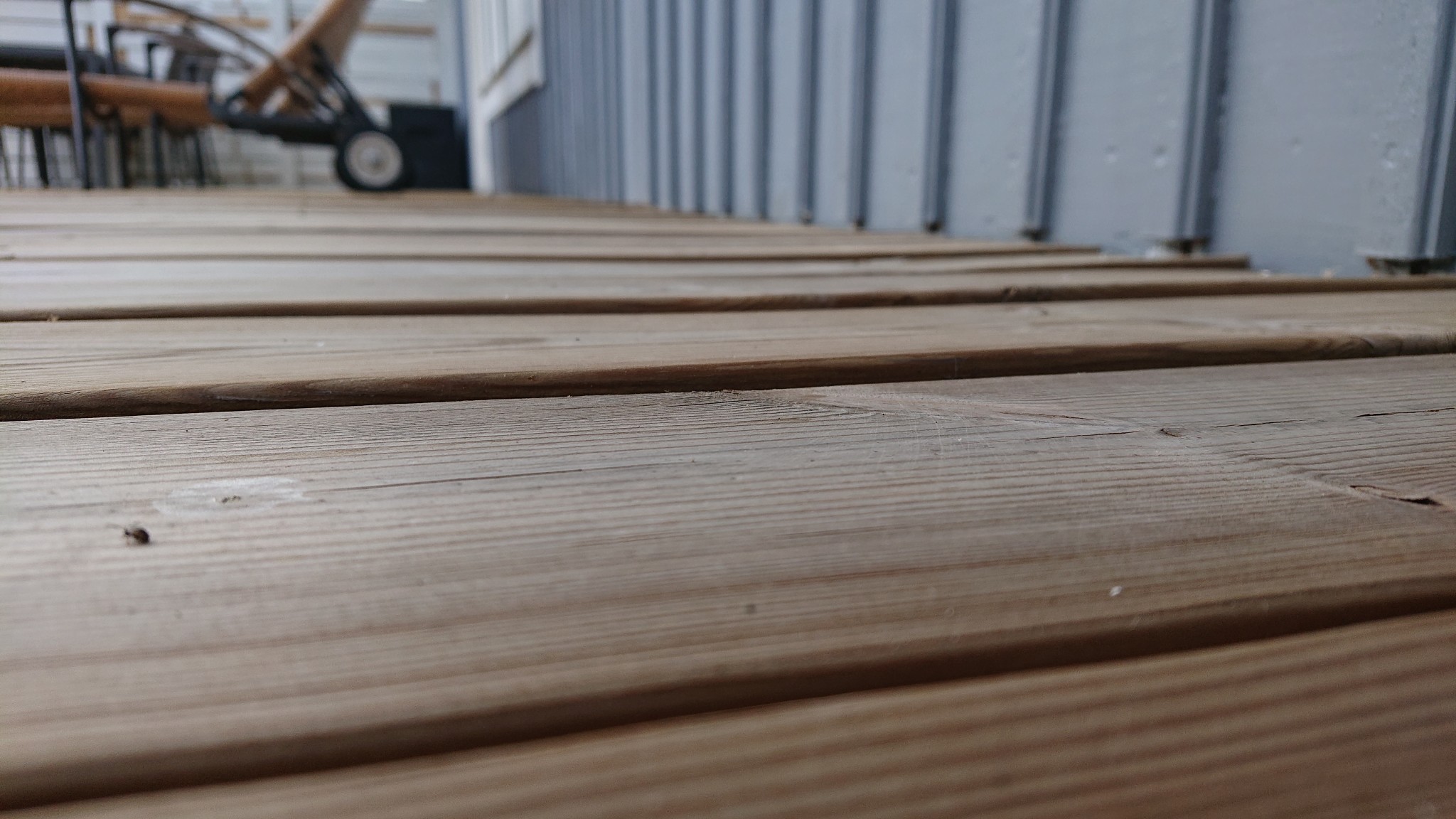
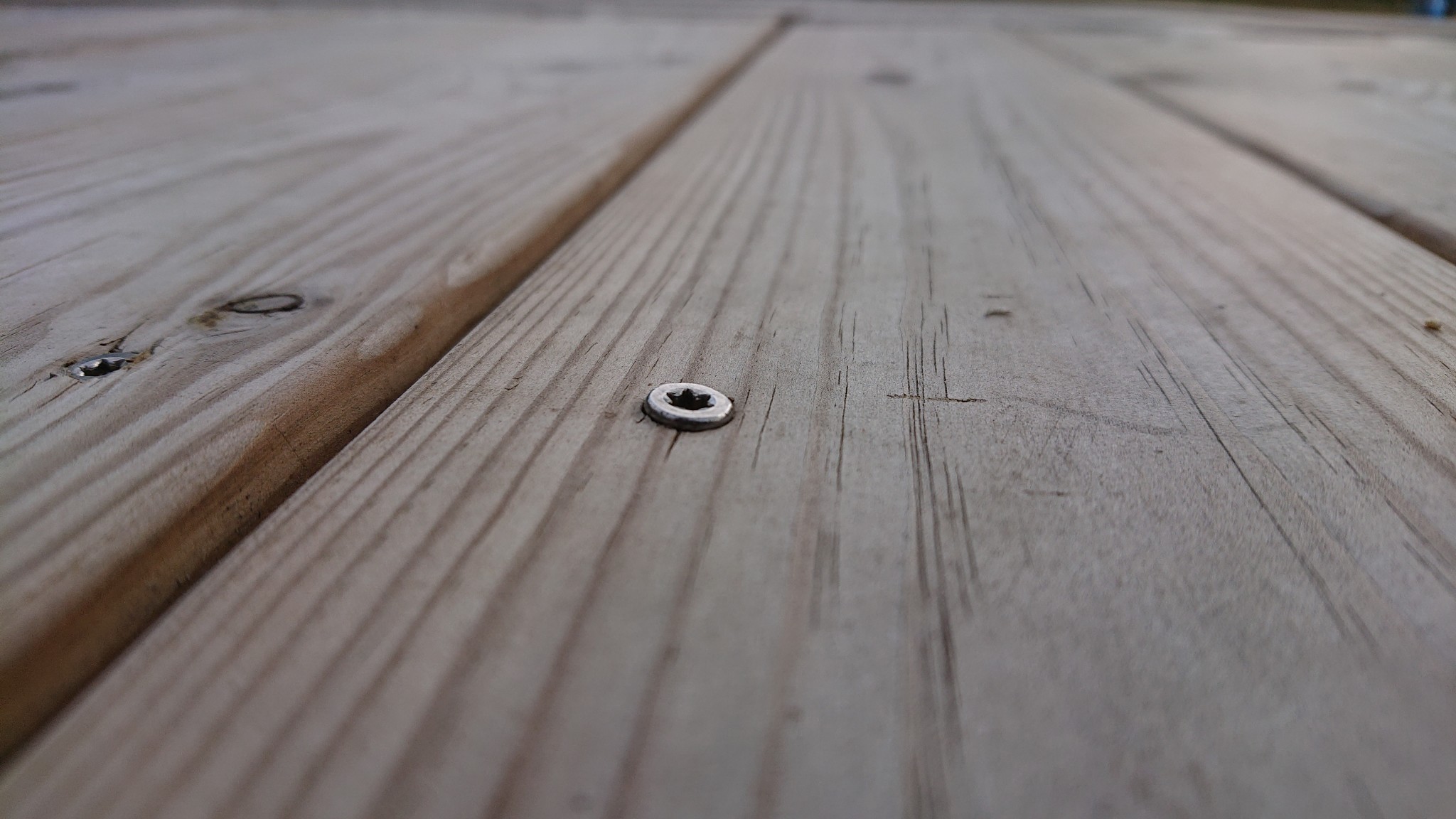
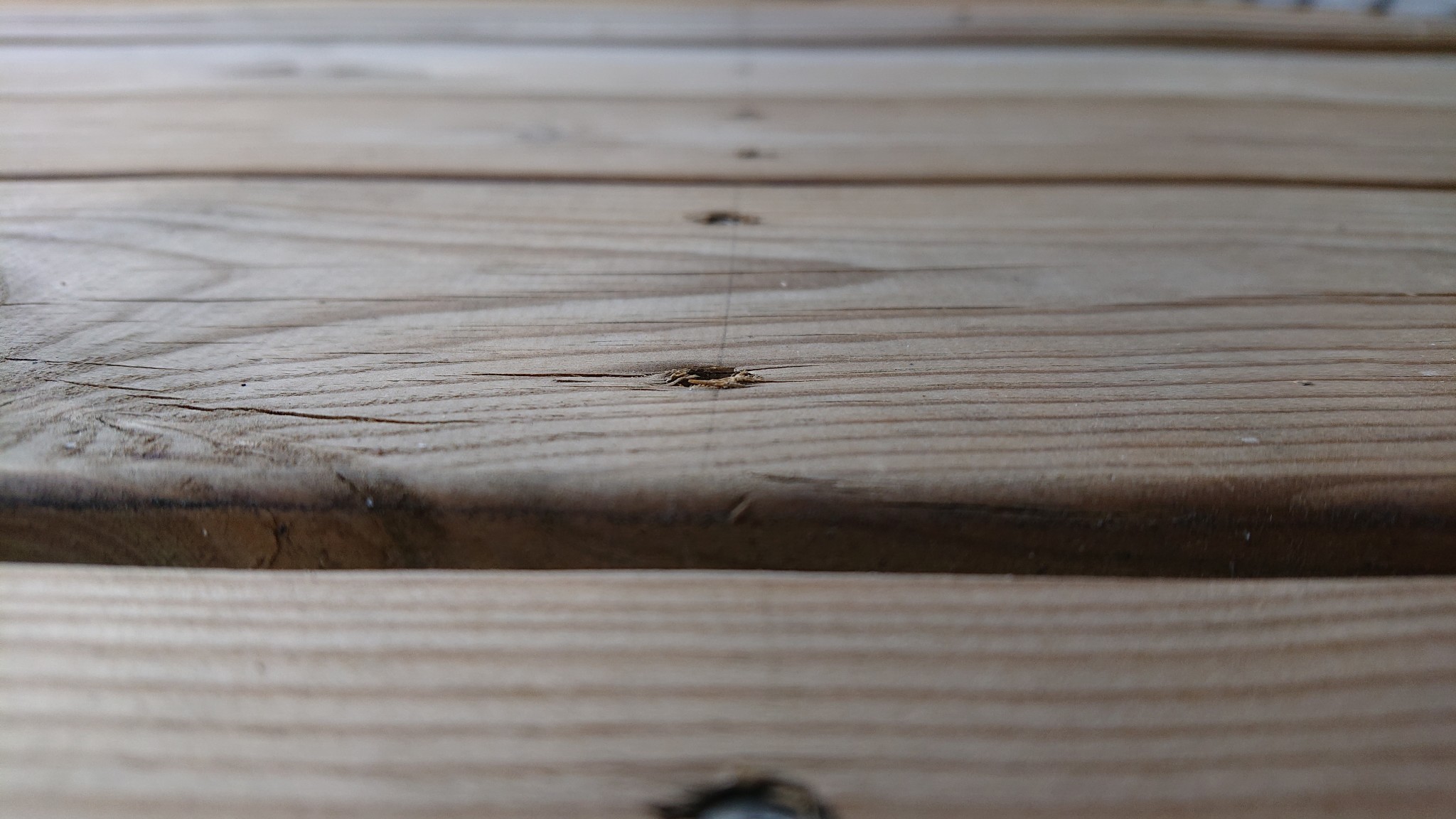
What has happened now is that some screws, quite a few actually, have crept up, causing the decking to rise. This has created really ugly bumps, up to 1cm in some places.
See pictures if you like. I've tried tightening, and the only thing that happens is that the screw goes deeper into the decking, but the decking itself still warps in some places.
Where does the fault lie? The quality of the deck wood or the quality of the screws? And... What can be done about this? Who should you start complaining to?
It's unfortunately probably nothing wrong. The wood moves considerably with varying humidity and temperature, it's probably just what's happened. If the decking is heavily exposed to the sun, this worsens the situation. Forcing twisted timber back is not easy!
Unfortunately, it's probably not a defect. The wood moves significantly with varying humidity and temperature, that's probably what's happened. If the deck is heavily exposed to the sun, this worsens the situation. Forcing twisted wood back is not easy!
Thanks for the reply!
I was thinking of soaking it thoroughly and tightening everything again, but then the risk is that the screw will just dig into the wood without much improvement. Heavily exposed to the sun? Yes, from around 12 to about 19, it's in direct sunlight. Every day of the week.
I have some leftover decking, so I'm thinking at least to replace the worst boards.
You didn't sink them enough into the wood when you laid the decking.
No, that doesn't have to be the case! My newly laid decking resembles yours, at least concerning the screws. The boards were screwed in "wet" and flush with the surface of the decking as per instructions, then the decking has naturally dried and shrunk, causing the heads to stick up somewhat. I'm reluctant to retighten these because they will then end up further down in the decking when it swells, and because it requires a lot of screwing... We'll see if there are any comments from the family in the future, so I'll probably have to be on my knees one more time...
Working on a big deck now and I'm not driving my screws in too far, just a few mm below the wood. It will be interesting to see. But many people say their screws come up. We'll see, I'm wondering if it might depend a bit on what type of screw you're using, of course. One thing I would check is if the screws have broken off and come up because they're no longer attached to the screw joist. Just a thought from a hobby carpenter.😉
Whose instruction? I drilled my screws 5 mm into the wood.
I just thought that if you drill them too deep, water will collect near the heads and cause them to absorb more water, so they crack and rise more easily, leading to more splinters in your feet. That was my thought. We'll see if it's wrong.
Whose instruction? I placed my screws 5 mm into the wood.
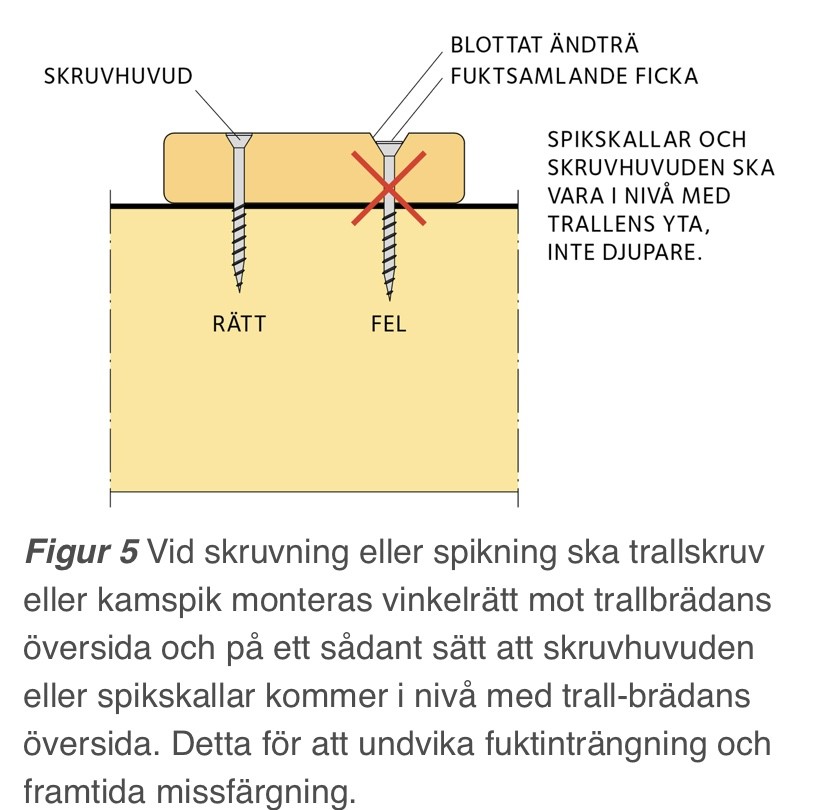
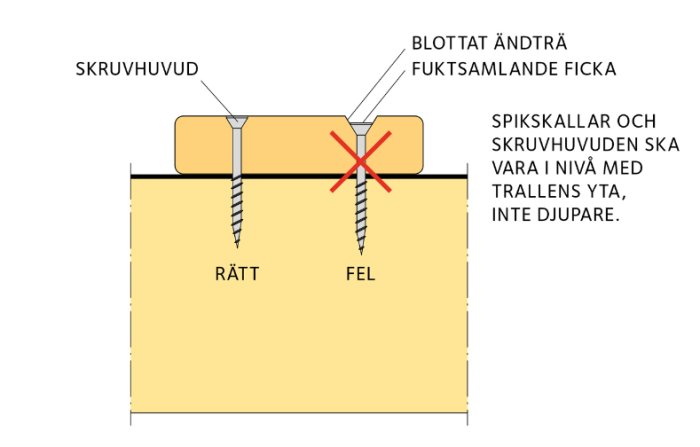
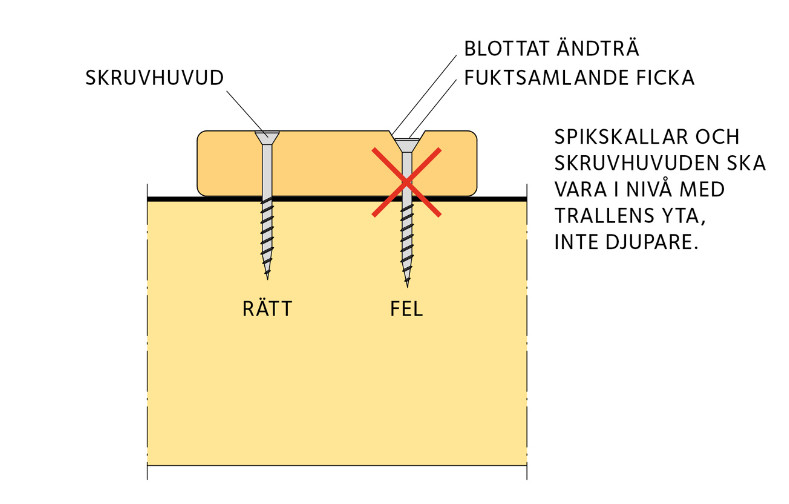
According to guidelines from Svenskt trä:
“Deck screws or cam nails should be installed perpendicular to the decking board's surface, in such a way that the screw heads or nail heads are level with the decking board's surface, not deeper. This is to avoid moisture penetration and future discoloration, see figure 5.”
The "law" about the level of the screw head probably comes from Swedish wood's rules for deck construction.
No, I don't use these insane rules myself.
I always drive the head down a few mm into the wood and always use stainless steel screws.
The only time I don't drive the screw all the way down is when I need to remove the board later to do something with the framework that requires taking off the decking board. Sunken screw heads often cause splinters when trying to remove them.
A year has passed since the deck was put in place according to, to my knowledge, all the rules of the art.
What's happened now is that certain screws, quite a lot actually, have crept up, causing the decking to elevate. This has created really ugly elevations, up to about 1cm in some places.
Please see the images. I have tried retightening and the only thing that happens is that the screw goes further into the deck, but the boards themselves are still warped in some places.
What is the problem here? The quality of the decking material or the screws' quality.
And... What can be done about this? Who should I start complaining to?
It's important that you have the right screw length. If it’s 28 mm thick decking, then you must have at least 55 mm screw length, otherwise, the decking might twist as you describe. My experience is that the screw needs to be driven down properly into the wood. The idea that the decking would last longer just because the screw head is only tightened to the deck surface is, I believe, a myth; it can hardly reduce water infiltration into the decking in a significant way. The solution now is to replace warped boards and retighten screws so that no one gets injuries on their feet.
"The law" about the level of the screw head probably comes from Swedish wood's rules for deck building
No, I don't use these insane rules myself.
I always drive the head a few mm down into the wood and always use stainless screws.
The only time I don't drive the screw all the way down is when I need to remove the board later to do something in the beamwork that requires removing the decking board. Driven-down screw heads often chip when you try to remove them.
The problem is that the screws probably won't hold the shrunken warped decking, and the mistake was that the decking was too moist and of weak dimensions!
See another thread here with non-pressure-treated decking from a good supplier....
Trying to screw down the screws will only break them and cause damage!
The only real thing to do, unfortunately, is to replace all the decking with non-pressure-treated ones of a thicker dimension and cover the beams with moisture-proof bitumen paper if you can, and treat the new decking.
If you cut corners, you can replace the warped ones with new ones of better quality and use stronger stainless steel screws that are 60 mm long.
Vi vill skicka notiser för ämnen du bevakar och händelser som berör dig.


Nyfniken said:

optimum said:
"and always use stainless sI was first...!