
6,033 views ·
45 replies
6k views
45 replies
Cracks in load-bearing posts - concern or not?


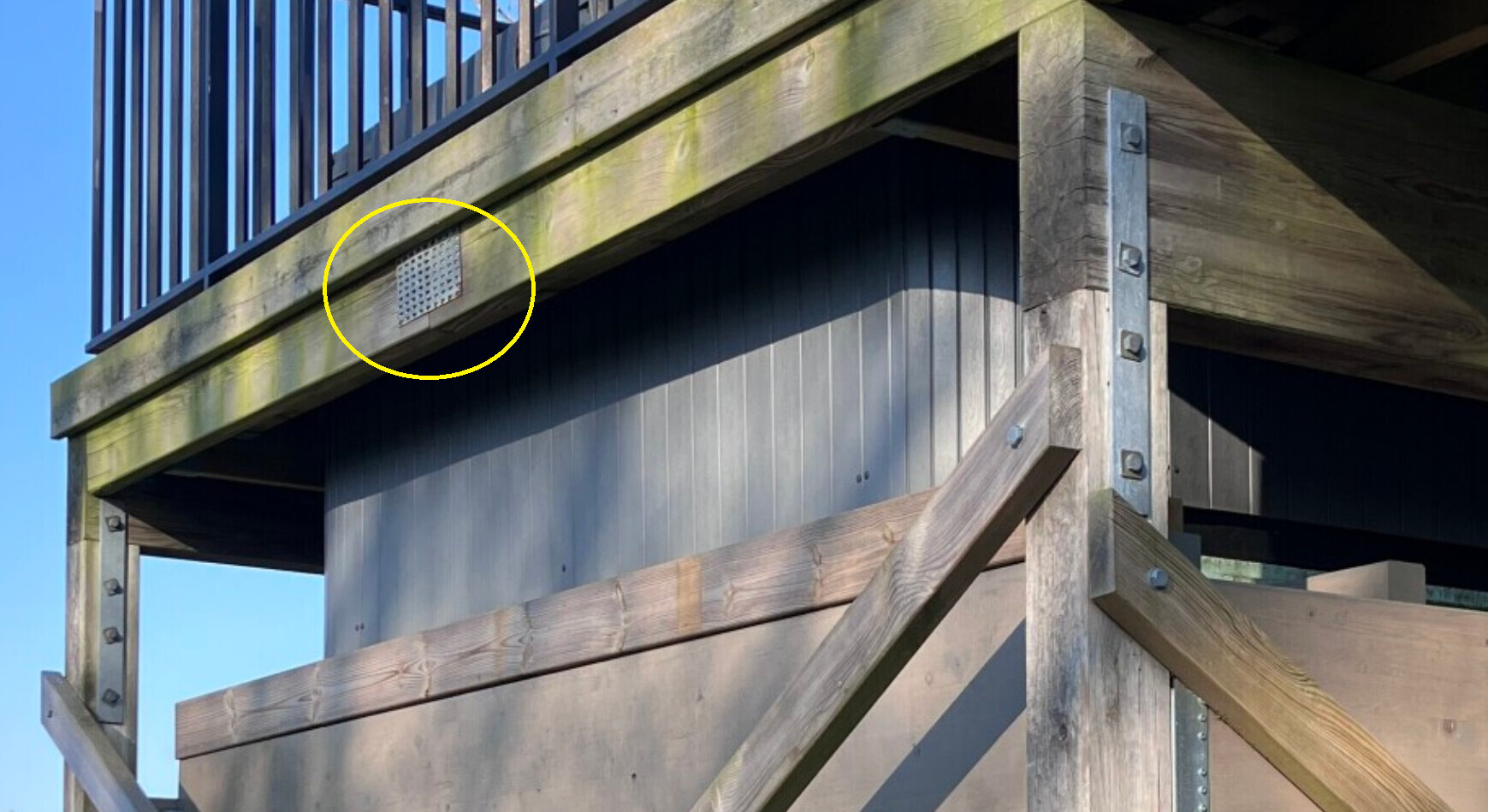

I have professionally built about ten glulam frames and have had many discussions with constructors about cracks.
If this were mine, I would not take any action at all.
But TS can use screws for extra security if it feels better.
If this were mine, I would not take any action at all.
But TS can use screws for extra security if it feels better.
What concerns me is that untreated timber seems to have been used in an outdoor construction, and it doesn't seem like there is any water-repellent treatment at all (left). It's possible there were instructions about this during construction that were then forgotten (previous owner?), but I think TS might consider whether it should be cleaned and oiled at the very least, as it is exposed to both moisture and sunlight.
But I'm not a constructor
But I'm not a constructor
😅
Grateful for everyone taking the time to answer in the thread. It's a bit difficult for me to relate to the answers though, ranging from "no problem, tighten a few screws for peace of mind" to "everything must be replaced." 😄
I guess we'll have to get someone to check it on-site. I'm just a little skeptical and think they might have their own incentive to think it should be replaced, to get more work & income?
Those of you in the "tear & replace" group - what is the worst-case scenario? If we tighten screws as suggested, is there a risk we might ignore a problem that will lead to the terrace suddenly collapsing when we're relaxing in the spa bath?
After some research, it seems the posts were pressure-treated, but maybe weather & wear can remove that over time?
Grateful for everyone taking the time to answer in the thread. It's a bit difficult for me to relate to the answers though, ranging from "no problem, tighten a few screws for peace of mind" to "everything must be replaced." 😄
I guess we'll have to get someone to check it on-site. I'm just a little skeptical and think they might have their own incentive to think it should be replaced, to get more work & income?
Those of you in the "tear & replace" group - what is the worst-case scenario? If we tighten screws as suggested, is there a risk we might ignore a problem that will lead to the terrace suddenly collapsing when we're relaxing in the spa bath?
After some research, it seems the posts were pressure-treated, but maybe weather & wear can remove that over time?
At its core, it's about the time perspective.
Right now, it's fine if you secure with a few screws or nails.
In 60 years, all wooden structures outdoors without a roof are doomed.
Somewhere in between comes the question of whether the timber is impregnated or not and whether the glue is weather-resistant.
Usually, it is avoided to use pressure-treated wood in load-bearing constructions because the wood becomes brittle and weak from the impregnation process. Gluing pressure-treated wood is also not always reliable. Therefore, and for cost reasons, one can suspect that the builders may have used ordinary non-impregnated wood, and then it is predestined to rot and collapse. Then we can each try to guess how long it will take before it collapses. It will probably take several more years.
The entire construction gives the impression of the kind of constructions that usually happen when a customer orders something that cannot be built sustainably, after which the builder does as he is told and thinks that it's not his problem anyway.
Right now, it's fine if you secure with a few screws or nails.
In 60 years, all wooden structures outdoors without a roof are doomed.
Somewhere in between comes the question of whether the timber is impregnated or not and whether the glue is weather-resistant.
Usually, it is avoided to use pressure-treated wood in load-bearing constructions because the wood becomes brittle and weak from the impregnation process. Gluing pressure-treated wood is also not always reliable. Therefore, and for cost reasons, one can suspect that the builders may have used ordinary non-impregnated wood, and then it is predestined to rot and collapse. Then we can each try to guess how long it will take before it collapses. It will probably take several more years.
The entire construction gives the impression of the kind of constructions that usually happen when a customer orders something that cannot be built sustainably, after which the builder does as he is told and thinks that it's not his problem anyway.
Without having seen the entire construction and that I'm absolutely not a professional, it might sound like a bigger project than it needs to be to replace the posts (important that the bath is empty).
As an amateur, I replaced 4 posts for my patio/screen roof without major problems, so I guess a professional can do it relatively quickly. Of course, it all depends on how everything is screwed together.
As an amateur, I replaced 4 posts for my patio/screen roof without major problems, so I guess a professional can do it relatively quickly. Of course, it all depends on how everything is screwed together.
The joist hangers are supported by an extra beam.
This beam is fastened with through-bolts and nuts.
You can see at least two in the pictures/post.
It's your wallet..
Screw or one more through-bolt is my advice.
This beam is fastened with through-bolts and nuts.
You can see at least two in the pictures/post.
It's your wallet..
Screw or one more through-bolt is my advice.
It obviously depends on what I'm taking a chance on. And that's kind of the question I'm trying to get answered. Worth the chance of falling and injuring the whole family - of course not. Worth the chance that the cracks become more visible and it becomes uglier - yes, it could be.Matti_75 said:
I see. I, as an amateur, naturally think that impregnated holds better than non-impregnated. But then, the wood is just affected in different ways, with or without impregnation.H heimlaga said:At its core, it's about the time perspective.
Right now, it's fine if you secure with a few screws or nails.
In a 60-year perspective, all wooden constructions outdoors without a roof are doomed.
Somewhere in between is the question of whether the wood is impregnated or not and whether the glue is weather-resistant.
Generally, it's advisable to avoid using pressure-treated wood in load-bearing constructions because the wood becomes brittle and weak from the impregnation process. Gluing pressure-treated wood isn't always reliable either.
Therefore, and for cost reasons, one might suspect that the builders could have used regular untreated wood, and then it's destined to rot and collapse. Then we can each try to guess how long it will take before it collapses. It's certainly going to take several more years.
The whole construction gives the impression of the kind of structures that result when the customer orders something that can't be built sustainably, whereafter the builder does as instructed and thinks it's not his problem anyway.
It doesn't seem to rot, and from how it looks in the pictures from when the house was new, one might suspect that the posts are impregnated, as they shimmer in green. But then maybe that contributes to them cracking instead. 🤷♀️
My question now is more about the risk if we settle for a light remedy (screws or similar). Do we risk it suddenly collapsing one day under our feet, or will it gradually become apparent when it's imperative to replace the posts?
The housing company we built with had an architect who designed according to our wishes. I don't remember insisting strongly on having a terrace on the upper floor, but perhaps it was the natural consequence of having the kitchen & living room on the upper floor, so the architect (correctly) thought it logical to extend it with an outdoor area on the same level. It's possible that we also suggested it, but it wasn't something we would have fought for if they had said it was a risky construction.
The construction company/builder still did a solid job with pillars cast into the ground, so it's not a hasty construction, from my ignorant perspective.
It is clearly not as easy as it seems. The original posts might be "easy" to replace, but the shelf that the hot tub rests on blocks the screws to the original posts, so in addition to the hot tub needing to be emptied and moved, the entire shelf needs to be dismantled. 😖V Villa1949 said:Without seeing the entire construction and not being a professional, it might sound like a bigger project than it needs to be to replace the posts (important that the bath is empty).
As an amateur, I replaced 4 posts for my patio/screen roof without major problems, so I guess a pro would do it relatively quickly. Of course, it all depends on how everything is screwed together.

As you yourself have said, there is a wide range of responses and the reason is probably that we do not see the whole picture, only some details.
(Like that splice plate seems to have rusty screws, which should not happen regardless of the dimensioning)
My advice would be to certainly consider the suggestions you get here, but to bring in a knowledgeable carpenter to inspect the whole thing.
Preferably, bring someone who you pay specifically to do an assessment of the situation.*
His findings will then determine how you proceed. If there is incorrect material/construction, etc., it might be something that can still be covered by the construction defect insurance depending on how it was ordered.
There is still 1 year left on it.
*) That is, he should be paid the same whether he thinks everything needs to be torn apart or just spruced up, so there is no self-interest in doing one or the other.
(Like that splice plate seems to have rusty screws, which should not happen regardless of the dimensioning)
My advice would be to certainly consider the suggestions you get here, but to bring in a knowledgeable carpenter to inspect the whole thing.
Preferably, bring someone who you pay specifically to do an assessment of the situation.*
His findings will then determine how you proceed. If there is incorrect material/construction, etc., it might be something that can still be covered by the construction defect insurance depending on how it was ordered.
There is still 1 year left on it.
*) That is, he should be paid the same whether he thinks everything needs to be torn apart or just spruced up, so there is no self-interest in doing one or the other.
As I wrote earlier, for an experienced carpenter it will not be difficult. And without having to dismantle the platform if necessary, only replace the posts. The bathtub itself without water is not very heavy.W white_cheese said:
Forget carpenters.
It's a lottery whether they have the necessary knowledge about glulam or not.
Most likely not...
It's the service provider you should contact, as they will have the contact to the manufacturer's designer.
Or contact, for example, Setra and see if they want to help you for free...
It's a lottery whether they have the necessary knowledge about glulam or not.
Most likely not...
It's the service provider you should contact, as they will have the contact to the manufacturer's designer.
Or contact, for example, Setra and see if they want to help you for free...